For a two-side gusset pouch, describe the mouth in the state in which it will be filled. The flat component width is not enough to explain the opening available to a nozzle, funnel or manual scoop. Ask the converter and packing team to agree the opening sequence and verify it with representative samples.
Confirm what “two-side gusset” means in the enquiry
Provide front, side and top views with folds marked. Suppliers may describe constructions differently, so use the sample and drawing to settle terminology. Identify any back seal and the edge left open for filling. If the reference pack has a folded or clipped top, state whether that feature belongs to the purchased pouch or a later packing step.
International Plastics' measuring guide illustrates dimension references for a side-gusset bag. Add an opening-state view to the project drawing; the empty outside measurements alone do not explain the filling task.
Distinguish outside width from accessible opening
The outside width identifies the supplied component, while the usable mouth describes access at a particular stage. A fold, seal or feature can affect that access. Record both on the drawing without treating one as a substitute for the other. The filling owner should identify the state in which its interface needs clearance.
Use top-view sketches at delivered, presented and opened states. Show where the fold legs sit and which surfaces are held. The sketches need not claim a machine design. They should explain the actual sample and the interface supplied by the equipment owner.
For an illustrative whole-piece product, the final filled pouch has enough room, but pieces bridge at the presented mouth. A larger body volume may leave the original access problem unchanged. The next question is whether the opening geometry, presentation method or product route needs review. Keep that question with the relevant technical owners.
If the opening appears different on left and right, record it before forcing symmetry by hand. Ask whether the difference comes from the sample, normal fold behaviour or its presentation. A trial is more useful when it preserves what actually happened than when every pack is manually adjusted to resemble the drawing.
Review the interface before the artwork
Give the packing team the physical sample and the intended product. Ask it to identify the space needed to present, open and hold the mouth during filling. Record the actual equipment interface through its authorised operator or technical owner. Do not infer machine suitability from a catalogue photograph.
When filling is manual, define the normal tool and handling sequence. A sample filled slowly by hand after carefully arranging every fold may demonstrate basic containment but not the intended routine. Observe the practical task and record where extra manipulation is needed. That observation guides a sample revision more effectively than a general request for an easier pouch.
Give the interface reviewer the right sample evidence
A sample can demonstrate approximate access while differing from the proposed structure or feature arrangement. List those differences. If the line assessment requires a particular stiffness or surface behaviour, the responsible team should say what sample is representative enough. An attractive mock-up should not quietly become the equipment approval reference.
Record contact at each state without assigning a cause immediately. A folded region may contact a funnel, a product piece may bridge or a mouth may fail to present consistently. These events require different investigations. Give each its own location, stage and sample reference.
Ask the supplier which geometric alternatives it can propose. Compare alternatives against the actual interface rather than a universal mouth ratio. A changed height, opening or gusset can also affect artwork and closure readiness, so include those consequences in the next sample request.
The review file should connect the empty drawing, interface document and observed sample. If any of those changes, identify the affected state. This is more precise than asking the line team to approve an entire pouch again without explaining what changed or which previous observation remains relevant.

Use an opening-state sheet
| State | What to record | Question |
|---|---|---|
| Delivered flat | Fold positions and open edge | Is the component identified correctly? |
| Presented for fill | Grip or equipment contact | Can the mouth be handled consistently? |
| Opened | Available path and fold intrusion | Does the filling interface have access? |
| Product entering | Bridging or contact near the mouth | Is normal discharge unobstructed? |
| Ready to close | Fold position and product clearance | Can the final closure proceed? |
This original sheet describes a sequence, not a universal opening dimension. Attach photographs or sketches where a verbal description would leave room for interpretation.
Follow the product through the mouth
Use representative piece size or powder behaviour. Record bridging, snagging or product retained near folds. If the product varies, include a realistic range rather than only the easiest batch. A free-flowing substitute can hide an access issue that appears with the actual product.
Separate opening problems from dosing problems. If a filler discharges product inconsistently, the pouch may receive different occupied volumes even at the same nominal target. The packing team should identify the observation and investigate through its normal process controls before the converter is asked to change the construction.
Review the transition from filling to closing
Follow the mouth through the step immediately after product entry. Record whether folds return to the intended position, whether product remains near the working region and how the pack reaches the final closure operation. The observation needs the normal sequence, not a carefully reset sample prepared after the event.
ASTM F88/F88M-23 concerns sampled seal-separation strength and notes that this differs from whole-package opening interaction. Use that distinction when requesting evidence. A dimensional mouth observation, a seal-strength result and a complete-pack use assessment answer different questions.
Do not select a stronger seal as the automatic response to a fold trapped in the closing region. First establish what occurred and have the authorised technical owners assess its consequence. A process change, a geometry change or another sample may be appropriate, depending on that evidence.
For an illustrative record, a fold is correctly positioned before filling but turns inward before closure. The report should preserve both states and the intervening sequence. A final photograph alone would lose the information needed to investigate the transition and could lead reviewers to change the wrong part of the construction.
Close the sample without losing the fold state
Review how the folds return to the intended position before final closing. Record whether additional handling is needed and whether the closing region remains clear. GS1's standard distinguishes flexible-pack measurement conditions; use a defined finished state for any resulting product-data measurements.
An illustrative sample may open widely enough but leave one fold tucked into the closing area after filling. Record that as a closure-stage issue with its own photo. It should not disappear inside a broad statement that the pouch “fits the filler.”
Decide what counts as a resolved access issue
Agree an outcome tied to the intended task. It could be consistent presentation through an identified interface, normal product entry or closure readiness under the accepted process. The technical owner defines any measurements or acceptance limits. Avoid a broad pass statement that omits the condition being assessed.
Check a revised sample with representative product and the relevant interface. Preserve the original issue record alongside the new observation. If the revised geometry solves entry but creates a closing or artwork problem, record that trade-off before selecting it. A change can be useful without being a complete release.
Keep the amount of operator intervention visible. If the approved routine includes a particular presentation step, record it. If reviewers added a special manual adjustment only for the trial, identify that difference and ask whether it is acceptable for the intended operation.
The completed access file should let purchasing request the correct component and let packing recognise the approved sequence. Include the sample, drawing and interface revisions in the order reference. Later changes in product piece size or filling equipment then have a clear starting point for reviewing which mouth observations need to be repeated.
Side-gusset geometry: a practical specification example
A pack is shortlisted for its shape, then its panels are divided between artwork and functional features. Work from the filled geometry: a bottom gusset, side gusset and flat base are distinct constructions. Establish where the product will settle, which panel the customer sees and which edge is used for filling. This prevents an artwork decision from silently changing the pack layout.
For this decision, start with the folded and expanded side dimensions. The useful output is a front and side view using an agreed gusset convention. Put that output beside the relevant quotation, drawing or sample rather than leaving it in a separate email. This is an illustrative decision exercise, not a report of a completed customer trial.
Product references to make the discussion concrete
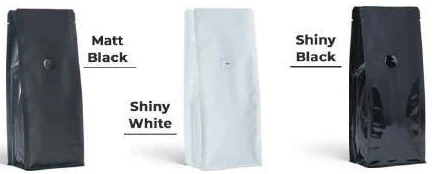
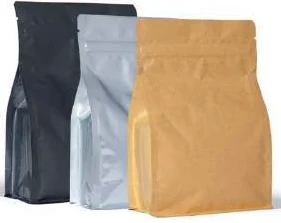
The catalogue includes side-gusset pouches and flat-bottom pouches. These examples show different physical constructions; they are not interchangeable specifications. Folded sides expand as the pouch fills. This format has a different filled footprint from a bottom-gusset stand-up pouch, so specify the face width and opened side depth separately. A coffee-valve version can be discussed for the relevant product.
| Format reference | Material or construction to clarify | Details to include in the brief |
|---|---|---|
| Side-gusset pouches | Paper-look and opaque or foil-look laminates are illustrated; confirm the actual inner and outer layers for the contents. | Face width and side-gusset convention; filled height and headspace. |
| Flat-bottom pouches | Flexible laminate with paper-look or opaque outer options; the appearance alone does not identify the full layer structure. | Base width and full opened depth; net fill and product bulk. |
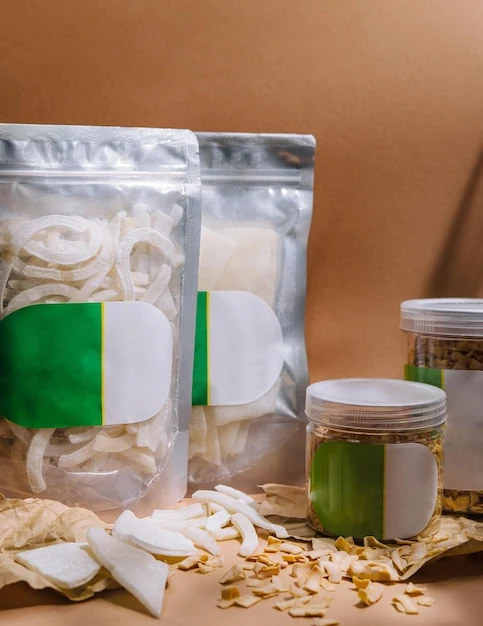
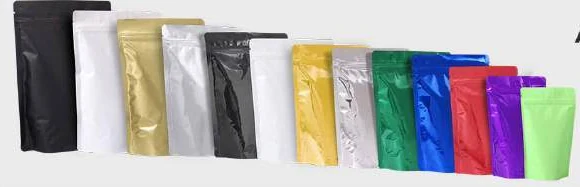
Use the reference pictures to identify the base, side panels, window or opening that you mean. A picture cannot supply the missing dimensions or material layers. If a photograph shows a finish or closure you do not want, state that difference explicitly; otherwise a visual reference can introduce an unintended requirement.
Complete the record before requesting the next sample
- Attach a front and side view using an agreed gusset convention. Identify the product or SKU and the date of the observation.
- Record the folded and expanded side dimensions. Keep confirmed information separate from proposed values and questions for the supplier.
- Add the actual fill weight or volume, the dimension convention, material proposal and intended closure. Include the number of designs and quantity per design when requesting a quotation.
- State which question the next drawing, sample or quotation must resolve. A change of size, closure or material should remain visible alongside the earlier reference.
This record makes the next conversation specific. It lets the design, purchasing and packing teams work from the same proposed item and shows which decision still needs evidence. Review the related product pages for format details, or prepare a custom packaging brief with the unresolved requirements.

Request a sample that answers the access question
Give Navkar Poly Print the opening-state sheet, filling interface details, actual product form and desired quantity. Ask for a construction proposal that the packing team can inspect before artwork is fixed. Retain the approved sequence with the drawing so repeat orders refer to the same mouth and fold arrangement.
Sources and scope.
These references support the technical discussion. Product photographs illustrate formats; the material, dimensions and suitability of the proposed pack are confirmed for each project.
- International Plastics: side-gusset bag measuring guide
Illustrated external dimensions and dimension-order notation.
- GS1 Package and Product Measurement Standard
Distinguishes measurement treatment for different filled flexible-pack types; does not set converter tolerances.
- ASTM F88/F88M-23: seal strength
Public scope distinguishes a sampled seal-separation result from whole-package opening interaction; no test procedure or universal acceptance limit supplied.
Let’s discuss your product.
Share your contents, dimensions, filling method, quantity and delivery destination. We’ll work through the proposed packaging specification with you.
Create a packaging brief