
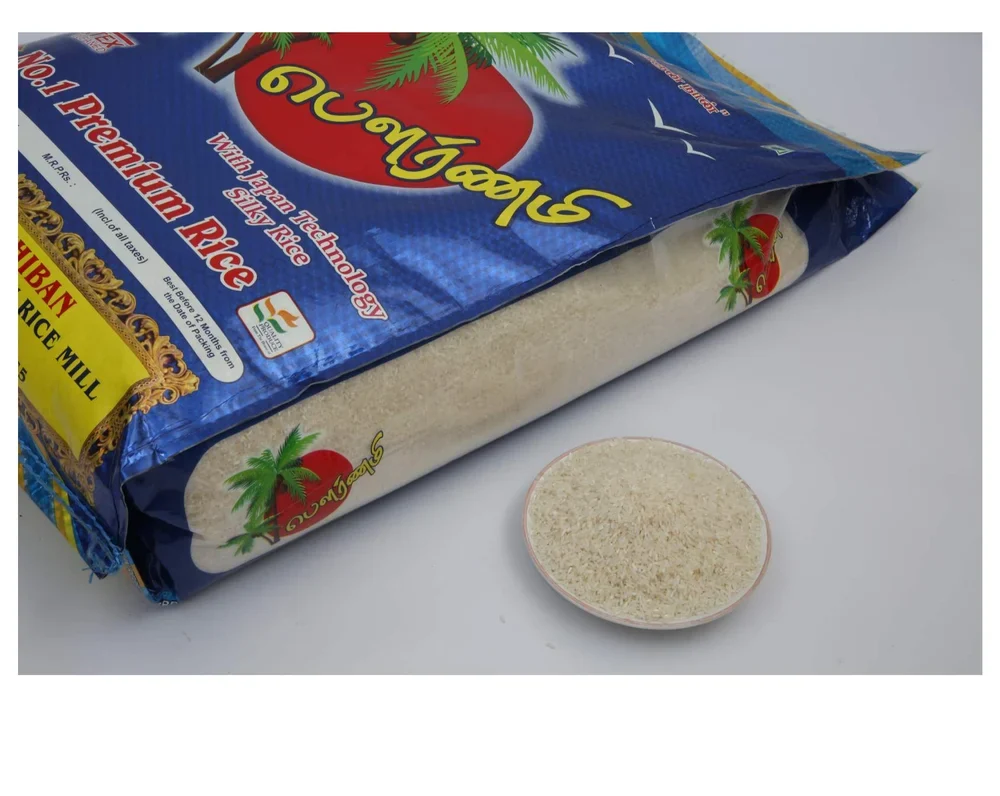
Rice packaging bags need to work as filled packs, carrying units and printed retail products. The right choice depends on the actual grain, fill quantity, opening and closure, selling channel and delivery route. A small clear-window pack and a large woven sack may belong to the same rice range while needing separate drawings and acceptance checks.
This guide covers how to organise that range, compare flexible and woven constructions, measure filled samples and prepare the print and purchasing brief. It also applies to a grain or pulses project when the actual product and handling requirements are substituted for the rice example. It does not assume that equal fill weights require equal bag sizes.
Map the range by product and sales channel
List each rice variety or grain product and its intended pack weight. Add the selling channel: neighbourhood retail, supermarket shelf, direct delivery, institutional supply or a larger distribution order. Keep export or special storage requirements as separate inputs rather than treating them as an automatic property of a bag style.
Decide what the customer needs to recognise on the front. This may be the brand, variety, product form and pack size. Then list the physical tasks: filling at the mill, closing, lifting, transport, store handling, opening and storage after purchase. That sequence exposes requirements that a front-view artwork file can miss.
For a range with several sizes, make a size-and-design matrix. A change in weight can affect the bag's gusset, filled thickness, handle need and carton arrangement. The artwork should remain recognisable without simply stretching the smaller layout. Read ten rice-bag details to specify before requesting quotations across multiple sizes.
Compare flexible retail bags and woven sacks
Begin with the physical construction. Flexible retail bags use a film or laminate body with the specified seals and features. Woven sacks have a woven body and may include a printed laminated surface or a separate liner. Describe the offered construction rather than calling every glossy bag a BOPP bag and assuming the rest of its specification.
Within the flexible range, compare side-gusset bags, flat-bottom formats, handled packs, window packs and smaller pouches. These terms can overlap: a bag may have both gussets and a handle, or a window and a printed opaque panel. Record the base construction first and the optional feature second.
| Requirement | Formats worth comparing | What the sample should show |
|---|---|---|
| Product visible on a retail shelf | Window or clear-panel flexible bags | Grain visibility after settling |
| Wider opening for filling | Appropriate gusseted or open-mouth designs | Actual filling access and final closure |
| Carrying a filled retail unit | A handled format sized for the load | Handle attachment and body movement |
| Larger supply pack | Woven sack and any required liner | Closing, handling and storage arrangement |
| A premium shelf presentation | Printed gusseted or flat-bottom formats | Front panel, base and filled footprint |
Use seven rice packaging bag types to compare these choices visually. None of the names alone determines the finished bag's load rating, food-contact suitability or storage performance.
Describe the grain condition and storage route
Provide the actual product information to the packaging discussion. Record the rice form, intended fill quantity, product temperature at packing if relevant, and the conditions expected in storage and distribution. Include known handling concerns, such as sharp product contact or dusty filling, using observations from the actual operation.
IRRI explains that grain moisture interacts with the storage environment in its Rice Knowledge Bank. That is a reason to describe the product and storage conditions clearly. It is not a basis for copying a paddy moisture figure onto a packaged milled-rice specification.
Ask the food and quality teams which product and packaging checks are required. Where a liner, ventilation detail or particular barrier is proposed, write down its purpose and how it will be reviewed. Avoid choosing between a breathable sack and a sealed flexible bag by appearance alone; they represent different storage and packing arrangements.
Measure the filled bag before fixing the size
Start with a representative quantity of the actual rice. Fill a candidate bag and record its usable width, height and opened gusset, together with the filled thickness and closing space. Check the dimensions in the same condition each time, including whether the product has been allowed to settle.
Distinguish the flat bag drawing from the filled shape. The front panel can bow, the gusset can open and the top can change shape during closing. A tall narrow bag and a shorter wider bag may hold a similar quantity but stack and carry differently. The drawing should show which dimensions are external and which describe available product space.
For example, trial a retail bag with the proposed grain weight, then place several completed bags in the intended dispatch carton. Record the arrangement rather than assuming that the flat bag dimensions predict the carton. If the fit is awkward, revisit the proportions before approving artwork. The pouch capacity guide explains why weight and dimensions must be reviewed together.
Specify handles, openings and closure as a system
If the bag needs a handle, identify its type, position and relationship to the main load-bearing body. Ask for a filled carrying review with the actual contents. Check the handle opening, the space around it, the way the bag hangs and the strain near seams and corners. A printed photograph of a handle does not establish a carrying specification.
Describe how the bag is filled and finally closed. A film bag's closing arrangement differs from that of a stitched woven sack or a liner inside a sack. Where there are multiple layers, make clear which one contains the product and how each component is secured.
Think through opening at the destination as well. A customer may pour the entire contents into another container or use the pack over several occasions. A reclosure feature, where proposed, needs an accessible position after opening. Do not add a zipper solely because it appears on a smaller product in the range.
Ask for a complete material and construction description
For flexible bags, request the proposed layer structure, overall thickness and product-contact surface, along with the seam and any handle reinforcement. For woven sacks, identify the fabric construction, printed or laminated layer, closure and liner as separate items. Keep the material proposal attached to the correct size and drawing.
A silver finish, high-gloss panel or clear side is a presentation choice, not a complete material specification. If a viewing window is required, show its dimensions and position. Check how the panel behaves when the rice presses against it and how it appears after the bag is filled and stacked.
Agree what supporting information and trials are needed for the intended application. Do not replace one construction with another on the basis of matching thickness or matching appearance. If the supplier proposes an alternative, compare the complete bag rather than only the front film.
Plan printed panels for multiple varieties and sizes
Use a consistent brand architecture with a controlled variant area. The business should supply the exact rice description and approved product information for every design. Make the variety, pack size and other variable fields easy to verify during artwork review and receiving inspection.
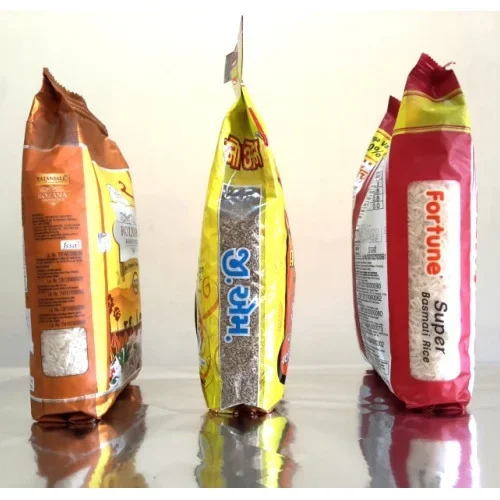
Map the front, rear, sides and gussets on the drawing. Keep essential identifiers clear of folds, handle cutouts and closing zones. A window can reduce the space available for text, so allocate it before the layout is finalised. Check the filled bag from the angles in which it will be displayed, including a sideways position on a stacked shelf.
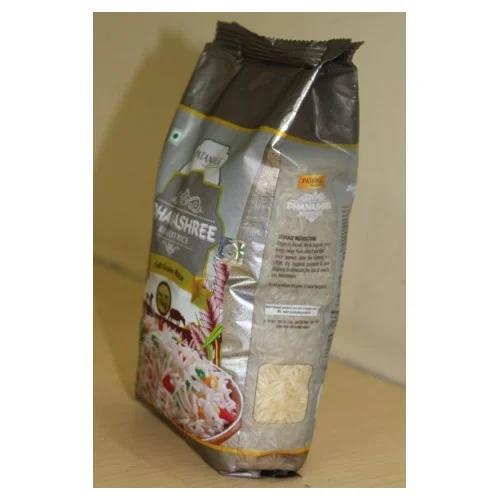
The supplied blue, silver and multicoloured rice-bag photographs on the rice packaging product page illustrate different panel and gusset arrangements. Use them to communicate a format preference; the artwork and material for your own range remain separate decisions.
Run a handling and dispatch trial
Follow several filled samples through the intended handling route. Record the fill and closure, carrying action, bag-to-bag contact, carton or stacking arrangement and unpacking at the destination. Define the trial with your team before using it as an approval gate, including what would count as an unacceptable outcome.
Retain the sample identity, drawing revision, material proposal and notes together. If a seam opens, a handle stretches or a printed panel scuffs, the observation should point to a specific pack and handling step. Simply recording that a sample was good provides little help during the next order.
Repeat relevant checks after a change to the grain, weight, bag size, handle, material, closing method or distribution route. A bag approved for one combination should not silently become the reference for every other size. The sample approval guide provides a way to organise that evidence.
Compare quotations on the same order basis
Send suppliers one size-and-design matrix and identify any alternative constructions separately. Ask for the price basis, quantity per design, setup charges, samples, packing units, delivery terms and applicable exclusions. Confirm whether the offer covers a finished bag, printed film, a sack with a liner or another supply arrangement.
Keep the delivered cost and the usable unit clear. A low price per kilogram of film is not directly comparable with a finished bag price. Similarly, a sack quotation without the required liner is not the same product as one including it. Use the quotation comparison checklist to keep the decision tied to the specification.
Worked example: a retail rice range and a larger supply sack
Consider a rice business preparing a smaller retail bag and a larger supply pack. Start by recording the actual rice, fill quantity and handling task for each. The retail concept may need a viewing panel and a visible brand face. The supply pack may require a different body, closing arrangement and any separately agreed liner. These are two packing projects within one brand range.
Fill trial samples and compare the usable openings, closing space and completed shapes. For the retail bag, inspect the grain window and front panel after settling. For the larger pack, record the intended lifting, stacking and receiving routine. If a handle is proposed on either size, review it with that pack's actual load rather than borrowing approval from another size.
Now issue a two-line quotation brief with separate drawings and material proposals. Identify the artwork for each and the quantity required. Ask suppliers to distinguish the base offer from options such as a changed handle or liner. This makes it possible to understand whether a price difference reflects the same pack or an altered construction.
Questions that often delay a rice-bag enquiry
Can a bag be sized from kilograms alone?
Kilograms identify the fill weight, not the complete geometry. Use the actual grain and packing condition to establish the volume, remaining closing space and filled dimensions. Agree the drawing from a representative fit exercise rather than copying the dimensions from a different brand's pack.
Does a printed woven sack always need a liner?
Treat the liner as a separate decision. Describe the product-contact and storage requirements, the outer sack and the closing process, then ask the responsible team to review the proposed assembly. A photograph of another sack does not establish what your product needs.
Should every rice variety have a different bag design?
That is a brand and stock-control decision, but each variant still needs accurate identification. A common layout can be used with controlled changes to the product name, colour or other approved fields. Keep file revisions and order quantities clear so receiving teams can distinguish the intended SKUs.
Use regional guidance for the actual destination
For a rice-mill project around Miryalaguda or Miryalagudah, the regional rice packaging guide adds local delivery and product-brief context. For a pulses range, explore Virudhunagar packaging requirements. These are useful extensions of a product specification, rather than reasons to repeat the same city name across unrelated articles.
Continue with seven rice-bag formats when choosing a construction, or ten ordering details when preparing the enquiry. The food pouch pillar covers smaller food formats, and the main selection guide connects the broader buying process.
Sources and scope.
These references support the technical discussion. Product photographs illustrate formats; the material, dimensions and suitability of the proposed pack are confirmed for each project.
- IRRI Rice Knowledge Bank: Equilibrium moisture content
Background on grain moisture and the storage environment. Paddy guidance is not used to prescribe a universal moisture limit or shelf life for packaged milled rice.
Let’s discuss your product.
Share your contents, dimensions, filling method, quantity and delivery destination. We’ll work through the proposed packaging specification with you.
Create a packaging brief