Retail carry bag options combine a handle design, bag body and material. They are not mutually exclusive types: a film bag may have a die-cut handle, gussets and a specified environmental attribute at the same time. Describe those elements separately when asking for custom printing or a new size.
The nine options below are useful comparison points for a retail enquiry. Some are standard body families, while others are custom handle or material requirements to discuss. For the complete product-to-dispatch sequence, use the retail and textile packaging guide.
1. T-shirt-style carry bags
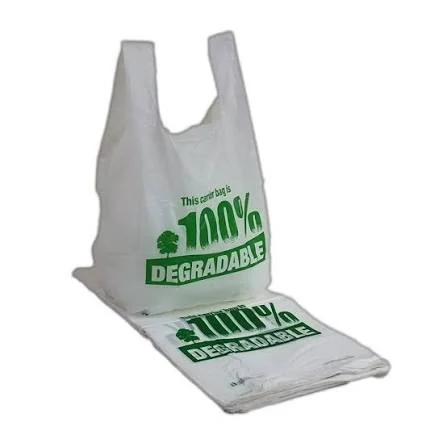
A T-shirt-style bag has two extended handle areas above the main body. It is worth comparing around the actual items, usable opening and carrying load. Specify the body dimensions, side gussets and handle opening rather than relying only on overall height.
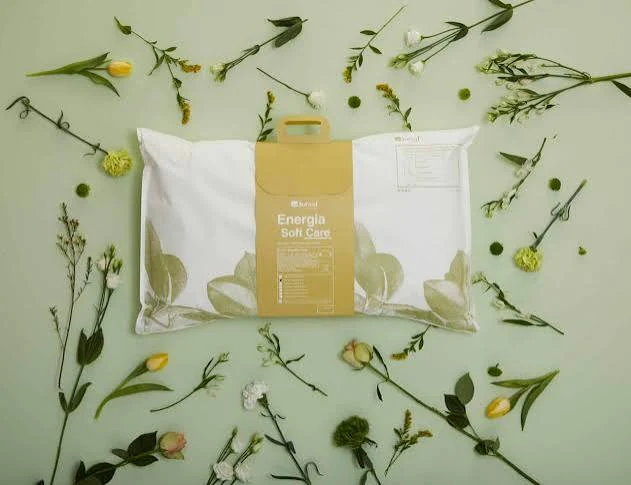
Review the filled base, the way the handles gather in the hand and the strain around the body and seams. Keep artwork away from the folds and handle profile. The supplied white-and-green bag in the carry-bag material enquiry illustrates the shape; its printed wording is not a complete material specification.
2. Die-cut handle bags
A die-cut handle is formed as an opening in the bag body. It provides a different grip and front-panel layout from an extended T-shirt handle. Identify the cutout dimensions, its position relative to the top edge and the usable product space below it.
The Diversified Plastics format reference shows this handle approach. For your order, check the filled load, grip access and the area around the cutout. A die-cut outline does not itself establish reinforcement or carrying performance. Start with the printed carry-bag range and specify the requested handle.
3. Reinforced or patch-handle configurations
Where the proposed handle needs reinforcement, describe it as a separate construction requirement. Ask the supplier to show the reinforcement area, attachment and relationship to the handle opening. Keep that detail on the drawing so it cannot be confused with an unreinforced bag of similar appearance.
Trial the complete filled bag. Observe the grip area and the surrounding body, not just the reinforcing patch. If an alternative construction is proposed, compare it against the same load and handling task. Treat this as a custom requirement until the supplier confirms the actual design and material.
4. Soft-loop handle bags
A soft-loop handle is attached separately to the body and can change how the customer carries a wider or boxed purchase. Define the loop length, attachment locations and available hand space. Include the effect on the bag's packed height and storage arrangement.
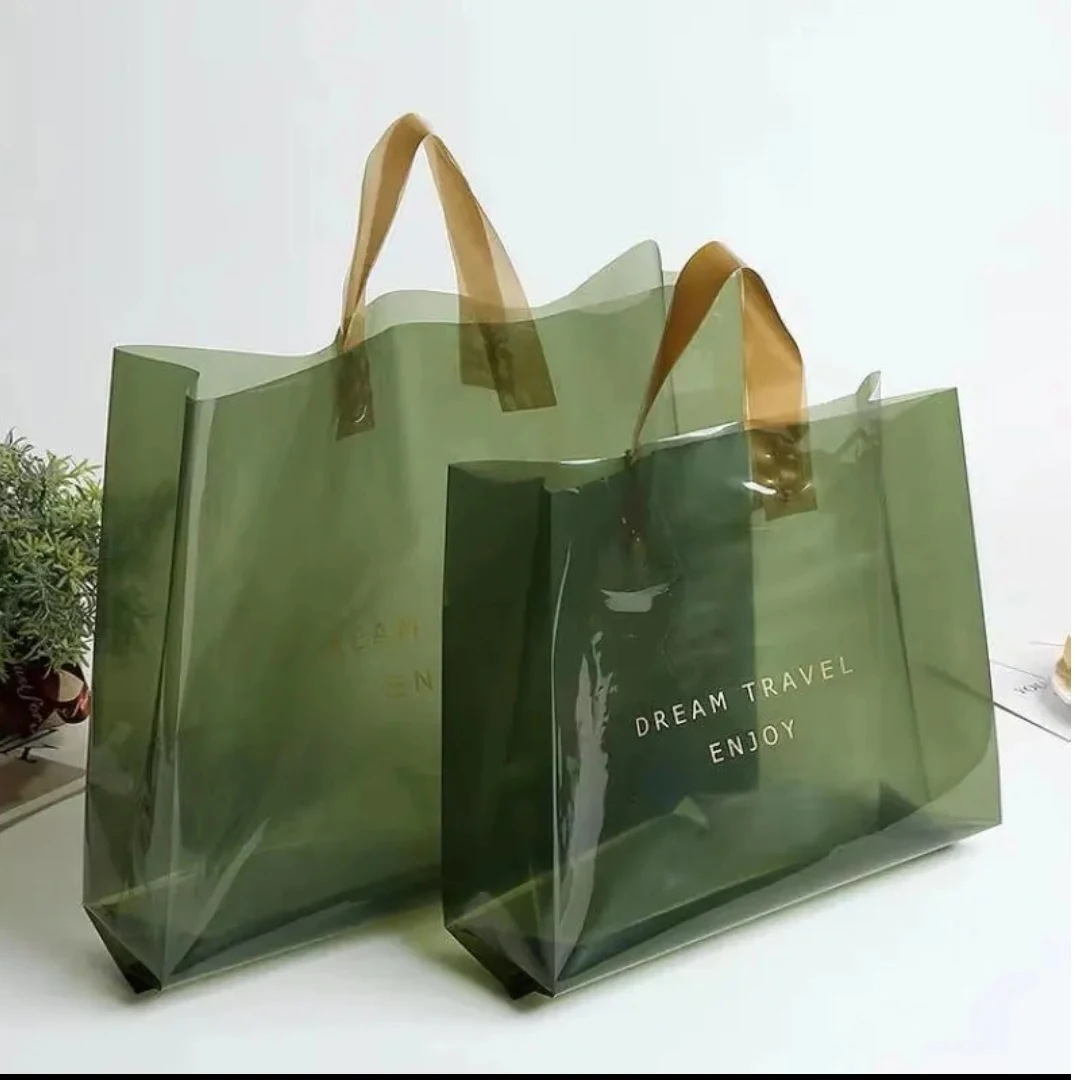
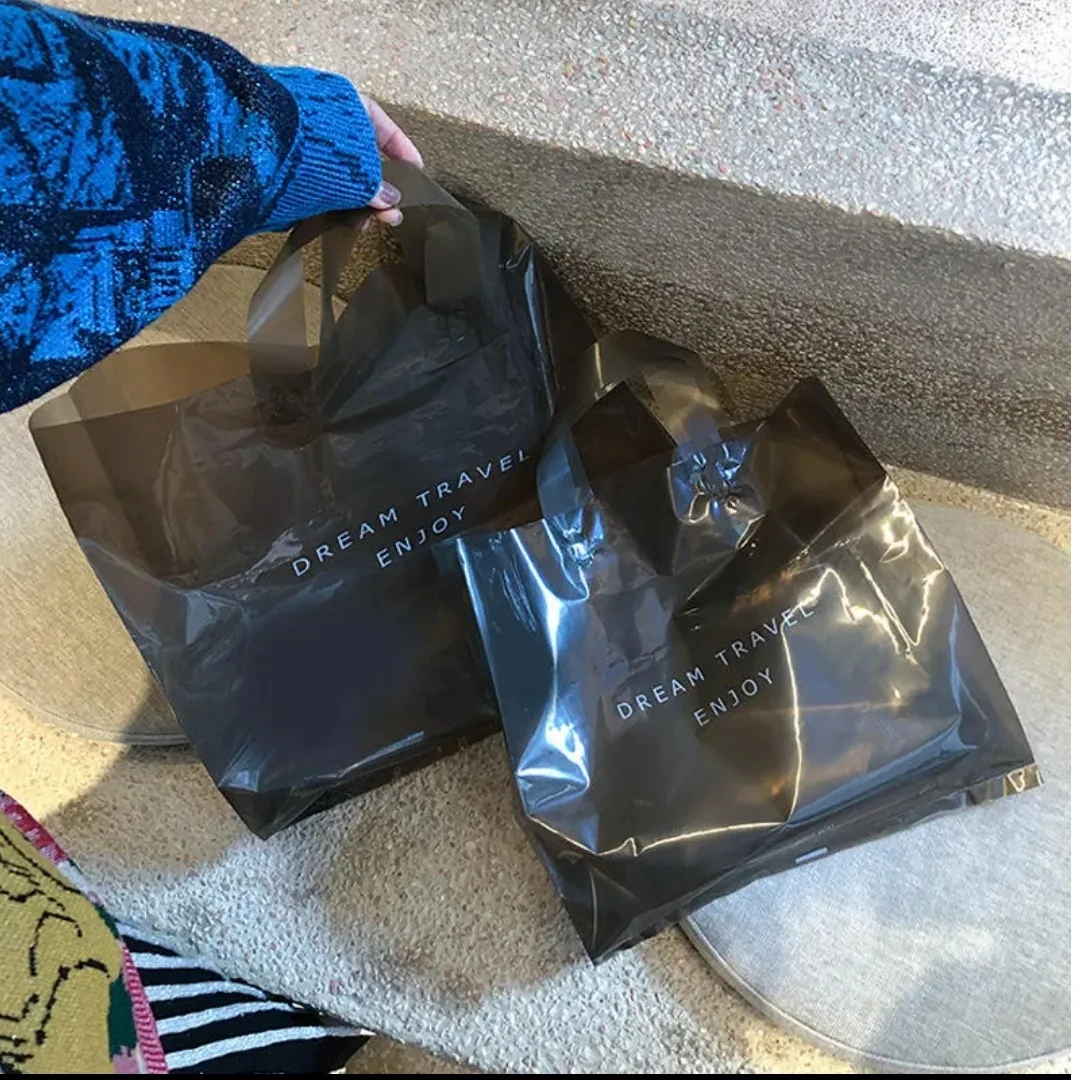
The supplied green printed carry bags show a loop-handle presentation. For your product, check attachment, load distribution and the way the bag hangs. Plan the graphics so the filled product and handle attachment do not distort the key brand area unexpectedly.
5. Rigid-handle custom bags
A rigid handle is another component in the pack rather than simply part of the film outline. If it is required, supply a reference and ask for the proposed handle, attachment, bag body and opening to be reviewed together. Identify how the pack is opened, filled and carried.
Consider how the component affects storage and the bag's retail appearance. Check grip access and the complete filled shape. Do not assume that a rigid-looking reference belongs to an existing standard range; include it in a custom packaging enquiry so feasibility and construction can be resolved.
6. Drawstring or dori bags
A drawstring arrangement changes both closure and carrying. State whether it is intended to close the main product bag, hold an inner pack or present a gift assortment. Show the string path, openings and any eyelet or reinforced area on the proposed drawing.
Check the gathered top with the actual contents. It can reduce the usable body height and hide parts of the print. Ask the supplier to review the cord, attachment and surrounding material as a complete system. Avoid transferring a food-pouch reference directly to a textile carry bag without a new size and handling review.
7. Non-woven retail bags
Non-woven bags are a material and construction family, not a single handle style. Specify the fabric proposal, dimensions, seams, base or gussets and handles. Include the print layout and intended use so the supplier can offer a defined construction rather than a generic bag weight.
Evaluate the loaded bag and the attachment areas with representative items. Decide how it will be folded, stored and handed to the customer. The non-woven bag page provides an enquiry starting point; the carrying performance and any repeated-use expectation need review for your own pack.
8. Clear handled bags with a separate closure
A clear retail bag with a handle and proposed closure can keep the item visible while providing an agreed opening and carrying arrangement. This may be useful when the packed product already has a printed insert or retail band. Specify the usable area, handle position and closure independently.
Trial access, insertion, carrying and opening with the actual product and any display insert. A zipper or flap changes the available body space and should not be added only to copy a sample. Compare this approach with the pillow retail packaging options when the bag contains a complete bedding product.
9. Bags with a specified biodegradable material requirement
Biodegradability is a material requirement, not a handle shape. State the proposed material, intended use and supporting information needed for any environmental wording. Keep that information linked to the exact material being offered. Green ink or printed claims on a reference photo do not resolve the specification.
Review size, seams and carrying performance alongside the material attribute. A material change can require another filled trial even if the outer design looks unchanged. Use the biodegradable plastic carry-bag enquiry to describe this requirement without assuming that another carry bag has the same composition.
Compare the same loaded-bag requirement
Before requesting prices, record the packed product dimensions, contents, required load, handle, body, material proposal and artwork count. Include quantity per design and delivery destination. Ask suppliers to show alternatives separately so a lower price does not quietly remove a feature or change the material.
For a textile project, distinguish this shopping bag from the product's own protective cover and dispatch layer. Continue with the textile packaging guide or mattress and pillow options for that sequence. The packaging RFQ template helps turn the chosen combination into a clear buying brief.
Sources and scope.
These references support the technical discussion. Product photographs illustrate formats; the material, dimensions and suitability of the proposed pack are confirmed for each project.
- Mondi: Mattress compression wrapping and secondary packaging
A manufacturer case distinguishes compression wrapping from the outer dispatch wrap. It does not establish Navkar compression-packaging capability or the properties of supplied photographs.
- Sealed Air: Inflatable air pillows
Primary reference for secondary cushioning and void filling, distinct from retail packaging for bedding pillows. No performance percentages are adopted.
- Diversified Plastics: Die-cut handle bags
Manufacturer example of a handle opening formed in the bag body; sizes, materials and load performance remain project-specific.
Let’s discuss your product.
Share your contents, dimensions, filling method, quantity and delivery destination. We’ll work through the proposed packaging specification with you.
Create a packaging brief