Saree and textile packaging bags for Chirala businesses should start with the folded garment, including the blouse piece, tags and any presentation insert. Specify the inner display pack, the customer carry bag and the courier mailer as separate items. This makes it easier to compare suppliers and prevents the bag that looks right at the counter from becoming an awkward dispatch pack.
Chirala: the industry and buying context
The Bapatla district administration documents Chirala silk sarees under its One District One Product programme. The following packaging brief is written for a saree or handloom business choosing between shop presentation, customer carrying and parcel dispatch.
Regional industry reference. The packaging requirements below are practical buying guidance; product images illustrate applications and formats.
Measure the complete folded sale unit
Fold a representative saree in the way it will be sold. Include the blouse piece, tags, board or tissue that belongs to that sale unit. Measure the widest face and the finished thickness, then allow the packing team to check insertion and removal with a sample bag.
A slim cotton article and a more elaborate garment can occupy different volumes after folding. Record those differences in a size matrix rather than stretching one bag across every SKU. If the shop wants a shared external bag, define the largest intended bundle and test how the smaller bundle presents inside it.
Pay attention to the opening and to any feature that could catch on the article during insertion. Ask the people who pack orders to use the sample; a drawing cannot show every snag or awkward fold. Keep the fold convention with the drawing so a later change in presentation does not invalidate the measurements.
Separate display, carrying and courier functions
The inner pack presents and identifies the garment. A printed carry bag is handled by the customer. A courier mailer closes around the parcel and its protective contents. Approve each function independently, even if the brand artwork is shared.
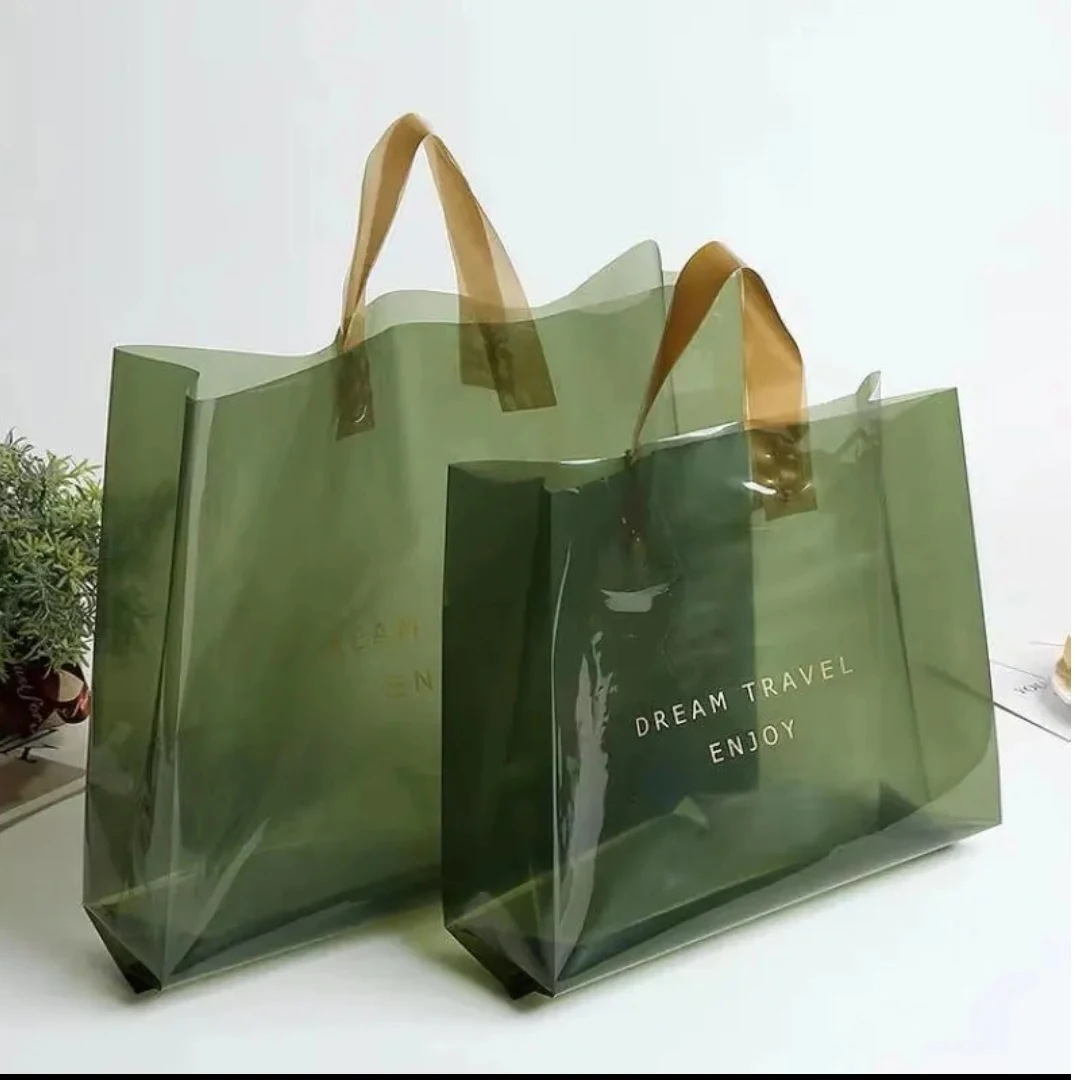
For a carry bag, specify the handle style, the filled bundle and how it is normally carried. A non-woven bag needs its fabric and handle construction discussed as part of the brief. A photograph of a handle is a reference for the conversation, while the actual load and attachment are reviewed with the proposed construction.
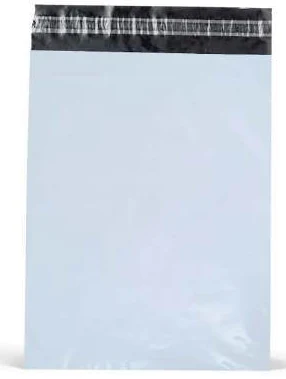
For a courier mailer, distinguish usable height from the adhesive flap. Measure the item after adding any required inner protection. Specify a document-pocket requirement separately, including where it must be accessible after the parcel closes. A retail bag dimension is not automatically a usable mailer dimension.
Packaging formats to discuss
Use the product pages to identify the format you mean, then attach the dimensions and application requirements. A sample photograph shows a reference construction; the written brief defines the proposed order.
| Format | Construction or purpose to clarify | Information to include |
|---|---|---|
| Printed carry bags | Printed customer carry bag with a specified handle | Filled bundle, handle style and printed faces. |
| Non-woven bags | Non-woven fabric bag with an agreed handle construction | Fabric requirement, filled size and handle attachment. |
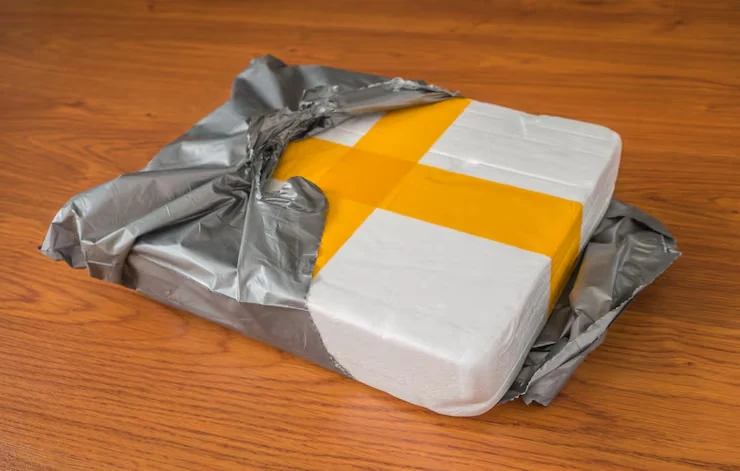
| Courier bags | Flexible mailing-bag film with an adhesive flap; polymer type, opacity and thickness are project specifications. | Item or inner-carton dimensions; Usable height excluding the flap. |
For artwork, ask for the drawing for the actual selected format before releasing final files. Keep the approved material, dimensions, opening and print revision on the same item record. A later change to one of those fields should be checked against the rest of the specification.
Keep saree variants readable at the counter
Create an item table covering design, colour, size or length description and any set components. Decide which information is fixed in print and which belongs on a controlled label. Frequent colour changes may be easier to manage through an agreed variable field than through a new bag artwork for every shade.
Make the product-facing information visible without repeatedly opening the sale unit. When a transparent area is wanted for viewing the weave or colour, define that area on the drawing. Check whether an insert, tag or fold blocks the intended view once the article is packed.
Review printed colour on the proposed bag surface rather than approving it from the garment photograph alone. A white, clear and coloured surface can give the same artwork a different appearance. Keep the approved artwork revision tied to the bag size and material description.
Review a sample through packing and dispatch
Use a short trial that follows a real order: fold the article, add its insert, place it in the inner pack, identify the variant and prepare the carry bag or parcel. Time is less useful here than noting the exact action that is awkward. Record whether the opening is difficult to use, the fit is too tight or identification becomes hidden.
For a multi-item order, check the actual bundle rather than multiplying a one-item thickness. Folded textiles can shift or compress, and an extra article can change the shape of the parcel. Photograph the filled envelope beside a ruler and record which components were included.
Inspect the garment after the handling exercise as well as the bag. State the sample construction and the handling conditions with the observation. This helps distinguish a presentation concern from a closing or fit concern and gives the supplier a specific revision to address.
Build a Chirala delivery and reorder brief
List quantities separately for inner packs, carry bags and courier mailers. Include the number of artwork variants and the intended order pattern. A combined total can conceal a small printed variant that has a different quotation scope.
Provide the exact Chirala delivery address and postcode, together with the required date and receiving arrangements. Ask for freight and any setup items to be identified clearly. Confirm those terms with the quotation rather than relying on a location name in an article.
Retain one current bag drawing, one artwork reference and one filled reference for each approved size. A reorder should identify those records directly. If the fold, insert or garment assortment changes, check the fit before repeating the earlier packaging order.
Common questions from textile packaging buyers
Can the same bag be used in the shop and for online dispatch?
Assess the two handling routes separately. The shop pack may need visibility and convenient access; a parcel may need a distinct closing flap and protection around the contents. An outer courier mailer can be specified around an already approved inner presentation.
Should every saree design have different packaging?
Start by identifying which information changes. A shared branded pack with an agreed variable label can be discussed alongside design-specific printing. Compare the actual artwork quantities and the way the packing team will identify each sale unit.
How should the first sample request be written?
Send the folded dimensions, maximum bundle thickness, proposed handle or closing feature and the type of garment. State whether the sample is intended to resolve fit, carrying or display. Our Hyderabad team can review the format and delivery brief for Chirala once those requirements are clear.
Prepare your Chirala packaging enquiry
Start a packaging brief for Chirala. The form will carry the proposed product, preferred format and delivery region into your enquiry; add your exact postcode and requirements before reviewing the brief. Share the quantity per design, intended fill, available drawing and artwork status. Our contact team is based in Hyderabad and confirms the proposed specification, availability, freight and lead time for each enquiry.
For further reading, use the related technical guides below or browse the regional packaging guides to explore another industry context. The best next step is the drawing, sample or quotation that resolves your own product's remaining question.
Sources and scope.
These references support the technical discussion. Product photographs illustrate formats; the material, dimensions and suitability of the proposed pack are confirmed for each project.
- Bapatla district: Chirala silk sarees
Primary regional industry context. Does not establish a Navkar branch, local stock or product performance.
Discuss packaging for Chirala.
Share your contents, dimensions, filling method, quantity and delivery destination. We’ll work through the proposed packaging specification with you.
Create a packaging brief