Choose a dori eyelet pouch or paper gift bag by the contents, carrying task, presentation and complete delivered cost. A dori eyelet pouch may suit a particular flexible presentation and string closure; a paper bag may suit a different retail handover or box arrangement. Test the actual filled system and its load path before assigning either format a universal strength or premium-value advantage.
Define the role of the outer package
Is the pack a retail carrier, a decorative gift presentation or the direct container for the product? These roles create different requirements. A bag holding a sealed gift box is not equivalent to a pouch directly containing loose goods.
List the contents, dimensions, mass and any sharp or rigid edges. Record whether an inner pack protects the product from contact, moisture or damage. For food, the responsible team must qualify the actual food-contact system; the decorative outer bag should not be assumed to provide it.
State the handover occasion and expected carrying action. A brief presentation across a counter differs from a longer carry through an event or shopping trip. The proposed load and use conditions should be explicit before the supplier recommends dimensions or attachment details.
Follow the carrying load through the construction
For a dori eyelet pouch, review the string, eyelets, attachment areas, body material and filled geometry together. For a paper bag, review the handles, attachment, paper construction and base. A strong-looking string or thick-looking sheet cannot establish the capacity of the whole assembly.
Ask the technical reviewer to identify the appropriate evidence and acceptance criteria for the intended contents. Include representative filled samples and the relevant carrying conditions. Do not invent a kilogram rating from the package's appearance or from a different supplier's sample.
Keep handling claims specific. Repeated use, wet exposure and heavier contents can create different requirements. A successful review for one gift assortment does not automatically approve a larger box or an altered handle position, even if the design and branding remain the same.
What paper-bag guidance supports
The industry publication Guidelines for High-Quality Paper Carrier Bags, January 2023 discusses material strength, construction and storage factors affecting paper carrier durability. It is guidance from the paper-bag industry, not a head-to-head test of Navkar's dori eyelet pouches.
The Paper Bag's quality overview explains the role of carrier-bag testing. Its cited standards and certification system apply within their defined scope. They do not provide a load rating for an untested gift package or establish conformity of either candidate in this comparison.
Compare filled geometry and presentation
Place the intended contents in both prototypes. Check fit, base support, closure access and the appearance of the sides. An empty sample can hide bulging, pressure from corners or an awkward string position once the gift is inside.
Observe the handover sequence: lifting, carrying, placing down and opening. Record whether the recipient can access the contents without damaging the presentation. A closure that looks decorative may create frustration if its action is unclear or if it catches on the inner product.
Photograph both candidates under matched lighting and scale. Compare them at the distance used in retail and as a small online image if relevant. Do not allow one candidate's more elaborate staging to substitute for a better package design.
Make the bill of materials visible
| Item | What should be specified |
|---|---|
| Body | Material, finished dimensions, construction and agreed appearance |
| Carrying or closing feature | Dori, eyelets, handles, attachment details and intended function |
| Decoration | Printing, finish, personalisation and approved artwork references |
| Inner protection | Any insert, wrap, sealed inner pack or gift box needed for the contents |
| Assembly and dispatch | Filling or insertion, checking, folding, carton arrangement and delivery scope |
Ask both suppliers to quote the same contents and commercial quantity. A paper bag quote without printing or handles cannot be compared with a fully decorated dori pouch. Likewise, a pouch quotation without required inner protection is not the cost of the complete gift system.
Calculate delivered presentation cost
Use cost per accepted presentation unit reaching the receiving location. Include components, decoration, allocated setup, assembly, secondary packing and delivery. Add measured damage and rework costs within the same boundary for each candidate.
An invented example illustrates the effect of acceptance. Candidate A costs ₹32,000 for the relevant batch scope and provides 960 acceptable presentation units, giving ₹33.33 each. Candidate B costs ₹34,000 and provides 990 acceptable units, giving approximately ₹34.34 each.
These figures are invented and do not describe either format's price or damage rate. Add product replacement costs where the contents are damaged and keep cosmetic rejections distinct. A branded gift package may lose presentation value even when its contents remain usable.

Include the assembly sequence
Observe a representative run with the actual contents. Record opening the outer pack, inserting the gift, arranging any tissue or insert, positioning strings or handles, adding message items and placing the completed unit in the shipment carton.
Measure directly attributable work and errors rather than guessing from one demonstration. A design that saves a small component cost can require more assembly or checking. Clarify which party performs each operation and whether the supplier's quotation already includes it.
For personalisation, separate variable items from permanent branding. A name change on a small card can create a different stock and rework exposure from a name printed on the entire bag. The packaging structure should support the buyer's real order pattern and approval process.
Check the storage and transport arrangement
Record the empty-pack storage footprint and the completed filled-carton arrangement separately. Packs that store compactly before use may still need substantial protection once filled. The actual contents and presentation criteria determine the dispatch configuration.
Request delivery quotations using carton dimensions, gross mass, unit count and destination. For a multi-address corporate programme, include split packing, address management and replacement responsibilities. For a single retail buyer, confirm receiving and storage expectations instead.
Inspect the body, attachments and decorative surface after the agreed handling review. Record tears, distortion, rubbing, scuffing and damage to the contents separately. These observations help identify whether the issue lies in the primary construction, assembly or outer carton.
Test the recipient's impression fairly
Ask intended users which occasion each candidate suits and what value they expect. Collect unaided responses before introducing terms such as luxury or sustainable. Those labels can influence perception without demonstrating any product benefit.
Then show the actual commercial offer and assess the opening experience. A candidate may look suitable for a premium event yet be impractical for routine retail replenishment. Another may communicate a simpler, convenient gift successfully at the intended price.
If the business expects higher sales, test that outcome under comparable product, price, promotion and availability conditions. A preference for the empty bag is not proof of increased product sales or repeat corporate orders. Keep the presentation score and commercial result in separate records.
Avoid unsupported environmental shortcuts
Material names alone do not establish the better environmental outcome. A meaningful comparison needs the complete materials, reuse assumptions, distribution and relevant disposal context. Do not convert an industry's general sustainability claim into a guarantee for the proposed gift package.
If such a claim matters to the buyer, request a suitable assessment and approved wording from the responsible specialists. Keep economic cost, load performance and environmental impact as separate measures. A candidate can perform differently across those dimensions without one universal winner.
Check presentation at the final handover
Review the completed gift after normal assembly and storage, immediately before handover. Strings, handles, inserts and message items should sit as intended with the actual contents. A supplier's empty sample does not show the finished recipient experience.
For a corporate programme, define who checks personalised information and who authorises replacements. Keep cosmetic acceptance separate from carrying and product-protection approval. This gives the receiving team a practical decision when a gift is intact but its presentation has been damaged.
Use actual approved photographs when communicating the offer to buyers. Conceptual diagrams can explain the system, but they should not imply that a particular customer order or tested load has already been produced.
Dori-eyelet versus paper bag: a practical specification example
A format comparison is useful when it answers the actual buying question. Define the customer action and the filled product before deciding that one appearance is better. A valve, window, zipper or matte surface changes a different part of the specification. Some features can coexist, so compare their purposes and constraints rather than forcing every decision into an either-or choice.
For this decision, start with the actual product envelope and carrying action. The useful output is the usable cavity and handle arrangement on a drawing. Put that output beside the relevant quotation, drawing or sample rather than leaving it in a separate email. This is an illustrative decision exercise, not a report of a completed customer trial.
Product references to make the discussion concrete
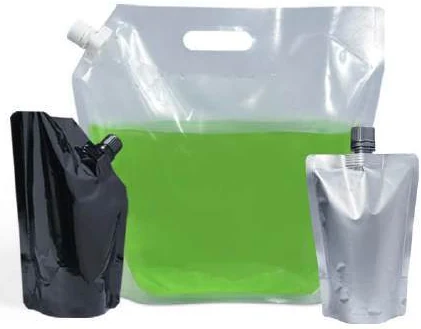
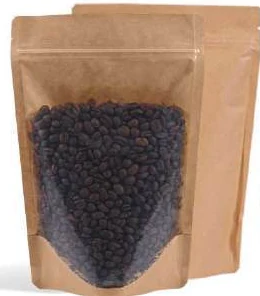
The catalogue includes kraft paper pouches and jar-shaped zipper pouches. These examples show different physical constructions; they are not interchangeable specifications. A brown or white paper outer provides a distinctive surface, while a clear front or window can reveal the contents. Specify the product-contact layers separately from the paper appearance. Compare the print contrast, window location and zipper position on a filled sample.
| Format reference | Material or construction to clarify | Details to include in the brief |
|---|---|---|
| Kraft paper pouches | Kraft or paper outer with a product-specific inner construction; paper appearance does not establish a plastic-free composition. | Paper colour and surface preference; full layer structure and thickness. |
| Jar-shaped zipper pouches | Clear or frosted flexible pouch construction with a zipper; the jar shape is a profile, not a rigid container. | Usable cavity and narrowest opening; die-cut outline and corner radii. |
Use the reference pictures to identify the base, side panels, window or opening that you mean. A picture cannot supply the missing dimensions or material layers. If a photograph shows a finish or closure you do not want, state that difference explicitly; otherwise a visual reference can introduce an unintended requirement.
Complete the record before requesting the next sample
- Attach the usable cavity and handle arrangement on a drawing. Identify the product or SKU and the date of the observation.
- Record the actual product envelope and carrying action. Keep confirmed information separate from proposed values and questions for the supplier.
- Add the actual fill weight or volume, the dimension convention, material proposal and intended closure. Include the number of designs and quantity per design when requesting a quotation.
- State which question the next drawing, sample or quotation must resolve. A change of size, closure or material should remain visible alongside the earlier reference.
This record makes the next conversation specific. It lets the design, purchasing and packing teams work from the same proposed item and shows which decision still needs evidence. Review the related product pages for format details, or prepare a custom packaging brief with the unresolved requirements.
Choose for the actual gift programme
Choose a dori eyelet pouch when the qualified construction, string action and filled presentation suit the contents and buyer. Choose a paper bag when its tested carrying arrangement, inner fit and complete economics better meet the brief. Preserve the approved load and contents boundaries for repeat orders.
Send Navkar Poly Print the contents, dimensions, mass, presentation requirements, quantity by design and destination pattern. Request a dori eyelet proposal with clear evidence needs. Clarify paper-bag sourcing separately; paper-bag manufacturing is not part of Navkar's confirmed catalogue.
Sources and scope.
These references support the technical discussion. Product photographs illustrate formats; the material, dimensions and suitability of the proposed pack are confirmed for each project.
- Guidelines for High-Quality Paper Carrier Bags, January 2023
Ask for complete carrier performance evidence. Paper-industry guidance; no dori comparison, load rating or project conformity.
- The Paper Bag's quality overview
Primary supplier or technical reference for the linked format or component question; no Navkar capability, test outcome or shelf-life claim is transferred.
Let’s discuss your product.
Share your contents, dimensions, filling method, quantity and delivery destination. We’ll work through the proposed packaging specification with you.
Create a packaging brief