Build a snack packaging trial dossier before requesting a production proposal. Include the actual finished snack, quantity range, packing route, handling concerns and intended customer task. A complete dossier lets the supplier identify a meaningful sample route instead of guessing from a product name and a reference photograph.
Begin with the finished snack reference
Identify the product form, formulation revision and meaningful physical variation. For makhana, note representative piece distribution and finished seasoning condition. For namkeen mixtures, identify component groups that affect movement or volume. Use the actual product owner's information rather than a generic category description.
Record target quantities by SKU and the intended sale format. State whether the product is single-use, family-size or part of an assortment. Keep confidential information appropriately controlled through the normal procurement process, while sharing enough physical and process detail for a useful proposal.
Make the dossier useful to different decision owners
Organise the file around questions rather than the order emails happened to arrive. Product owners need to recognise the finished snack. Packing owners need the actual route and interfaces. Procurement needs a commercial scope. The supplier needs to see how those requirements combine into one proposed component.
Give each section an accountable owner and release state. A confirmed quantity can sit beside a provisional feature preference without ambiguity if the status is visible. Avoid a dossier in which every attachment appears equally authoritative merely because it is included in one folder.
Use an index that names each reference, its revision and the decision it supports. A product sample photograph may explain appearance, a dimensioned drawing identifies geometry and a technical report supports its stated test conclusion. These records are complementary; collecting them does not make them interchangeable.
For an illustrative enquiry, the product identity and launch quantity may be confirmed while final artwork remains in development. The supplier can discuss sample geometry within that scope, with printed release waiting for approved content. This permits useful progress without inventing an approval that the business has not yet completed.
Connect the product to the packing operation
Identify the in-house or co-packing route and its technical owner. Include the relevant machine-interface documents for rollstock or premade pouches. Mark missing line information as a dependency. Avoid inserting assumed reel, mouth or speed limits merely to make the dossier appear complete.
Ishida's snack resource separates weight, damage and presentation concerns. Use that separation to define trial tasks. The supplier needs to know whether the open question is capacity, product handling, closure access or graphic presentation; those questions may require different samples.
Prioritise the open question before ordering samples
Rank unresolved questions by the decisions they block. If the snack quantity cannot enter the current mouth arrangement, a print mock-up is unlikely to resolve the first problem. If physical fit is established but variant identity is unclear, another assortment of empty pouches may add little value.
Write one decision statement for each proposed sample. Examples include comparing access at the intended quantity, observing the closing region after transfer or checking a defined panel arrangement when filled. Name the evidence that would allow the sample to advance and the owner who can make that decision.
Keep dependencies visible. A machine-interface trial needs the actual line owner and relevant component information. A product-condition investigation needs a defined assessment. A customer-use observation needs the intended serving task. Sample availability alone does not close those dependencies.
An original planning table can add three fields to the evidence index: first question, sample needed and next decision. This keeps a broad packaging project manageable without reducing the final approval to one convenient photograph or a single overall judgement that hides unresolved tasks.
Use a snack evidence index
| Dossier section | Required reference | Decision supported |
|---|---|---|
| Finished product | Product ID and representative sample | Application understanding |
| Packing | Actual route and interface information | Component proposal |
| Physical fit | Quantity and occupied-space observations | Sample size range |
| Handling | Stage observations or defined concern | Relevant trial plan |
| Customer use | Opening and serving task | Feature proposal |
| Graphics and route | SKU index and destination requirements | Complete commercial scope |
This original index turns separate emails into one usable enquiry record. Each section should have an owner and a clear release state so the supplier can distinguish a requirement from a provisional preference.
Check whether the dossier contains superseded references before circulation. Keep them in the controlled history if needed, but identify the current authority in the index. Two drawings with similar names can otherwise generate two different sample proposals. A short reconciliation before enquiry is usually more useful than asking the supplier to interpret an uncontrolled folder after quotations have already begun.
Identify the technical questions honestly
Ask what material and complete-pack evidence is needed for the actual product and storage conditions. Do not prescribe a universal laminate or storage duration from another snack's brochure. Keep closure performance, formulation suitability and shelf-life work under the responsible technical teams.
If breakage is the concern, include stage observations. Ishida's stick-snack document demonstrates why geometry and integrated handling matter. A request for “strong packaging” does not identify where the actual product first changes condition.
Separate evidence types in the proposal review
Ask what each offered document actually demonstrates. A material property report describes its specimen and conditions. A complete-pack assessment describes a particular construction and method. A filling observation concerns the identified product and operation. The dossier should retain these scopes beside the documents.
For a fragile snack, a material-strength value cannot locate when product breakage occurs. Stage observations are needed for that investigation. Similarly, an acceptable opening demonstration does not establish a storage duration. Link a conclusion only to evidence that addresses its mechanism and conditions.
When a supplier proposes a different construction, identify which existing observations remain relevant and which require renewal. A change in panel geometry may affect graphic review and carton arrangement, while another change may require separate technical assessment. Have the responsible owners decide rather than assuming every previous result transfers.
Use a proposal comparison with plain outcomes: supported, awaiting specified evidence or outside the current scope. Avoid a numerical score whose apparent precision conceals missing inputs. Procurement can then explain why a proposal with an attractive component price still has an unresolved launch dependency.
Make the sample request decision-specific
Ask for samples that can resolve the open tasks. A fit question may need unprinted candidates, while a seam-visibility question needs the correct feature arrangement and panel map. Identify differences between development samples and the production proposal in the internal review file.
For an illustrative request, a buyer could ask for two dimensioned samples to compare closure clearance at the intended namkeen quantity, followed by a complete printed approval after size selection. That is a defined sequence; it does not presume sample availability, lead time or commercial terms.
Close the handover with a controlled release index
Before a production order, reconcile the product, drawing, construction, artwork and packing-route references. Confirm that the quotation covers the same versions. If a development sample differed from the final proposal, record the difference and the relevant approval that closed it.
Create an illustrative release row such as: snack SKU S1, product revision P3, drawing D2, construction reference M2 and complete artwork A4. These fictional identifiers show how a matched record works. Their value lies in traceability, not in any particular numbering convention.
Keep commercial assumptions separate from technical acceptance. The order quantity, destination and outer-packing scope determine the quotation request. Product suitability and pack performance follow the relevant evidence. A favourable freight quote cannot close a technical question, and a useful sample does not establish delivered commercial economics.
Retain a short decision history with rejected or deferred options and reasons. Future teams can then understand why the selected proposal advanced and what would trigger another review. The dossier becomes a practical repeat-order reference, while a changed snack, route or customer task can reopen the specific affected decision instead of restarting an undocumented search for the usual pouch.
Snack packaging approval: a practical specification example
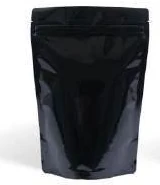
A snack brand is comparing an upright pouch with a flexible pack supplied from rollstock. Use the actual snack, since bulky pieces can settle or break differently from a powder or grain. Record the filled volume, the amount of clear closing space and the retail presentation. A resealable format also needs to be checked after part of the product has been consumed.
For this decision, start with the actual snack and current drawing. The useful output is a project record that identifies the approved fill and format. Put that output beside the relevant quotation, drawing or sample rather than leaving it in a separate email. This is an illustrative decision exercise, not a report of a completed customer trial.
Product references to make the discussion concrete
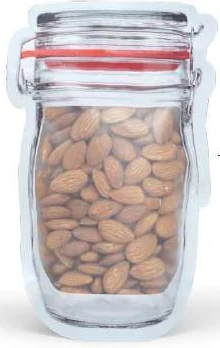
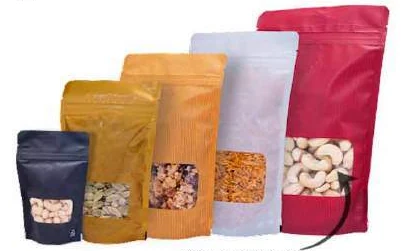
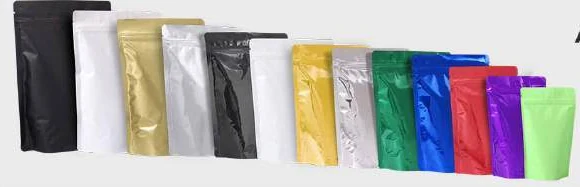
The catalogue includes window pouches and transparent stand-up pouches. These examples show different physical constructions; they are not interchangeable specifications. A window reveals part of the product while retaining an opaque area for artwork. Define its shape and location on the dieline, then check it at the intended fill level. An empty mockup can make a window appear better positioned than it is after the product settles.
| Format reference | Material or construction to clarify | Details to include in the brief |
|---|---|---|
| Window pouches | A transparent window combined with paper-look or opaque flexible panels; confirm the full structure and product requirements. | Window width, height and location; product visibility at full and low fill. |
| Transparent stand-up pouches | Transparent flexible film or laminate; optical clarity does not identify its barrier properties or complete composition. | Required clear viewing area; print coverage and opaque backing needs. |
Use the reference pictures to identify the base, side panels, window or opening that you mean. A picture cannot supply the missing dimensions or material layers. If a photograph shows a finish or closure you do not want, state that difference explicitly; otherwise a visual reference can introduce an unintended requirement.
Complete the record before requesting the next sample
- Attach a project record that identifies the approved fill and format. Identify the product or SKU and the date of the observation.
- Record the actual snack and current drawing. Keep confirmed information separate from proposed values and questions for the supplier.
- Add the actual fill weight or volume, the dimension convention, material proposal and intended closure. Include the number of designs and quantity per design when requesting a quotation.
- State which question the next drawing, sample or quotation must resolve. A change of size, closure or material should remain visible alongside the earlier reference.
This record makes the next conversation specific. It lets the design, purchasing and packing teams work from the same proposed item and shows which decision still needs evidence. Review the related product pages for format details, or prepare a custom packaging brief with the unresolved requirements.
Complete the enquiry with actual commercial inputs
Give quantities by SKU, delivery destination, required documentation and outer-packing expectations. For India-wide or nearby export enquiries, compare actual freight scope and quotations rather than assuming the same delivered economics. A Sri Lanka candidate needs its own route assessment.
Send Navkar Poly Print the snack evidence index and its supporting records. Ask the proposal to state the construction, sample dependencies and excluded or pending evidence clearly. The result should be a pack that can be reviewed against the actual snack task before a production order is approved.
Sources and scope.
These references support the technical discussion. Product photographs illustrate formats; the material, dimensions and suitability of the proposed pack are confirmed for each project.
- Ishida snack food packaging applications
Equipment manufacturer treats pack weight, damage and pack presentation as separate snack-line concerns.
- Ishida stick-snack product packaging solutions
Demonstrates the importance of product geometry and integrated handling for a fragile snack.
Let’s discuss your product.
Share your contents, dimensions, filling method, quantity and delivery destination. We’ll work through the proposed packaging specification with you.
Create a packaging brief