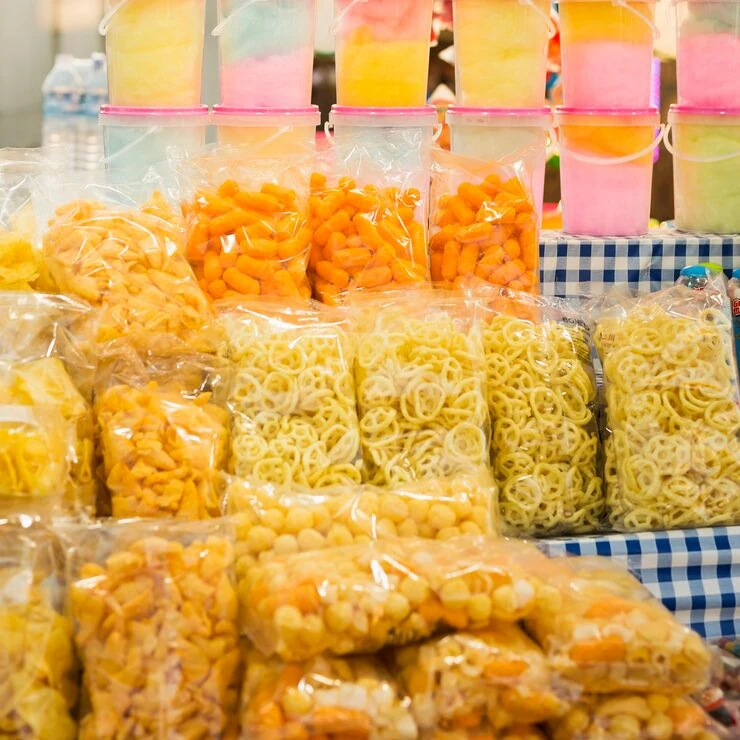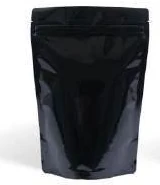
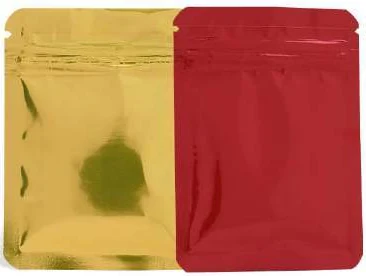
Choose a makhana pouch size from the space occupied by the actual finished product, then confirm filling, closure and handling on samples. A weight such as 50 g or 100 g does not establish one universal size. Roasting, seasoning, piece distribution and normal settling should be represented in the trial brief.
Define the makhana being packed
Record the actual product description: plain or seasoned, physical piece range and any variation the product owner expects. Provide representative samples from the finished product, not only a handful selected for photography. State the declared net quantity and the intended packing route.
Include the sales task: single-use snack, repeated-use family pack or another defined format. The same ingredient can require a different opening, display or outer-packing arrangement across those tasks. Keep any material or storage-life requirement under product-specific technical review rather than assuming that a familiar snack laminate is sufficient.
Separate piece size from the space between pieces
A pouch holds both the snack and the spaces between its pieces. Large, irregular pieces can arrange differently from smaller pieces at the same net mass. Treat piece distribution, actual occupied volume and the proposed pouch geometry as three related observations. A photograph of a handful cannot replace the latter two.
Jha and Sharma's popped gorgon nut study examined conditioned material and milling fractions. Its physical measurements distinguished loose and packed bulk-density methods. The study concerned milling, so its values cannot specify a seasoned snack pouch. It does show why the sample condition and settling method belong beside any density figure.
Ask the product owner to provide an ordinary production sample and the meaningful variation they expect. If the product includes a range of piece sizes, select the comparison sample under their procedure. Do not pick only the largest or most attractive pieces and call them representative.
Record whether the sample was taken before or after the final seasoning stage. The packing decision concerns the finished material that reaches the filler. An earlier process sample can be informative, but identify the difference and keep the fit decision conditional until the relevant finished product is available.
Observe occupied volume consistently
Use a repeatable container-fill method to screen occupied volume. Record whether product was loose poured or settled through a stated procedure. Keep piece distribution and seasoning condition with the observation. Do not force the product into a smaller volume to justify a preferred graphic silhouette.
Use the observation to request a range of unprinted sample sizes. It is a screening input, not a complete pouch geometry. The supplier still needs to consider folds, seals, access and the actual product. Compare candidate pouches using the same quantity and normal handling condition where practical.
Make the volume observation repeatable
Choose a container with a readable volume scale and record its identity. Weigh the intended quantity using the buyer's normal controlled equipment, transfer it by the agreed method and read the occupied volume. Record whether the material was left as poured or settled in a defined way. Avoid pressing pieces down to obtain a convenient answer.
An illustrative screening record might contain three readings of 820, 850 and 830 mL for equal 50 g portions. The arithmetic mean is 833 mL, rounded from 2,500 divided by three. These invented readings teach the record format; they are neither makhana density data nor a proposed commercial tolerance.
The spread is useful information. Investigate whether it reflects product variation, container reading or a changed transfer method before using the mean alone. Preserve the individual observations because they reveal more than a single capacity number.
Then take the actual product into dimensioned pouch candidates. A rigid container does not reproduce a flexible pouch mouth, seal region or filled profile. Use volume screening to choose a sensible sample range, and use filled samples to decide whether that range answers the packing task.
Use a makhana fit card
| Field | What to record |
|---|---|
| Product identity | Finished product, seasoning and representative piece range |
| Quantity | Intended net mass for this SKU |
| Volume observation | Method, product condition and observed occupied space |
| Filling behaviour | Mouth access, bridging and product near closure |
| Closed appearance | Front, base, clear region and actual product level |
| Handling outcome | Condition before and after the defined task |
This original card keeps the physical product in the size discussion. If several flavours share one pouch size, record which representative versions were assessed rather than assuming the easiest-flowing product covers all of them.
Assess working space before judging the photograph
Distinguish the space occupied after settling from the space needed during filling. The product must enter the mouth, clear the intended closure region and reach its filled position. A pouch that looks acceptable after manual rearrangement may be awkward during the intended operation.
For each candidate, record the entry method, any permitted product adjustment and the condition immediately before closure. If an operator pauses or moves pieces away from the closing region, describe that action. It may explain a difference between a demonstration sample and the proposed packing route.
Use a simple decision sequence. If entry is restricted, examine mouth access and the transfer interface. If entry is comfortable but the product occupies the closing region, review the working height and fill behaviour. If both are acceptable but the filled face is unsuitable, review presentation separately. These observations guide the supplier towards the relevant geometry question.
Keep product damage observations alongside the fit record, using the product owner's assessment method. More empty space does not automatically mean less damage, and a tighter-looking pouch does not establish better protection. The complete product, pouch and handling sequence require their own comparison.
Review product handling along the line
Ishida's snack resource treats weight, damage and presentation as distinct concerns. Apply that separation to the trial: record the target quantity, the pack shape and the product condition independently. A neat pouch can still contain an unacceptable proportion of damaged pieces according to the buyer's own criteria.
Check product before filling and after the defined packing sequence. Use a product-owner-approved assessment rather than inventing a breakage threshold. If damage appears, identify the stage where it first becomes visible before asking the converter to alter the pouch.
Record what each sample represents before sharing it. An empty pouch, a manually filled mock-up and an observed line sample answer different questions. Label them accordingly and retain the drawing revision. A reviewer who receives an attractive mock-up without that context may assume the filling task has already been demonstrated, leaving a gap between the size decision and the intended operation.
Confirm display and carton tasks
If the format must stand, check the intended quantity on the actual shelf arrangement. If supplied flat or hung, assess that presentation. Pack the representative closed pouches into the proposed carton without forced compression and record the arrangement.
Ishida's fragile-snack application page highlights gentle handling as a product-specific issue. It does not establish makhana performance or a particular pack structure. Your trial must connect the actual product with its complete handling route.
Decide which candidate should advance
Summarise each candidate against the same tasks: entry, closure access, filled appearance, customer removal and outer-pack arrangement. Name the task that disqualifies a candidate instead of assigning an unexplained overall score. This helps purchasing understand why the smallest-looking option may require further work.
An illustrative decision could retain candidate B for a line trial because its closing region stayed accessible, while candidate A required repeated manual rearrangement. Candidate C might remain open because its carton arrangement has not been reviewed. That is a reasoned sample decision rather than a claim about universal makhana pack dimensions.
When comparing commercial proposals, retain the dimensioned sample reference and distinguish internal dimensions from the supplier's stated drawing dimensions. Confirm which dimensions purchasing will order and which filled observations the sample demonstrated. A volume estimate should never become a purchase description on its own.
Keep an approved filled reference, photographs with orientation, and the product sample identity in the enquiry file. These give future reviewers a practical way to recognise a changed product or pouch. If the product changes later, revisit the affected fit tasks rather than assuming the original size decision remains valid.
Makhana pouch size: a practical specification example
A snack brand is comparing an upright pouch with a flexible pack supplied from rollstock. Use the actual snack, since bulky pieces can settle or break differently from a powder or grain. Record the filled volume, the amount of clear closing space and the retail presentation. A resealable format also needs to be checked after part of the product has been consumed.
For this decision, start with the loose volume of the actual makhana at target weight. The useful output is a filled size comparison with headspace and base dimensions. Put that output beside the relevant quotation, drawing or sample rather than leaving it in a separate email. This is an illustrative decision exercise, not a report of a completed customer trial.
Product references to make the discussion concrete
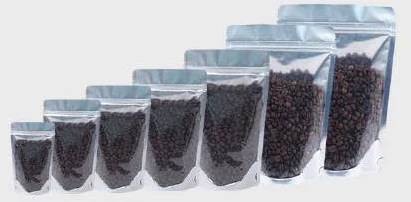
The catalogue includes window pouches and transparent stand-up pouches. These examples show different physical constructions; they are not interchangeable specifications. A window reveals part of the product while retaining an opaque area for artwork. Define its shape and location on the dieline, then check it at the intended fill level. An empty mockup can make a window appear better positioned than it is after the product settles.
| Format reference | Material or construction to clarify | Details to include in the brief |
|---|---|---|
| Window pouches | A transparent window combined with paper-look or opaque flexible panels; confirm the full structure and product requirements. | Window width, height and location; product visibility at full and low fill. |
| Transparent stand-up pouches | Transparent flexible film or laminate; optical clarity does not identify its barrier properties or complete composition. | Required clear viewing area; print coverage and opaque backing needs. |
Use the reference pictures to identify the base, side panels, window or opening that you mean. A picture cannot supply the missing dimensions or material layers. If a photograph shows a finish or closure you do not want, state that difference explicitly; otherwise a visual reference can introduce an unintended requirement.
Complete the record before requesting the next sample
- Attach a filled size comparison with headspace and base dimensions. Identify the product or SKU and the date of the observation.
- Record the loose volume of the actual makhana at target weight. Keep confirmed information separate from proposed values and questions for the supplier.
- Add the actual fill weight or volume, the dimension convention, material proposal and intended closure. Include the number of designs and quantity per design when requesting a quotation.
- State which question the next drawing, sample or quotation must resolve. A change of size, closure or material should remain visible alongside the earlier reference.
This record makes the next conversation specific. It lets the design, purchasing and packing teams work from the same proposed item and shows which decision still needs evidence. Review the related product pages for format details, or prepare a custom packaging brief with the unresolved requirements.
Request a size proposal that can be checked
Send Navkar Poly Print the makhana fit card, product sample, intended quantity and packing-interface details. Ask for dimensioned sample candidates and identify the review tasks before artwork is frozen. The approved size should be the one supported by the complete product-filled record, with technical material and storage evidence assessed separately.
Sources and scope.
These references support the technical discussion. Product photographs illustrate formats; the material, dimensions and suitability of the proposed pack are confirmed for each project.
- Ishida snack food packaging applications
Equipment manufacturer treats pack weight, damage and pack presentation as separate snack-line concerns.
- Ishida bread-snack handling
Fragile snack handling is an application-specific concern; no performance numbers transferred.
- Jha and Sharma: physical characterisation of popped gorgon nut
Conditioning and milling study supports keeping sample condition and density-observation method identified; does not prescribe seasoned makhana pouch size.
Let’s discuss your product.
Share your contents, dimensions, filling method, quantity and delivery destination. We’ll work through the proposed packaging specification with you.
Create a packaging brief