
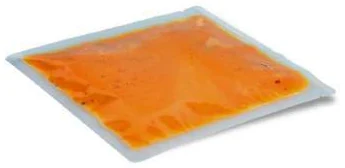
A sauce pouch storage trial starts with a study question and an authorised protocol. Procurement can organise the samples and records, while the food technical team defines what the observations mean and what evidence is needed for a shelf-life decision.
Separate a target from a demonstrated result
"We need six months" is a commercial target. It does not define storage conditions, test intervals, product acceptance or the packaging assembly covered. Ask the responsible product team to turn the target into a written study brief. Do not substitute a converter's material data sheet for that work.
Identify the sauce formula, manufacturing batch and process reference. Name the pouch body, fitment, cap and final closure. If the product is held in a different container while artwork is being finalised, record that difference; the result is not automatically evidence for the eventual printed pack.
Turn the commercial target into a specific question
Ask the product owner what proposed statement the study must support. Identify the sauce, manufacturing process, quantity, assembly and intended conditions. The requested duration is one input to that programme, not an acceptance criterion by itself.
Keep unopened storage distinct from product use after opening. Those scenarios involve different exposure and handling. If both belong to the proposition, the technical owner should define their relevant evidence separately rather than allowing one result to cover the other by implication.
For an illustrative planning statement, the business may want evidence for the defined product in the final assembly under its intended distribution and storage route. The owner then defines methods, sampling and interpretation. This article does not select a microbiological programme or establish food-process limits.
Record any early material substitution. Samples held in another container while artwork develops may answer a product question but do not automatically represent the eventual complete pack. The study owner should decide what can be retained from that evidence and what requires final-assembly assessment.
Give observations their own categories
Separate packaging observations from product conclusions. A pouch may look tidy while the product needs further assessment, and an apparent surface change may require investigation before its significance is understood. The study owner should define sampling and evaluation methods appropriate to the intended application.
Viking Masek's line description shows why filling and closing references belong with sample identity. A study using an unrecorded closure route leaves an avoidable gap. Collect the relevant process record when the trial samples are made, not weeks later.
Keep quality changes and packaging findings distinct
Use separate categories for appearance, relevant pack function and product outcomes defined by the protocol. A change can require investigation without its significance being evident from a photograph. Retain actual observations and let the accountable team interpret them.
Mayonnaise-emulsion research has examined storage time and temperature alongside measured flow properties in specified samples. Such work demonstrates that product outcomes need defined methods and conditions. It does not provide a storage duration for another sauce or qualify a pouch.
Record technical report references beside the applicable sample group. If an assessment is destructive, identify which samples were used and what remains available for other questions. A pack opened for product examination cannot later serve as an untouched reference.
For an illustrative observation, a surface change and an unusual product result may appear at the same retrieval. The record should retain them separately until relevant examination supports an interpretation. Their coexistence alone does not show that one caused the other.
Give each retrieved result the actual observation date and relevant sample history. Storage time is part of the evidence, so a late retrieval should not be recorded as though it occurred on schedule. The technical owner can assess the deviation when the true sequence is visible.
Also record whether a sample was moved, opened or used for another assessment before retrieval. Its later finding may remain informative, but it represents that actual history. Clear custody notes prevent a convenient spare from silently replacing an untouched protocol sample and preserve the information needed for a credible interpretation.
Plan storage, retrieval and decisions together
Make a calendar showing sample groups, authorised conditions, retrieval dates and reviewers. Keep an untouched retained reference where the study protocol requires it. Define how damaged, missing or deviating samples will be recorded rather than silently replacing them with convenient alternatives.
SEE lists varied assemblies in its spout pouch portfolio. Results should remain attached to the tested assembly. A change to cap, structure, size, process or formula should prompt the technical owner to decide whether additional work is needed. Procurement's useful output is a complete evidence file with a documented decision, not an unsupported expiry claim.
Design custody and retrieval before samples are made
Give sample groups identities that survive storage and retrieval. Link each to product batch, formula, actual filling and final closure, construction and components. Record the planned role and permitted handling under the protocol.
Make the calendar operational: who holds the samples, who retrieves them, which assessment follows and where the result is recorded. A scheduled date without an owner can leave a study gap that cannot be repaired by relabelling a later observation.
An explicitly illustrative stock plan might reserve three groups of six identified packs for different protocol-defined roles, giving eighteen packs in total. These invented counts explain allocation arithmetic; they are not a recommended sample size or schedule. The actual quantities must follow the technical plan.
Record deviations, missing material and actual retrieval dates. Ask the study owner whether the evidence remains useful and what action follows. A deviation can be interpretable when visible. Backdating or silently substituting differently handled material removes information the owner needs to judge it.
Allocate storage samples by their actual role
Reserve a column for the reason each sample exists. An illustrative plan might distinguish a retained baseline, a scheduled observation sample and a separate investigation reserve, with quantities set by the technical protocol. This stops a convenient spare being mistaken for an equivalent study sample after different handling. Record who may open or move each group and how its status changes afterwards. If a retrieval is missed, preserve the actual date and ask the study owner to assess the deviation. Backdating the record would make the file less useful precisely when interpretation matters most.
Connect the conclusion to the tested configuration
Before interpreting results, reconcile every report with its actual sample group and condition record. Check whether the proposed final commercial assembly matches the tested one. A familiar front design does not establish that cap, fitment, construction or final closing route is unchanged.
Write the technical conclusion through the authorised study owner, with its scope and limitations. Procurement should retain the signed or otherwise controlled decision and ensure the commercial claim does not exceed it. A favourable trend is not automatically approval of the requested duration.
If formula, size, component or process changes, map the change to the relevant evidence. The owner may retain some reports and require additional work elsewhere. Record that rationale rather than restarting everything automatically or extending the previous conclusion by default.
At order handover, identify which pack samples were developmental and which final assembly the decision covers. The study file then supports a current product-and-pack application, with a clear route for future changes and no unsupported expiry claim created by purchasing shorthand.
Record the study question and sample history
Use this original worksheet with your product and supplier team. Give each row a named owner and evidence reference; a blank answer remains an open decision.
| Record | What to enter and why |
|---|---|
| Study question | State the intended storage claim or uncertainty and identify the technical person responsible for interpreting results. |
| Sample identity | Link sauce batch, formula, process record, pouch structure, fitment, cap and final closure references. |
| Condition plan | Record authorised conditions, retrieval intervals, quantities and responsibilities without inventing a universal schedule. |
| Observation record | Separate packaging appearance and function from product evaluations defined by the approved study protocol. |
| Decision scope | Record conclusions, limitations, deviations and changes that require further technical review. |
Foodservice handle: a practical specification example
A liquid-food pack needs a coherent filling, sealing and dispensing plan. A flat portion sachet, retort pouch and capped spout pouch are different briefs even when they contain a similar recipe. Record the product flow, fill volume, intended treatment and how the user empties the pack. Do not transfer a process condition or storage expectation from a reference photograph.
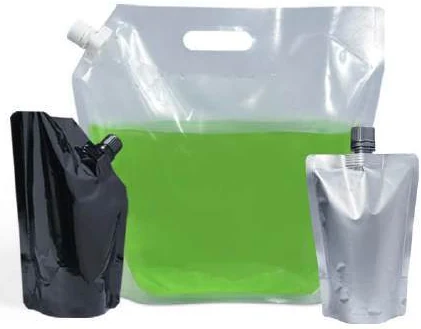
For this decision, start with the larger fill and handling method. The useful output is the handle, spout and filled envelope reviewed together. Put that output beside the relevant quotation, drawing or sample rather than leaving it in a separate email. This is an illustrative decision exercise, not a report of a completed customer trial.
Product references to make the discussion concrete
The catalogue includes spout pouches and retort pouches. These examples show different physical constructions; they are not interchangeable specifications. A fitted spout provides a controlled opening for dispensing. The reference range includes compact pouches and larger handled formats. Specify the product, fill volume, spout location and cap before developing the pouch shape; a corner spout and a top-centre spout require different layouts.
| Format reference | Material or construction to clarify | Details to include in the brief |
|---|---|---|
| Spout pouches | Flexible liquid-pack laminate with a fitted spout and cap; contact-layer and closure compatibility are reviewed for the formulation. | Fill volume and product viscosity; spout bore, position and cap. |
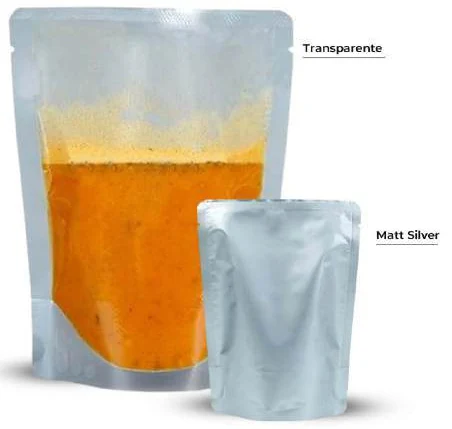
| Retort pouches | Multilayer retort laminate, with transparent or opaque options subject to product and process review. | Food formulation and fill weight; required process time and temperature. |
Use the reference pictures to identify the base, side panels, window or opening that you mean. A picture cannot supply the missing dimensions or material layers. If a photograph shows a finish or closure you do not want, state that difference explicitly; otherwise a visual reference can introduce an unintended requirement.
Complete the record before requesting the next sample
- Attach the handle, spout and filled envelope reviewed together. Identify the product or SKU and the date of the observation.
- Record the larger fill and handling method. Keep confirmed information separate from proposed values and questions for the supplier.
- Add the actual fill weight or volume, the dimension convention, material proposal and intended closure. Include the number of designs and quantity per design when requesting a quotation.
- State which question the next drawing, sample or quotation must resolve. A change of size, closure or material should remain visible alongside the earlier reference.
This record makes the next conversation specific. It lets the design, purchasing and packing teams work from the same proposed item and shows which decision still needs evidence. Review the related product pages for format details, or prepare a custom packaging brief with the unresolved requirements.
Put the decision into practice
1. Commission the protocol. Ask the food technical team to translate the desired shelf life into an approved study and sample plan.
2. Produce identified samples. Capture the real product and packaging revisions at filling so the study can be traced later.
3. Maintain the calendar. Assign sample custody, retrieval and review tasks; record departures from the agreed plan immediately.
4. File the interpretation. Retain the authorised conclusion with its scope and limitations before making a commercial claim.
Give Navkar Poly Print the study scope and pack identity requirements when arranging sauce pouch samples for your technical team.
Sources and scope.
These references support the technical discussion. Product photographs illustrate formats; the material, dimensions and suitability of the proposed pack are confirmed for each project.
- Viking Masek: liquid pouch filling sequence
Equipment maker describes coordinated pouch handling, liquid filling and closure; no Navkar equipment or performance implied.
- SEE: Spout Pouches technical sell sheet
Illustrates spout-position, handle and shape options in another manufacturer portfolio; component selection remains project-specific.
- Mayonnaise emulsions: storage and rheological properties
Primary indexed study describes storage-condition effects on measured flow in tested emulsions; does not provide sauce shelf life or pouch approval.
Let’s discuss your product.
Share your contents, dimensions, filling method, quantity and delivery destination. We’ll work through the proposed packaging specification with you.
Create a packaging brief