
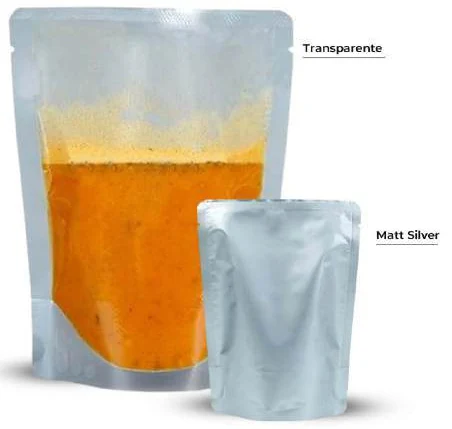
Specify a sauce spout pouch by describing the sauce, the filling process and the intended use before choosing the printed shape. The useful first deliverable is a process brief that lets the converter, filler and food technical team identify what must be demonstrated together.
Describe the sauce beyond its name
"Tomato sauce" is a commercial description, not a packaging specification. Give the technical reviewer the actual formulation reference, its revision, whether the product is smooth or contains pieces, and relevant product information your technical team can release. Share confidential details through an agreed channel rather than placing a recipe in a general quotation email.
Record whether the pack serves as a refill, a table dispenser or a foodservice ingredient. These uses create different questions about grip, cap access, pouring and how much product remains after use. Do not copy a film structure from another sauce solely because its colour or selling weight looks similar.
Make flow information interpretable
Ask the product team to describe the finished sauce and any relevant particles through its controlled specification. If they provide a viscosity result, retain the measurement method, temperature and other stated conditions. A single number without its basis is difficult to compare with another formulation or process stage.
Gao and colleagues' tomato-paste study used controlled preparation and rheometry. Its tested pastes showed decreasing apparent viscosity as shear rate increased, and preparation affected measured behaviour. The laboratory findings explain why a product name or an unqualified viscosity value cannot specify a commercial sauce pouch.
Keep the producer's actual formulation and process information authoritative. Do not copy the study's treatments or values into the enquiry as operating instructions. The useful procurement action is to preserve the conditions behind the product data and let the relevant technical owners assess the proposed assembly.
If the sauce contains pieces or fibres, identify the meaningful range and representative sample. A smooth development liquid cannot demonstrate the access or dispensing task of a different finished product. Record the limitation and the next representative material needed.
Map every condition the filled pack encounters
List filling conditions separately from subsequent processing, cooling, storage and transport. Give measured or authorised ranges where available and identify unknowns. A requested shelf life is an objective for the food business to validate; it is not evidence that a proposed pouch will deliver it.
Viking Masek describes coordinated handling, filling and closing in a premade liquid pouch line. This is why a pack quotation should identify the final filling interface. Obtain written technical agreement before treating any sample as suitable for the real process.
Draw the sequence that creates the finished assembly
Map the component received by the filler, the product entry point and the operation that completes closure. Identify subsequent processing and handling from the food business's authorised description. The pack must be considered in the conditions it actually encounters, not only as an empty printed sample.
Give each interface a reference and owner. The converter's drawing identifies the component proposal, the packing operation confirms its interface and the product/process owner supplies the required conditions. Procurement can coordinate those records but should not infer one team's approval from another team's document.
For an illustrative project, a candidate may receive dimensional approval while the filler still needs to confirm the actual filling opening. Keep both statuses visible. Calling the pouch approved at that point would hide a specific unresolved interface.
Where hot filling, retort, aseptic or another specialised route is required, state it as an explicit requirement and request the relevant capability response and evidence. None follows from the pouch's shape, an attractive spout sample or a familiar material name. Do not release a complete-system claim before the accountable technical review.
Keep the product and sample labels visible during review. A smooth substitute, actual particulate sauce and empty component are different evidence objects. Labelling them clearly helps each reviewer use the correct reference and prevents a geometry aid from being mistaken for a demonstration of the finished sauce.
Approve dispensing as a separate requirement
Use a filled prototype to review the intended pour into the actual receiving container. Note whether the user supports the base, grips a side panel or squeezes the body, and whether the cap can be returned without product obstructing the interface. The trial should follow the brand's approved product-handling procedure.
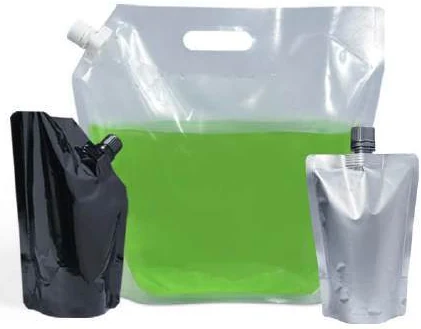
SEE lists different spout locations in its manufacturer portfolio. Treat the location as a drawing decision, with its own filling and user consequences. A promising pour from an empty mock-up does not close the compatibility, integrity or shelf-life questions.
Define the dispensing proposition without selecting by appearance
State whether the customer empties the pack once, pours occasional amounts or follows another approved service task. Identify the receiver, working arrangement and authorised product condition. A general wish for good dispensing does not give a sample reviewer a reproducible task.
Observe opening, grip, product start, transfer and stopping under that proposition. Record what happens before assigning a cause. A continuation after the intended stop can prompt a specific investigation, while an awkward reach to the last product can prompt a different geometry question.
Keep general specification work distinct from a repeated small-dose observation. If the business later needs event-by-event portions, give that work its own fixed-setup plan and measurement review. The specification brief should identify the required task and evidence route rather than imply that a few informal pours validate it.
An illustrative requirement could be ordinary transfer into the buyer's actual vessel with a defined handling sequence. The candidate then needs observation under that sequence and appropriate technical evidence for the complete assembly. A catalogue photograph cannot close either task.
Compare sauce requirements with complete sample references
For an illustrative brief, take a smooth cooking sauce intended to refill a customer's container. The buyer records formula S-04, a proposed corner-spout drawing and the actual receiver. The process-temperature row remains open until the food technical lead supplies an authorised reference. That open row prevents the proposal becoming a bulk purchase specification, while dispensing mock-ups can still be compared for geometry. When the process reference arrives, reviewers assess the same identified assembly. This sequence preserves useful design progress without treating an incomplete commercial enquiry as proof of application suitability.
Make the specification orderable and maintainable
Separate manufacturing dimensions and component identities from observed functional requirements. The supplier needs an agreed drawing and construction, while the buyer needs to know which sample and task support the selected arrangement. Preserve both in the release index.
For an illustrative index, sauce S2, drawing D4, fitment F1, cap C2 and construction M3 can form one proposed assembly. These fictional references show the relationship. If the cap changes later, review its relevant interface and evidence rather than assuming the rest of the pack's familiar appearance covers it.
Record which approval each owner completed. Product compatibility, food process, filling interface, physical use and artwork are related decisions with different evidence. A single unexplained tick is insufficient for a multi-team handover.
Before commercial release, reconcile the quotation with that matched assembly and the actual destination and quantities. Identify differences between development samples and the final proposal. The resulting specification should allow purchasing to order the reviewed component and allow a future change to reopen the affected decision without reconstructing the project from email images.
Record the sauce, process and assembly decisions
Use this original worksheet with your product and supplier team. Give each row a named owner and evidence reference; a blank answer remains an open decision.
| Record | What to enter and why |
|---|---|
| Formula reference | Identify the sauce version and technical contact; record relevant product characteristics without distributing an uncontrolled recipe. |
| Process envelope | List filling, later processing, cooling and storage conditions separately, including the owner of each authorised value. |
| Dispensing task | Describe the receiving vessel, typical dose and whether the pack is emptied once or used repeatedly. |
| Pack interface | Attach the pouch drawing, spout and cap references, filling opening and proposed closure route. |
| Release evidence | List compatibility, integrity, distribution and product-study evidence required before a commercial decision. |
Sauce pouch: a practical specification example
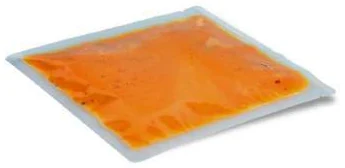
A liquid-food pack needs a coherent filling, sealing and dispensing plan. A flat portion sachet, retort pouch and capped spout pouch are different briefs even when they contain a similar recipe. Record the product flow, fill volume, intended treatment and how the user empties the pack. Do not transfer a process condition or storage expectation from a reference photograph.
For this decision, start with the sauce consistency and intended serving. The useful output is the opening and dispensing action matched to the fill. Put that output beside the relevant quotation, drawing or sample rather than leaving it in a separate email. This is an illustrative decision exercise, not a report of a completed customer trial.
Product references to make the discussion concrete
The catalogue includes spout pouches and retort pouches. These examples show different physical constructions; they are not interchangeable specifications. A fitted spout provides a controlled opening for dispensing. The reference range includes compact pouches and larger handled formats. Specify the product, fill volume, spout location and cap before developing the pouch shape; a corner spout and a top-centre spout require different layouts.
| Format reference | Material or construction to clarify | Details to include in the brief |
|---|---|---|
| Spout pouches | Flexible liquid-pack laminate with a fitted spout and cap; contact-layer and closure compatibility are reviewed for the formulation. | Fill volume and product viscosity; spout bore, position and cap. |
| Retort pouches | Multilayer retort laminate, with transparent or opaque options subject to product and process review. | Food formulation and fill weight; required process time and temperature. |
Use the reference pictures to identify the base, side panels, window or opening that you mean. A picture cannot supply the missing dimensions or material layers. If a photograph shows a finish or closure you do not want, state that difference explicitly; otherwise a visual reference can introduce an unintended requirement.
Complete the record before requesting the next sample
- Attach the opening and dispensing action matched to the fill. Identify the product or SKU and the date of the observation.
- Record the sauce consistency and intended serving. Keep confirmed information separate from proposed values and questions for the supplier.
- Add the actual fill weight or volume, the dimension convention, material proposal and intended closure. Include the number of designs and quantity per design when requesting a quotation.
- State which question the next drawing, sample or quotation must resolve. A change of size, closure or material should remain visible alongside the earlier reference.
This record makes the next conversation specific. It lets the design, purchasing and packing teams work from the same proposed item and shows which decision still needs evidence. Review the related product pages for format details, or prepare a custom packaging brief with the unresolved requirements.
Put the decision into practice
1. Build one brief. Combine product, process and use information in a revision-controlled document so suppliers answer the same application.
2. Resolve feasibility. Have the converter and filling team flag conditions that remain unconfirmed before progressing to artwork investment.
3. Trial the assembly. Use representative product, pouch components and agreed filling conditions; record observations against the named requirements.
4. Release the scope. Approve only the combination supported by the trial, with outstanding studies and owners clearly recorded.
Send Navkar Poly Print a sauce process brief, intended fill quantity and current pouch drawing so the enquiry can begin with a defined technical review.
Sources and scope.
These references support the technical discussion. Product photographs illustrate formats; the material, dimensions and suitability of the proposed pack are confirmed for each project.
- Viking Masek: liquid pouch filling sequence
Equipment maker describes coordinated pouch handling, liquid filling and closure; no Navkar equipment or performance implied.
- SEE: Spout Pouches technical sell sheet
Illustrates spout-position, handle and shape options in another manufacturer portfolio; component selection remains project-specific.
- Gao and colleagues: tomato-paste processing and rheology
Primary laboratory study demonstrates process- and shear-dependent measured flow in tested pastes; no sauce dispensing or food-process limits prescribed.
Let’s discuss your product.
Share your contents, dimensions, filling method, quantity and delivery destination. We’ll work through the proposed packaging specification with you.
Create a packaging brief