
A liquid food pouch process brief should make four responsibilities visible: product, packaging, filling and release. Its purpose is to show where one team's approved information becomes another team's input, with unresolved questions still clearly assigned.
Build the brief around handovers
Begin with a sequence from product preparation through filled-pack dispatch. For each stage, identify the input, the responsible team and the record produced. A converter cannot reconstruct an undocumented food process from the phrase "liquid pouch", and a filler cannot infer the final closing route from a front-panel mock-up.
Record the product version and intended market at the start of the sequence. Keep commercial requests, such as pack quantity or desired launch date, in the same project file but separate from technical acceptance. A deadline is useful planning information; it does not resolve an unassessed product condition.
Draw the handover as an input and an accepted output
For each stage, identify what arrives, what the team does and what record leaves. The product owner supplies a controlled product-and-process brief. The packaging team supplies the proposed assembly. The filler confirms its interface and operating evidence. The release owner reconciles the accepted scope.
These roles can sit within one business or several suppliers. The brief should describe responsibility rather than assume a particular company structure. Procurement needs to know who can answer each unresolved question and which accepted document becomes the next team's input.
An illustrative row might show a dimensioned component proposal received by the filler for interface review, with confirmation pending. That status is more useful than a generic suitable-for-liquid statement. It identifies the next decision without pretending that the supplier's drawing proves compatibility with an undocumented process.
Keep commercial planning alongside the sequence but distinguish it from acceptance. Quantities and target dates help coordination. They do not close a missing technical input or authorise a process condition that the responsible team has not reviewed.
Use evidence states that mean something
Give every technical question one of four states: information requested, under review, demonstrated for the stated scope, or rejected with reason. Avoid a vague "approved" tick beside a topic that actually contains several questions. Dimensional approval and product-process approval should never share an unexplained checkbox.
Viking Masek describes handling, filling and closure as connected line operations. Assign an interface owner wherever different companies supply those operations. That person collects the accepted drawing and component references; they do not replace the specialists' technical decisions.
Break broad topics into reviewable questions
Replace a single closure-approved field with the actual questions the project needs. These may include component identity, filling opening, final closing responsibility and relevant complete-pack evidence. The accountable owners should decide the necessary level of detail for the application.
Give each question a status, evidence reference, owner and next action. Information requested means the input is missing. Under review means it exists but has not received the relevant decision. Demonstrated for scope should identify the scope. Rejected should retain the reason and affected proposal.
An illustrative handover can show approved dimensions with product-process evidence still under review. Keep that split visible in meeting records and quotations. The word approved should not grow to cover unrelated decisions merely because one field is closed.
Record actual decision dates and document versions. A later conversation should not overwrite the history silently. The release copy needs the current authoritative state, while superseded decisions remain traceable enough to explain why an earlier candidate or condition no longer applies.
Keep unanswered interfaces in the project meeting record with a next action and owner. A topic repeatedly discussed without an accountable response can appear settled simply through familiarity. The brief should show whether a decision exists and which document carries it.
Where two teams disagree about scope, write both references and the unresolved question plainly. Ask the authorised owners to reconcile the input and acceptance rather than asking procurement to select the most recent email. Once resolved, update the affected row and issue a matching release copy so the correction reaches the people ordering and operating the component.

Treat the brief as a controlled document
An illustrative handover row could read: "Filling opening: proposed by pack designer; line reviewer to confirm; drawing revision B; response pending." This is more useful than "suitable for our filler" without a reference. The same format can record spout location, final seal responsibility, coding area and finished-pack packing configuration.
SEE's spout pouch portfolio includes different construction options. Link each chosen option to the brief instead of allowing the latest email image to become the specification. When the product or process changes, reopen the affected handovers and record the release decision.
Resolve the interfaces that fall between teams
Look for questions that no single document closes. A designer may specify a fitment while the filler assumes a different filling opening. Marketing may select a cap appearance while the technical file references another component. These are interface discrepancies that the brief should expose.
Use the actual proposed assembly and stage drawings to reconcile them. Have each accountable team confirm its input and acceptance rather than asking the coordinator to infer compatibility. The coordinator keeps the records matched; specialists retain their technical decisions.
For an illustrative discrepancy, a drawing revision can move the final closing region while the line review still references the previous revision. The next action is an affected-interface review, not an unexplained instruction to proceed with the latest image.
Track the outcome in the same row. Record which reference changed, what evidence was renewed and which owner accepted it. This gives procurement a reasoned basis for the active proposal and prevents an unresolved meeting note from becoming an accidental production instruction.
Check the handover through a fresh reader
Use a handover challenge before releasing the brief: give it to a colleague who was not in the project meetings and ask them to identify the latest product, pack, line and approval status. Any answer that requires searching an informal chat reveals a document gap. For example, a cap colour approved by marketing may sit beside a different cap identity assessed by the line team. Resolve that discrepancy through the relevant owners and issue one updated reference. The challenge tests the clarity of the file; it does not replace technical review of the package.
Build a release copy that survives a team change
Arrange the final brief so a new reviewer can identify product, process, pack, line route and evidence status without searching informal messages. Use a concise index with links to the controlled records. Include the complete assembly rather than only its printed front.
Keep exclusions and unresolved scope concrete. A particular quantity, alternative process route or changed component can remain outside the current decision pending review. That boundary does not mean it will fail; it prevents premature extension of the accepted evidence.
Before ordering, reconcile the quotation, drawing, construction, component identities and artwork with the release index. Identify development-sample differences and their affected tasks. The order should describe the component and included operations actually reviewed.
When a future change arrives, map it to the handovers it affects. Retain earlier evidence where an accountable owner considers it applicable and record the reason. The brief then serves as a practical control of the project, rather than a one-time checklist whose completed boxes hide changes made after the original review.
Record each input, owner and evidence state
Use this original worksheet with your product and supplier team. Give each row a named owner and evidence reference; a blank answer remains an open decision.
| Record | What to enter and why |
|---|---|
| Sequence reference | List the authorised stages from product preparation to dispatch and attach the latest process description. |
| Responsibility row | Identify the owner supplying each input and the specialist accepting that input for the next stage. |
| Interface document | Link drawings, component codes, product versions and line references without relying on email image order. |
| Evidence state | Use requested, under review, demonstrated for scope, or rejected, with date and supporting record. |
| Change trigger | List changes that require renewed review and name the person authorised to coordinate release. |
Dosing and dispensing: a practical specification example
A liquid-food pack needs a coherent filling, sealing and dispensing plan. A flat portion sachet, retort pouch and capped spout pouch are different briefs even when they contain a similar recipe. Record the product flow, fill volume, intended treatment and how the user empties the pack. Do not transfer a process condition or storage expectation from a reference photograph.
For this decision, start with the intended portion and user action. The useful output is a dispensing observation using representative product. Put that output beside the relevant quotation, drawing or sample rather than leaving it in a separate email. This is an illustrative decision exercise, not a report of a completed customer trial.
Product references to make the discussion concrete
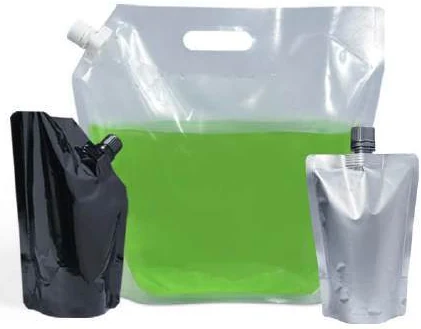
The catalogue includes spout pouches and retort pouches. These examples show different physical constructions; they are not interchangeable specifications. A fitted spout provides a controlled opening for dispensing. The reference range includes compact pouches and larger handled formats. Specify the product, fill volume, spout location and cap before developing the pouch shape; a corner spout and a top-centre spout require different layouts.
| Format reference | Material or construction to clarify | Details to include in the brief |
|---|---|---|
| Spout pouches | Flexible liquid-pack laminate with a fitted spout and cap; contact-layer and closure compatibility are reviewed for the formulation. | Fill volume and product viscosity; spout bore, position and cap. |
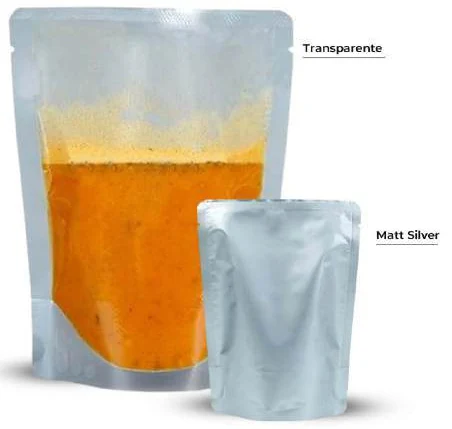
| Retort pouches | Multilayer retort laminate, with transparent or opaque options subject to product and process review. | Food formulation and fill weight; required process time and temperature. |
Use the reference pictures to identify the base, side panels, window or opening that you mean. A picture cannot supply the missing dimensions or material layers. If a photograph shows a finish or closure you do not want, state that difference explicitly; otherwise a visual reference can introduce an unintended requirement.
Complete the record before requesting the next sample
- Attach a dispensing observation using representative product. Identify the product or SKU and the date of the observation.
- Record the intended portion and user action. Keep confirmed information separate from proposed values and questions for the supplier.
- Add the actual fill weight or volume, the dimension convention, material proposal and intended closure. Include the number of designs and quantity per design when requesting a quotation.
- State which question the next drawing, sample or quotation must resolve. A change of size, closure or material should remain visible alongside the earlier reference.
This record makes the next conversation specific. It lets the design, purchasing and packing teams work from the same proposed item and shows which decision still needs evidence. Review the related product pages for format details, or prepare a custom packaging brief with the unresolved requirements.
Put the decision into practice
1. Map the handovers. Bring the four teams together around one sequence and identify decisions that fall between suppliers.
2. Collect controlled inputs. Ask for referenced documents and authorised ranges rather than verbal assumptions about normal production.
3. Resolve the open rows. Prioritise unknowns that affect feasibility before paying for final print preparation or bulk materials.
4. Issue a release copy. Record exactly which product, process and pack revisions the signed decision covers.
Share the controlled process brief with Navkar Poly Print so the pouch enquiry has clear inputs, owners and review boundaries.
Sources and scope.
These references support the technical discussion. Product photographs illustrate formats; the material, dimensions and suitability of the proposed pack are confirmed for each project.
- Viking Masek: liquid pouch filling sequence
Equipment maker describes coordinated pouch handling, liquid filling and closure; no Navkar equipment or performance implied.
- SEE: Spout Pouches technical sell sheet
Illustrates spout-position, handle and shape options in another manufacturer portfolio; component selection remains project-specific.
Let’s discuss your product.
Share your contents, dimensions, filling method, quantity and delivery destination. We’ll work through the proposed packaging specification with you.
Create a packaging brief