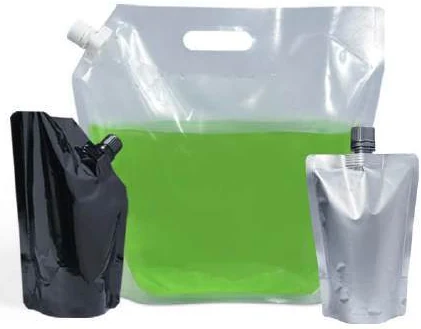
Observe repeated small sauce portions with the pouch, receiver and approved product condition fixed for the session. Record the amount delivered and the start-stop event together. The decision is which specific handling question deserves follow-up, rather than which spout location to select or whether the pack has passed formal dispensing validation.
Fix the configuration and the question
Assign session, filled-pouch, formula and receiver references. Record the actual cap and fitment, pouch drawing, initial product amount and the product condition authorised by the food business. Keep the same receiving container and working position for the observation. If any input changes, start a separately identified group rather than merging its results.
Write the question narrowly: for example, whether the operator can stop a chosen small portion without an unrecorded continuation into the receiver. The product owner defines the portion task and authorised handling sequence. This exercise supplies no food-process settings, temperature recommendation or universal serving amount.
Keep the session question narrower than a performance claim
Write one observation question before preparing the session. For example, the team may want to understand the visible continuation after an intended stop during the selected small-portion task. Keep the pouch, receiver and approved product condition fixed so the event notes remain interpretable.
Identify the starting state and ordinary operator action. Record the initial amount and actual session sequence, since the pouch changes naturally as portions are removed. The fixed configuration does not mean every event occurs at an identical fill state.
If the team changes product condition, receiver or instructions, create a new identified group. Do not combine the readings as though only the event number changed. A useful short development session can reveal a follow-up question while leaving performance validation outside its purpose.
Keep the observer's role consistent. Record any coaching or assistance because it can change the action. The sheet should describe what actually occurred, including interruptions, rather than reconstruct an ideal sequence after the session.
Define what a delivered-portion reading means
Agree how the observation team records receiver readings, units, instrument identity and the timing of the reading relative to the stop action. Have the responsible team choose the measurement arrangement and decide whether it is adequate for the intended development question. Record its displayed increment and known limitations; a numerical display does not by itself establish accuracy or suitability.
If the chosen arrangement uses cumulative receiver mass, the portion entry is the after-reading minus the before-reading for that event. Record material arriving after the intended stop separately, including whether it reached the receiver before or after the reading. Do not silently count a late drip in another portion or ignore product outside the receiver.
Make subtraction and timing traceable
Retain both receiver readings for every event, with units and actual reading sequence. The delivered entry should remain traceable to those readings. If a before-reading is missing, record the gap rather than inferring it from the preceding after-reading unless the responsible method explicitly supports that treatment.
Agree how the receiver remains in the measurement arrangement and what happens if material arrives outside it. A late drop, contact with another object or moved receiver may affect interpretation. The responsible team should decide how to record such events and whether the reading remains useful.
An illustrative event could show a displayed difference of 21 g while the observer notes a continuation before the after-reading. The number includes whatever entered the receiver between the two stated readings. It does not reveal how much arrived before the intended stop unless the observation method separately establishes that amount.
Keep the displayed increment and known method limits beside the results. Arithmetic consistency is useful, but it does not establish instrument accuracy, measurement uncertainty or formal repeatability.
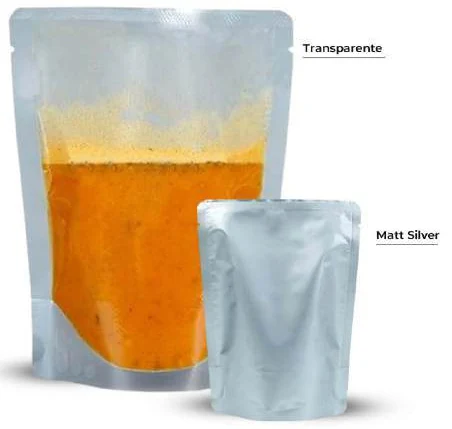
Observe each start and stop without changing the task
Let the authorised operator follow the agreed ordinary action. Record when flow begins, the intended stop, any continuing material and whether grip or pouch orientation changes. Do not coach a different squeeze, angle or pause midway through a group and then describe all entries as equivalent conditions.
SEE's spout-pouch sheet illustrates component-position options. Here the selected configuration stays fixed; changing it belongs in a new sample group. The purpose is observing one defined use task, not repeating general position selection.
Describe starting and stopping in observable language
Use event notes that another reviewer can understand. Record flow began after the intended action, a continuation entered the receiver, or the operator repositioned before stopping. Avoid evaluative labels such as precise or inconsistent unless their meaning and evidence have been defined.
Preserve the order of events. The natural falling fill state may change the action, and an observer needs that context when deciding what to investigate next. Do not randomise or average away a sequence pattern in a short exploratory record.
If the operator repeats a missed action, identify the repeat separately. A corrected attempt should not silently replace an awkward event. Both can be useful for understanding the task and the role of instruction.
This observation deliberately remains about repeated small portions under the fixed setup. General spout-position selection belongs in its separate design review, and a one-time bulk workstation transfer is another task. Keeping those boundaries clear makes the session useful without expanding it into an unsupported all-purpose dispensing test.
Keep readings and interpretation in separate columns
The table below contains invented teaching values, not measurements of a real sauce, Navkar product or supplier trial. The chosen 20 g planning portion illustrates the record only; it is not a recommended dose or acceptance limit.
| Event | Receiver before, g | Receiver after, g | Delivered portion, g | Illustrative event note |
|---|---|---|---|---|
| 1 | 100 | 119 | 19 | Operator stopped; no continuation noted in this example |
| 2 | 119 | 140 | 21 | A trailing drop entered before the after-reading |
| 3 | 140 | 160 | 20 | Grip remained unchanged in this example |
| 4 | 160 | 182 | 22 | Operator repositioned before stopping |
The differences total 82 g, matching 182 − 100. Their mean is 82 ÷ 4 = 20.5 g. Those calculations summarise the invented entries; they do not establish accuracy, repeatability, causation or a pass decision. Four observations cannot support an unsupported general performance claim. Preserve the event notes rather than declaring the last reading a pouch defect.
Separate manual observations from other evidence
Sealed Air describes FlexPrep as a pouch used with a specialised dispensing system. Its proprietary portion-control claims do not transfer to a manually handled spout pouch or establish Navkar capability. Identify the actual arrangement being observed.
Viking Masek describes separate liquid filling and closing operations. Retain their actual project references alongside the use record. A convenient portioning action does not establish compatibility, closure integrity, food-process suitability or shelf life.
Choose a follow-up from the actual event
Review readings and event notes together. A higher delivered entry may coincide with a recorded continuation, but that association alone does not prove a cause. The technical team can decide whether the next step concerns observation timing, instructions, product condition or a separately identified candidate.
If a changed pouch is proposed, retain the original session and give the new assembly its own reference. State every relevant difference. A comparison of complete proposals can be useful, but it should not claim that a single feature caused the outcome unless the design supports that conclusion.
Keep quantitative ambition proportionate to the method. The current sheet can organise a development observation. Formal performance claims would require a suitable plan, adequate measurement and accountable technical interpretation beyond this example.
At handover, provide the fixed configuration, actual sequence, raw readings, missed events and reviewer decision. The supplier receives a focused question that can guide another proposal, while product-process, compatibility and storage conclusions remain with their own relevant evidence.
Liquid-food format: a practical specification example
A liquid-food pack needs a coherent filling, sealing and dispensing plan. A flat portion sachet, retort pouch and capped spout pouch are different briefs even when they contain a similar recipe. Record the product flow, fill volume, intended treatment and how the user empties the pack. Do not transfer a process condition or storage expectation from a reference photograph.
For this decision, start with the product, portion size and use pattern. The useful output is a comparison of sachet, spout and larger pouch requirements. Put that output beside the relevant quotation, drawing or sample rather than leaving it in a separate email. This is an illustrative decision exercise, not a report of a completed customer trial.
Product references to make the discussion concrete
The catalogue includes spout pouches and retort pouches. These examples show different physical constructions; they are not interchangeable specifications. A fitted spout provides a controlled opening for dispensing. The reference range includes compact pouches and larger handled formats. Specify the product, fill volume, spout location and cap before developing the pouch shape; a corner spout and a top-centre spout require different layouts.
| Format reference | Material or construction to clarify | Details to include in the brief |
|---|---|---|
| Spout pouches | Flexible liquid-pack laminate with a fitted spout and cap; contact-layer and closure compatibility are reviewed for the formulation. | Fill volume and product viscosity; spout bore, position and cap. |
| Retort pouches | Multilayer retort laminate, with transparent or opaque options subject to product and process review. | Food formulation and fill weight; required process time and temperature. |
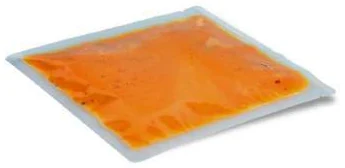
Use the reference pictures to identify the base, side panels, window or opening that you mean. A picture cannot supply the missing dimensions or material layers. If a photograph shows a finish or closure you do not want, state that difference explicitly; otherwise a visual reference can introduce an unintended requirement.
Complete the record before requesting the next sample
- Attach a comparison of sachet, spout and larger pouch requirements. Identify the product or SKU and the date of the observation.
- Record the product, portion size and use pattern. Keep confirmed information separate from proposed values and questions for the supplier.
- Add the actual fill weight or volume, the dimension convention, material proposal and intended closure. Include the number of designs and quantity per design when requesting a quotation.
- State which question the next drawing, sample or quotation must resolve. A change of size, closure or material should remain visible alongside the earlier reference.
This record makes the next conversation specific. It lets the design, purchasing and packing teams work from the same proposed item and shows which decision still needs evidence. Review the related product pages for format details, or prepare a custom packaging brief with the unresolved requirements.
Release the observation and the next question
The completed sheet needs five groups: fixed configuration; authorised product and portion task; receiver and instrument record; event-by-event readings and notes; and reviewer decision. Name the owner who can interpret each. Record changed inputs, missed readings and events that were not observed instead of reconstructing them later.
Use the record to request a targeted investigation or revised sample, then give any changed configuration its own group. Send Navkar Poly Print the fixed-setup sheet and identified sample details when discussing a sauce dispensing observation, with formal performance and food-product conclusions reserved for the responsible technical review.
Sources and scope.
These references support the technical discussion. Product photographs illustrate formats; the material, dimensions and suitability of the proposed pack are confirmed for each project.
- Viking Masek: liquid pouch filling sequence
Equipment maker describes coordinated pouch handling, liquid filling and closure; no Navkar equipment or performance implied.
- SEE: Spout Pouches technical sell sheet
Illustrates spout-position, handle and shape options in another manufacturer portfolio; component selection remains project-specific.
- Sealed Air: FlexPrep dispensing pouch system
Manufacturer identifies its pouch with a specialised dispensing unit; proprietary portion-control claims are not transferred to a manual spout-pouch observation.
Let’s discuss your product.
Share your contents, dimensions, filling method, quantity and delivery destination. We’ll work through the proposed packaging specification with you.
Create a packaging brief