Specify stiffness by describing the handling and presentation result you need. A firm feel can be relevant to gripping, opening or shelf presentation, but it is not a complete material specification. Ask the converter and packing team to review representative samples against the actual geometry and use. Keep stiffness separate from puncture, barrier and sealing decisions rather than treating a heavier-feeling sample as universally stronger.
Turn feel into an observable task
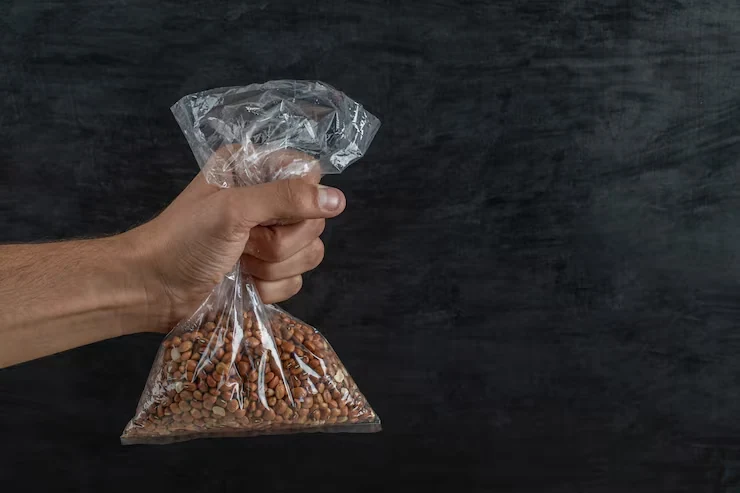
Ask what the current concern is: difficulty presenting the pouch to a filler, a face that collapses in the intended tray or an awkward customer grip. Record the exact action and conditions instead of using only soft and rigid. Different tasks may favour different responses, so there is no automatic winner for a firmer sample. Include the actual pouch geometry and features. A flat film held between fingers is a useful discussion aid but does not demonstrate how a formed, filled pack will behave at the relevant interface.
Compare representative candidates fairly
Use identified samples and record their construction, dimensions and feature differences. Fill them with the intended product where that is relevant to the question and use the agreed display or handling arrangement. If samples differ in several ways, avoid attributing the result solely to stiffness. Ask the technical owner whether a specific measurement or structured observation is appropriate. The buyer’s record should preserve the method and conditions chosen by that owner, not replace them with a subjective good-quality rating.

Review connected requirements
A material change intended to alter feel can affect other interfaces, so assess its actual construction differences. Ask which forming, sealing, appearance and application evidence needs review. Do not infer barrier from stiffness: separate transmission methods such as ASTM F3136 address other properties. A laminated system also has identified component relationships, as reflected in Bostik’s laminate information. Keep those technical questions with the responsible parties rather than prescribing a universal film recipe to obtain a firmer touch.
Build a stiffness-use review card
The card turns a subjective material preference into a specific reviewable objective. It can support sampling discussions without claiming a laboratory result the project has not obtained.
| Record | What to capture and how to use it |
|---|---|
| Target action | Describe the gripping, opening, presenting or displaying action that motivates the requirement. Identify the actual user or line interface, enabling the supplier to propose a sample against a concrete task instead of an undefined premium feel. |
| Sample baseline | Record construction, dimensions and features for each candidate. Identify differences explicitly so an observed result is not attributed to stiffness alone when geometry or another material characteristic also changed. |
| Review condition | State product, fill quantity, fixture and handling arrangement used. Keep any substitute or unsupported display condition visible, preserving the scope of a practical observation rather than treating it as a universal performance result. |
| Observed result | Record what occurred during the target action and the agreed acceptance reference. Separate subjective preference from an established measurement, and ask the responsible technical owner to identify further evidence where needed. |
| Connected approval | List other requirements potentially affected by the material change and their owners. Review the actual differences before transferring existing barrier, sealing or application approvals to a proposal selected for its feel. |
Keep photographs and sample references with the card. A note saying the second sample feels better is difficult to use later unless the team can identify which sample and action the observation concerned.
Illustrative shelf concern
A brand asks for a stiffer pouch because one prototype does not present well in its tray. The team records the tray, filled quantity and actual collapse location, then compares identified candidates. It also checks whether geometry or support arrangement contributes to the issue. The example avoids assuming that added thickness is the answer. The useful outcome is a demonstrated presentation result under defined conditions, with other material requirements still subject to their appropriate evidence.
Translate stiffness into the action that matters
Write the task in physical terms. The pouch may need to remain open during filling, be gripped consistently, stand in a defined display or collapse during dispensing. These are different outcomes. A request for a premium hand feel can start a design discussion, but it is too subjective to approve an operational requirement.
Ask the receiving or use owner to demonstrate the desired action with a current reference where available. Record the support, product quantity and handling sequence. A material can feel firm between fingers while behaving differently as a large filled panel. The task-based brief helps the technical team decide what mechanical or practical evidence is relevant.
Separate the material specimen from the pouch geometry
Panel size, folds, seals and features affect how a pouch responds during handling. A flat swatch is therefore not the same object as a formed pouch. Keep the sample dimensions and orientation with any observation. If the comparison uses different pouch sizes, state that the geometry also changed rather than assigning every difference to the film.
Fraunhofer IVV describes evaluating mechanical, optical and barrier properties during material development. This is institute context for treating properties separately. It does not provide a stiffness threshold for a buyer's pouch or establish that a hand-feel preference predicts machine running or product protection.
Use comparable samples for an initial review
Choose candidates with identified constructions and comparable geometry for the intended question. Record whether they are empty, filled or partly depleted. Use the same action and support condition. If one specimen is manually shaped and another is taken directly from filling, the comparison includes that preparation difference.
Ask observers to describe what happens: the mouth closes, the panel bends at a particular location, or the pack leans when unsupported. These observations are more useful than a general hard or soft rating. A technical owner can then determine whether the next assessment concerns material response, geometry, filling presentation or another interface.
Work through a filling-mouth scenario
Suppose an illustrative premade pouch is difficult to hold open at a manual filling station. First record the mouth dimensions, support and actual product path. Compare another identified sample under the same action. Do not immediately prescribe a thicker film; the opening geometry or holding arrangement may also affect the result.
If a firmer construction improves the observed mouth behaviour, review its other relevant consequences before selection. The pouch may feel different in use or occupy a different formed shape. Ask the technical team which existing material, closure and application evidence still applies. A favourable handling observation is one part of the decision, not a complete material approval.
Keep measurement and preference distinct
If an instrumented mechanical test is proposed, identify the method, specimen direction, conditions and reported units through the qualified reviewer. Do not equate results from different methods without assessment. The test should answer a defined requirement, while the buyer's subjective appearance or feel preference remains a separate recorded judgement.
For a qualitative comparison, use an agreed description and retain the specimens. A simple internal review can be useful without pretending to be a validated consumer study. Record who observed what and under which condition. Avoid reporting a numerical improvement or customer preference percentage when no suitable study was conducted.
Make the trade-off review explicit
Before accepting a candidate, revisit the actual task and confirm that the accepted specimen represents the proposed construction and geometry. Record the observed benefit and any unresolved consequence. A material chosen for handling still needs the relevant barrier, compatibility and closure evidence for the product.
If the fill quantity or pouch size changes, repeat the affected handling question rather than assuming the same feel will produce the same result. The final brief should let the supplier propose a defensible material and geometry combination. It should explain the action the buyer needs, the conditions used to assess it and the evidence limits, without reducing stiffness to a single informal squeeze of an empty sample.
Stiffness and handling: a practical specification example
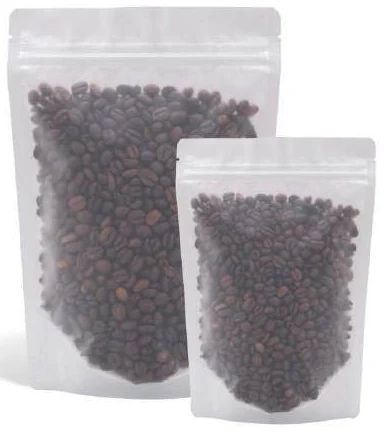
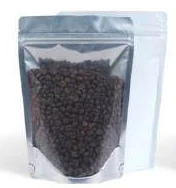
Two samples have similar appearances but different material requirements. One may use a clear panel and another an opaque surface; neither appearance specifies its complete layer structure. Keep the product, storage conditions, fill method and required performance in the brief. Ask for the proposed construction in writing so the comparison remains meaningful when a paper-look or metallic appearance is introduced.
For this decision, start with the product bulk, pack size and handling action. The useful output is a filled-sample comparison at the intended dimensions. Put that output beside the relevant quotation, drawing or sample rather than leaving it in a separate email. This is an illustrative decision exercise, not a report of a completed customer trial.
Product references to make the discussion concrete
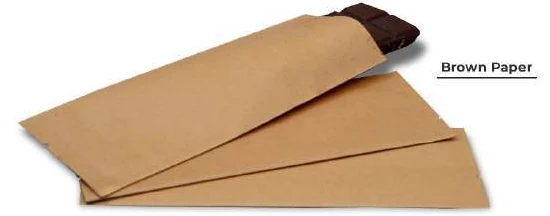
The catalogue includes clear-front opaque-back pouches and kraft paper pouches. These examples show different physical constructions; they are not interchangeable specifications. A clear front shows the contents while an opaque or metallic back provides a contrasting panel. Specify which face carries the principal artwork and check how it reads through the transparent face. The windowed side and opaque side need a coordinated material brief.
| Format reference | Material or construction to clarify | Details to include in the brief |
|---|---|---|
| Clear-front opaque-back pouches | Transparent front paired with opaque or foil-look back panels; confirm the layer construction on each face. | Front and back material requirements; artwork side and orientation. |
| Kraft paper pouches | Kraft or paper outer with a product-specific inner construction; paper appearance does not establish a plastic-free composition. | Paper colour and surface preference; full layer structure and thickness. |
Use the reference pictures to identify the base, side panels, window or opening that you mean. A picture cannot supply the missing dimensions or material layers. If a photograph shows a finish or closure you do not want, state that difference explicitly; otherwise a visual reference can introduce an unintended requirement.
Complete the record before requesting the next sample
- Attach a filled-sample comparison at the intended dimensions. Identify the product or SKU and the date of the observation.
- Record the product bulk, pack size and handling action. Keep confirmed information separate from proposed values and questions for the supplier.
- Add the actual fill weight or volume, the dimension convention, material proposal and intended closure. Include the number of designs and quantity per design when requesting a quotation.
- State which question the next drawing, sample or quotation must resolve. A change of size, closure or material should remain visible alongside the earlier reference.
This record makes the next conversation specific. It lets the design, purchasing and packing teams work from the same proposed item and shows which decision still needs evidence. Review the related product pages for format details, or prepare a custom packaging brief with the unresolved requirements.
Approve the demonstrated use result
Select a proposal only after the target action and connected requirements have appropriate acceptance. Record the sample and construction revision so repeat orders can retrieve the decision. Reassess the relevant scope when geometry, fill or material changes. This creates a practical stiffness brief without treating touch as proof of every packaging property.
Send the completed stiffness-use review card with your product and filling details to Navkar Poly Print for a project-specific discussion. Ask for the proposed specification, evidence required and open questions to be recorded before quotation approval.
Sources and scope.
These references support the technical discussion. Product photographs illustrate formats; the material, dimensions and suitability of the proposed pack are confirmed for each project.
- ASTM F3136 oxygen gas transmission rate
Standards-owner scope for one OTR method; not a requirement that this method applies to every project.
- Bostik laminate adhesives
Adhesive manufacturer context for flexible lamination; suitability and process conditions remain project-specific.
- Development and optimization of packaging materials
Institute evaluates mechanical, optical and barrier properties separately; no pouch stiffness threshold or Navkar test inferred.
Let’s discuss your product.
Share your contents, dimensions, filling method, quantity and delivery destination. We’ll work through the proposed packaging specification with you.
Create a packaging brief