Compare flexible packaging by its complete construction and required performance, with thickness recorded as one specification field. Two films with the same total thickness need not perform the same job. Ask what each proposed layer contributes and which evidence applies to the intended product and packing route. This creates a more useful enquiry than requesting a strong pouch at a familiar gauge copied from another product.
Replace shorthand with an identified construction
Ask for a layer-order description that identifies the outside viewing face and product-contact side. Record the supplier’s exact material reference and revision, including how thickness is specified. A familiar abbreviation may omit coatings, adhesives or other features relevant to the proposal. The buyer does not need to prescribe chemistry; it needs a retrievable statement of what is being proposed. Keep the construction linked to format and features because a material sold as film is ultimately used as a formed and closed package with additional interfaces.
Translate broad adjectives into questions
Words such as strong, premium and high barrier are incomplete requirements. Ask which practical issue the buyer wants to prevent or observe: damage during handling, loss of a product characteristic, difficulty opening, poor presentation or an unsuitable filling interface. Then ask the qualified technical owner which evidence is appropriate. Oxygen and water-vapour transmission are separate measured properties, with distinct ASTM OTR and WVTR method scopes. Neither a thick feel nor a material name supplies those results for the proposed construction.
Compare proposals on a common evidence basis
Request each proposal against the same product brief and packing conditions. List which requirements are supported, conditional or unassessed. Avoid ranking constructions solely by total gauge or assuming that adding thickness always fixes a reported problem. Ask what changes in the full system and what evidence supports the intended outcome. A material substitution can affect converting, sealing, appearance or other interfaces even if the nominal thickness remains. Keep the technical review proportionate to the actual difference and preserve its reasoning for future orders.
Use a layer-role comparison sheet
The sheet records proposed functions and evidence without pretending the buyer has independently tested the construction. Complete it for each candidate against the same intended application.
| Record | What to capture and how to use it |
|---|---|
| Construction identity | Record layer order, functional faces and supplier material revision. Distinguish the complete proposal from shorthand abbreviations so future reports and samples can be checked against the actual material being considered. |
| Thickness basis | State total and any agreed layer-thickness information with units and measurement reference. Keep it separate from performance decisions, avoiding the assumption that matching a nominal gauge establishes equivalence between different constructions. |
| Functional requirement | Describe the product or packing problem each proposed function addresses. Ask the technical owner to define appropriate evidence rather than using broad adjectives such as strong or high barrier as if they were measurable acceptance criteria. |
| Evidence scope | List relevant reports, sample identity and conditions for each requirement. Mark unsupported functions as open, and distinguish film-property evidence from qualification of the complete filled and closed package. |
| Change implication | Record how a proposed substitution differs and which interfaces need review. Preserve the current accepted baseline and reviewer reasoning so an unchanged thickness cannot silently authorise a materially different package. |
Use one requirement row at a time during quotation discussion. This helps the supplier explain its proposal and gives the buyer a clear list of evidence requests without inventing a universal film recipe.
Illustrative same-gauge comparison
Two illustrative proposals state the same total thickness but describe different constructions. The buyer records their layer order and asks for the evidence relevant to its product and filling route. One proposal has a report whose conditions differ from the enquiry, while the other still needs an identified sample. The correct next step is to resolve those gaps, not to declare either proposal equivalent or superior from gauge alone. No actual material performance or Navkar test result is implied.
Read thickness as one characteristic
Total thickness describes the distance through the material under a defined measurement method. It does not identify the layers, their proportions or their functions. Two constructions with the same total thickness can therefore deserve different reviews. Ask the supplier to state the proposed structure and explain what each part contributes to the requirements in the brief.
Keep the thickness measurement basis explicit. Identify units, specimen and method through the agreed specification. A layer description and a measured total answer different questions. Do not add nominal layer values and assume that the sum is interchangeable with every finished-material measurement; ask the supplier how the quoted construction and its acceptance basis are defined.
Assign a function before asking for more material
If the concern is moisture, request relevant moisture-transmission evidence. If it is filling handling, define the handling observation. If it is closure, identify the actual sealing interface. Asking only for a thicker film can miss the functional issue and can alter other properties that the project must assess. The useful request connects the concern to a measurable or observable requirement.
TOPPAN's barrier-film page describes substrate, deposited layer and coating as parts of a transparent barrier construction. It is a manufacturer example of functions arising from a specified layered system. It does not establish the same performance for any film with the same overall thickness or for a Navkar proposal.
Compare constructions on equivalent evidence
Build a row for each candidate with its identity, thickness basis, intended function and supporting report or observation. Keep the test conditions beside the result. If one supplier provides a flat-film report and another provides finished-package evidence, label the difference. The two references may answer useful but different questions.
Ask the technical reviewer what remains uncertain before selecting a candidate. A material can have strong evidence for one property while its product compatibility or conversion behaviour remains unresolved. Avoid replacing these separate decisions with a single quality score. A transparent comparison should reveal the missing evidence as clearly as the favourable data.
Use an illustrative mass calculation with limits
Suppose two hypothetical constructions have the same area and the same average density, but their thicknesses are 80 µm and 100 µm. Under those simplified assumptions, the thicker construction has 100 divided by 80, or 1.25 times the material volume and mass. The example is a geometric relationship, not a quotation or a real material comparison.
Actual constructions can have different densities, yields, processes and functions. A higher mass does not prove greater barrier, while a lower mass does not prove lower delivered cost or recyclability. Use actual construction data and quotations for a commercial model. Keep filling, setup, losses and transport separate from the empty-material comparison where they are relevant.
Review changes by the function they may affect
When a layer or thickness changes, identify the affected requirements before deciding which evidence can be retained. A change can leave one property adequately covered while reopening another. Ask the responsible technical owner to explain that judgement against the actual specimen and intended conditions. Similar names do not establish equivalence.
If a sample is used for assessment, record the complete proposed construction rather than only its thickness. Otherwise a later team may order the same gauge with a different layer arrangement and assume that the old result applies. Keep the construction identity linked through drawings, reports, samples and the agreed purchase specification.
Turn the enquiry into a functional proposal
Send the supplier the intended product, route and relevant requirements with the known constraints. Ask for a construction proposal and the evidence supporting each important function. Allow a technically justified alternative rather than prescribing an unverified stack copied from another pack.
The final selection should explain why the identified construction addresses the defined job. It should state which evidence supports that conclusion and which application decisions remain. This gives procurement a more useful basis than comparing gauge alone. It also creates a clear reference for future changes, when the question is whether the function remains covered rather than whether the material still sounds equally thick.
Structure versus thickness: a practical specification example
Two samples have similar appearances but different material requirements. One may use a clear panel and another an opaque surface; neither appearance specifies its complete layer structure. Keep the product, storage conditions, fill method and required performance in the brief. Ask for the proposed construction in writing so the comparison remains meaningful when a paper-look or metallic appearance is introduced.
For this decision, start with the complete proposed layers and total thickness. The useful output is a construction comparison that does not use thickness as a barrier claim. Put that output beside the relevant quotation, drawing or sample rather than leaving it in a separate email. This is an illustrative decision exercise, not a report of a completed customer trial.
Product references to make the discussion concrete
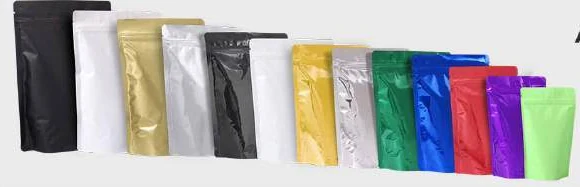
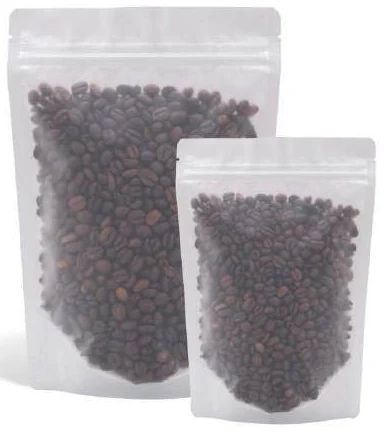
The catalogue includes clear-front opaque-back pouches and kraft paper pouches. These examples show different physical constructions; they are not interchangeable specifications. A clear front shows the contents while an opaque or metallic back provides a contrasting panel. Specify which face carries the principal artwork and check how it reads through the transparent face. The windowed side and opaque side need a coordinated material brief.
| Format reference | Material or construction to clarify | Details to include in the brief |
|---|---|---|
| Clear-front opaque-back pouches | Transparent front paired with opaque or foil-look back panels; confirm the layer construction on each face. | Front and back material requirements; artwork side and orientation. |
| Kraft paper pouches | Kraft or paper outer with a product-specific inner construction; paper appearance does not establish a plastic-free composition. | Paper colour and surface preference; full layer structure and thickness. |
Use the reference pictures to identify the base, side panels, window or opening that you mean. A picture cannot supply the missing dimensions or material layers. If a photograph shows a finish or closure you do not want, state that difference explicitly; otherwise a visual reference can introduce an unintended requirement.
Complete the record before requesting the next sample
- Attach a construction comparison that does not use thickness as a barrier claim. Identify the product or SKU and the date of the observation.
- Record the complete proposed layers and total thickness. Keep confirmed information separate from proposed values and questions for the supplier.
- Add the actual fill weight or volume, the dimension convention, material proposal and intended closure. Include the number of designs and quantity per design when requesting a quotation.
- State which question the next drawing, sample or quotation must resolve. A change of size, closure or material should remain visible alongside the earlier reference.
This record makes the next conversation specific. It lets the design, purchasing and packing teams work from the same proposed item and shows which decision still needs evidence. Review the related product pages for format details, or prepare a custom packaging brief with the unresolved requirements.
Approve a construction with its evidence
Keep the accepted material reference, application brief and required evidence together. Ask the supplier to identify proposed substitutions before production. Reassess affected requirements after a change in construction, product, geometry or filling conditions. A clear material decision explains what was accepted and why, rather than relying on a thickness number to stand for the entire packaging specification.
Send the completed layer-role comparison sheet with your product and filling details to Navkar Poly Print for a project-specific discussion. Ask for the proposed specification, evidence required and open questions to be recorded before quotation approval.
Sources and scope.
These references support the technical discussion. Product photographs illustrate formats; the material, dimensions and suitability of the proposed pack are confirmed for each project.
- ASTM F3136 oxygen gas transmission rate
Standards-owner scope for one OTR method; not a requirement that this method applies to every project.
- ASTM F1249 water vapour transmission rate
Standards-owner method scope, distinct from an application-specific acceptance limit.
- Barrier Film
Manufacturer describes a specific layered transparent barrier system; not universal performance from total thickness.
Let’s discuss your product.
Share your contents, dimensions, filling method, quantity and delivery destination. We’ll work through the proposed packaging specification with you.
Create a packaging brief