Brief light exposure as a product-and-display question, then ask the technical team what material evidence is needed. An opaque look, dark print or metallic appearance does not by itself establish the protection required for a particular product. Record how the pack will be stored and displayed, what is known about the product concern and which construction is proposed. This gives the supplier a useful technical discussion rather than an undefined request for lightproof packaging.
Capture the exposure story
Ask the product and sales teams where the pack is expected to sit and how the proposed distribution and display may expose it. Record confirmed conditions separately from assumptions. Avoid inventing a single lighting duration or intensity for all retail channels. If the team lacks product sensitivity information, identify that gap and its owner. The supplier cannot establish the entire product requirement from a brand colour or product category. A concise exposure brief should explain the decision the technical team needs to make, not pretend the risk is already quantified.
Describe the actual construction and view
Request the proposed layer arrangement and any transparent areas or windows. Record the artwork coverage where relevant to the technical review. A visually dark pack can still require evidence for the intended conditions, while a clear-looking construction should not be ranked solely from its appearance. Keep oxygen and moisture evidence distinct from the light question; separate OTR and WVTR method scopes exist in ASTM F3136 and ASTM F1249. Those reports should not be relabelled as light-protection evidence.
Ask for an appropriate assessment scope
The qualified team should decide which material information and product evaluation are appropriate. Procurement can request report identity, specimen scope and applicability, but should not publish a generic test programme or exposure limit. If a candidate changes from opaque presentation to a windowed version, ask which assumptions and evidence need review. Record actual findings and limits before making a product-protection claim. A successful visual review under office lighting does not establish performance throughout the intended storage and retail journey.
Use a light-exposure enquiry sheet
This sheet collects facts and questions for technical assessment. It deliberately separates the proposed appearance from the evidence needed to support a claim about the product.
| Record | What to capture and how to use it |
|---|---|
| Product concern | Record the known light-related product issue or the question requiring assessment. Identify the product specialist and available evidence, keeping unconfirmed sensitivity assumptions visible instead of presenting them as measured facts. |
| Exposure conditions | Describe confirmed distribution, storage and display arrangements, with assumptions labelled. Ask the relevant owner to resolve missing conditions rather than using a universal retail-lighting scenario as if it represented every channel. |
| Proposed construction | Record material revision, relevant layers and clear or windowed areas. Link the actual artwork where coverage matters, so the reviewer can assess the complete proposal instead of inferring protection from its external colour. |
| Assessment evidence | Ask the qualified reviewer what material or product evidence is required and record its scope. Keep light evidence distinct from oxygen or moisture reports, preserving the actual question each document can support. |
| Claim and change | Record the accepted conclusion, limits and authorised wording where applicable. Reassess affected evidence after window, coverage, construction or display changes before transferring any earlier product-protection statement to the revised proposal. |
Keep claims provisional until the responsible assessment supports them. A well-prepared enquiry can still be commercially useful while openly stating that the product sensitivity and evidence requirements remain to be established.
Illustrative proposed window
A brand wants a larger window so shoppers can see more product. The earlier proposal used a different presentation, and the product team has not yet assessed the changed exposure. The buyer updates the window drawing and exposure brief, then requests the relevant technical review. It does not claim that the window will fail or that dark printing elsewhere compensates automatically. The example shows a change in evidence scope rather than a universal judgement about transparent packaging.
Define the product concern with its owner
Ask the product team what change it is trying to prevent and what evidence supports the concern. Light-related colour, flavour or nutrient questions may need different assessments. The packaging buyer should not invent a sensitivity threshold from the product's appearance. Record the intended product and the proposed storage or display condition so the technical reviewer can define a relevant evaluation.
Fraunhofer IVV's packaging overview discusses oxygen and light protection and describes research on transparent UV-resistant shrink films. This institute example shows why optical protection needs a defined question. It does not establish that every transparent material transmits the same relevant wavelengths or that a particular pouch protects the buyer's product.
Describe the exposure the pack will actually see
Record the proposed display location, whether the pack is inside an outer carton, and the part of the package exposed. Obtain information about lighting and exposure duration through the responsible team where relevant. A vague phrase such as ambient storage leaves too much unanswered when the concern specifically involves light.
Distinguish a known retail arrangement from an assumption. If the product may move between channels, identify the proposed scenarios separately. The technical team can decide which condition matters for assessment. Do not turn an informal office-window demonstration into proof of every warehouse, shop or transport exposure.
Ask which optical evidence addresses the concern
Visible opacity, haze and wavelength-specific transmission are different descriptions. The reviewer should identify the property and method needed for the actual product question. A dark-looking printed area does not automatically provide a quantified light barrier, while a visibly clear construction may have a targeted optical function. Ask for applicable evidence rather than relying on the colour of the empty sample.
If a report presents a transmission curve, retain its axes, units, specimen identity and relevant conditions. Do not choose one favourable wavelength and generalise it to all light. Procurement can preserve the report accurately and obtain the technical interpretation without inventing an optical acceptance threshold.
Review the complete viewing construction
Identify the substrate, coatings, print coverage, backing and clear areas in the proposed pack. Mark the region represented by any optical evidence. A measurement on one part of a construction may not describe a window or another printed area. Ask whether a changed window size alters the relevant exposed region or construction.
Use a drawing to connect the technical assessment with the design. If the brand wants a window, show its actual position and intended product view. The technical reviewer can then assess the proposal as it will be used. A material name alone cannot communicate how much of the finished package is clear or what product lies behind it.
Keep a comparative observation controlled
For an illustrative design comparison, place the candidate constructions around equivalent representative product quantities under a qualified assessment plan. Identify which variables are held consistent and what outcome is observed. If several factors differ, record that limitation. A simple demonstration can reveal a question worth investigating without becoming a validated product study.
Retain the original observations and the technical conclusion separately. If no measurable product change appears in a short exercise, state the actual duration and condition rather than claiming permanent protection. If a change appears, do not assign light as the cause without the relevant assessment. The next evidence request should follow the product owner's question and method.
Reopen the right question after a design change
A larger window, different ink coverage, changed substrate or new display channel can affect the light-exposure brief. Compare the change with the accepted construction and conditions. Ask which existing evidence remains applicable and whether the optical or product assessment needs repeating.
The final buying record should state the concern, relevant exposure, proposed construction and technical evidence supporting the decision. Keep any product claim within that assessed scope. This gives the design team room to compare visibility options while preventing colour, metallic appearance or a broad high-barrier label from being mistaken for a complete light-protection specification.
Light exposure: a practical specification example
Two samples have similar appearances but different material requirements. One may use a clear panel and another an opaque surface; neither appearance specifies its complete layer structure. Keep the product, storage conditions, fill method and required performance in the brief. Ask for the proposed construction in writing so the comparison remains meaningful when a paper-look or metallic appearance is introduced.
For this decision, start with the product display and storage route. The useful output is the required opaque area and any remaining clear panel. Put that output beside the relevant quotation, drawing or sample rather than leaving it in a separate email. This is an illustrative decision exercise, not a report of a completed customer trial.
Product references to make the discussion concrete
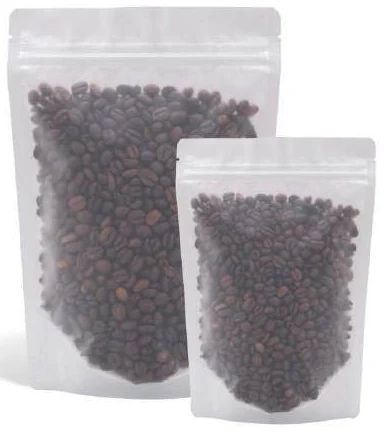
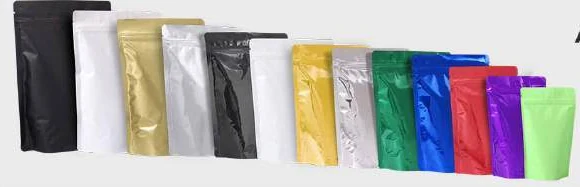
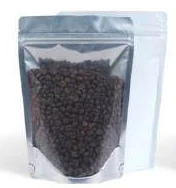
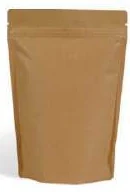
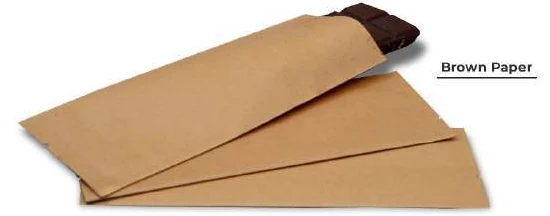
The catalogue includes clear-front opaque-back pouches and kraft paper pouches. These examples show different physical constructions; they are not interchangeable specifications. A clear front shows the contents while an opaque or metallic back provides a contrasting panel. Specify which face carries the principal artwork and check how it reads through the transparent face. The windowed side and opaque side need a coordinated material brief.
| Format reference | Material or construction to clarify | Details to include in the brief |
|---|---|---|
| Clear-front opaque-back pouches | Transparent front paired with opaque or foil-look back panels; confirm the layer construction on each face. | Front and back material requirements; artwork side and orientation. |
| Kraft paper pouches | Kraft or paper outer with a product-specific inner construction; paper appearance does not establish a plastic-free composition. | Paper colour and surface preference; full layer structure and thickness. |
Use the reference pictures to identify the base, side panels, window or opening that you mean. A picture cannot supply the missing dimensions or material layers. If a photograph shows a finish or closure you do not want, state that difference explicitly; otherwise a visual reference can introduce an unintended requirement.
Complete the record before requesting the next sample
- Attach the required opaque area and any remaining clear panel. Identify the product or SKU and the date of the observation.
- Record the product display and storage route. Keep confirmed information separate from proposed values and questions for the supplier.
- Add the actual fill weight or volume, the dimension convention, material proposal and intended closure. Include the number of designs and quantity per design when requesting a quotation.
- State which question the next drawing, sample or quotation must resolve. A change of size, closure or material should remain visible alongside the earlier reference.
This record makes the next conversation specific. It lets the design, purchasing and packing teams work from the same proposed item and shows which decision still needs evidence. Review the related product pages for format details, or prepare a custom packaging brief with the unresolved requirements.
Request a qualified proposal
Send the exposure sheet with the intended product and layout details. Ask the supplier to identify the construction it proposes and the evidence it can support. Preserve open questions and avoid public protection claims until accepted. Keep the final conclusion linked to the exact construction and exposure assumptions so repeat orders remain within the scope actually reviewed.
Send the completed light-exposure enquiry sheet with your product and filling details to Navkar Poly Print for a project-specific discussion. Ask for the proposed specification, evidence required and open questions to be recorded before quotation approval.
Sources and scope.
These references support the technical discussion. Product photographs illustrate formats; the material, dimensions and suitability of the proposed pack are confirmed for each project.
- ASTM F3136 oxygen gas transmission rate
Standards-owner scope for one OTR method; not a requirement that this method applies to every project.
- ASTM F1249 water vapour transmission rate
Standards-owner method scope, distinct from an application-specific acceptance limit.
- The future of packaging
Institute overview discusses light/oxygen protection and transparent UV-resistant film research; no transferred product threshold or shelf life.
Let’s discuss your product.
Share your contents, dimensions, filling method, quantity and delivery destination. We’ll work through the proposed packaging specification with you.
Create a packaging brief