Treat transparency and barrier as separate requirements when reviewing a clear film proposal. Seeing the product does not identify the construction or establish oxygen, moisture or light performance. Ask for the visual result you want and the technical evidence the product requires, then check whether the same proposed material supports both. This avoids rejecting or accepting a candidate simply because it is clear.
Describe the view instead of saying clear
Specify what the customer needs to see and how the appearance will be reviewed. A view of colour, piece size or fill level may require different placement and clarity expectations. Ask for an identified sample representing the proposed material and finish. Record whether the sample is empty or filled and what lighting or background influenced the view. A photograph can communicate an idea but cannot establish the optical result under every selling condition. Keep the visual target practical and tied to the actual product presentation.
Request the relevant barrier evidence independently
Ask the technical owner which oxygen, moisture or other evidence is relevant to the intended product. AMETEK MOCON describes separate permeation testing for films and packages. The buyer should obtain the applicable report scope, not infer barrier from visual transparency or a marketing description. Preserve method, conditions, units and specimen identity when comparing proposals. If a candidate is described as a transparent barrier film, ask what exact construction and evidence the description refers to before treating it as an approved material.
Review changes across the whole proposal
A clear region can be part of an all-clear pack or a defined window in a more complex construction. Record what the actual proposal contains. Ask whether a window change affects construction, printed coverage, available text space or the intended exposure. Keep the material and artwork records aligned. A qualified reviewer should decide what additional evidence is needed after a change. Do not assume that maintaining the same visible view preserves every technical property, or that an opaque alternative automatically meets a higher barrier requirement.
Build an optical-and-barrier matrix
Use two distinct columns for visual acceptance and technical applicability. The matrix makes a combined decision possible without allowing a strong result in one subject to conceal missing evidence in the other.
| Record | What to capture and how to use it |
|---|---|
| Visual objective | Record the product feature to be seen and the proposed viewing arrangement. Identify the sample and review conditions so an attractive photograph is not mistaken for a controlled appearance reference for the final material. |
| Construction identity | Record the complete proposed clear or windowed structure and its revision. Distinguish the actual material from broad descriptions, enabling each report and sample to be checked against the same proposal. |
| Barrier requirement | Ask the technical owner to identify the relevant property and evidence basis for the intended use. Preserve the distinction between oxygen, moisture and light questions rather than treating barrier as one universal performance rating. |
| Report applicability | Record specimen, method, conditions and the reviewer's applicability decision. Keep film results separate from whole-package qualification and identify which features or regions require further consideration in the actual proposal. |
| Combined decision | Record visual acceptance, technical acceptance and remaining questions separately. Reassess affected subjects after construction, window or printed-coverage changes, so a clear-view approval cannot silently become an unrestricted material release. |
Use the matrix to compare a clear and an opaque candidate if both remain credible. The comparison should identify actual evidence and open questions, avoiding a universal ranking based on appearance alone.
Illustrative attractive clear sample
A clear sample gives the desired product view, but the supplied barrier report refers to a different material reference. The buyer accepts the sample only as a visual discussion aid and requests the applicable technical evidence. A later report may resolve the gap or lead to another proposal. The example makes no prediction about either material’s performance; it shows how separate visual and technical decisions prevent a promising sample from receiving unsupported application approval.
ASTM F3136 provides a separate oxygen-transmission method reference.
Separate the view from the transmission requirement
A shopper's ability to see the contents is a visual requirement. Oxygen and water-vapour transmission are technical properties measured under specified conditions. Light exposure adds another question. A clear-looking sample can therefore satisfy the visual brief while the evidence for one of the product-protection requirements remains unresolved. Record these decisions separately against the same proposed construction.
Ask what needs to be visible: the whole product, individual pieces or a particular characteristic. Then ask the product owner what protection is required under the proposed conditions. Avoid starting with a general instruction for a clear high-barrier film without defining either task. The supplier needs enough context to propose an identifiable candidate and relevant evidence.
Use institute findings as a construction example
Fraunhofer FEP's clear-barrier leaflet describes aluminium-oxide coatings on polymer substrates. Its film table uses stated OTR and WVTR conditions and notes substrate-dependent variation. This establishes that a transparent coating technology can provide barrier properties; it does not give one universal value for all transparent films.
The practical request is for the exact proposed structure and its own applicable evidence. Do not borrow a leaflet value for an untested candidate or assume that a similar coating name makes the result transferable. The technology example helps frame the question, while the supplier's identified material and the qualified review answer the project decision.
Check whether the report represents the supplied state
Locate the specimen identity and ask what operations occurred before it was tested. A report on a coated base film may be relevant to material selection while leaving the final laminate or package to another assessment. The technical owner should decide how the evidence applies. Keep any difference in layer arrangement or processing visible.
If the proposal changes the clear window or print backing, identify what changes physically. Sometimes the discussion concerns ink coverage; another proposal may change the construction itself. These scenarios need different questions. A statement that the design is still clear does not establish whether existing oxygen, moisture or light-related evidence remains applicable.
Compare candidates under equivalent conditions
Build a table for visual observation, OTR, WVTR and any relevant light assessment rather than a single barrier score. Keep test method, conditions, units and reporting limits with each technical result. A missing result remains a gap. Do not replace it with an assumed ranking based on appearance or the thickness of the sample.
For an illustrative comparison, candidate A has an applicable OTR report but no completed filled-view review. Candidate B has an attractive filled prototype but a report for a different structure. Each has a different unresolved question. The next step is targeted evidence for the missing decision, not averaging their strengths into an apparent overall winner.
Observe the final viewing arrangement
Use the intended product, orientation and background for the visual check. Record folds, reflections and product settlement that affect the view. A transparent film can still provide an unhelpful window if the chosen position shows empty space or an unrepresentative part of a mixture. Keep photographs tied to the sample and layout revision.
If the design uses a printed backing around the window, examine the transition between clear and printed areas. Ask whether critical information remains readable and the intended view is understandable. This is a layout observation. It does not establish shelf life, compatibility or performance after the package has experienced the full distribution route.
Issue a combined decision with separate reasons
The final record should explain the accepted visual arrangement and the technical evidence supporting the identified construction. State the owner and status of remaining application work. This lets procurement understand why a candidate advances without treating transparency as either a guaranteed weakness or a guaranteed advantage.
On a future change, compare the altered visual or structural feature with the accepted references. Ask which observations and reports remain applicable. Keeping the two evidence streams linked but distinct makes a clear-pack proposal reviewable and prevents a short material description from turning into an unsupported product-protection promise.
Clear-panel barrier: a practical specification example
Two samples have similar appearances but different material requirements. One may use a clear panel and another an opaque surface; neither appearance specifies its complete layer structure. Keep the product, storage conditions, fill method and required performance in the brief. Ask for the proposed construction in writing so the comparison remains meaningful when a paper-look or metallic appearance is introduced.
For this decision, start with the viewing area and written film construction. The useful output is a comparison that separates optical clarity from measured performance. Put that output beside the relevant quotation, drawing or sample rather than leaving it in a separate email. This is an illustrative decision exercise, not a report of a completed customer trial.
Product references to make the discussion concrete
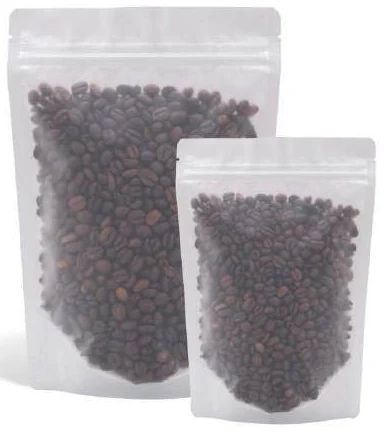
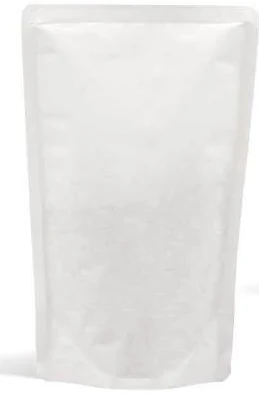
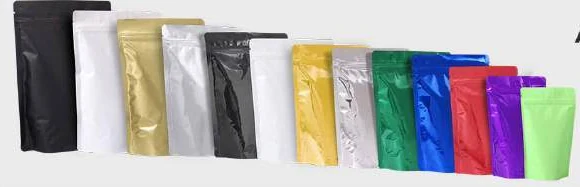
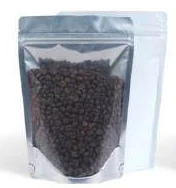
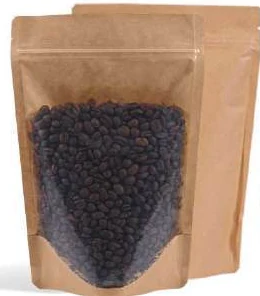
The catalogue includes clear-front opaque-back pouches and kraft paper pouches. These examples show different physical constructions; they are not interchangeable specifications. A clear front shows the contents while an opaque or metallic back provides a contrasting panel. Specify which face carries the principal artwork and check how it reads through the transparent face. The windowed side and opaque side need a coordinated material brief.
| Format reference | Material or construction to clarify | Details to include in the brief |
|---|---|---|
| Clear-front opaque-back pouches | Transparent front paired with opaque or foil-look back panels; confirm the layer construction on each face. | Front and back material requirements; artwork side and orientation. |
| Kraft paper pouches | Kraft or paper outer with a product-specific inner construction; paper appearance does not establish a plastic-free composition. | Paper colour and surface preference; full layer structure and thickness. |
Use the reference pictures to identify the base, side panels, window or opening that you mean. A picture cannot supply the missing dimensions or material layers. If a photograph shows a finish or closure you do not want, state that difference explicitly; otherwise a visual reference can introduce an unintended requirement.
Complete the record before requesting the next sample
- Attach a comparison that separates optical clarity from measured performance. Identify the product or SKU and the date of the observation.
- Record the viewing area and written film construction. Keep confirmed information separate from proposed values and questions for the supplier.
- Add the actual fill weight or volume, the dimension convention, material proposal and intended closure. Include the number of designs and quantity per design when requesting a quotation.
- State which question the next drawing, sample or quotation must resolve. A change of size, closure or material should remain visible alongside the earlier reference.
This record makes the next conversation specific. It lets the design, purchasing and packing teams work from the same proposed item and shows which decision still needs evidence. Review the related product pages for format details, or prepare a custom packaging brief with the unresolved requirements.
Approve both subjects explicitly
Retain the accepted visual sample and technical references under the same item revision. Ask suppliers to identify any construction changes before production. Revisit the matrix when product appearance, exposure or package features change. The resulting enquiry tells the supplier what must be seen and what must be evidenced without using transparency as a substitute for a material specification.
Send the completed optical-and-barrier matrix with your product and filling details to Navkar Poly Print for a project-specific discussion. Ask for the proposed specification, evidence required and open questions to be recorded before quotation approval.
Sources and scope.
These references support the technical discussion. Product photographs illustrate formats; the material, dimensions and suitability of the proposed pack are confirmed for each project.
- AMETEK MOCON permeation testing
Instrument-manufacturer context for film and package permeation; product qualification requires appropriate scope.
- ASTM F3136 oxygen gas transmission rate
Standards-owner scope for one OTR method; not a requirement that this method applies to every project.
- Clear barrier films for packaging applications
Transparent aluminium-oxide coatings; table reports substrate-dependent OTR/WVTR. Scope: Specific technology leaflet; no film values transferred to Navkar or used as whole-package shelf-life data.
Let’s discuss your product.
Share your contents, dimensions, filling method, quantity and delivery destination. We’ll work through the proposed packaging specification with you.
Create a packaging brief