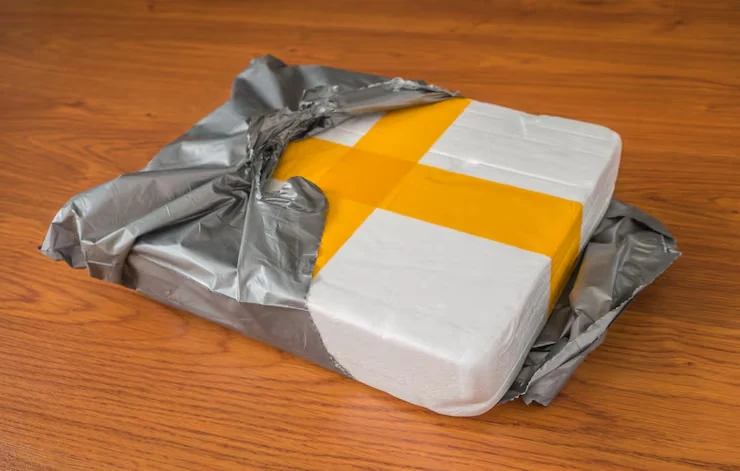
Evaluate packaging shipment consolidation against actual quotes, stock needs and approval readiness. Combining consignments can change the logistics plan, but a larger shipment should not be assumed cheaper or preferable without comparing the complete scope and consequences.
Identify what can truly travel together
List orders, SKUs, origin points, ready dates and destinations. Distinguish approved stock from items still awaiting artwork or technical release. A consolidation plan cannot rely on an unapproved variant being ready merely because another order is complete.
Record whether the same receiving site can accept all items and whether separate purchase-order identification is required. GS1 discusses logistics-unit identification. Use an agreed packing-list and label structure so the combined shipment remains separable at receipt.
Request matched transport scenarios
Ask for separate and consolidated quotations using actual packed dimensions and gross weights. DHL explains chargeable-weight comparisons, but only the current offers reveal the commercial effect of the proposed combination. Include collection, intermediate handling and final delivery scope.
Keep any extra storage or handling responsibilities visible. Ask whether repacking changes the shipping unit and requires review. Do not compress cartons or change an accepted packing arrangement solely to make a theoretical freight calculation smaller.
Compare time and inventory consequences
Record how long each ready order would wait and whether the buyer's production plan can tolerate that delay. Ask operations to identify shortages or excess inventory created by the proposed timing. A freight saving does not automatically outweigh a documented production need.
Start with readiness rather than a shared destination
Build a candidate table containing order, SKU, supplier or origin, destination, packing revision and accepted readiness state. Separate goods ready for dispatch from items waiting for artwork, technical release or commercial acceptance. A common destination is only one condition for consolidation. The plan also needs compatible timing, an identified physical arrangement and agreement on who handles the combined shipment.
Ask each origin owner to confirm what ready means. It might mean production complete, packed and identified, available for collection or another stated event. Do not combine these states into one date. A finished order awaiting packing is not necessarily ready for the same collection as a fully tenderable shipment. Label estimates and obtain current confirmation before a provisional consolidation becomes the booking basis.
Create complete separate and combined scenarios
For the separate scenario, show each shipment's origin, destination, packed units and requested service. For the combined scenario, show any intermediate collection, storage, repacking and onward movement. Identify the party responsible for every additional handover. If the goods remain at the supplier, clarify the actual storage and release arrangement. Do not assume consolidation includes free holding or transfers ownership at a particular event.
Obtain quotations using each scenario's actual dimensions and gross mass. The combined shipment may have a different physical arrangement, so request the relevant packing information. If repacking is proposed, ask the packing and logistics owners to review its suitability. A theoretical reduction in calculated volume does not justify changing an accepted packing method without the appropriate assessment.
Separate transport savings from the whole decision
Use actual matched quotations for freight and identified additional services. List storage, handling or other agreed costs separately. If the buyer wants to include internal costs, use its own supported basis. Unknown amounts remain open. Avoid entering an assumed saving simply because two shipments become one booking. The carrier's charging method and the complete service scope determine the financial effect.
For an illustrative comparison, define separate cost as accepted quote A plus accepted quote B. Define combined cost as the accepted combined quote plus any confirmed additional holding and handling. The difference is only a transport-scope comparison unless the model explicitly includes further categories. It is not automatically a project saving. Keep the source records and the comparison date so a later booking can be checked against the same assumptions.
Examine the cost of waiting operationally
Ask planning for each order's latest usable receipt event and the evidence behind it. Record current usable stock, committed production requirements and the status of incoming quantities. The consolidation team should understand what changes if the earlier order waits. Do not invent a production-stop cost or a universal number of safe waiting days. The operational owner must assess the actual consequence using current information.
In the existing illustrative A-and-B situation, A is ready and B still depends on artwork. Create a decision point before A's latest acceptable dispatch under the current plan. At that point, use B's actual readiness response rather than its hoped-for date. If B remains unresolved, choose among the options genuinely available to the business. Keeping A waiting indefinitely to protect an assumed saving is not a complete plan.
Preserve order and SKU identity in the combined load
Prepare a packing list that lets receiving separate purchase orders, SKUs and supplier lots. Identify mixed cartons or pallets and the content links they require. A combined logistics unit should not erase the underlying identities. If the receiver uses a formal logistics-label system, confirm the required identifiers and data. If it uses a simpler accepted system, ensure that its labels and packing list still support reconciliation.
Ask who creates the consolidated manifest and who checks it against the source orders. Errors can arise when quantities are copied from an earlier readiness forecast rather than final packing. Reconcile counts before dispatch. Give the destination the accepted manifest and expected shipment reference. It should be able to identify partial receipts or exceptions without booking the whole combined load as one undifferentiated item.
Set a release rule and fallback
Record what must be true before consolidation is authorised: named orders ready, packing confirmed, service accepted and destination available. Assign the person who confirms each condition. If a condition changes, return the plan for the relevant decision. A release rule is more useful than a general preference to combine shipments because it tells the team when the preferred option is actually executable.
Define a fallback using current options, such as shipping the ready order separately if the later order misses the agreed decision point. Obtain any required quotation and approval rather than assuming the original separate service remains available. Record who communicates the decision to supplier, logistics and receiving through the authorised project process. This prevents a late change from leaving goods waiting while each party expects another to release collection.
Review the actual outcome without universal conclusions
After receipt, compare quoted and actual cost, waiting period, quantities and handover events. Identify whether the original assumptions held and explain material differences. One successful combined shipment does not prove all future consolidation is preferable; one difficult movement does not invalidate the approach. Use the record to refine the next scenario comparison. The useful outcome is a justified decision for identified orders, with financial and operational consequences visible together.
Illustrative consolidation decision
Suppose Order A is ready this week and Order B is expected later after artwork acceptance. Create two scenarios: ship A now and B when released, or wait and ship both once B is actually ready. Enter only confirmed freight quotes and label B's date as provisional until accepted. Ask operations to record the latest usable receipt date for A. If waiting would cross that date, the decision needs a different plan rather than optimistic assumptions. Retain the scenario comparison and reasons so the next consolidation discussion starts from evidence instead of a general policy that everything must travel together.
A working record for this decision
Use this original worksheet with your product and supplier team. Give each row a named owner and evidence reference; a blank answer remains an open decision.
| Record | What to enter and why |
|---|---|
| Shipment candidates | List order, SKU, origin, destination and accepted readiness status for each candidate. |
| Packing scenarios | Record separate and combined carton or pallet arrangements with their dimensions and weights. |
| Quoted costs | Obtain matched service-scope offers, including extra handling or storage where applicable. |
| Timing consequence | Record waiting days, required receipt and operational effects using the buyer approved plan. |
| Decision record | Document chosen scenario, unresolved assumptions and responsibility for changes. |
Consolidated delivery: a practical specification example
A packaging quote is being compared across two delivery plans. Use the same filled or empty-pack arrangement, quantity and destination in both calculations. A flat-bottom pouch, mailer and reel can occupy very different shipment volumes. Record the actual carton or reel measurements; the unit price of an empty pack does not establish the delivered cost per usable item.
For this decision, start with the required dates and combined order volume. The useful output is a comparison that includes the inventory consequence. Put that output beside the relevant quotation, drawing or sample rather than leaving it in a separate email. This is an illustrative decision exercise, not a report of a completed customer trial.
Product references to make the discussion concrete
The catalogue includes courier bags and rice packaging bags. These examples show different physical constructions; they are not interchangeable specifications. Courier mailers close with an adhesive flap. Size the usable cavity around the actual item or inner pack, keeping the flap allowance separate. An invoice or POD document pocket can be included in the enquiry; confirm its dimensions and location on the drawing.
| Format reference | Material or construction to clarify | Details to include in the brief |
|---|---|---|
| Courier bags | Flexible mailing-bag film with an adhesive flap; polymer type, opacity and thickness are project specifications. | Item or inner-carton dimensions; usable height excluding the flap. |
| Rice packaging bags | Flexible gusseted bag or pouch construction; film layers, thickness, handle reinforcement and closure are specified for the fill. | Rice type and target net weight; filled envelope and side gusset. |
Use the reference pictures to identify the base, side panels, window or opening that you mean. A picture cannot supply the missing dimensions or material layers. If a photograph shows a finish or closure you do not want, state that difference explicitly; otherwise a visual reference can introduce an unintended requirement.
Complete the record before requesting the next sample
- Attach a comparison that includes the inventory consequence. Identify the product or SKU and the date of the observation.
- Record the required dates and combined order volume. Keep confirmed information separate from proposed values and questions for the supplier.
- Add the actual fill weight or volume, the dimension convention, material proposal and intended closure. Include the number of designs and quantity per design when requesting a quotation.
- State which question the next drawing, sample or quotation must resolve. A change of size, closure or material should remain visible alongside the earlier reference.
This record makes the next conversation specific. It lets the design, purchasing and packing teams work from the same proposed item and shows which decision still needs evidence. Review the related product pages for format details, or prepare a custom packaging brief with the unresolved requirements.
Put the decision into practice
1. Map the candidates. Separate ready and provisional orders before designing a combined shipment.
2. Quote both scenarios. Give logistics real packing information for separate and consolidated options.
3. Review operational effects. Ask the buyer team to assess waiting, shortages and inventory implications.
4. Release the chosen plan. Retain the accepted packing, timing and identification records for dispatch and receiving.
Ask Navkar Poly Print for readiness and packing details by order so your logistics team can compare actual consolidation options.
Sources and scope.
These references support the technical discussion. Product photographs illustrate formats; the material, dimensions and suitability of the proposed pack are confirmed for each project.
- DHL: calculating chargeable weights
Carrier explains actual versus volumetric weight; buyers must use current route-specific factors and quotations.
- GS1: Logistic Label Guideline
Primary guidance for identifying logistics units; buyer worksheet does not require a GS1 implementation unless agreed.
Let’s discuss your product.
Share your contents, dimensions, filling method, quantity and delivery destination. We’ll work through the proposed packaging specification with you.
Create a packaging brief