Build a material brief by stating what the package must do and which evidence will support acceptance. Keep the supplier’s proposed construction separate from the buyer’s requirements until the technical review connects them. A performance-based brief is especially useful when the buyer does not know the current film structure. It allows a concrete enquiry without inventing a material recipe from a photograph.
Start with the actual product journey
Record product form, proposed quantity, filling route, storage, distribution and customer use as far as known. Identify the practical concerns the packaging must address. Do not assume every product needs the highest possible barrier or that one construction fits a whole category. Ask the qualified team to prioritise the relevant requirements and identify information gaps. A buyer can provide a useful brief with open fields, provided they are labelled and assigned rather than silently replaced with standard values.
Define evidence at the right level
Some requirements concern the film, others the formed pouch, components or filled product. Record the appropriate level before requesting reports. AMETEK MOCON distinguishes film and package permeation testing; other properties likewise need an identified specimen and scope. The responsible technical team should select methods and acceptance criteria. Avoid combining different properties into a single quality score. A strong result in one subject cannot resolve an unanswered closure, compatibility or process question elsewhere in the package system.
Invite a traceable proposal
Ask suppliers to state the proposed construction, assumptions and evidence against the brief. Compare responses by requirement, noting supported, conditional and unassessed items. Where information is confidential or not yet available, agree the next technical exchange. A material proposal can be promising without being accepted for production. Bostik’s laminate-system information reinforces that the construction is a system of components; the exact proposal and application still need their own review. Preserve deviations so commercial comparison uses a common scope.
Use a requirement-to-evidence matrix
This original matrix is the core of the brief. Use one row per practical requirement and keep the proposed material response separate from the accepted technical decision.
| Record | What to capture and how to use it |
|---|---|
| Requirement and purpose | Describe the product or packing need in clear terms and identify why it matters. Avoid using only adjectives such as premium or high barrier, which do not tell the supplier what evidence will support acceptance. |
| Evidence level | State whether the question concerns film, converted pouch, component or filled product. Ask the qualified owner to choose the appropriate method and specimen, preserving the scope rather than requesting an unrelated generic certificate. |
| Supplier proposal | Record the construction reference, assumptions and evidence offered for the requirement. Keep missing information explicit and distinguish a recommended option from an accepted production specification. |
| Technical decision | Name the reviewer and record supported, conditional or unassessed status with reasoning. Link reports and sample identities so later buyers can understand how the proposal was evaluated instead of relying on a broad good-quality label. |
| Release and change | Record the accepted configuration and remaining evidence required before normal supply. Identify changes to product, material or process that require applicability review, keeping the final decision connected to the actual intended use. |
Use the matrix as a discussion tool, not a demand for every possible laboratory report. Evidence should answer the relevant requirements selected by the qualified team, with gaps managed deliberately.
Illustrative unknown-current-structure enquiry
A buyer has a filled pack and needs a replacement supply but does not know its construction. It sends the product and packing brief, representative reference and requirement matrix. Suppliers identify proposals and assumptions rather than claiming to know the original structure from appearance. The technical team then selects the evidence needed to compare candidates. The enquiry becomes concrete while remaining honest about the unknown baseline; no universal film prescription or inferred performance result is presented.
Write the requirement before the proposed construction
A performance brief begins with what the package must do for the identified product and route. State the product concern, the relevant condition and the decision the evidence must support. A layer stack can be a supplier proposal, but it should not replace the explanation of why that stack is needed. This leaves room for a technically justified alternative.
Separate mandatory requirements from preferences and unresolved assumptions. A fixture limit may be confirmed while an appearance preference remains flexible. A desired storage duration may still need product evidence. Keep each status clear so the supplier does not read every aspiration as an established technical specification or make an unverified promise to satisfy it.
Organise evidence by level
Identify whether each question concerns a material specimen, converted package, filled package or product outcome. A flat-film transmission report can support material screening. It cannot alone approve the complete closure or establish the product's shelf life. A filled geometry observation can answer fit while leaving barrier and compatibility to separate evidence.
Fraunhofer IVV's development page describes separate evaluation of mechanical, optical and gas/moisture barrier properties. This institute context supports keeping requirements distinct. The buyer's brief should identify the actual required outcome and relevant evidence rather than requesting a single undefined “high-performance” material.
Make every quantitative target interpretable
For a transmission target, include method, units and conditions through the qualified reviewer. For a dimension, identify measurement points and the agreed acceptance basis. For a handling outcome, describe the action and sample condition. A number without these references can lead two suppliers to answer different questions while appearing to meet the same target.
If the buyer does not yet know an appropriate target, state the product requirement and ask for a supported proposal. Do not invent a threshold merely to fill the specification table. The technical owner can then decide what assessment is needed and whether the proposed evidence addresses the intended use.
Compare supplier proposals without hiding differences
Use one row per requirement and columns for each proposal's construction, evidence and unresolved questions. Keep exclusions visible. If one proposal changes the format, filling route or closure as well as the film, show those changes explicitly. A cheaper material response may carry a different implementation scope that needs its own assessment.
For an illustrative enquiry, candidate A supplies a relevant film report but no finished-pouch reference. Candidate B supplies a representative pouch but incomplete test conditions. Neither should receive an automatic overall pass. Request the missing evidence for the decision that matters. This is more useful than averaging several unrelated property scores into a false sense of equivalence.
Define the technical decision and commercial decision separately
The technical review determines whether the proposed item has acceptable evidence for its requirements. Procurement evaluates quotation scope, actual prices and supply terms. These decisions inform each other without substituting for one another. A favourable commercial offer cannot close an unresolved product-protection requirement, while a promising material sample does not establish delivered cost.
Where a cost model is needed, include the relevant packaging, setup, filling, freight and loss assumptions using actual quotations or clearly labelled illustrative values. Compare the same saleable-output basis. Keep unknown amounts visible. A lower package mass is a physical observation, not proof of lower total cost or local recyclability.
Build change triggers into the brief
List the product, construction, feature, process and use conditions whose alteration would prompt review. The trigger is a question about evidence applicability, not a claim that every change automatically fails. Ask the relevant technical owner to assess what remains covered and what needs another observation or report.
The completed brief should let a supplier propose an identifiable solution and let the buyer explain the acceptance rationale. Retain current references and the decision owner for each important requirement. This creates a practical purchasing document that can evolve with the project while keeping performance claims tied to the actual evidence, conditions and package system rather than a borrowed structure name.
Material worksheet: a practical specification example
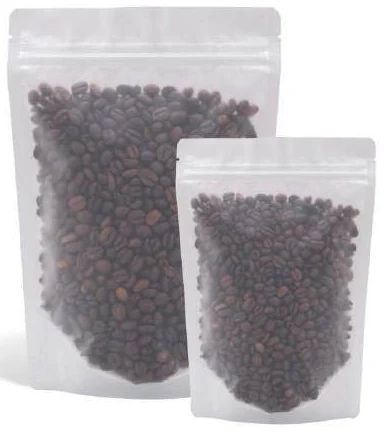
Two samples have similar appearances but different material requirements. One may use a clear panel and another an opaque surface; neither appearance specifies its complete layer structure. Keep the product, storage conditions, fill method and required performance in the brief. Ask for the proposed construction in writing so the comparison remains meaningful when a paper-look or metallic appearance is introduced.
For this decision, start with the known product requirements and open questions. The useful output is a written proposal with each unresolved requirement identified. Put that output beside the relevant quotation, drawing or sample rather than leaving it in a separate email. This is an illustrative decision exercise, not a report of a completed customer trial.
Product references to make the discussion concrete
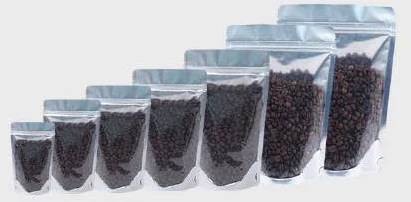
The catalogue includes clear-front opaque-back pouches and kraft paper pouches. These examples show different physical constructions; they are not interchangeable specifications. A clear front shows the contents while an opaque or metallic back provides a contrasting panel. Specify which face carries the principal artwork and check how it reads through the transparent face. The windowed side and opaque side need a coordinated material brief.
| Format reference | Material or construction to clarify | Details to include in the brief |
|---|---|---|
| Clear-front opaque-back pouches | Transparent front paired with opaque or foil-look back panels; confirm the layer construction on each face. | Front and back material requirements; artwork side and orientation. |
| Kraft paper pouches | Kraft or paper outer with a product-specific inner construction; paper appearance does not establish a plastic-free composition. | Paper colour and surface preference; full layer structure and thickness. |
Use the reference pictures to identify the base, side panels, window or opening that you mean. A picture cannot supply the missing dimensions or material layers. If a photograph shows a finish or closure you do not want, state that difference explicitly; otherwise a visual reference can introduce an unintended requirement.
Complete the record before requesting the next sample
- Attach a written proposal with each unresolved requirement identified. Identify the product or SKU and the date of the observation.
- Record the known product requirements and open questions. Keep confirmed information separate from proposed values and questions for the supplier.
- Add the actual fill weight or volume, the dimension convention, material proposal and intended closure. Include the number of designs and quantity per design when requesting a quotation.
- State which question the next drawing, sample or quotation must resolve. A change of size, closure or material should remain visible alongside the earlier reference.
This record makes the next conversation specific. It lets the design, purchasing and packing teams work from the same proposed item and shows which decision still needs evidence. Review the related product pages for format details, or prepare a custom packaging brief with the unresolved requirements.

Approve the evidence-linked specification
Convert the accepted proposal into a controlled material specification linked to the product, drawing and filling route. Keep the matrix as the reasoning record and use it for later substitutions. Ask for proposed changes before production. This creates a useful purchasing specification even when the initial buyer brief began with a product need rather than a known material code.
Send the completed requirement-to-evidence material matrix with your product and filling details to Navkar Poly Print for a project-specific discussion. Ask for the proposed specification, evidence required and open questions to be recorded before quotation approval.
Sources and scope.
These references support the technical discussion. Product photographs illustrate formats; the material, dimensions and suitability of the proposed pack are confirmed for each project.
- AMETEK MOCON permeation testing
Instrument-manufacturer context for film and package permeation; product qualification requires appropriate scope.
- Bostik laminate adhesives
Adhesive manufacturer context for flexible lamination; suitability and process conditions remain project-specific.
- Development and optimization of packaging materials
Institute evaluates mechanical, optical and gas/moisture barrier properties separately; supports evidence-level organisation only.
Let’s discuss your product.
Share your contents, dimensions, filling method, quantity and delivery destination. We’ll work through the proposed packaging specification with you.
Create a packaging brief