Approve a nut portion pack as an individual product unit and as part of its selling or delivery set. Each pouch needs a clear quantity, useful opening and product access; the outer arrangement needs count, identification and handling review. A neat multipack mock-up does not demonstrate that every inner unit works.
Define the unit's commercial role
State whether the pack is sold alone, included in a multipack, supplied for hospitality or used in an assortment. Ask the responsible content reviewer to confirm what information belongs on each level. The packaging design should follow that approved requirement rather than guessing which copy can be omitted.
Record actual nut form and portion quantity. Small packs should still use representative whole and broken-piece distribution according to the product specification. Do not assume a lower weight makes product variation irrelevant. A few large pieces can materially affect access and appearance in a small component.
Define what the individual unit must accomplish
State whether each unit is a retail item, part of a counted multipack or an internal hospitality portion. The responsible business and content owners should confirm the information and identification requirements for the actual route. Do not assume that a small pouch can omit copy because it normally sits inside a larger box.
Record the product quantity and meaningful whole-piece variation. In a small pack, one large piece can influence the visible arrangement or the space near the closing region. Use representative material rather than arranging an ideal-looking collection for the proof photograph.
Identify the expected opening and removal task. A portion intended for direct consumption may need a different observation from one emptied into a bowl. Begin with the closed complete sample so the opening feature and remaining access are included.
For an illustrative brief, unit U1 might contain one product at a defined quantity and belong to a set of ten units. The unit and set need their own references. Those fictional identifiers demonstrate the record structure without claiming a particular portion size, mandatory count or legal content rule.
Review the product and opening together
Fill representative samples through the intended route. Observe product near the closing region and the complete closed shape. Open the received-state sample as intended and remove all contents normally. Record the remaining edge and any pieces that are difficult to access.
UC Davis's walnut guidance identifies handling as part of product quality. Keep a before-and-after condition observation where relevant, using the product owner's method. A clean-looking portion pouch does not establish that the product has been handled acceptably.
Review opening where product and geometry meet
Observe the actual filled region beside the intended opening path. Record whether the user can locate the cue, obtain an ordinary grip and create useful access. The feature should be assessed as part of the complete small pack rather than as an isolated notch or tear line.
Remove the product by the intended action and note pieces that remain near folds or the opening edge. A pouch that opens visibly can still be inconvenient to empty. If the user must shake or reposition it, record that action and ask whether it fits the intended proposition.
Keep product-condition assessment separate and use the owner's method where required. A convenient opening can coexist with an unresolved product-damage concern. Conversely, acceptable product condition does not establish that a customer can remove the contents comfortably.
An illustrative comparison might retain candidate B because the intended removal task was clearer, while candidate A's top region left restricted access. Record the actual sample and quantity. The decision applies to that application and should not become a universal minimum opening dimension for all nut portions.
Use a two-level portion-pack record
| Level | Required fields | Physical review |
|---|---|---|
| Individual unit | Product, quantity, drawing and artwork ID | Fill, close, open and empty |
| Unit identification | Approved copy and variable-code task | Legibility on the complete pouch |
| Selling set | Count, assortment and outer reference | Arrangement and access |
| Shipping set | Carton count and orientation | Normal loading and receiving |
| Traceability link | Inner and outer reference relationship | Records remain connected |
This original record prevents an approved outer design from obscuring an unreviewed inner component. The required information at each level should be confirmed by the responsible reviewer for the actual sales route.
Where the packing operation adds variable information, review a representative complete output through the responsible owner. Record the code task, location and sample identity. The preprinted artwork and the finished coded pouch are different review objects. If the outer set also carries variable information, identify how the records remain connected. This gives procurement a traceable handover without assuming that approval of one clean proof covers every later coding action.
Check code and copy on the small shape
Review the complete proof on the actual construction drawing, then inspect the filled sample. Curvature, seals and opening features can reduce usable regions. Do not solve space conflicts by shrinking text without the content owner's approval. Consider the layout or component proposal first.
If dimensions are entered into customer systems, assign that record separately. GS1's standard provides package measurement rules for relevant trade items. Keep the inner unit and outer set linked to their correct identities rather than reusing one dimensional description for both.
Reconcile count, assortment and pack level
Build an assembly record from the intended complete set. List each inner reference and count, the outer reference and loading arrangement. If all units are identical, retain their common identity; if the set mixes products, give each product its own controlled line.
An explicitly illustrative assortment contains four units of A, three of B and three of C. The total is ten units. If each contains an assumed 20 g, the illustrative combined net content is 200 g before considering any actual declaration requirements. The arithmetic explains the set relationship; the responsible reviewer must approve real quantities and copy.
Check the assembled set physically with filled units. Empty pouches may sit differently and do not reproduce contact at the closing regions. Observe insertion, ordinary removal and the remaining arrangement after one or more units are taken out.
Record whether a unit can be identified after separation from the set. That question may matter operationally even where the approved sales route keeps the unit inside an outer pack. Keep the answer under the relevant business and content review rather than assuming the outer carton solves every identity task.
Review the set after ordinary removal
Arrange the portion pouches in the proposed outer unit and remove them as a buyer or staff member would. Record whether the next unit remains accessible and identifiable. For an assortment, verify the intended mix and count with a simple assembly record.
An illustrative issue is an attractive outer box that grips the small pouches so tightly that removal bends the top closure. Record the actual contact and ask for a complete inner-and-outer review. The solution may involve arrangement rather than a change to every pouch.
Control changes across the unit and set
When an inner drawing changes, inspect affected outer fit, count and arrangement. A small change can matter to a tightly arranged set even if the portion quantity is unchanged. Conversely, a revised outer design should not silently alter the approved individual unit.
Keep the order schedule consistent with the two-level record. The supplier needs to know whether the quotation covers individual pouches, assembled sets, shipping cartons or another agreed scope. A price per thousand units can be ambiguous if the unit is not defined.
Before release, reconcile the complete artwork and code tasks at each level. Identify any information that is added during packing and who verifies it. A clean preprinted proof does not demonstrate the actual variable-data result on the finished portion pouch.
Retain a matched reference for the approved unit and assembled set, including photographs and drawing revisions. Future repeat orders can then follow the correct combination. If a product form, portion quantity or set count changes, use the record to identify the affected tasks and approvals instead of carrying every previous conclusion into a new arrangement.
Portion packs: a practical specification example
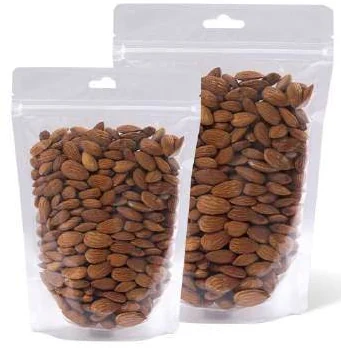
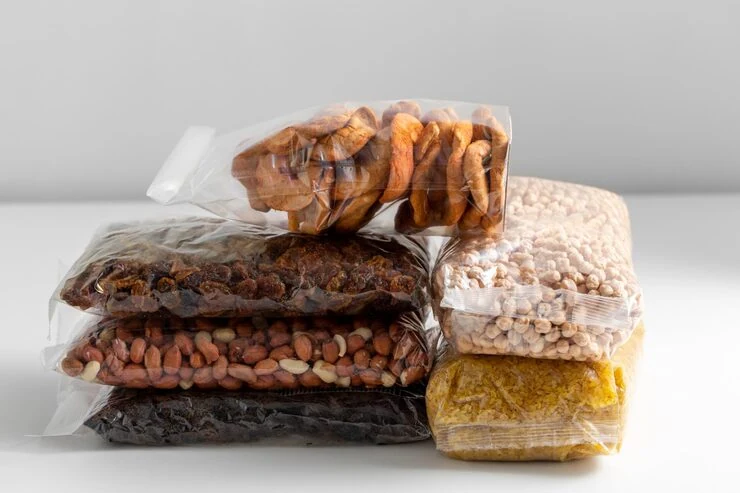
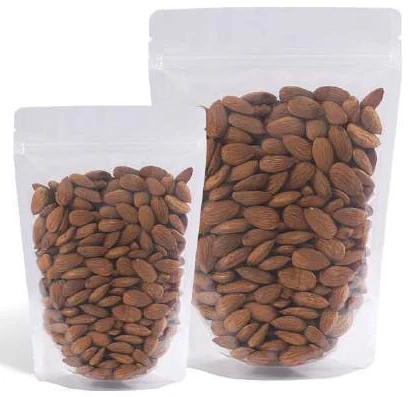
A dry-fruit range includes almonds, raisins and a gift assortment. Equal weights may occupy different volumes and present differently behind a window. Compare each product at its own intended fill rather than copying one size across the range. For a zipper pouch, review access and reclosure after repeated portions; for a gift pack, review how the filled pouch sits inside the outer presentation.
For this decision, start with the intended single serving and opening method. The useful output is a small-pack layout with readable artwork and seal clearance. Put that output beside the relevant quotation, drawing or sample rather than leaving it in a separate email. This is an illustrative decision exercise, not a report of a completed customer trial.
Product references to make the discussion concrete
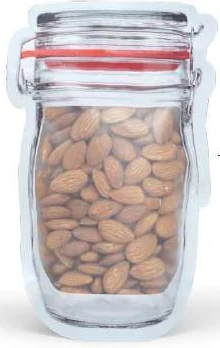
The catalogue includes jar-shaped zipper pouches and window pouches. These examples show different physical constructions; they are not interchangeable specifications. A contoured outline gives the pouch a jar-like silhouette while retaining a flexible pack construction. The narrow shoulder and top opening affect filling and access. Review the usable cavity, zipper length and artwork boundaries on a dimensioned drawing before committing to the shape.
| Format reference | Material or construction to clarify | Details to include in the brief |
|---|---|---|
| Jar-shaped zipper pouches | Clear or frosted flexible pouch construction with a zipper; the jar shape is a profile, not a rigid container. | Usable cavity and narrowest opening; die-cut outline and corner radii. |
| Window pouches | A transparent window combined with paper-look or opaque flexible panels; confirm the full structure and product requirements. | Window width, height and location; product visibility at full and low fill. |
Use the reference pictures to identify the base, side panels, window or opening that you mean. A picture cannot supply the missing dimensions or material layers. If a photograph shows a finish or closure you do not want, state that difference explicitly; otherwise a visual reference can introduce an unintended requirement.
Complete the record before requesting the next sample
- Attach a small-pack layout with readable artwork and seal clearance. Identify the product or SKU and the date of the observation.
- Record the intended single serving and opening method. Keep confirmed information separate from proposed values and questions for the supplier.
- Add the actual fill weight or volume, the dimension convention, material proposal and intended closure. Include the number of designs and quantity per design when requesting a quotation.
- State which question the next drawing, sample or quotation must resolve. A change of size, closure or material should remain visible alongside the earlier reference.
This record makes the next conversation specific. It lets the design, purchasing and packing teams work from the same proposed item and shows which decision still needs evidence. Review the related product pages for format details, or prepare a custom packaging brief with the unresolved requirements.
Release both levels together
Link the portion drawing, complete artwork, product quantity, outer count and approved arrangement. State the packing route and actual destination. If an inner unit changes, review affected outer fit and information before repeat production.
Send Navkar Poly Print the two-level record, representative nuts and intended set configuration. Request a proposal that can be assessed as usable individual pouches within a clearly specified complete selling and delivery arrangement.
Sources and scope.
These references support the technical discussion. Product photographs illustrate formats; the material, dimensions and suitability of the proposed pack are confirmed for each project.
- UC Davis walnut quality and handling guidelines
Handling and storage are material parts of nut quality; no duration or packaging guarantee inferred.
- GS1 Package and Product Measurement Standard
Distinguishes measurement treatment for different filled flexible-pack types; does not set converter tolerances.
Let’s discuss your product.
Share your contents, dimensions, filling method, quantity and delivery destination. We’ll work through the proposed packaging specification with you.
Create a packaging brief