Assess a raisin pouch with the actual finished product and normal filling method. Record whether product flows individually, arrives in clusters or remains near folds during use. The trial should connect product condition with pack tasks rather than assuming one dry-fruit size or closure works for every raisin product.
Identify the product and trial condition
Use the product owner's current finished-product reference, including relevant coating or treatment information. State intended quantity and packing conditions. If different product grades or sources are expected, ask which representative variation should be included in the trial. Do not choose only the easiest-flowing sample.
Record how the trial material was prepared and handled before filling. A sample delivered in a different condition may not represent routine production. The product owner should define the relevant condition; the packaging team should document it rather than invent a preparation method.
Make product condition part of the trial input
Ask the product owner to identify the finished raisin form, current grade and relevant treatment. Record when and where the sample was taken, and how it was handled before the trial. These details help reviewers understand whether an observed cluster existed before the pouch was involved.
Keep the sample preparation within the owner's approved procedure. Do not warm, cool, separate or coat the material simply to make a convenient demonstration unless that action represents the intended process and is authorised. An altered sample answers a different application question.
If normal production includes meaningful variation, agree how the comparison will represent it. Several casually selected samples do not automatically cover that range. The owner can identify whether the concern involves an ordinary condition or a particular challenge to investigate.
For an illustrative record, sample R1 could be identified as finished whole raisins received from the intended production point, while sample R2 represents a separately approved chopped ingredient. Those fictional references prevent the team from treating two physically different applications as duplicate trials merely because both are raisins.
Observe movement at defined points
Watch product presentation, entry into the pouch and the state before final closing. Record clusters, bridging and material retained near the mouth. Note where the event first appears. A dosing or transfer issue should not be silently converted into a dimensional change request.
California Raisins' processing resource provides raisin-specific handling context. Use the actual finished-product brief when requesting a pouch proposal rather than treating all dried fruit as one technical application. The source does not approve a particular pouch construction or replace the product owner's own specification.
Describe the event before changing the pouch
Observe the product before transfer, during entry and immediately before closing. Identify where clusters, hesitation or retained material first appear. A stage map is more informative than a single completed-pack photograph because it narrows the possible explanations.
If a cluster is already visible at the feed point, record that fact. If individual pieces reach the mouth but pause at an entry restriction, record the contact and actual transfer method. Neither observation should become a universal diagnosis without further assessment.
An illustrative sequence might show smooth entry but product collected high on one wall after filling. The next comparison could examine the defined transfer arrangement with the packing owner. A request for a stronger material would not address the observed location or action.
Keep interventions visible. When an operator repositions a pouch or clears product during a demonstration, note when and why. A convenient final sample can otherwise hide repeated work that the intended production process does not allow. The supplier needs to understand the unresolved task before proposing another geometry.
Use a condition-and-task record
| Condition or stage | Record | Question answered |
|---|---|---|
| Trial product | Product ID and actual condition | Is the sample representative? |
| Product entry | Flow, clusters and mouth interaction | Can normal filling proceed? |
| Ready to close | Product location near the working region | Is closure assessment meaningful? |
| First use | Opening and normal removal | Is product access suitable? |
| Partly used | Remaining product and pack shape | Does ordinary use remain practical? |
This original record avoids assigning every cluster to a pack defect. It also prevents a good fill result from being treated as proof of convenient customer access.
Plan which samples support each observation. A pack opened for a detailed product-condition assessment cannot subsequently represent an unopened first-use task. Allocate or identify the relevant samples before the trial, and record any replacement with its reason.
Keep the observer's wording consistent across candidates. If one sample is described as ordinary removal and another receives a detailed sequence of instructions, the results include that difference. The design team needs to know whether a proposed improvement came from the pack arrangement, additional guidance or both.
Review the consumer task separately
Observe the complete unopened pack through first opening and normal product removal. State whether the intended task is pouring, scooping or taking individual portions. If a reclosure is specified, include product removal and reclosure at a defined partly used state.
An illustrative finding could be acceptable filling but difficult removal of clustered product through a narrow mouth. The next design question concerns the intended access task and actual product condition. A vague request for a stronger pouch would not resolve that observation.
Assess the complete customer access sequence
State whether the user pours, scoops or removes a portion by hand. Use the actual unopened pack, complete opening feature and ordinary receiver or utensil. The access left after first opening may differ from the empty component's initial mouth.
Observe a partly used condition where repeated use is intended. Record remaining product location, pouch shape and the action needed to reach it. If reclosure is specified, include access to the feature after normal product removal rather than demonstrating it only on an empty clean sample.
An illustrative candidate may fill acceptably but require the customer to reach deep into a narrow partly used pouch. Another candidate may improve that task while using a different display profile. Record the trade-off and ask the product owner to decide which proposition is intended.
Avoid calculating a remaining-product percentage from a casual demonstration. If residual quantity matters commercially, the team should define the removal method, measurement and sample coverage. A useful qualitative observation can still identify where access is awkward without being promoted into a quantified yield claim.
Keep technical conclusions specific
Ask the responsible technical owners to identify evidence for the proposed structure, closure and actual storage conditions. A short fill-and-use trial does not establish a storage duration. Do not prescribe a laminate solely because it is common in another dry-fruit category.
California Raisins' form-and-function resource distinguishes raisin ingredient forms. Identify whether the actual product is whole, chopped or another finished form rather than transferring evidence by ingredient name alone. A mixed raisin-and-nut product also needs its own combination review rather than borrowed single-ingredient approvals.
Give each proposed adjustment a decision question
Write the observed event, the task it affects and the proposed comparison. If the concern is entry, compare a relevant mouth or transfer arrangement. If the concern is reaching remaining product, compare the opened access and geometry. Keep the finished product and quantity identified throughout.
Where practical, change one relevant input so the team can interpret the result. If product condition, pouch and transfer method all change, describe the observation as applying to the new complete setup. It may be a useful proposal, but it does not isolate a single cause.
An illustrative decision can retain a candidate for a further machine trial after a customer-access comparison, with the line-interface gate still open. Procurement should record the reason for advancement and the evidence required next. This is clearer than calling the candidate approved without saying which tasks were assessed.
At final release, match the raisin product reference with drawing, construction, artwork and packing-route references. Preserve the trial conditions beside them. Future changes in product form or source can then prompt a focused impact review instead of automatically inheriting an earlier result from a different raisin application.
Raisin packaging: a practical specification example
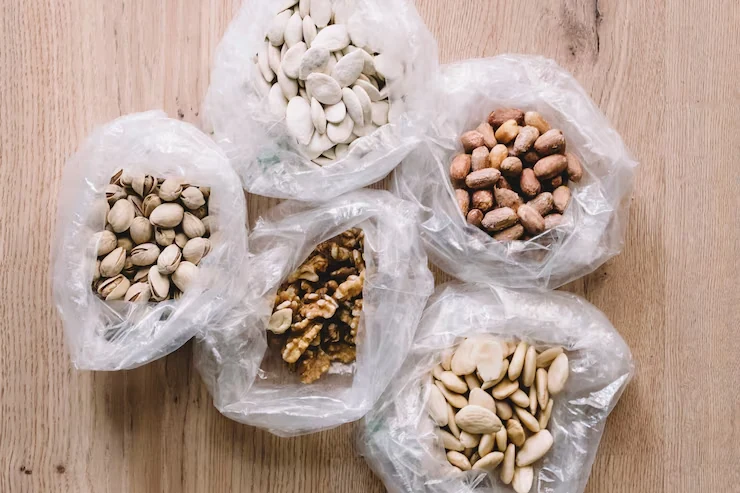
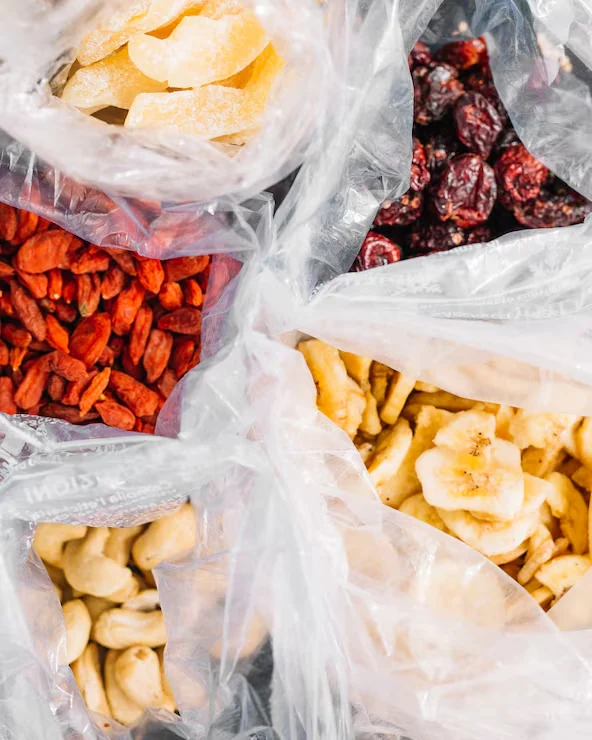
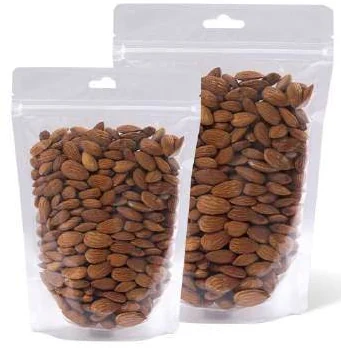
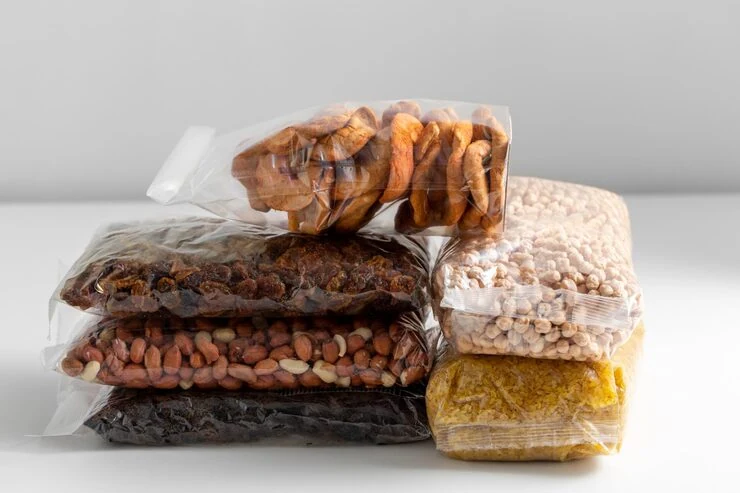
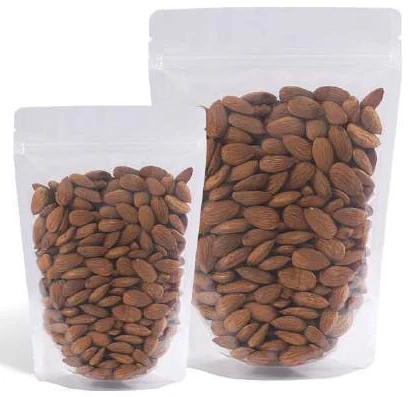
A dry-fruit range includes almonds, raisins and a gift assortment. Equal weights may occupy different volumes and present differently behind a window. Compare each product at its own intended fill rather than copying one size across the range. For a zipper pouch, review access and reclosure after repeated portions; for a gift pack, review how the filled pouch sits inside the outer presentation.
For this decision, start with the fill behaviour and dispensing requirement. The useful output is a check of usable opening and product movement. Put that output beside the relevant quotation, drawing or sample rather than leaving it in a separate email. This is an illustrative decision exercise, not a report of a completed customer trial.
Product references to make the discussion concrete
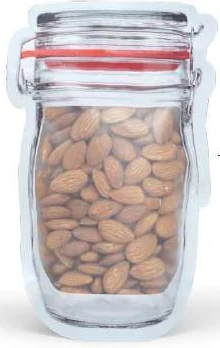
The catalogue includes jar-shaped zipper pouches and window pouches. These examples show different physical constructions; they are not interchangeable specifications. A contoured outline gives the pouch a jar-like silhouette while retaining a flexible pack construction. The narrow shoulder and top opening affect filling and access. Review the usable cavity, zipper length and artwork boundaries on a dimensioned drawing before committing to the shape.
| Format reference | Material or construction to clarify | Details to include in the brief |
|---|---|---|
| Jar-shaped zipper pouches | Clear or frosted flexible pouch construction with a zipper; the jar shape is a profile, not a rigid container. | Usable cavity and narrowest opening; die-cut outline and corner radii. |
| Window pouches | A transparent window combined with paper-look or opaque flexible panels; confirm the full structure and product requirements. | Window width, height and location; product visibility at full and low fill. |
Use the reference pictures to identify the base, side panels, window or opening that you mean. A picture cannot supply the missing dimensions or material layers. If a photograph shows a finish or closure you do not want, state that difference explicitly; otherwise a visual reference can introduce an unintended requirement.
Complete the record before requesting the next sample
- Attach a check of usable opening and product movement. Identify the product or SKU and the date of the observation.
- Record the fill behaviour and dispensing requirement. Keep confirmed information separate from proposed values and questions for the supplier.
- Add the actual fill weight or volume, the dimension convention, material proposal and intended closure. Include the number of designs and quantity per design when requesting a quotation.
- State which question the next drawing, sample or quotation must resolve. A change of size, closure or material should remain visible alongside the earlier reference.
This record makes the next conversation specific. It lets the design, purchasing and packing teams work from the same proposed item and shows which decision still needs evidence. Review the related product pages for format details, or prepare a custom packaging brief with the unresolved requirements.
Turn findings into a targeted sample request
Describe the event, stage and consequence with a sample identity. Ask whether a proposed change addresses filling access, customer removal or another specific task. If the product condition changes at the same time, record that difference and avoid attributing the result to the pouch alone.
Send Navkar Poly Print the condition-and-task record, representative raisins, quantity and packing-interface details. Request samples that resolve the actual access or fit question, with technical suitability assessed against the real finished product and intended conditions.
Sources and scope.
These references support the technical discussion. Product photographs illustrate formats; the material, dimensions and suitability of the proposed pack are confirmed for each project.
- California Raisins: processing details and handling resources
Primary industry resource addressing actual raisin processing and handling; no imported storage duration.
- California Raisins: ingredient form and function
Differentiates raisin ingredient forms; not a packaging prescription.
Let’s discuss your product.
Share your contents, dimensions, filling method, quantity and delivery destination. We’ll work through the proposed packaging specification with you.
Create a packaging brief