Specify a dates pouch using the actual product form and handling condition. Whole dates, pitted dates and cut pieces should not inherit one filling or opening approval. Record how the finished product moves, clusters and contacts the pouch, then review the complete pack under its intended process and use conditions.
Describe the finished dates accurately
Record the product owner's specification, including whole or pitted form, cut size where relevant and any coating or other finished treatment. State intended quantity and the conditions supplied by the product owner for filling and storage. Avoid guessing those conditions from the product category.
UC Davis's date factsheet identifies product-specific quality and storage considerations. Use it as a reason to obtain an actual product brief, not as a shelf-life promise for a pouch. Its conditions cannot be transferred automatically to an unassessed commercial product.
Identify the form before discussing dimensions
Ask whether the product is whole, pitted, filled, cut or another controlled form. Record the actual commercial product reference and any relevant finished treatment. Do not use a photograph of one date variety as the sole description for another product.
The UC Davis date factsheet distinguishes maturity stages and cultivar-related quality concerns. It also describes darkening as affected by moisture and temperature. This supports a product-specific brief; its historical conditions should not be converted into a storage recipe for an unassessed pouch.
For fit work, include ordinary variation in piece size and shape as defined by the product owner. For handling work, identify the actual product condition when it reaches packing. A sample taken at a different process stage can be useful, but its limits should remain visible.
If several date forms are proposed for one component, create separate observations rather than assuming a shared ingredient name establishes common behaviour. A commercial wish to use one pouch can guide the comparison, but the decision needs the actual filling and customer-access evidence for each form.
Observe the route into the pack
Use representative finished dates and the intended filling method. Record how the product enters the mouth, whether pieces cluster and where they contact the walls or closing region. If the trial uses hand placement, identify that limitation when the planned routine is automated.
Keep a before-fill product observation so later handling findings have a baseline. The product owner should define acceptable condition and how it is assessed. Do not interpret normal product variation as a pouch defect without a supported comparison.
Trace contact and clustering without assigning cause early
Watch the product presentation before entry. Record whether pieces arrive individually, together in a cluster or by deliberate placement. Then observe contact at the mouth, wall and intended closing region. Keep the sequence tied to sample identities.
Describe what is visible in plain terms. Product remained on a wall after transfer is an observation. The film caused sticking is a causal conclusion that needs further evidence. Keeping those statements separate gives the technical team room to investigate product condition, contact and process together.
An illustrative comparison might show a cluster already present before it enters both candidate pouches. That result points towards understanding the incoming product and transfer task before treating the cluster as a component defect. Another comparison might identify an access restriction only in one geometry.
Record any permitted adjustment during filling. If the operator manually separates pieces for the demonstration, state it. The proposed routine process may not include that action. A sample that can be filled after intervention demonstrates a different condition from one that proceeds through the intended operation unaided.
Use a dates handling-and-access sheet
| Task | Observation | Decision owner |
|---|---|---|
| Present product | Actual form and condition | Product owner |
| Fill | Entry, clustering and wall contact | Packing |
| Prepare closure | Product near the working region | Packing and technical quality |
| First opening | Cue, grip and resulting access | Product and design |
| Remove dates | Individual or bulk removal as intended | Product owner |
| Reclose if specified | Feature access after use | Packaging and product |
This original sheet separates a product-handling question from a component-performance question. Record photographs and sample identities where clustering or access is difficult to explain in words.
If the product forms part of a gift assortment, retain its own inner-unit identity before reviewing the outer arrangement. A box that accepts the filled pouch does not establish convenient removal of the dates. Keep the inner access finding and assembled-set fit finding in separate record fields, then reconcile both with the proposed commercial scope. This makes later substitutions easier to assess without reopening unrelated products in the same set.
Review removal from the filled pouch
Open the complete sample as intended and remove dates through the normal task. Observe access to individual pieces or bulk transfer, depending on the product proposition. Record material left near folds or an opening feature. Do not pre-arrange the contents to make the demonstration easier.
For an illustrative comparison, a pouch may fill acceptably but make it difficult to reach the last pieces near its base. Another may improve access while changing retail presentation. Record both consequences so the product team selects a whole-pack proposal rather than a single preferred front silhouette.
Review individual removal and bulk transfer separately
State which customer task belongs to the product. A consumer taking individual dates needs useful reach and visibility. A food-preparation user pouring a defined quantity needs a controlled transfer into the actual receiving arrangement. Do not combine those tasks into one vague access judgement.
For individual removal, begin with the complete opening and observe the route to the first and last pieces. For bulk transfer, record the receiver, pouch orientation and any product remaining after the ordinary action. The product owner should approve handling conditions used in either demonstration.
An illustrative finding could be comfortable access to the top layer but repeated repositioning to reach pieces near a base fold. Record the action and location. A geometry change may help, but it should be compared against display, filling and carton consequences before becoming the preferred solution.
Keep cleanup or residual-product observations specific. Product remaining in a pouch is useful evidence only when the removal method and condition are known. Avoid converting one informal observation into a yield percentage or promising a residue-free pack without an appropriate defined assessment.
Ask for the actual technical evidence
Provide the proposed material and closure to the responsible product and technical reviewers. Ask what compatibility, complete-pack and storage evidence is needed for the actual dates product and conditions. Do not claim a universal barrier requirement or duration from the visual appearance of the laminate.
FAO's date packinghouse chapter discusses packaging as part of date quality and market presentation. Identify the actual date form and handling requirements when preparing this brief; if the product joins an assortment, record it as a distinct inner unit. The historical guidance does not approve a current pouch, process or storage duration.
Convert observations into a bounded proposal
Summarise the product form, quantity, packing route and intended access task in the proposal request. Include the actual sample references and the technical conditions supplied by the product owner. This gives the converter enough information to explain a proposed geometry and construction without guessing the application.
Separate the proposed component from the evidence still needed to approve it. A dimensioned sample can resolve mouth access while material compatibility or storage work continues under the accountable team. Record the distinction in the internal decision file.
For an illustrative release sequence, select a physical candidate after the intended filling and removal tasks are assessed, then review the complete production proposal against the technical evidence and approved copy. If a development sample differs in construction, identify the affected tasks before relying on its observation.
Retain the approved dates reference with the pack identifiers. A later change in form, treatment or intended use should trigger an impact review. The result may retain the existing pouch or require further samples, but the decision should follow the actual change rather than the familiarity of the previous printed pack.
Date packaging: a practical specification example
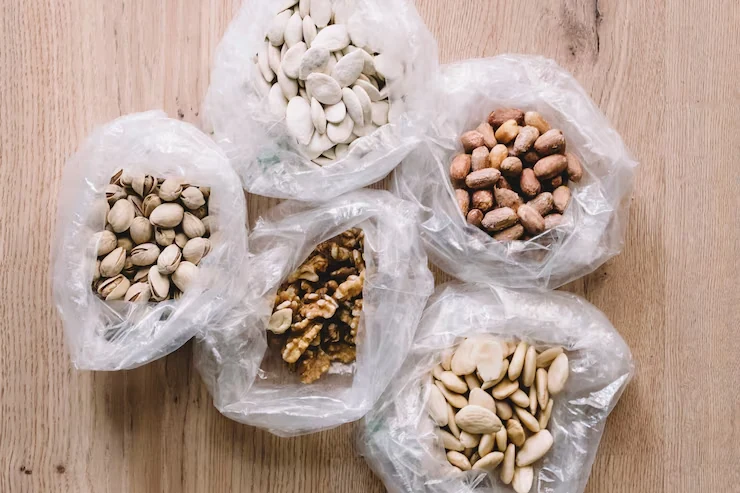
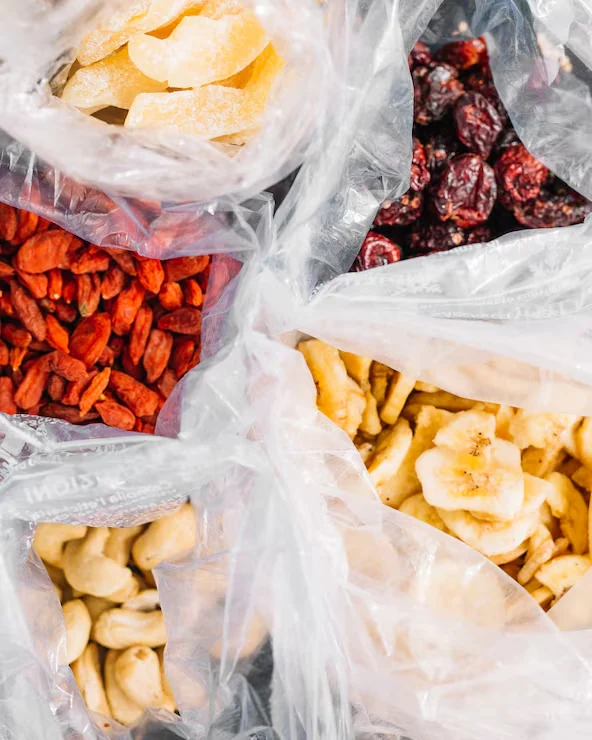
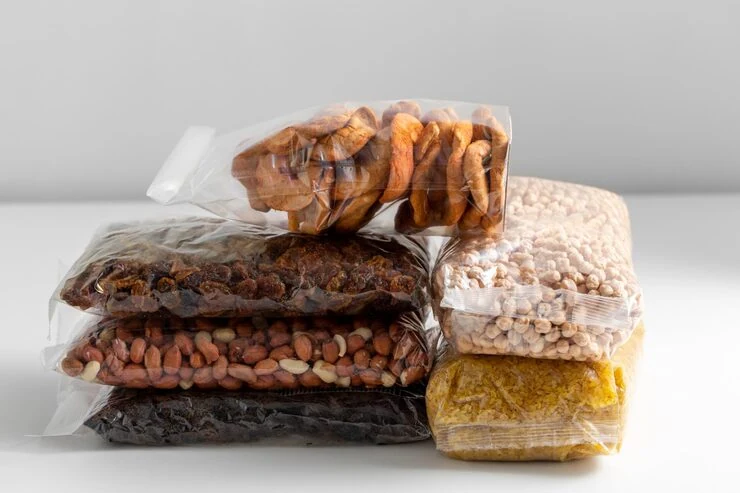
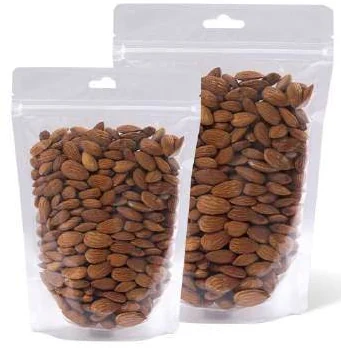
A dry-fruit range includes almonds, raisins and a gift assortment. Equal weights may occupy different volumes and present differently behind a window. Compare each product at its own intended fill rather than copying one size across the range. For a zipper pouch, review access and reclosure after repeated portions; for a gift pack, review how the filled pouch sits inside the outer presentation.
For this decision, start with the product shape and surface condition. The useful output is a filled-sample review of insertion, presentation and closing. Put that output beside the relevant quotation, drawing or sample rather than leaving it in a separate email. This is an illustrative decision exercise, not a report of a completed customer trial.
Product references to make the discussion concrete
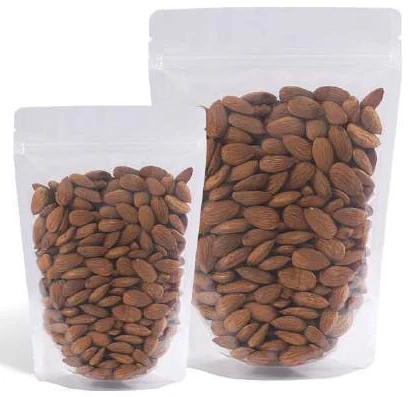
The catalogue includes jar-shaped zipper pouches and window pouches. These examples show different physical constructions; they are not interchangeable specifications. A contoured outline gives the pouch a jar-like silhouette while retaining a flexible pack construction. The narrow shoulder and top opening affect filling and access. Review the usable cavity, zipper length and artwork boundaries on a dimensioned drawing before committing to the shape.
| Format reference | Material or construction to clarify | Details to include in the brief |
|---|---|---|
| Jar-shaped zipper pouches | Clear or frosted flexible pouch construction with a zipper; the jar shape is a profile, not a rigid container. | Usable cavity and narrowest opening; die-cut outline and corner radii. |
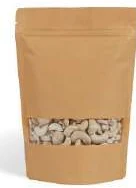
| Window pouches | A transparent window combined with paper-look or opaque flexible panels; confirm the full structure and product requirements. | Window width, height and location; product visibility at full and low fill. |
Use the reference pictures to identify the base, side panels, window or opening that you mean. A picture cannot supply the missing dimensions or material layers. If a photograph shows a finish or closure you do not want, state that difference explicitly; otherwise a visual reference can introduce an unintended requirement.
Complete the record before requesting the next sample
- Attach a filled-sample review of insertion, presentation and closing. Identify the product or SKU and the date of the observation.
- Record the product shape and surface condition. Keep confirmed information separate from proposed values and questions for the supplier.
- Add the actual fill weight or volume, the dimension convention, material proposal and intended closure. Include the number of designs and quantity per design when requesting a quotation.
- State which question the next drawing, sample or quotation must resolve. A change of size, closure or material should remain visible alongside the earlier reference.
This record makes the next conversation specific. It lets the design, purchasing and packing teams work from the same proposed item and shows which decision still needs evidence. Review the related product pages for format details, or prepare a custom packaging brief with the unresolved requirements.
Release a precise dates application brief
Link the product reference, form, quantity, packing method and access observations to the proposed drawing. State which conditions were actually reviewed. A later move from whole to cut product should trigger an impact review, even if the brand and declared weight stay the same.
Send Navkar Poly Print the dates handling-and-access sheet, representative finished product and technical conditions supplied by its owner. Request a sample proposal that can be assessed through filling, closing and customer access, with material and storage suitability reviewed separately.
Sources and scope.
These references support the technical discussion. Product photographs illustrate formats; the material, dimensions and suitability of the proposed pack are confirmed for each project.
- UC Davis Postharvest Research and Extension: date factsheet
Dates have product-specific quality and storage considerations; no universal pouch suitability inferred.
- FAO: date harvesting, packinghouse management and marketing aspects
Official date-specific packinghouse chapter links fruit quality, packaging and market presentation; historical numerical limits, legal statements and storage recipes are not adopted.
Let’s discuss your product.
Share your contents, dimensions, filling method, quantity and delivery destination. We’ll work through the proposed packaging specification with you.
Create a packaging brief