A namkeen mixture brief should describe the mixture's components and behaviour, not only its product name and weight. Sev, peanuts, flakes and other pieces may move or settle differently. Give the supplier and packing team a representative finished product so the pouch proposal can be reviewed against the real mixture.
Describe the mixture at the useful level
List the component types, intended formulation reference and normal physical variation. The supplier may not need confidential recipe percentages at the first enquiry, but it needs enough information to understand piece size, fines and handling behaviour. Agree how sensitive product information will be shared through the normal purchasing process.
Provide the actual seasoned product for trials when appropriate. An unseasoned base may not behave like the finished mixture. Record target quantity, intended consumer use and packing route. Identify which information is confirmed and which remains under development so the proposal does not harden around an obsolete product version.
Describe the components that govern movement
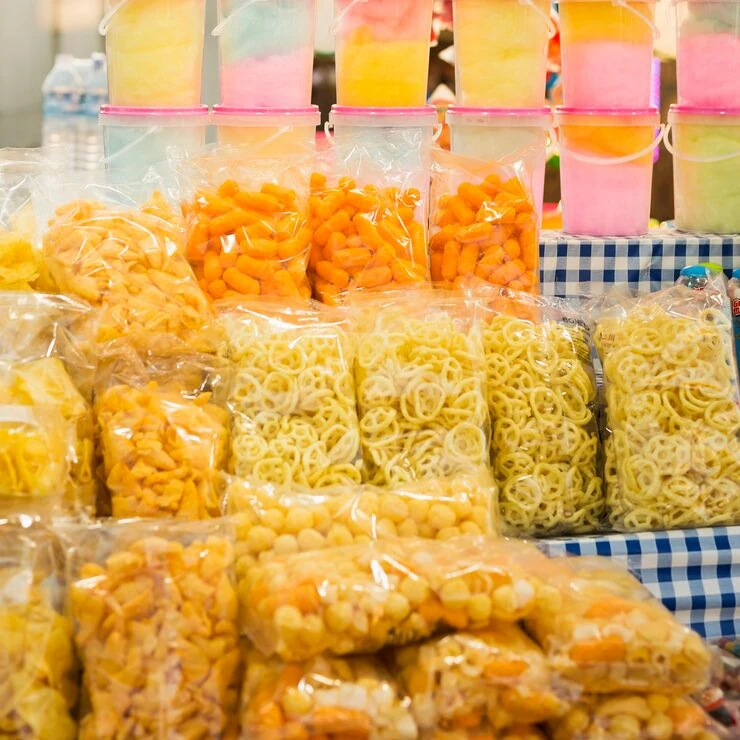
Procurement needs a physical description that a packing reviewer can use. Group components by relevant behaviour: long pieces that may bridge an opening, flat pieces that may overlap, smaller particles that move through gaps, and visible loose seasoning. These are observation categories, not a claim that every namkeen mixture contains the same components.
Record the finished mixture as supplied to the packing operation. A product-development bowl mixed by hand may differ from the production feed at the moment it is sampled. Ask the product owner to define the sampling point and whether the sample represents the normal mixture or a deliberate challenge condition.
Describe component proportions only where controlled information is available. If confidential recipe percentages cannot be shared, the technical owners can agree a suitable physical sample or a limited description. Avoid inventing a precise composition merely to fill a worksheet.
Include photographs that show the ordinary component range beside a scale, then retain actual material where the product owner's procedure permits it. Pictures explain shape; physical samples support access and movement observations. Neither establishes the complete range of variation unless the sampling rationale supports that conclusion.
Observe the fill as a mixture
Watch whether components arrive together or separate during transfer. Record bridging, retained pieces and fines approaching the closure region. Do not assume the pouch causes a composition difference simply because it becomes visible in the final pack. Trace the observation through the product-feed and dosing stages with the packing owner.
Ishida's snack resource treats pack weight and product presentation as separate concerns. A target mass alone does not establish that every pack contains the intended visual or component balance. The product owner should define how that balance is assessed.
Watch whether the sample changes during transfer
Observe the mixture before transfer, at the filling point and in the filled pouch. The purpose is to establish whether the material being assessed remains comparable across those stages. Do not assume that each portion contains an identical distribution simply because the full batch was blended.
An original observation plan can divide an authorised run into beginning, middle and end sample positions. Record the actual timing or sequence reference and inspect them under the same product-owner method. If the later sample appears to contain more small pieces, retain that observation and investigate it before attributing a pouch result to geometry.
For an illustrative example, the beginning portion may enter a sample mouth freely while a later portion containing more long pieces hesitates at the entry. The useful next question is whether the sample difference or transfer arrangement explains the hesitation. Widening the pouch immediately could obscure that distinction.
Keep the movement description factual: a component remained at the mouth, a cluster arrived together, or loose material appeared in the closing region. Avoid conclusions such as poor flow unless the team has defined what that term means and how the observation supports it.
Use a component-behaviour matrix
| Component group | Observed behaviour | Packaging question |
|---|---|---|
| Large pieces | Bridge or occupy irregular space | Is the mouth and product region suitable? |
| Long or fragile pieces | Change shape during handling | Where does damage first appear? |
| Dense pieces | Settle differently from lighter pieces | Is the final mixture representative? |
| Fines and seasoning | Approach walls or closure | Is the working closure region clear? |
| Whole mixture | Forms the filled pack profile | Does the intended quantity fit normally? |
This original matrix uses observations, not universal predictions about every namkeen recipe. Replace the example groups with the actual product's meaningful components.
Give the brief a hierarchy of requirements
Separate non-negotiable product requirements from preferences and unresolved questions. The declared quantity and approved product identity are controlled inputs. A preferred display silhouette may be negotiable. The extent of acceptable fragments needs an accountable product-owner definition rather than a purchasing guess.
This hierarchy prevents a reference photograph from controlling every design decision. A buyer may like a narrow pouch but discover that the actual mixture needs different entry access. The brief should allow the supplier to explain that trade-off while retaining the real product and customer requirements.
Link each important requirement to evidence. A mouth-access concern can reference an observed transfer. A serving concern can reference the intended portion-removal task. A storage requirement should reference the approved product conditions and technical evidence plan. An unsupported preference should remain clearly labelled as such.
If two requirements conflict, record the conflict and its decision owner. For example, a compact retail face and comfortable access for a large serving utensil may need a sample comparison. Purchasing can coordinate the comparison without pretending that a single component dimension resolves both tasks.
Review product condition at defined stages
Take representative observations before filling, after filling and after the agreed handling sequence. Keep sample identities and methods consistent. Ask the product owner to define acceptable appearance and composition; do not invent a damage percentage or infer a shelf-life result from a short packing trial.
Ishida's stick-snack document shows why product geometry matters in an integrated handling route. The lesson is to review the actual transfer path, not to prescribe its equipment or apply its performance claims to namkeen.
At handover, ask the packing owner to restate the main physical concern using the sample and matrix. If two teams interpret the description differently, resolve that difference before ordering development material. Terms such as coarse, oily or free flowing are too broad unless they are connected to the observed finished product and the particular packing action that matters.
Check the consumer removal task
For a single-use pack, observe opening and pouring or eating as intended. For a family pack, include repeated product removal and reclosure if specified. Record whether large components are difficult to access or fines collect near the feature. A complete use review can reveal a different issue from the filling trial.
An illustrative decision is to retain a larger opening because the normal mixture otherwise requires shaking to remove its larger pieces. That decision should follow the observed task and product requirements, not an assumption that a narrow opening always looks more premium.
Turn the brief into a useful sample request
Write the sample request around the most important unresolved behaviour. Ask for a dimensioned candidate that allows the intended transfer and serving tasks to be observed, with its construction and feature arrangement identified. A generic request for namkeen pouches can generate samples that answer none of the buyer's actual questions.
For a mixed snack, an illustrative request might compare two mouth arrangements using the same finished mixture, quantity and transfer method. Record entry interruptions, product remaining near the closure and removal of the intended serving. Keep the product-condition assessment separate so a convenient opening is not mistaken for an acceptable damage result.
Before circulating the brief, have the packing owner confirm the operation description and the product owner confirm the sample identity. Procurement can then check quantities, delivery scope and document control. These reviews have different purposes and should be recorded separately.
Retain rejected options with a short reason. A candidate that failed a particular utensil-access task may still be relevant if the serving proposition changes, while a candidate rejected for a controlled technical requirement needs that requirement resolved. A clear history saves the next team from repeating a comparison without understanding its original purpose.
Namkeen pouch format: a practical specification example
A snack brand is comparing an upright pouch with a flexible pack supplied from rollstock. Use the actual snack, since bulky pieces can settle or break differently from a powder or grain. Record the filled volume, the amount of clear closing space and the retail presentation. A resealable format also needs to be checked after part of the product has been consumed.
For this decision, start with the product mix, oils and proposed serving size. The useful output is a format brief distinguishing portion packs from family packs. Put that output beside the relevant quotation, drawing or sample rather than leaving it in a separate email. This is an illustrative decision exercise, not a report of a completed customer trial.
Product references to make the discussion concrete
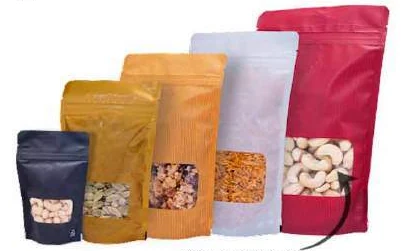
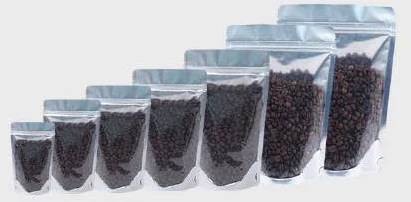
The catalogue includes window pouches and transparent stand-up pouches. These examples show different physical constructions; they are not interchangeable specifications. A window reveals part of the product while retaining an opaque area for artwork. Define its shape and location on the dieline, then check it at the intended fill level. An empty mockup can make a window appear better positioned than it is after the product settles.
| Format reference | Material or construction to clarify | Details to include in the brief |
|---|---|---|
| Window pouches | A transparent window combined with paper-look or opaque flexible panels; confirm the full structure and product requirements. | Window width, height and location; product visibility at full and low fill. |
| Transparent stand-up pouches | Transparent flexible film or laminate; optical clarity does not identify its barrier properties or complete composition. | Required clear viewing area; print coverage and opaque backing needs. |
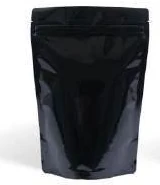
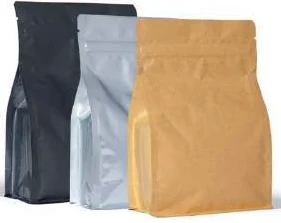
Use the reference pictures to identify the base, side panels, window or opening that you mean. A picture cannot supply the missing dimensions or material layers. If a photograph shows a finish or closure you do not want, state that difference explicitly; otherwise a visual reference can introduce an unintended requirement.
Complete the record before requesting the next sample
- Attach a format brief distinguishing portion packs from family packs. Identify the product or SKU and the date of the observation.
- Record the product mix, oils and proposed serving size. Keep confirmed information separate from proposed values and questions for the supplier.
- Add the actual fill weight or volume, the dimension convention, material proposal and intended closure. Include the number of designs and quantity per design when requesting a quotation.
- State which question the next drawing, sample or quotation must resolve. A change of size, closure or material should remain visible alongside the earlier reference.
This record makes the next conversation specific. It lets the design, purchasing and packing teams work from the same proposed item and shows which decision still needs evidence. Review the related product pages for format details, or prepare a custom packaging brief with the unresolved requirements.
Send a complete application enquiry
Provide Navkar Poly Print the component-behaviour matrix, finished product reference, target quantities and packing-interface details. Request a sample proposal and identify which product versions require assessment. Keep material suitability and storage evidence as separate technical approvals tied to the actual formulation and distribution conditions.
Continue with the buying guides
For the wider format discussion, use the food pouch buying guide and ten food packaging pouch types before narrowing the namkeen brief.
Sources and scope.
These references support the technical discussion. Product photographs illustrate formats; the material, dimensions and suitability of the proposed pack are confirmed for each project.
- Ishida snack food packaging applications
Equipment manufacturer treats pack weight, damage and pack presentation as separate snack-line concerns.
- Ishida stick-snack product packaging solutions
Demonstrates the importance of product geometry and integrated handling for a fragile snack.
Let’s discuss your product.
Share your contents, dimensions, filling method, quantity and delivery destination. We’ll work through the proposed packaging specification with you.
Create a packaging brief