Choose a mayonnaise spout pouch when controlled dispensing, a suitable filling route and the full commercial calculation support it. Choose a glass jar when spoon access, the intended presentation or an established packing operation creates greater value. Neither format name establishes how long your mayonnaise will remain acceptable.
The opening changes the customer's task
Mayonnaise may be spread with a spoon, squeezed onto food or transferred into a kitchen dispenser. Begin with that task. A wide jar opening offers utensil access and visibility, while a spout directs product through a smaller opening. Their value depends on consistency, particles and the user's routine.
Describe who opens the pack, where it is stored during use and how quickly it is normally consumed. A household breakfast table and a sandwich counter create different handling and portioning patterns. Do not use the same preference questionnaire for both without adapting the tasks.
For a pouch, record spout position, the intended gripping area and cap handling. For a jar, record the lid, opening diameter reference and utensil access. Compare actual filled samples because the print mockup cannot reveal squeezing effort or whether a spoon reaches the corners comfortably.
What mayonnaise research can establish
The 2017 study Evaluation of the Mechanisms of Mayonnaise Phospholipid Oxidation analysed oxidation products using LC-MS/MS. It investigated chemical mechanisms in mayonnaise; it did not run a commercial pouch-versus-jar trial. Its useful message for this decision is that product quality can change through oxidation, so appearance and container category alone are insufficient evidence.
A separate 2021 paper, Quantitative and Predictive Modelling of Lipid Oxidation in Mayonnaise, developed a model under accelerated conditions including 50°C. Those experimental conditions are not a storage recommendation or a ready-made expiry date for your recipe. A food technologist must decide whether any model applies to the proposed formulation and process.
Separate three protection questions
First ask whether the complete pack and process are suitable for the actual food. Second ask how the unopened product maintains acceptable quality through distribution. Third ask what happens after customers open and repeatedly use it. These questions need related evidence but have different boundaries.
A glass wall and a flexible laminate behave differently, but the complete system includes seals, caps, contact surfaces, headspace and processing. Write down the exact candidate references so that a successful sample cannot later be replaced with an unreviewed component that merely looks similar.
Specify the intended storage conditions and quality endpoints before starting a trial. A meaningful record identifies formulation version, production batch, fill process, pack references and observation schedule. Retain the responsible technical team's conclusions with the commercial decision rather than treating a supplier brochure as the final approval.
Compare the complete formats
| Buyer question | Spout pouch review | Glass jar review |
|---|---|---|
| How is product removed? | Squeezing or pouring through the nominated spout | Utensil access or pouring through the nominated opening |
| What is purchased? | Printed pouch, spout, cap and final closing scope | Jar, lid, any liner or seal, label and closing scope |
| What can disrupt filling? | Product at closure interfaces, fitting route and handling | Container handling, filling access and lid application |
| What needs distribution evidence? | Complete seals, fitment and outer protection | Closure, glass protection and outer arrangement |
| What affects repeat use? | Grip, aiming, cap replacement and residual product | Opening effort, utensil access, lid replacement and residue |
Use the table to organise questions rather than assigning a universal winner. A pouch that passes every technical requirement can still be awkward for a particular serving action. A visually premium jar can still create unacceptable delivery cost for a specific channel.
Calculate cost per usable quantity
Use a common basis such as cost per accepted kilogram of filled mayonnaise delivered to the buyer. Include the primary pack, closure, decoration, allocated setup, filling, outer packaging and delivery. Add the value of product lost through rejects, damage or residual contents when measured data is available.
Here is an invented example of the residual-product calculation. Two packs each start with 1,000g. Under one defined observation method, candidate A yields 970g and candidate B yields 950g of usable mayonnaise. If the relevant filled-system cost is ₹20 for A and ₹19 for B, the costs per usable kilogram are ₹20 ÷ 0.97 = ₹20.62 and ₹19 ÷ 0.95 = ₹20.00.
The cheaper nominal pack remains cheaper in this illustration, even though its residual product is greater. Actual results could reverse that conclusion. These invented values explain the method; they do not claim that either a pouch or jar empties better. Include the product's economic value if the comparison is for the brand's full business cost.
Keep line conversion visible
Ask the filling partner whether each candidate can run on the proposed equipment and what modifications, trials or additional operations would be required. Record commercial output as accepted packs per working period, including ordinary changeover and closing operations. A theoretical machine speed does not price your actual job.
If one format uses existing equipment and another requires outside filling, obtain comparable quotes for the whole operation. Include transport between sites, scheduling constraints, coding responsibilities and minimum commercial batch size. Clarify who owns rejected product and who authorises release.
Request quotation lines separately for the first launch and a repeat order with unchanged artwork. This makes setup and development expenditure visible. A format may suit a repeat programme but be uneconomic for a small, uncertain trial, particularly when several flavours divide the available quantity.
Test the meal occasion, not only the shelf
For a sandwich counter, observe workers preparing the same representative order sequence. Capture portion consistency, interruptions to opening or replacing the closure, mess and end-of-pack handling. For household use, observe normal storage and spreading or squeezing actions with the intended users.
Keep the product condition comparable. Differences in consistency or temperature can change apparent dispensing performance and confuse the pack comparison. The technical team should set the appropriate observation conditions and handling boundaries; this guide does not prescribe a food processing or storage procedure.
Ask users what went wrong before asking what they liked. A preference for a glossy printed pouch may disappear if they cannot grip it comfortably. A preference for glass may reflect familiarity with spoon access rather than a proven belief about freshness. Record the reason so the next prototype solves the correct problem.
Shelf appeal needs a measurable role
A jar can make the product itself visible, depending on the label and container. A pouch can devote a larger continuous area to branding and serving imagery. Compare readability at normal shelf distance, variant recognition and the appearance of a partly emptied pack where repeat use matters.
Do not translate a preference survey into a sales forecast. If the brand tests a new format commercially, keep recipe, quantity, price, promotional support and availability comparable where practical. Track conversion, complaints and repeat purchase alongside margin. A more attractive pack that creates more returns may reduce commercial value.
Consider the consumer's unit-price comparison too. If the pouch and jar contain different quantities, state the price per common quantity clearly. Otherwise shoppers may appear to prefer a format when they are actually responding to a lower displayed ticket price or a larger promotional fill.
Include the real delivery arrangement
Make up the actual filled carton for both candidates. Record units per carton, dimensions, gross mass and any internal protection. Request lane-specific quotations to the receiving location. Glass breakage protection and pouch fitment protection deserve their own review; neither is established by an empty-pack photograph.
For a nearby industrial buyer, include receiving and storage convenience as well as freight. For a more distant Indian buyer or Sri Lankan importer, confirm the shipment scope and destination charges before comparing delivered value. Avoid assuming that the lighter primary pack always creates the cheaper filled shipment.
Compare the last serving as well as the first
Include a defined end-of-pack task in the usability review. Ask whether the user can obtain the remaining mayonnaise through the intended opening without an unapproved workaround. Record the action, time and residual product using the same method for both candidates.
Keep this observation separate from storage and safety conclusions. A pack that empties conveniently can still require further product qualification. The result helps the buyer decide whether improved access is worth a different opening, component or presentation.
Mayonnaise pouch versus jar: a practical specification example
A brand is comparing two packaging concepts around one real application. Hold the product quantity and customer use constant, then list what changes with the container: filling, closing, opening, dispensing, display and shipment. A flexible alternative may offer a different shape or use pattern, but its material and closure still need their own project-specific review. Keep hypothetical cost examples separate from quotations.
For this decision, start with the product flow and intended serving. The useful output is a dispensing and residual-product observation. Put that output beside the relevant quotation, drawing or sample rather than leaving it in a separate email. This is an illustrative decision exercise, not a report of a completed customer trial.
Product references to make the discussion concrete
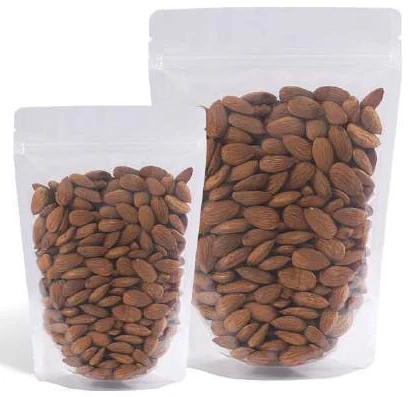
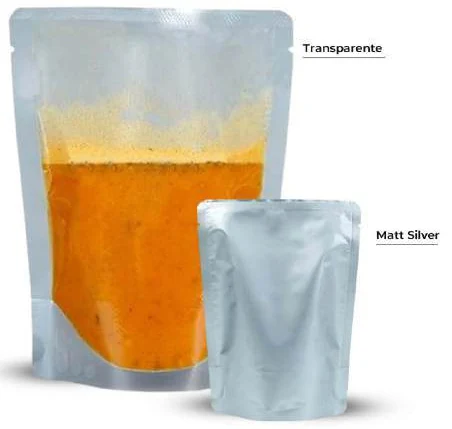
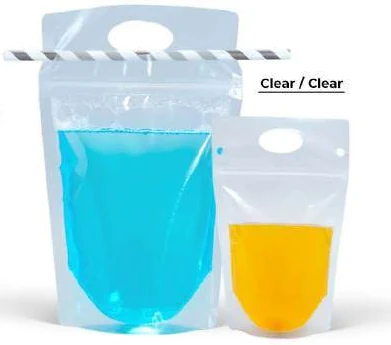
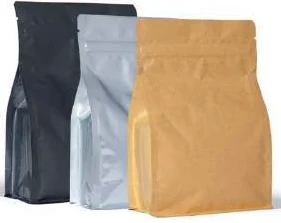
The catalogue includes spout pouches and flat-bottom pouches. These examples show different physical constructions; they are not interchangeable specifications. A fitted spout provides a controlled opening for dispensing. The reference range includes compact pouches and larger handled formats. Specify the product, fill volume, spout location and cap before developing the pouch shape; a corner spout and a top-centre spout require different layouts.
| Format reference | Material or construction to clarify | Details to include in the brief |
|---|---|---|
| Spout pouches | Flexible liquid-pack laminate with a fitted spout and cap; contact-layer and closure compatibility are reviewed for the formulation. | Fill volume and product viscosity; spout bore, position and cap. |
| Flat-bottom pouches | Flexible laminate with paper-look or opaque outer options; the appearance alone does not identify the full layer structure. | Base width and full opened depth; net fill and product bulk. |
Use the reference pictures to identify the base, side panels, window or opening that you mean. A picture cannot supply the missing dimensions or material layers. If a photograph shows a finish or closure you do not want, state that difference explicitly; otherwise a visual reference can introduce an unintended requirement.
Complete the record before requesting the next sample
- Attach a dispensing and residual-product observation. Identify the product or SKU and the date of the observation.
- Record the product flow and intended serving. Keep confirmed information separate from proposed values and questions for the supplier.
- Add the actual fill weight or volume, the dimension convention, material proposal and intended closure. Include the number of designs and quantity per design when requesting a quotation.
- State which question the next drawing, sample or quotation must resolve. A change of size, closure or material should remain visible alongside the earlier reference.
This record makes the next conversation specific. It lets the design, purchasing and packing teams work from the same proposed item and shows which decision still needs evidence. Review the related product pages for format details, or prepare a custom packaging brief with the unresolved requirements.
Make a conditional recommendation
Prioritise a qualified spout pouch for projects where direct dispensing, the proposed line and observed handling work well together. Prioritise a jar where utensil access and the chosen market presentation justify its complete cost and transport arrangement.
Send Navkar Poly Print the mayonnaise formulation and process brief, target quantity, dispensing task, intended storage and delivery destination. Request an application review and a clear proposed component scope. Keep the final decision tied to documented technical evidence, usable delivered cost and the customer's actual meal occasion.
Sources and scope.
These references support the technical discussion. Product photographs illustrate formats; the material, dimensions and suitability of the proposed pack are confirmed for each project.
- Evaluation of the Mechanisms of Mayonnaise Phospholipid Oxidation
Product-quality mechanism context. No commercial pouch-versus-jar trial or project shelf-life result.
- Quantitative and Predictive Modelling of Lipid Oxidation in Mayonnaise
Evidence needs for formulation-specific stability. Experimental conditions are not storage instructions or a transferable expiry date.
Let’s discuss your product.
Share your contents, dimensions, filling method, quantity and delivery destination. We’ll work through the proposed packaging specification with you.
Create a packaging brief