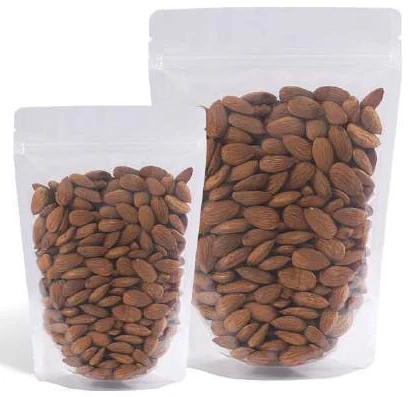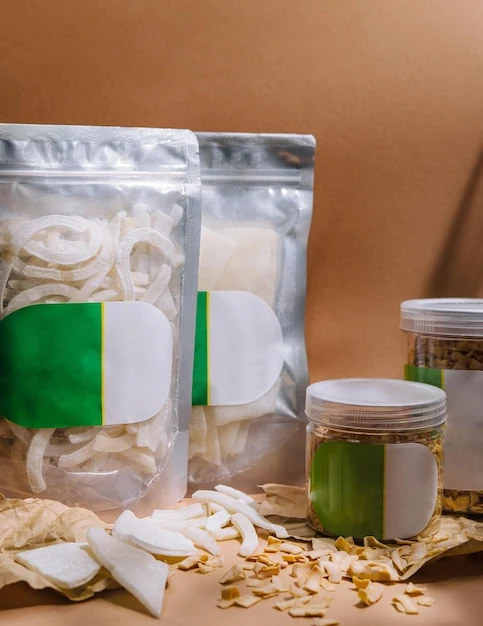
A dry fruit pouch and a gift box often serve different layers of the same package. The pouch can provide the qualified food-contact and protection system, while the box supplies presentation, organisation and gifting cues. Compare a complete pouch-only offer with a complete gift-box offer, including the actual inner food pack in both cases.
Decide what is actually being compared
A printed pouch sold individually is different from several sealed pouches arranged in a gift box. A box containing loose product is a third system with different contact and protection questions. State the exact configuration before asking which format is better.
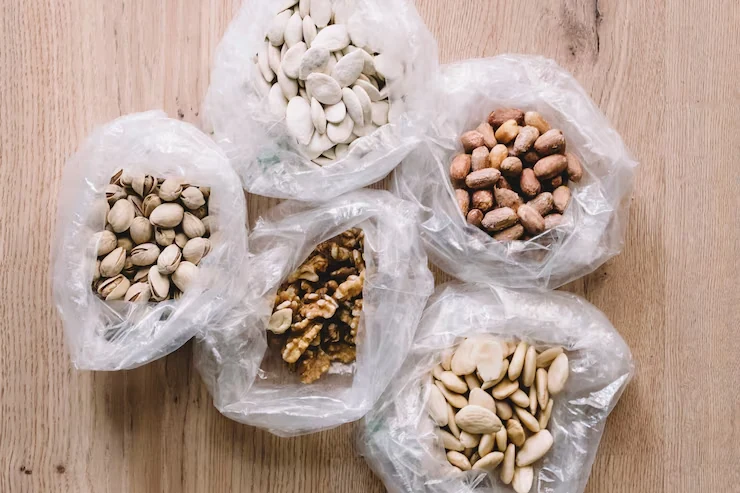
List every product in the assortment, its quantity and its individual packaging. Mixed nuts, raisins, dates and flavoured products may have different quality requirements. The technical team should decide whether each item needs a separate qualified inner package and whether combining them creates additional issues.
Identify the gift buyer and recipient. Corporate procurement may value consistent branding, dispatch reliability and recipient identification. A retail shopper may prioritise appearance, price and immediate carry convenience. The outer design should serve the actual transaction rather than a general idea of luxury.
Keep protection and presentation distinct
The box can organise the assortment and protect the presentation, but it should not be assumed to provide the required moisture or oxygen protection. Establish the food-contact pack, closure and storage evidence independently. Then design the outer arrangement around that accepted system.
The 2018 raw Nonpareil almond storage study compared packaging and environmental conditions over two years. Its carton-versus-bag findings relate to that defined experiment, not every commercial gift box. They reinforce the need to identify the protective inner system instead of relying on the word box.
If several sealed inner packs are used, keep their identities visible in assembly records. A visually identical replacement inner pack can carry a different structure or closure. Gift assembly must preserve the approved product-pack configuration rather than treating inner packaging as an interchangeable decorative item.
Compare the recipient's opening sequence
Observe carrying, opening, identifying the contents, accessing an individual portion and storing the remainder. A beautiful box can create frustration if inserts are hard to remove or the product names are hidden. A simple pouch can feel complete when the graphic hierarchy and opening work well.
Check whether the gift is intended to be consumed immediately, shared among several people or kept for repeated use. Those occasions change the value of separate portions, zippers, dividers and resealable inner packs. Do not add features without a clear role in the recipient's routine.
For corporate gifts, include the personalisation and handover action. Verify names, quantities, variant combinations and any message cards against the order. A spelling or assortment error can damage the gifting experience even when every packaging component arrives intact.
Build a complete bill of materials
| Layer or operation | Pouch-only offer | Gift-box offer |
|---|---|---|
| Food-contact package | Qualified pouch and closure | Qualified inner package for each product |
| Presentation | Printing and any carrying or display feature | Box, inserts, decoration and message items |
| Assembly | Filling, closing, coding and packing | Inner packing plus assortment assembly and checking |
| Dispatch | Actual outer carton and protection | Actual outer carton, gift-surface protection and protection for inner packs |
| Stock exposure | Designs and product variants | Inner packs plus box designs, inserts and personalisation inventory |
Quote the same product assortment and total mass. A gift box with a larger quantity should not be compared with a smaller pouch as if the full price difference came from presentation. Keep content value, packaging and service charges separate.
Calculate the gift premium transparently
Here is an invented method example. A qualified assortment has ₹420 of product and inner-pack cost. A pouch-only presentation adds ₹20 of relevant finishing and dispatch cost, giving ₹440. A gift-box presentation adds ₹85 for the box, inserts, assembly and dispatch difference, giving ₹505.
The illustrative extra cost is ₹65 per gift. Across 1,000 gifts it is ₹65,000. If the buyer values the improved presentation at a higher selling price or stronger corporate gifting experience, that value needs its own commercial justification. These figures are invented, exclude taxes and do not describe Navkar prices.
If the box supports a higher retail price, compare contribution after channel margin, discounts, delivery and returns. A higher ticket price is not automatically a better margin. Keep any claimed sales or repeat-order effect tied to a real pilot rather than an attractive mockup.
Include assembly time and error risk
Make a representative assembly sequence and record the actual operations. These may include positioning inner packs, adding inserts, checking variants, placing cards, closing the box and preparing the outer carton. Avoid estimating the whole task from the time needed to fold one empty box.
Measure a defined run after the process is understood, and capture errors separately from normal output. An assortment with several products can fail through missing items, wrong quantities or hidden labels. Establish a checking method and responsibility before committing to a large seasonal order.
Keep personalisation changes controlled. Specify which fields vary by recipient and who approves the final data. Reprinting boxes because a corporate name changed is commercially different from changing a small message card. The design can reduce avoidable stock exposure if that need is recognised early.
Review the full delivery experience
The gift surface itself is part of the purchased value. Define acceptance for crushing, scuffing, print damage and internal movement as well as the integrity of the food packages. Photograph representative packed cartons and record the quantity and orientation used.
Request transport quotations using actual dimensions, gross mass and protection. A presentation box can change chargeable shipment size even when the product mass is unchanged. Compare delivery to the real receiving location or recipient network rather than using a general freight percentage.
For corporate dispatch to many addresses, include address management, split shipment handling, failed delivery and replacement responsibilities. For a single industrial buyer, include unloading and storage expectations. Those service models can have very different costs and should not share one unexplained delivery allowance.
Test appearance with the right audience
Show the complete filled alternatives to the intended buyer group. Ask what occasion each seems appropriate for, what contents they expect and whether the brand is clear. Record unaided responses before explaining the concept or the proposed price.
Then assess the price and the opening experience. A box may score well for gifting but poorly for everyday storage. A pouch may seem convenient but need a clearer gift message. Those findings can guide the design without implying a universal hierarchy between flexible and rigid presentation.
ISTA's 2026 India parcel project overview treats product and package together within a defined transport scope. Ask a suitable specialist which evaluation applies to the actual gift shipment. The overview does not establish that a proposed gift box or inner pack has passed testing.
Plan seasonal purchasing carefully
Separate reusable components from date-specific or customer-specific items. Review likely demand by assortment and design, then identify what becomes obsolete if the forecast changes. A lower unit price at a much larger quantity can create an expensive remainder after a festival or campaign.
Keep product shelf-life and packaging inventory as separate planning records. An unused empty box and a filled assortment create different risks. Procurement should see lead-time dependencies, approval dates and the order in which product, inner packs and presentation components must be ready.
Plan substitutions within the assortment
Agree what happens if one nut variant or decorative component becomes unavailable. A gift order can require a specific assortment, so a visually similar replacement should not enter assembly without the buyer's approval. Record changes to quantity, product identity and presentation.
Keep the commercial effect visible too. A substitute product can change cost, fill volume and the qualification required for its inner pack. Procurement should route the content change to the appropriate owners before accepting a revised gift configuration.
This is especially useful for corporate orders where many recipients should receive a consistent offer. A controlled substitution rule protects both presentation and the accuracy of the order, rather than relying on a final visual check.
Dry-fruit gift packaging: a practical specification example
A brand is comparing two packaging concepts around one real application. Hold the product quantity and customer use constant, then list what changes with the container: filling, closing, opening, dispensing, display and shipment. A flexible alternative may offer a different shape or use pattern, but its material and closure still need their own project-specific review. Keep hypothetical cost examples separate from quotations.
For this decision, start with the assortment and outer gift presentation. The useful output is the filled inner packs checked in the complete gift format. Put that output beside the relevant quotation, drawing or sample rather than leaving it in a separate email. This is an illustrative decision exercise, not a report of a completed customer trial.
Product references to make the discussion concrete
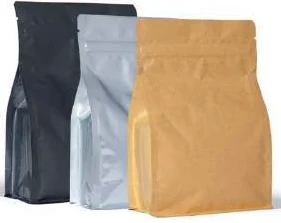
The catalogue includes spout pouches and flat-bottom pouches. These examples show different physical constructions; they are not interchangeable specifications. A fitted spout provides a controlled opening for dispensing. The reference range includes compact pouches and larger handled formats. Specify the product, fill volume, spout location and cap before developing the pouch shape; a corner spout and a top-centre spout require different layouts.
| Format reference | Material or construction to clarify | Details to include in the brief |
|---|---|---|
| Spout pouches | Flexible liquid-pack laminate with a fitted spout and cap; contact-layer and closure compatibility are reviewed for the formulation. | Fill volume and product viscosity; spout bore, position and cap. |
| Flat-bottom pouches | Flexible laminate with paper-look or opaque outer options; the appearance alone does not identify the full layer structure. | Base width and full opened depth; net fill and product bulk. |
Use the reference pictures to identify the base, side panels, window or opening that you mean. A picture cannot supply the missing dimensions or material layers. If a photograph shows a finish or closure you do not want, state that difference explicitly; otherwise a visual reference can introduce an unintended requirement.
Complete the record before requesting the next sample
- Attach the filled inner packs checked in the complete gift format. Identify the product or SKU and the date of the observation.
- Record the assortment and outer gift presentation. Keep confirmed information separate from proposed values and questions for the supplier.
- Add the actual fill weight or volume, the dimension convention, material proposal and intended closure. Include the number of designs and quantity per design when requesting a quotation.
- State which question the next drawing, sample or quotation must resolve. A change of size, closure or material should remain visible alongside the earlier reference.
This record makes the next conversation specific. It lets the design, purchasing and packing teams work from the same proposed item and shows which decision still needs evidence. Review the related product pages for format details, or prepare a custom packaging brief with the unresolved requirements.
Choose the complete gifting system
Choose a pouch-led offer when the recipient experience, price point and protection requirements are met with a simpler presentation. Choose a gift box when organisation, personalisation and the intended occasion justify the extra assembly, stock and delivery cost.
Send Navkar Poly Print the assortment, inner-pack requirements, gift quantity, branding and destination pattern. Ask for the pouch scope and clarify which outer presentation components require another supplier. Gift-box manufacturing is not part of Navkar's confirmed catalogue, so keep that capability question explicit in procurement discussions.
Sources and scope.
These references support the technical discussion. Product photographs illustrate formats; the material, dimensions and suitability of the proposed pack are confirmed for each project.
- raw Nonpareil almond storage study
Separate protection and environment from geometry. No flat-bottom-versus-stand-up or window-design ranking; no Navkar expiry.
- ISTA's 2026 India parcel project overview
Product and complete parcel evaluated together. Overview is not full procedure, carrier compliance or evidence of a passed test.
Let’s discuss your product.
Share your contents, dimensions, filling method, quantity and delivery destination. We’ll work through the proposed packaging specification with you.
Create a packaging brief