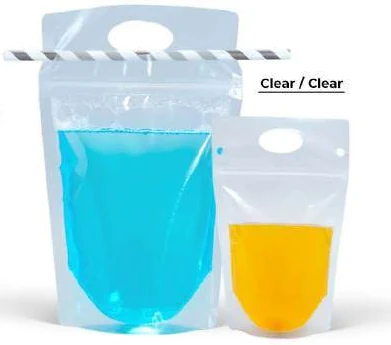
A spout pouch can be commercially attractive for sauce when its filling route, dispensing performance and delivered cost work together. A bottle can remain the better choice where the existing line, retailer fixture or customer's handling strongly favours rigidity. Compare the cost of an accepted, filled pack reaching the same buyer, rather than the price of an empty container.
Start with one sauce and one selling unit
Define the sauce's formulation, consistency, particles, intended filling conditions and required storage conditions. Give the proposed quantity in the unit used by the product team. A nominal volume and a target mass are different requirements; the filler must establish their relationship for the actual product.
Specify whether customers squeeze sauce directly onto food, pour into a serving container or refill an existing bottle. These uses create different opening and gripping requirements. A design that empties neatly into a wide catering vessel may frustrate someone aiming into a narrow bottle.
Record the retail channel and destination before requesting quotations. A supermarket shelf, restaurant storeroom and ecommerce parcel expose the pack to different handling. Keep the product, quantity and channel fixed throughout the first comparison so that changing assumptions do not create imaginary savings.
Compare the components you actually buy
A spout pouch quotation should identify the film construction, pouch dimensions, printing, spout, cap, fitment attachment and supplied closure condition. Clarify which opening the filling operation uses and who completes the final closure. Confirm whether coding, secondary protection and any tamper feature are included.
A bottle quotation needs equally specific boundaries: resin or glass specification, bottle mass or approved reference, neck finish, cap, liner where relevant, label or sleeve and outer packaging. Buying a pouch with printing included and comparing it with an unlabelled bottle produces an incomplete result.
The filling route also needs a written scope. Mespack's equipment solution finder provides primary equipment context for matching products and pouch formats. It is a discovery reference, not evidence that Navkar owns a particular filler or that an application has passed qualification.
Build a cost equation that survives a real quotation
Use this comparison boundary for each candidate:
Total relevant batch cost = packaging components + allocated setup + filling and closing + secondary packaging + delivery + expected loss costs.
Divide that total by accepted saleable packs. Keep taxes and recoverable credits consistent between quotations. Record the date, quantity by SKU, destination, validity and included operations beside every input. A single price per piece conceals too much when artwork or fitting requirements differ.
Separate development spending from repeat-order cost. A launch may require drawings, trials, artwork preparation or tooling that will not recur on every order. Show both the first batch and the expected repeat batch. Allocate setup only across a defensible volume; an optimistic annual forecast should not disguise the cash needed for the first purchase.
An illustrative sauce cost comparison
The following numbers are invented to explain the calculation. They are not Navkar quotations, market prices, measured rejection rates or a prediction of either format's performance. Assume both candidates contain the same sauce quantity and meet the same technical acceptance criteria.
| Batch input | Spout pouch example | Bottle example |
|---|---|---|
| Ordered packs | 10,000 | 10,000 |
| Complete pack and closure per unit | ₹7.00 | ₹8.00 |
| Allocated batch setup | ₹8,000 | ₹5,000 |
| Filling and closing per ordered unit | ₹1.50 | ₹1.00 |
| Outer protection and delivery per ordered unit | ₹0.80 | ₹1.10 |
| Accepted saleable packs | 9,800 | 9,900 |
| Packaging, conversion and delivery cost excluding sauce | ₹101,000 | ₹106,000 |
| Cost per accepted pack excluding sauce | ₹10.31 | ₹10.71 |
The pouch calculation is ₹70,000 + ₹8,000 + ₹15,000 + ₹8,000 = ₹101,000. Dividing by 9,800 gives ₹10.31 after rounding. The bottle calculation uses the same boundary and gives ₹10.71. The difference is about ₹0.40 per accepted pack under these assumptions.
All sauce purchase cost, disposal, returns and replacement delivery are excluded from this first illustration. For a full filled-system comparison, add total purchased sauce cost once, including sauce in rejected packs. Rejections also affect the accepted-pack denominator; do not add that sauce purchase value again as a loss charge. Add genuinely additional disposal or replacement expense. An expensive sauce can change the commercial result.
Find the variable that can reverse the result
Run a sensitivity check rather than celebrating one favourable total. In this example, adding ₹5,000 of extra pouch conversion or delivery expense raises its accepted-pack cost to about ₹10.82. That exceeds the illustrated bottle result. This demonstrates how a modest omitted batch expense can reverse the apparent winner.
Ask the filling site to identify the least certain input. It might be changeover time, closure components, line availability, staffing or accepted yield. Obtain a second quote or a representative trial for that variable first. This focuses effort on the uncertainty that can change the choice.
Compare planned runs at realistic quantities. Short runs may spread setup across fewer units, while longer runs create stock and artwork obsolescence exposure. Keep separate columns for economics and working capital because a low unit cost can still require an unsuitable purchase commitment.
Freshness requires a product and process comparison
The words pouch and bottle do not specify oxygen protection, closure integrity or shelf life. Request the proposed complete structure, component references, relevant test conditions and a storage study plan from the responsible technical team. Review the filled, closed pack after its actual processing and handling route.
For a sauce containing oil, colour-sensitive ingredients or flavour compounds, ask which quality changes determine consumer rejection. The study endpoint could include sensory quality, separation or another product-specific measure chosen by the food technologist. Microbiological safety and processing suitability require their own qualified assessment.
Mondi's stand-up pouch reference illustrates a supplier's format offering. Its capabilities cannot be transferred to a different proposed construction. Use supplier documentation to formulate questions, then obtain evidence for the actual sauce system.

Check dispensing before judging appearance
Prepare comparable filled prototypes and observe the intended customer action. Record grip, aiming, opening, cap replacement, mess, residual sauce and the stability of a partly emptied pack. Use the same sauce condition and a defined observation method for both candidates.
A rigid bottle may provide a familiar hand position. A pouch may offer a broad printed panel and a different squeezing action. Whether either feature helps depends on the product's flow and the user's task. Avoid asking only which photograph people prefer: that question misses everyday handling.
For retail appearance, compare the true filled shape at shelf distance and as a small ecommerce thumbnail. Check brand, sauce type, variant and quantity hierarchy. A more striking surface is commercially useful only if buyers can still identify the product quickly and use it successfully.
Price the lane you intend to serve
Request transport quotations using actual carton dimensions, gross mass, units per carton and destination PIN code. Compare identical delivery scope, insurance assumptions and unloading responsibilities. Empty pouch compactness alone does not establish savings on filled sauce shipments.
For an initial Hyderabad or nearby industrial-market launch, use the buyer's actual receiving location and expected order pattern. Evaluate other Indian regions with the same calculation. For Sri Lanka, include export packing, documentation responsibilities, import-side charges and the agreed delivery term before comparing landed cost.
Keep this geography information in a quotation record rather than promising a standard freight saving. A slightly dearer primary pack can sometimes fit the existing dispatch arrangement better; a cheaper one may need additional outer protection. The filled carton determines the useful comparison.
Resolve exclusions before negotiating the unit price
Ask each respondent to mark every commercial line as included, excluded or dependent on a trial. Then assign an owner to each exclusion. A lower pouch quote that excludes fitments or final closing cannot be negotiated intelligently until those missing costs are known.
For a repeat programme, keep the accepted specification beside the price record. State what happens if artwork, quantity, product or delivery location changes. A unit price agreed for one stable SKU is not automatically the rate for several short runs.
This turns the cost sheet into a purchasing tool rather than a one-time comparison. Procurement can see which quotation is complete, which assumption needs evidence and which variable deserves negotiation first.
Spout pouch versus bottle: a practical specification example
A brand is comparing two packaging concepts around one real application. Hold the product quantity and customer use constant, then list what changes with the container: filling, closing, opening, dispensing, display and shipment. A flexible alternative may offer a different shape or use pattern, but its material and closure still need their own project-specific review. Keep hypothetical cost examples separate from quotations.
For this decision, start with the fill volume, dispensing action and quoted scope. The useful output is a comparison of complete filled-pack routes. Put that output beside the relevant quotation, drawing or sample rather than leaving it in a separate email. This is an illustrative decision exercise, not a report of a completed customer trial.
Product references to make the discussion concrete
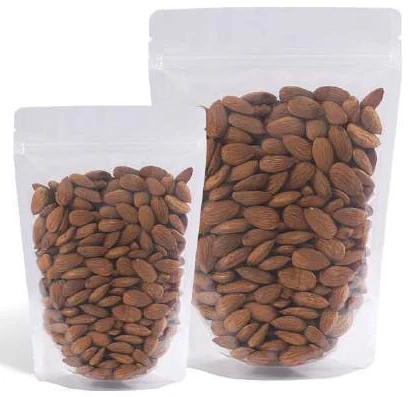
The catalogue includes spout pouches and flat-bottom pouches. These examples show different physical constructions; they are not interchangeable specifications. A fitted spout provides a controlled opening for dispensing. The reference range includes compact pouches and larger handled formats. Specify the product, fill volume, spout location and cap before developing the pouch shape; a corner spout and a top-centre spout require different layouts.
| Format reference | Material or construction to clarify | Details to include in the brief |
|---|---|---|
| Spout pouches | Flexible liquid-pack laminate with a fitted spout and cap; contact-layer and closure compatibility are reviewed for the formulation. | Fill volume and product viscosity; spout bore, position and cap. |
| Flat-bottom pouches | Flexible laminate with paper-look or opaque outer options; the appearance alone does not identify the full layer structure. | Base width and full opened depth; net fill and product bulk. |
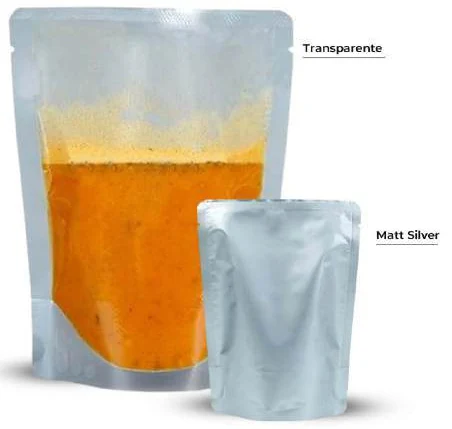
Use the reference pictures to identify the base, side panels, window or opening that you mean. A picture cannot supply the missing dimensions or material layers. If a photograph shows a finish or closure you do not want, state that difference explicitly; otherwise a visual reference can introduce an unintended requirement.
Complete the record before requesting the next sample
- Attach a comparison of complete filled-pack routes. Identify the product or SKU and the date of the observation.
- Record the fill volume, dispensing action and quoted scope. Keep confirmed information separate from proposed values and questions for the supplier.
- Add the actual fill weight or volume, the dimension convention, material proposal and intended closure. Include the number of designs and quantity per design when requesting a quotation.
- State which question the next drawing, sample or quotation must resolve. A change of size, closure or material should remain visible alongside the earlier reference.
This record makes the next conversation specific. It lets the design, purchasing and packing teams work from the same proposed item and shows which decision still needs evidence. Review the related product pages for format details, or prepare a custom packaging brief with the unresolved requirements.
Choose a candidate and a next action
Shortlist the spout pouch when the qualified application, conversion route and observed use support it and the complete cost remains favourable. Retain the bottle when an established line, required rigidity or tested customer preference outweighs the pouch's potential advantages.
Send Navkar Poly Print the sauce brief, intended use, quantities by SKU, component scope and delivery destination. Ask for a proposed specification and the remaining evidence needed. Approve the format only after technical acceptance, a comparable commercial calculation and a documented handling review agree.
Sources and scope.
These references support the technical discussion. Product photographs illustrate formats; the material, dimensions and suitability of the proposed pack are confirmed for each project.
- Mespack's equipment solution finder
Primary supplier or technical reference for the linked format or component question; no Navkar capability, test outcome or shelf-life claim is transferred.
- Mondi's stand-up pouch reference
Primary supplier or technical reference for the linked format or component question; no Navkar capability, test outcome or shelf-life claim is transferred.
Let’s discuss your product.
Share your contents, dimensions, filling method, quantity and delivery destination. We’ll work through the proposed packaging specification with you.
Create a packaging brief