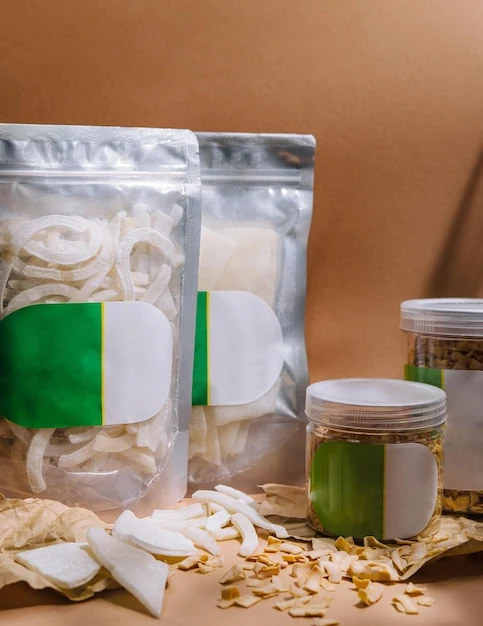
If one stand-up pouch serves several quantities, review its stance at each intended quantity. If it is a multi-use pack, observe the partly used state as well. A full sample may look convincing while a lower-fill version folds, leans or becomes awkward to reclose. Treat those as separate use conditions in the approval.
Define which low-fill condition matters
There are two different questions. The first is whether a lower-weight SKU can use the same pouch component. The second is whether a consumer can use and store a partly emptied pack conveniently. Record both if both are relevant. Do not label a partly used observation as evidence for an unopened sale pack.
Describe the product's physical form and how it settles. A light bulky product and a dense granular product can create different filled shapes. Use the actual product and representative quantity rather than selecting a substitute that happens to make the pouch stand neatly for review.
Separate sale quantity from product remaining after use
A low sale quantity and a partly used pack can contain similar amounts while representing different tasks. The sale pack has its complete initial closure and its retail presentation requirement. The opened pack has a changed top edge and a customer-use history. Label both conditions rather than treating their photographs as interchangeable.
Record the actual quantity or defined remaining state used in each observation. Avoid descriptions such as half full unless the team has agreed what that means. Half the original mass does not necessarily create half the apparent occupied height in a flexible pouch.
For an illustrative range, the same component is proposed for two sale quantities. The team also wants the larger pack to remain convenient after several servings. Create separate records for the smaller unopened SKU and the partly used larger SKU. One may need retail stance evidence while the other needs grip and reclosure observations.
This distinction keeps a common-component decision honest. A component can be acceptable for both sale quantities yet need a different use expectation after opening. It can also suit repeated use while presenting the smaller sale quantity poorly. The product owner should select the required tasks before asking the supplier to change the shape.
Establish the standing task
State whether the pack must stand unsupported or within a tray, and whether that expectation continues after opening. Layfield's guide illustrates the base-gusset feature of a stand-up construction. Actual low-fill behaviour still requires a complete sample assessment.
Use a defined display surface and settling condition. Record the normal handling sequence before placement. Avoid carefully shaping each sample by hand unless that shaping is a legitimate routine step. Otherwise the review may approve the reviewer's technique rather than the component's practical behaviour.
Explain the support question without inventing a prediction
OpenStax explains how the support base relates to centre of gravity in stable equilibrium. This gives a conceptual reason to observe the filled object. Flexible panels, moving contents and changing folds mean a drawing alone cannot provide a reliable pouch-specific stance result.
Look at the actual supporting contact and the distribution of product above it. A base that opens unevenly can produce a different posture from the intended geometry. Product gathering towards one side can change the filled profile even when the component matches its drawing.
Record the sequence before the lean appears. Does the pack stand after filling, change after closure or settle differently after placement? These are distinct observations. A request to make the film stiffer skips the question of when the geometry or product distribution changed.
Use matched product and handling conditions when comparing samples where practical. If different products or fill methods are used, identify them. The record can still inform a whole-pack choice, but it should not attribute the result to one changed base dimension without suitable evidence.

Build a stance ladder
| State | Product amount | Review task |
|---|---|---|
| Highest sale quantity | Actual intended quantity | Filled display and closure |
| Lowest sale quantity | Actual intended quantity | Base opening and front visibility |
| First opening | Representative use state | Grip and access |
| Partly used | Defined remaining amount | Reclosure and storage stance |
| Near empty | Defined use condition | Product removal and handling |
This original ladder avoids inventing universal fill percentages. Choose the states that match the actual product range and customer behaviour. Record omitted states as outside the trial scope rather than implying they passed.
Separate appearance from function
A wrinkle may be an appearance question, while a pack that falls into neighbouring products presents a display question. A zipper that becomes difficult to align after the front collapses is a use question. Record each observation under its task so the right reviewer can decide what is acceptable.
GS1's package measurement standard provides a separate basis for customer product measurements. Do not use a neatly positioned data-measurement sample as the only evidence of ordinary shelf stance. Keep the photographs and conditions from the stance ladder with the trial record.
Read each rung as a task result
Give each selected state a task, observation and decision owner. The front may be readable while the pouch leans; the zipper may operate while the body needs support. Record those outcomes separately. A broad score can hide which requirement is actually unresolved.
Photograph the relevant state without shaping it into the preferred posture. If the approved routine includes a handling step, record that step. If an extra adjustment was used only for the photograph, identify it and keep it out of an ordinary-use claim.
When the pack is supported by neighbours, observe what happens as one is removed. That is a display question about the actual arrangement. It should not be interpreted as evidence for an individual unsupported pouch. Likewise, a tray can be part of an approved system if its identity and use are controlled.
For an illustrative finding, the smallest sale fill remains upright in its agreed tray but turns away from the viewer after the front unit is removed. The next review might concern tray arrangement or cue placement. A larger gusset is only one possible proposal and should not be prescribed before the responsible teams review the observed interaction.
Compare practical responses
Possible responses include a different construction, a dedicated component for the smaller SKU, revised presentation expectations or a display support. Ask the supplier to explain a proposed change and sample it. Changing several features at once may be a reasonable whole-pack proposal, but it does not prove which single feature caused the improvement.
For an illustrative decision, the lower-weight SKU may be acceptable in a supported retail tray while the larger SKU stands individually. That can be a valid range decision if the commercial team approves the different display task and documents it clearly. It should not become a general unsupported-standing claim.
Choose among alternatives using the complete requirement
Compare a dedicated smaller component, a supported display and a common pouch with revised expectations as separate proposals. Include artwork, outer packing and stock implications in the commercial review. Do not imply that the same unit price or logistics arrangement follows every alternative.
Keep the product proposition visible. If the smaller SKU is intended as a single serving, its after-opening task can differ from the larger repeated-use pack. Selecting separate components may be reasonable even when a common size appears administratively convenient.
Define what evidence would resolve the remaining question. A revised tray needs a representative display review. A new component needs its actual product-fit and closing tasks checked. A wording change needs the responsible content owner's approval and should not conceal a physical use issue.
At release, state which quantities, sample revisions and supported arrangements were assessed. Keep any later product or feature change linked to the affected rung. This lets a repeat order use the accepted range without quietly extending it to a lower quantity or a new partly used condition that no one reviewed.
Low-fill stability: a practical specification example
A pack is shortlisted for its shape, then its panels are divided between artwork and functional features. Work from the filled geometry: a bottom gusset, side gusset and flat base are distinct constructions. Establish where the product will settle, which panel the customer sees and which edge is used for filling. This prevents an artwork decision from silently changing the pack layout.
For this decision, start with the pack geometry at a lower remaining fill. The useful output is a sample observed upright after part of the contents is removed. Put that output beside the relevant quotation, drawing or sample rather than leaving it in a separate email. This is an illustrative decision exercise, not a report of a completed customer trial.
Product references to make the discussion concrete
The catalogue includes flat-bottom pouches and side-gusset pouches. These examples show different physical constructions; they are not interchangeable specifications. A box-style base gives the filled pack a distinct footprint, with separate front, back and side panels. Compare a plain top opening with a regular zipper, and use filled samples to decide the shelf depth and panel proportions.
| Format reference | Material or construction to clarify | Details to include in the brief |
|---|---|---|
| Flat-bottom pouches | Flexible laminate with paper-look or opaque outer options; the appearance alone does not identify the full layer structure. | Base width and full opened depth; net fill and product bulk. |
| Side-gusset pouches | Paper-look and opaque or foil-look laminates are illustrated; confirm the actual inner and outer layers for the contents. | Face width and side-gusset convention; filled height and headspace. |
Use the reference pictures to identify the base, side panels, window or opening that you mean. A picture cannot supply the missing dimensions or material layers. If a photograph shows a finish or closure you do not want, state that difference explicitly; otherwise a visual reference can introduce an unintended requirement.
Complete the record before requesting the next sample
- Attach a sample observed upright after part of the contents is removed. Identify the product or SKU and the date of the observation.
- Record the pack geometry at a lower remaining fill. Keep confirmed information separate from proposed values and questions for the supplier.
- Add the actual fill weight or volume, the dimension convention, material proposal and intended closure. Include the number of designs and quantity per design when requesting a quotation.
- State which question the next drawing, sample or quotation must resolve. A change of size, closure or material should remain visible alongside the earlier reference.
This record makes the next conversation specific. It lets the design, purchasing and packing teams work from the same proposed item and shows which decision still needs evidence. Review the related product pages for format details, or prepare a custom packaging brief with the unresolved requirements.

Approve the range explicitly
List which sale quantities and use states passed, who reviewed them and which sample revision was used. Keep any support requirement with the SKU specification. If product geometry or quantity changes, repeat the affected rungs of the ladder.
Send Navkar Poly Print the stance ladder, product information and intended display support. Request samples that resolve the specific low-fill problem so the component is selected for its actual range of use.
Sources and scope.
These references support the technical discussion. Product photographs illustrate formats; the material, dimensions and suitability of the proposed pack are confirmed for each project.
- Layfield: packaging design guide
Illustrates stand-up pouch base-gusset architecture; not evidence for any food application here.
- GS1 Package and Product Measurement Standard
Distinguishes measurement treatment for different filled flexible-pack types; does not set converter tolerances.
- OpenStax College Physics: stability
Textbook support-base and centre-of-gravity relationship; a conceptual explanation, not a flexible-pouch test.
Let’s discuss your product.
Share your contents, dimensions, filling method, quantity and delivery destination. We’ll work through the proposed packaging specification with you.
Create a packaging brief