Plan a liquid food pouch transport trial around the filled shipping unit and intended route. A photograph of a pouch standing upright cannot tell the buyer how the complete pack, carton and handling system will behave during distribution.
Define what will actually travel
Identify the product version, filling process, pouch assembly and final closure, then record pack count, orientation, dividers if proposed, carton and any pallet arrangement. A trial result is much easier to interpret when those details are fixed before dispatch rather than reconstructed after a complaint.
Include the route type and handovers: factory collection, transport hub, warehouse and customer receiving. Distinguish an empty-pouch shipment to a food factory from the food factory's later shipment of filled packs. They are different distribution units and should not share an unexplained pass statement.
Choose an evaluation that matches the shipment question
State whether the work is exploratory route observation, comparison of proposed shipping arrangements or acceptance under a specified technical plan. These purposes should not share an unexplained pass result. The responsible team defines the method and criteria appropriate to the actual decision.
ISTA's public procedure overview distinguishes screening and simulation purposes and distribution contexts. Use that scope guidance when discussing the assessment with a competent team. An informal shipment is not automatically a formal ISTA test or a certified transport system.
Map the proposed distribution unit and actual handovers. A carton travelling individually differs from cartons in a larger unitised load. Record what the plan knows and which exposure details remain uncertain rather than copying a generic transport recipe.
For nearby export enquiries, obtain the proposed route and receiving requirements separately. A domestic sample result cannot establish the performance or economics of a Sri Lanka lane. Commercial scope and technical exposure both need their actual project information.
Agree questions and acceptance before the trial
Ask the competent packaging team which transport evaluation is appropriate for the intended distribution. The buyer can contribute actual route information, expected handling and customer presentation requirements. Do not invent a universal drop height, test duration or acceptable leakage level in the RFQ.
Viking Masek's liquid-pouch sequence makes filling and closing traceable operations. Collect those records for the trial samples. A changed final closure can make a packaging comparison difficult to interpret even when the printed pouch looks identical.
Establish the complete unit before dispatch
Identify product, quantity, formula, pouch body, fitment, cap and final closing route. Add the actual carton, count, orientation and any proposed internal or unitised components. A transport finding applies to that combination, not an isolated pouch shape.
Photograph the loading arrangement and retain a position map where useful. Record whether packs can contact one another, carton surfaces or identified internal features. Visible contact can guide questions, but it is not proof of damage or a predicted failure mechanism.
An illustrative trial can compare arrangements A and B with clearly identified cartons and sample positions. State every meaningful difference. If carton and pouch geometry both change, the result concerns complete proposals rather than one isolated feature.
Assess relevant baseline condition before dispatch using the method planned for receipt. The baseline should answer the same question: product condition, pack appearance or another defined outcome. A weight record alone cannot explain a later finding about fitment appearance or product quality.
Agree the receiving team's retention plan in advance. An unusual pack may need examination through the product owner's procedures, and discarding it after a quick photograph can remove useful evidence. Record sample identity, custody and the relevant investigation reference.
Keep known route information distinct from assumed exposure. A carrier's planned transit and the actual dispatch-to-receipt dates are different records. Neither establishes the detailed temperature, humidity or handling history unless it was measured or otherwise documented. Naming those limits helps the team design a more informative follow-up instead of attributing an unresolved finding to an imagined transport event.
Record the location of observations
Use a carton map to identify the position of each inspected pack. Note outer-carton condition, pouch presentation, fitment condition and any evidence needing technical investigation. Photographs should show the original arrangement before packs are moved. Follow the product owner's procedures if damage is suspected.
SEE's spout pouch range includes different constructions. Keep the tested component and drawing references with each observation. An isolated result on one route supports a scoped decision; it is not a universal transport guarantee. Have the technical owner decide what changed routes, carton counts or pack sizes require further evaluation.
Preserve receiving context before rearranging packs
Agree the inspection sequence with the receiver before dispatch. Where practical, record outer condition, loading position and internal arrangement before moving the contents. Follow the product owner's procedures for any suspected damage or quality concern.
Keep carton identity and position linked to every pack examined. A photograph of one pouch outside its carton may show a useful concern but lose information about the original contact location. Record what was known and what became unavailable during receiving.
For an illustrative cluster of observations at one carton position, compare the dispatch map, receiving photographs and relevant process references. The pattern can justify investigation of that contact or arrangement. It does not establish that the carton, cap, pouch or carrier alone caused the finding.
Keep actual route deviations visible. A delayed delivery, opened carton or different handover changes the exposure record. Do not replace actual events with the planned journey when writing the conclusion. The uncertainty is part of what the trial teaches the team.
Locate findings with a carton-position map
An illustrative carton record can number positions by layer, row and column, such as L1-R2-C3, without assuming a particular carton size. If an observation occurs, retain that position alongside the pouch and component references. Several similar observations at one contact location may suggest a question about the packing arrangement, but they do not prove a cause. Compare the original carton layout, photographs and process records before deciding what to investigate. A clear location record also helps distinguish damage present at receipt from changes introduced during later unpacking or sample handling.
Convert the findings into a scoped next action
Separate outer-pack, pouch, fitment, closure and product observations in the result record. Link technical assessments to their methods and sample identities. A tidy carton does not establish an acceptable product, and a product finding does not identify the responsible packaging input by itself.
State which configuration and route were actually evaluated. One result cannot cover all seasons, carriers, quantities or carton arrangements. The relevant owner decides whether changed conditions need further work and records the reason for retaining or renewing evidence.
An illustrative next action might compare a revised loading arrangement because the location record identifies a specific contact question. Another finding may require closer stage observations before changing a component. Keep the action linked to evidence rather than requesting stronger packaging without a defined mechanism.
Before purchasing the selected proposal, reconcile the shipping-unit reference with the quoted component and outer-packing scope. The technical conclusion and delivered economics remain distinct decisions, each supported by its actual records. This gives procurement a reviewable proposal and a clear boundary for later repeats.
Record the filled shipping unit and route
Use this original worksheet with your product and supplier team. Give each row a named owner and evidence reference; a blank answer remains an open decision.
| Record | What to enter and why |
|---|---|
| Shipping-unit identity | Record product, pouch assembly, fill process, final closure, carton specification and pack orientation. |
| Route map | Describe real transport stages, handling parties and destination receiving conditions supplied by the buyer. |
| Evaluation plan | Reference the agreed technical method, sample plan, acceptance criteria and responsible reviewer. |
| Carton position map | Number inspected packs by their original position so localised observations can be investigated. |
| Decision and changes | Record accepted scope and which route, carton or pack changes need another review. |
Liquid-pack change: a practical specification example
A liquid-food pack needs a coherent filling, sealing and dispensing plan. A flat portion sachet, retort pouch and capped spout pouch are different briefs even when they contain a similar recipe. Record the product flow, fill volume, intended treatment and how the user empties the pack. Do not transfer a process condition or storage expectation from a reference photograph.
For this decision, start with the altered formulation, closure or fill. The useful output is the parts of the previous approval that need a new review. Put that output beside the relevant quotation, drawing or sample rather than leaving it in a separate email. This is an illustrative decision exercise, not a report of a completed customer trial.
Product references to make the discussion concrete
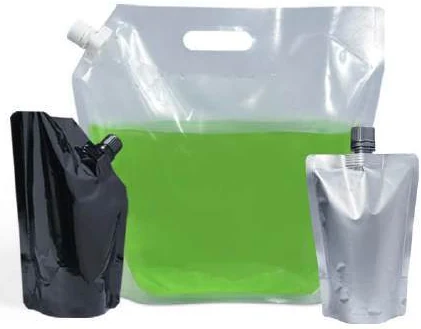
The catalogue includes spout pouches and retort pouches. These examples show different physical constructions; they are not interchangeable specifications. A fitted spout provides a controlled opening for dispensing. The reference range includes compact pouches and larger handled formats. Specify the product, fill volume, spout location and cap before developing the pouch shape; a corner spout and a top-centre spout require different layouts.
| Format reference | Material or construction to clarify | Details to include in the brief |
|---|---|---|
| Spout pouches | Flexible liquid-pack laminate with a fitted spout and cap; contact-layer and closure compatibility are reviewed for the formulation. | Fill volume and product viscosity; spout bore, position and cap. |
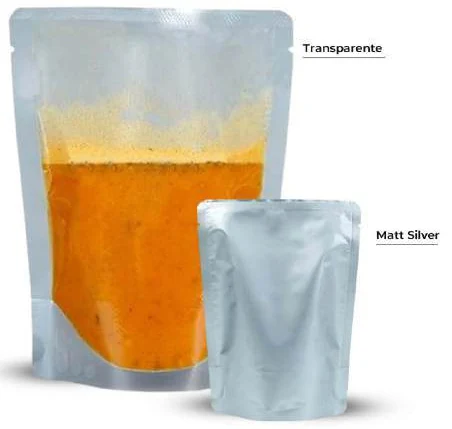
| Retort pouches | Multilayer retort laminate, with transparent or opaque options subject to product and process review. | Food formulation and fill weight; required process time and temperature. |
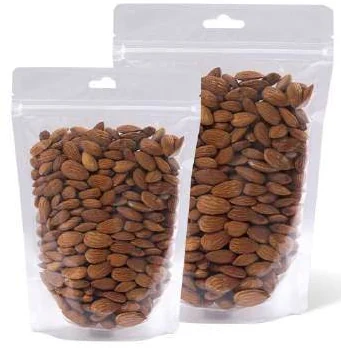
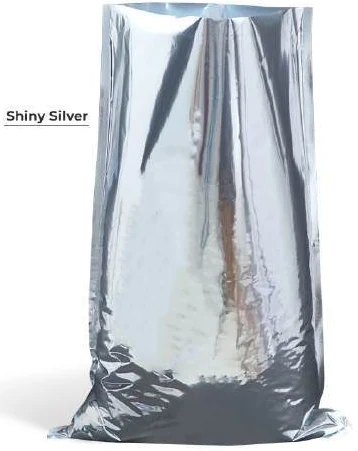
Use the reference pictures to identify the base, side panels, window or opening that you mean. A picture cannot supply the missing dimensions or material layers. If a photograph shows a finish or closure you do not want, state that difference explicitly; otherwise a visual reference can introduce an unintended requirement.
Complete the record before requesting the next sample
- Attach the parts of the previous approval that need a new review. Identify the product or SKU and the date of the observation.
- Record the altered formulation, closure or fill. Keep confirmed information separate from proposed values and questions for the supplier.
- Add the actual fill weight or volume, the dimension convention, material proposal and intended closure. Include the number of designs and quantity per design when requesting a quotation.
- State which question the next drawing, sample or quotation must resolve. A change of size, closure or material should remain visible alongside the earlier reference.
This record makes the next conversation specific. It lets the design, purchasing and packing teams work from the same proposed item and shows which decision still needs evidence. Review the related product pages for format details, or prepare a custom packaging brief with the unresolved requirements.

Put the decision into practice
1. Collect route evidence. Ask logistics and receiving teams for the actual distribution sequence before selecting a transport evaluation.
2. Freeze the trial unit. Identify product, components, closing process and outer packing so the comparison has a clear scope.
3. Inspect in sequence. Record outer and inner condition before rearranging the shipment, following approved product procedures.
4. Review the findings. Have the competent team interpret observations and define corrective work or further evaluation.
Provide Navkar Poly Print your intended shipping-unit drawing and route information when arranging liquid pouch samples for transport review.
Sources and scope.
These references support the technical discussion. Product photographs illustrate formats; the material, dimensions and suitability of the proposed pack are confirmed for each project.
- Viking Masek: liquid pouch filling sequence
Equipment maker describes coordinated pouch handling, liquid filling and closure; no Navkar equipment or performance implied.
- SEE: Spout Pouches technical sell sheet
Illustrates spout-position, handle and shape options in another manufacturer portfolio; component selection remains project-specific.
- ISTA Test Procedures overview
Official overview distinguishes assessment purposes and distribution contexts; no informal route observation claimed as formal testing or certification.
Let’s discuss your product.
Share your contents, dimensions, filling method, quantity and delivery destination. We’ll work through the proposed packaging specification with you.
Create a packaging brief