Confirm where the product enters and how the pack receives its final closure before approving a liquid pouch drawing. A spout visible on the finished pack does not, by itself, tell the converter how your filling line will use it.
Draw the pack at the moment of filling
Ask the filling team to mark the incoming pouch condition: which sides are closed, which opening is available and which components are already fitted. Then mark the pack after filling and closing. These two sketches often reveal assumptions hidden in a finished-product photograph.
Record the actual line and contact responsible for assessing it. A generic machine category does not replace the equipment interface review. Include how the pack is presented, held, opened, filled, closed, coded and discharged, with equipment-specific details supplied by the line owner.
Trace one physical edge through the drawings
Use an orientation convention understood by the converter and filler. Mark front, back, top and the proposed filling opening on the incoming sketch. Carry the same labels into the finished drawing so a rotated image cannot hide a different assumption.
Identify which components are installed before the line receives the pouch and which operations remain. A cap seen on a finished mock-up does not establish the incoming cap state. The actual handover must be stated by the relevant suppliers and accepted by the line owner.
For an illustrative discrepancy, the supplied drawing may show a top edge closed while the filler expects that edge available for entry. The issue is a conflicting supply condition, not a minor artwork preference. Resolve it before samples or print preparation are ordered against incompatible references.
Keep the drawing revision and date beside each sketch. An older technically accepted route should not be displaced silently by a newer marketing image. The project needs an authoritative matched pair that identifies both the incoming component and the finished assembly.
Assign the final closure responsibility
Viking Masek describes an ordered premade-pouch filling sequence. Use the same discipline in the enquiry: identify the party supplying the pouch and components, the party making the final closure and the party accepting the finished assembly.
Do not include operating settings copied from another line in the purchasing brief. Ask the authorised technical teams to establish and document the relevant production conditions through their own qualification. Procurement should collect the accepted references and recognise when an unresolved condition blocks a price comparison.
Assign the evidence at the final closing interface
Name who establishes the applicable closing conditions, who performs the operation and who accepts the resulting complete assembly. These roles may sit within one organisation or across suppliers. Procurement should collect the accepted references without inventing operating parameters.
Ask what component and process information each party needs. The line owner needs the actual proposed construction and supply condition. The converter needs accepted interface requirements. The product owner needs assurance that the complete route addresses the intended application through its technical programme.
An illustrative handover can show dimensional confirmation complete while the final closing assessment remains pending. Keep that distinction visible in the trial order and release index. A good-looking sample does not close an undocumented interface.
Record what a report actually assessed: specimen, assembly, method and conditions. A sampled result can contribute to the decision within its scope. It should not silently become a complete process qualification or storage conclusion simply because it concerns a closure.
Confirm the actual coding task at the appropriate state. Some information is present in preprinted artwork, while variable details are added by the packing operation. Record who approves the intended region and who verifies a representative completed output. A clean design proof cannot show whether the later coding task is accessible on the actual line.
If the final filled shape changes the region's presentation, keep that finding linked to the finished drawing. The supplier and line team can then review a specific interface rather than moving content by guesswork. Any revised panel should return through the relevant content and technical review.
Keep the consumer opening and filling opening distinct
SEE offers multiple spout positions in its pouch portfolio. A position selected for dispensing still needs to agree with the chosen filling route. Review cap and fitment identities, access around the opening and the location of instructions and coding.
An illustrative handover record might show a top edge remaining open for a proposed fill route while the consumer uses a corner spout. This is a question for supplier and line review, not a statement that every such combination can be made or run. Release the incoming and finished drawings together so production does not receive an ambiguous pack.
Follow the pack through handling, filling and discharge
Have the line owner review how the proposed component is presented, held, opened and positioned for filling. Then follow closing, coding and discharge. A conflict can arise outside the entry point, so the review needs the actual path rather than a single filling-mouth dimension.
Record relevant grip or contact regions on the drawing. Keep artwork, code and other feature positions coordinated with the accepted line interface. A code panel located in a routine handling region may require a specific review rather than automatic acceptance from the flat proof.
For an illustrative issue, the consumer spout can remain the preferred access while a separate incoming edge is proposed for filling. The actual suppliers and line team must confirm feasibility and evidence. The sketch is a question for review, not a universal construction claim.
If the actual line changes, map the interface difference to prior evidence. A component that ran on another operation should not inherit compatibility with the new route merely because both machines are described as liquid fillers.
Cross-check incoming, line and finished drawings
Try a document cross-check before ordering trial packs. Place the converter's incoming-pouch drawing beside the filler's process sketch and the brand's finished-pack artwork. Trace the same edge and fitment across all three. An illustrative discrepancy might be an edge shown open by the filler but sealed on the supplied-pouch drawing. Another could be a date-code panel placed where the line grips the body. Neither discrepancy should be solved by guessing which document is newer. Have the relevant owners agree the route and issue matching revisions for the next trial.
Release the two states as one controlled instruction
Reconcile the incoming sketch, finished drawing, construction, component codes and artwork. Give the release index one authoritative relationship between them. If a document still shows an earlier opening or cap state, resolve the mismatch before commercial release.
Identify development-sample differences. A hand-filled sample can help physical discussion while leaving the routine interface open. A sample supplied with a different opening arrangement answers another condition. Label those limits beside the observation rather than leaving later reviewers to infer them.
Use a readback with purchasing and the packing owner: what exactly arrives, where product enters, who closes it and what finished assembly is accepted? Any answer requiring an assumption identifies an unresolved handover.
Retain the matched drawings and acceptance references for repeats. A future feature, material or route change can then reopen the affected task. The orderable output is a defined incoming component for an identified route, connected to a defined finished pack and its relevant evidence.
Record the filling opening and final closure
Use this original worksheet with your product and supplier team. Give each row a named owner and evidence reference; a blank answer remains an open decision.
| Record | What to enter and why |
|---|---|
| Incoming condition | Sketch the pouch as supplied to the line, including open edges and installed components. |
| Finished condition | Sketch all final seals, fitments, cap state and coding areas after the agreed production route. |
| Line identity | Identify equipment and the authorised line reviewer rather than relying on a generic machine description. |
| Closure ownership | Name who establishes, performs, records and accepts the final closure operation. |
| Interface approval | Attach accepted drawings and qualification records with their exact scope and outstanding questions. |
Liquid transport: a practical specification example
A liquid-food pack needs a coherent filling, sealing and dispensing plan. A flat portion sachet, retort pouch and capped spout pouch are different briefs even when they contain a similar recipe. Record the product flow, fill volume, intended treatment and how the user empties the pack. Do not transfer a process condition or storage expectation from a reference photograph.
For this decision, start with the filled closure and carton arrangement. The useful output is the handling and leak-check requirements identified before dispatch. Put that output beside the relevant quotation, drawing or sample rather than leaving it in a separate email. This is an illustrative decision exercise, not a report of a completed customer trial.
Product references to make the discussion concrete
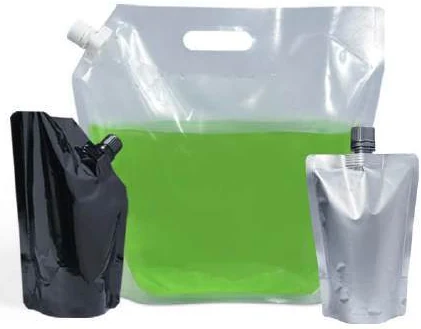
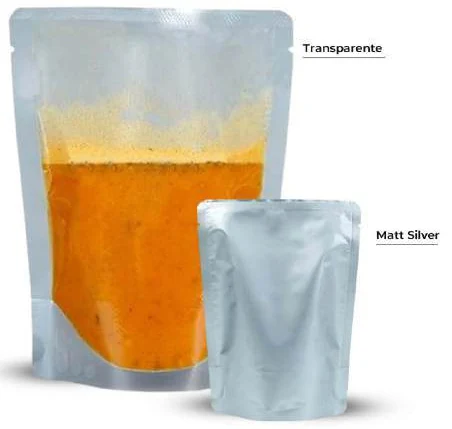
The catalogue includes spout pouches and retort pouches. These examples show different physical constructions; they are not interchangeable specifications. A fitted spout provides a controlled opening for dispensing. The reference range includes compact pouches and larger handled formats. Specify the product, fill volume, spout location and cap before developing the pouch shape; a corner spout and a top-centre spout require different layouts.
| Format reference | Material or construction to clarify | Details to include in the brief |
|---|---|---|
| Spout pouches | Flexible liquid-pack laminate with a fitted spout and cap; contact-layer and closure compatibility are reviewed for the formulation. | Fill volume and product viscosity; spout bore, position and cap. |
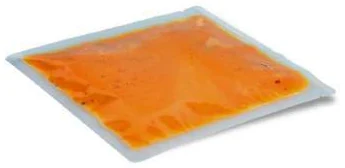
| Retort pouches | Multilayer retort laminate, with transparent or opaque options subject to product and process review. | Food formulation and fill weight; required process time and temperature. |
Use the reference pictures to identify the base, side panels, window or opening that you mean. A picture cannot supply the missing dimensions or material layers. If a photograph shows a finish or closure you do not want, state that difference explicitly; otherwise a visual reference can introduce an unintended requirement.
Complete the record before requesting the next sample
- Attach the handling and leak-check requirements identified before dispatch. Identify the product or SKU and the date of the observation.
- Record the filled closure and carton arrangement. Keep confirmed information separate from proposed values and questions for the supplier.
- Add the actual fill weight or volume, the dimension convention, material proposal and intended closure. Include the number of designs and quantity per design when requesting a quotation.
- State which question the next drawing, sample or quotation must resolve. A change of size, closure or material should remain visible alongside the earlier reference.
This record makes the next conversation specific. It lets the design, purchasing and packing teams work from the same proposed item and shows which decision still needs evidence. Review the related product pages for format details, or prepare a custom packaging brief with the unresolved requirements.
Put the decision into practice
1. Create two sketches. Draw the incoming pouch and the finished pack so opening and closure assumptions become visible.
2. Review the line path. Have the filling team check presentation, handling, filling access, closing and discharge against the proposal.
3. Record the qualified scope. Keep operating-condition decisions with authorised specialists and reference their accepted evidence.
4. Release matching revisions. Approve the pouch supply condition and finished configuration as a connected pair.
Give Navkar Poly Print both incoming and finished-pack sketches with the filling-line contact so the pouch enquiry has a defined closure route.
Sources and scope.
These references support the technical discussion. Product photographs illustrate formats; the material, dimensions and suitability of the proposed pack are confirmed for each project.
- Viking Masek: liquid pouch filling sequence
Equipment maker describes coordinated pouch handling, liquid filling and closure; no Navkar equipment or performance implied.
- SEE: Spout Pouches technical sell sheet
Illustrates spout-position, handle and shape options in another manufacturer portfolio; component selection remains project-specific.
Let’s discuss your product.
Share your contents, dimensions, filling method, quantity and delivery destination. We’ll work through the proposed packaging specification with you.
Create a packaging brief