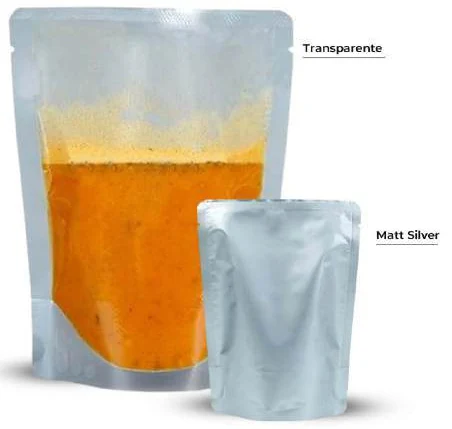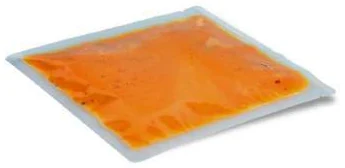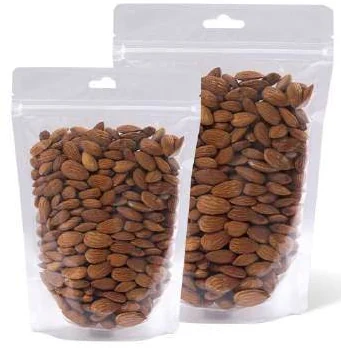
Observe one intended bulk transfer from an identified filled handled pouch into the actual foodservice receiving vessel. Keep the workstation, product and authorised procedure fixed. Record access, support changes and the pouch's changing fill state during that event. The result is a workstation-use record, not a general handle-selection guide or a repeated small-portion study.
Bound the event before preparing the sample
Identify the pouch assembly, formula or product batch, actual filled mass and the amount intended for transfer. Give the receiving vessel a reference, including its actual opening, working fill space and position as supplied by the operation. State the intended start and finish of the event: for example, the pack at its designated preparation position through transfer into a nominated vessel and the authorised final placement.
Use the food business's approved product-handling and workstation procedures. The responsible operation decides who may perform the task and under what conditions. This observation does not establish a safe lifting method, authorise an unassessed load or provide food-processing instructions.
Confirm that the event represents the intended operation
Have the operating owner identify the actual bulk-transfer task, participant and approved procedure. The observation should follow that authorised operation rather than create an improvised handling demonstration. Record the pouch starting state and intended finish before beginning.
Describe the receiving vessel's role and working condition. Its actual position, surrounding fixtures and available space matter to the event. A nominal opening diameter alone cannot describe whether the pouch can approach as intended.
An illustrative session boundary could begin at the designated preparation position and finish after the intended transfer and final placement. The amount and actions come from the operation. This article supplies neither a recommended load nor a lifting technique.
If the intended event cannot be performed under the owner's approved procedure, record the unresolved condition and seek its decision. Do not modify the task for a photograph and then treat the modified demonstration as evidence for the original workstation.
Map the workstation that will actually be used
Sketch the pouch start position, receiving vessel, surrounding fixtures and intended final position. Record the actual available approach space and any obstruction the authorised operator identifies. Include the vessel rim and nearby equipment where they affect access. A clear studio table cannot demonstrate the task at a crowded production workstation.
Keep the selected handle, body, spout and cap fixed for this session. SEE includes handle options in its spout-pouch portfolio; that format reference is not a load rating or proof of suitability at this workstation. Component selection and carrying evidence must already be separately identified for the technical team.
Map contact and visibility within the workspace
Sketch the start position, receiver, relevant rim, surrounding equipment and final position. Add the actual approach direction and any observed obstruction. The purpose is to locate interactions, not to create a universal workstation clearance rule.
Record what the operator can see at relevant points through the authorised observation arrangement. If the pouch body obscures the receiving opening, describe when and where. The technical owner determines its significance and any required review.
An illustrative note might identify contact near the vessel rim while the same pouch changes shape during transfer. That directs a question about the complete arrangement. It does not establish that the handle, receiver or operator alone caused a concern.
Keep any workstation difference visible between sessions. A moved vessel or different nearby fixture changes the event context even if the pouch is identical. A revised configuration deserves its own reference before the team compares outcomes.
Follow changing fill state within the single transfer
Observe the ordinary sequence without adding artificial pauses or asking the operator to improvise a grip for the camera. Note how the pack approaches the receiver, where support is applied when transfer begins and whether the natural supporting contact changes as product leaves. If the approved routine includes an interruption, record it as part of the actual event. Do not create one solely to obtain a partly used photograph.
Record what is visible, such as a hand moving from the side panel to an approved support location, the pouch body approaching the vessel rim or a changed view of the receiving opening. The technical owner determines significance. A grip transition is not automatically a defect, improvement or ergonomic conclusion.
Follow natural transitions in the same pouch
Observe support and grip changes as they occur within the one intended transfer. Do not add artificial stopping points solely to reproduce full and partly used states. Those states arise naturally as product leaves the same identified pack.
Record sequence and location in neutral language. A supporting contact moved, the body folded near a marked region or the approach changed are useful observations. Avoid assigning a safety, ergonomic or load-capacity conclusion from those notes.
If the approved routine includes a pause, retain it in the event record with its reason. If the event is interrupted unexpectedly, record the interruption and ask the operating owner how the observation should be treated. Do not combine stages from different events to create a seemingly complete transfer.
The result remains distinct from repeated small-dose dispensing. Its purpose is understanding one bulk-transfer interaction at the actual workstation, including the natural full-to-part-used transition.
Use a workstation event log
The following is an illustrative record structure with hypothetical observations, not a report of a Navkar product or a foodservice trial. It contains no recommended load, handling distance or transfer limit.
| Checkpoint in the same event | Product state | Illustrative observation | Follow-up question |
|---|---|---|---|
| Approach | Identified starting fill | Vessel rim partly obscured by the pouch body | Does the approved workstation arrangement give the intended view? |
| Transfer begins | Product starts leaving | Initial support remains unchanged | Is this consistent with the authorised task? |
| Transfer continues | Same pack now partly used | Supporting contact changes as the body folds | Which drawing and use requirements does the reviewer need to assess? |
| Transfer ends | Defined intended amount transferred | Operator uses the designated final position | Does the actual finish match the recorded procedure? |
Keep the real event's notes, images and any authorised readings together. If a transfer cannot be observed completely, record the missing stage. Do not fill it with an assumed result from another sample or operator.
Keep production and application evidence connected
Viking Masek describes distinct liquid filling and closing stages. Link the observed filled pouch to the actual production references so reviewers know which assembly and closing route reached the workstation. A similar-looking sample from another route is a different evidence object.
This observation does not establish carrying strength, distribution performance, component compatibility, food-process suitability or shelf life. Ask the responsible specialists to assess those questions through appropriate evidence. Keep the actual product conditions and procedure boundaries visible when interpreting the workstation record.
Review the interaction before asking for another component
Combine the map, sequence notes and identified sample in the review. Ask which observed interaction needs attention. Restricted receiver visibility, a particular contact or a changed support requirement can lead to different questions, so avoid an unspecified request for a better handle.
If a revised geometry or component is proposed, describe what it is intended to address and give it a new configuration reference. Keep the intended bulk-transfer task and workstation identified. Record other differences so the comparison is not attributed to one feature without evidence.
Retain the operating owner's procedure and the relevant production references. The observed pouch must be traceable to the assembly and closing route that reached the workstation. A similar empty sample cannot stand in for that event.
Close with a bounded observation decision and next action. Carrying-load evidence, product-process suitability, compatibility and distribution remain with their relevant assessments. The event log contributes a concrete workstation question without claiming approval of those other requirements.
Food process brief: a practical specification example
A liquid-food pack needs a coherent filling, sealing and dispensing plan. A flat portion sachet, retort pouch and capped spout pouch are different briefs even when they contain a similar recipe. Record the product flow, fill volume, intended treatment and how the user empties the pack. Do not transfer a process condition or storage expectation from a reference photograph.
For this decision, start with the actual processing schedule and material proposal. The useful output is a process-specific pack review rather than a generic retort label. Put that output beside the relevant quotation, drawing or sample rather than leaving it in a separate email. This is an illustrative decision exercise, not a report of a completed customer trial.
Product references to make the discussion concrete
The catalogue includes spout pouches and retort pouches. These examples show different physical constructions; they are not interchangeable specifications. A fitted spout provides a controlled opening for dispensing. The reference range includes compact pouches and larger handled formats. Specify the product, fill volume, spout location and cap before developing the pouch shape; a corner spout and a top-centre spout require different layouts.
| Format reference | Material or construction to clarify | Details to include in the brief |
|---|---|---|
| Spout pouches | Flexible liquid-pack laminate with a fitted spout and cap; contact-layer and closure compatibility are reviewed for the formulation. | Fill volume and product viscosity; spout bore, position and cap. |
| Retort pouches | Multilayer retort laminate, with transparent or opaque options subject to product and process review. | Food formulation and fill weight; required process time and temperature. |
Use the reference pictures to identify the base, side panels, window or opening that you mean. A picture cannot supply the missing dimensions or material layers. If a photograph shows a finish or closure you do not want, state that difference explicitly; otherwise a visual reference can introduce an unintended requirement.
Complete the record before requesting the next sample
- Attach a process-specific pack review rather than a generic retort label. Identify the product or SKU and the date of the observation.
- Record the actual processing schedule and material proposal. Keep confirmed information separate from proposed values and questions for the supplier.
- Add the actual fill weight or volume, the dimension convention, material proposal and intended closure. Include the number of designs and quantity per design when requesting a quotation.
- State which question the next drawing, sample or quotation must resolve. A change of size, closure or material should remain visible alongside the earlier reference.
This record makes the next conversation specific. It lets the design, purchasing and packing teams work from the same proposed item and shows which decision still needs evidence. Review the related product pages for format details, or prepare a custom packaging brief with the unresolved requirements.
Turn the event into a targeted review request
Use five linked fields: filled event identity; receiving vessel and workstation map; authorised procedure and intended transfer; checkpoint observations and grip transitions; and the review decision with open actions. The useful next action addresses a specific observed interaction, such as restricted receiver visibility, rather than requesting an unspecified better handle.
Send Navkar Poly Print the identified event log, actual workstation and vessel references, and the technical owner's question. A revised geometry or component becomes a new trial configuration. Review it against the same intended bulk-transfer task while keeping any formal load, process and food-product approvals separate.
Sources and scope.
These references support the technical discussion. Product photographs illustrate formats; the material, dimensions and suitability of the proposed pack are confirmed for each project.
- Viking Masek: liquid pouch filling sequence
Equipment maker describes coordinated pouch handling, liquid filling and closure; no Navkar equipment or performance implied.
- SEE: Spout Pouches technical sell sheet
Illustrates spout-position, handle and shape options in another manufacturer portfolio; component selection remains project-specific.
Let’s discuss your product.
Share your contents, dimensions, filling method, quantity and delivery destination. We’ll work through the proposed packaging specification with you.
Create a packaging brief