Release a liquid food pouch against one record linking product, process, components and acceptance evidence. A stack of separately approved samples can still leave the buyer without a clear answer about which complete assembly is authorised for the intended application.
Name the object being approved
Create a release identity that includes the product formula revision, pouch drawing, proposed structure, spout, cap, artwork and final closure route. Add the filling and any subsequent process references. An approval that says only "sample accepted" loses meaning when the project contains several rounds of visually similar samples.
State the intended market, storage and distribution scope. Ask the product owner to identify relevant regulatory and food-safety responsibilities and evidence through competent review. A converter's format confirmation cannot replace those decisions, and a requested commercial date cannot settle them.
Define the complete authorised combination
Give the release record a unique identity and list product, formula, quantity, process, drawing, construction, fitment, cap and complete artwork. Include the relevant final closing and shipping references. A component name is useful only when it points to the actual proposed assembly.
Distinguish product revision from pack revision. A new formula can create a technical question while geometry remains unchanged. A new cap can affect the assembly while the product stays the same. The record should expose those differences rather than hiding them behind a familiar SKU description.
For an illustrative release row, product S3 and assembly D5/F2/C1/M4 form one proposed combination. These fictional references show the relationship, not an approved commercial product. A later substitution needs an impact decision before it inherits the row's evidence.
Record the intended conditions and market scope supplied by the relevant owners. The release object is the combination within that scope. It should not become a blanket statement that any sauce can use any similar-looking pouch from the same component family.
Keep independent decisions visible
Use separate rows for dimensions, print, line handling, dispensing, compatibility, integrity, product study and transport where applicable. Give each row a reviewer, accepted record and status. This helps procurement see which work has closed and which questions remain open without requiring procurement to interpret laboratory data.
Viking Masek describes distinct liquid filling and closing operations. Record who accepts that interface for the released pack. The decision should reference the actual line and assembly assessed rather than a general statement that a spout pouch can be filled.
Match each decision with its actual evidence object
Use separate rows for the applicable questions and identify what was assessed. A drawing review concerns dimensions and arrangement. A line observation concerns a defined operation. A technical report concerns its specimen, method and conditions. A product study concerns the tested product-and-pack system.
Check that report references match the final proposal. A genuine report for a previous cap or different construction can remain useful background while not closing the current application question. The accountable owner decides what transfers and why.
An illustrative evidence gap can show print accepted on the final artwork while complete-pack technical review still references an earlier assembly. The action is to reconcile the affected technical scope. Marketing's approval cannot fill that gap, and an authentic report should not be stretched beyond its object.
Keep intended departmental business review distinct from completed technical sign-off. Procurement and B2B decision makers can assess scope and commercial readiness. Their presence in the review process does not invent laboratory work, personal credentials or an approval that has not occurred.
Include the authority behind any accepted deviation. A supplier may propose a different component code or drawing detail during procurement. The change needs a documented decision through the relevant owners before it appears on the active order, even where its appearance seems minor.
Keep the deviation linked to the released combination and affected evidence. A separate email saying acceptable can lose meaning when several candidates exist. The useful record states exactly what changed, which assembly it applies to and what the accountable review concluded. This gives purchasing a clear instruction and preserves the basis for later investigation or repeat-order review.
Write the boundary in plain language
An illustrative release statement could say: "Drawing revision D and artwork revision 6 accepted for the stated dimensional and print criteria; application release pending the product team's study decision." This makes partial approval useful without allowing it to be misread as complete approval.
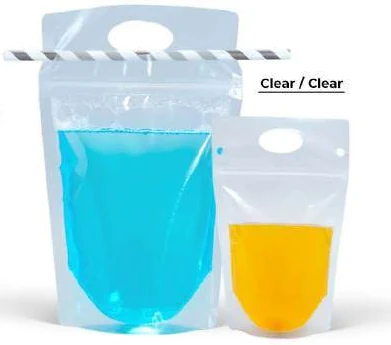
SEE's technical portfolio illustrates varied spout and handle options. If any component changes, the release owner must decide which evidence remains applicable. Record the change and its assessment before issuing a repeat order. A clear release file is also the starting point for investigating a later difference.
Make partial release useful without hiding its limit
State exactly what may progress and what remains conditional. An accepted dimensioned candidate can allow related artwork work within the agreed scope while a technical gate remains open. The internal instruction should describe that boundary instead of relying on the word approved alone.
Use plain sentences that a purchase-order issuer can read back. Identify product and pack references, accepted tasks and unresolved evidence. If the reader cannot tell whether a commercial production order is authorised, the statement needs clarification through the accountable owners.
For an illustrative split, artwork and dimensions may be accepted while application release awaits the product owner's study decision. Preserve both statuses and the next action. Do not make the completed fields disappear merely because another field remains pending, or allow them to imply a completed application release.
Retain decision dates and document versions in the controlled history. A new conclusion should identify what changed and the authority behind it. This helps future reviewers distinguish a current scoped acceptance from an obsolete sample approval copied into a later order.
Read back the scope before purchasing
Before signing, perform an approval-readback exercise. Ask the purchasing owner to state which product and pack may be ordered, which process is covered and which conditions still need review. An illustrative misunderstanding is treating print acceptance as permission to fill a new formula. Correct the release statement until its scope is clear to both technical and commercial readers. Keep the signed evidence accessible to the people issuing purchase orders, rather than only in a designer's folder. This makes the record operational when a repeat request arrives months after the original development discussion.
Use change control at repeat order and substitution
Compare every repeat specification against the released combination. Identify product, process, component, quantity, artwork and route changes before asking the supplier to proceed. A repeat commercial description can conceal a meaningful technical difference.
Map each change to the decisions it affects. Some reports may remain applicable, while another task needs renewal. Record the relevant owner's rationale so evidence retention is deliberate and reviewable. Avoid assuming either universal transfer or automatic invalidation of the entire file.
An illustrative cap substitution may leave the artwork dimensions unchanged while reopening interface and complete-assembly evidence. A corrected content panel may require artwork approval without necessarily changing the physical trials. The mechanism determines the review path.
Before final order release, reconcile the quotation and included operations with the active record. Keep development-sample differences and approved deviations visible. The resulting file gives purchasing one current instruction and gives technical teams a reliable starting point when a later enquiry, change or investigation needs the exact assembly and its accepted scope.
Record the assembly and accepted evidence
Use this original worksheet with your product and supplier team. Give each row a named owner and evidence reference; a blank answer remains an open decision.
| Record | What to enter and why |
|---|---|
| Release identity | Combine product, drawing, structure, component, artwork and filling-process references in a single controlled record. |
| Decision rows | List applicable requirements and identify each specialist responsible for accepting the relevant evidence. |
| Evidence links | Attach sample codes, reports, line records and study conclusions rather than using unreferenced approval ticks. |
| Scope statement | Describe intended product, process, storage, market and distribution boundaries in plain language. |
| Change route | Name who reviews deviations and which changes suspend or reopen an earlier decision. |
Liquid-food approval: a practical specification example
A liquid-food pack needs a coherent filling, sealing and dispensing plan. A flat portion sachet, retort pouch and capped spout pouch are different briefs even when they contain a similar recipe. Record the product flow, fill volume, intended treatment and how the user empties the pack. Do not transfer a process condition or storage expectation from a reference photograph.
For this decision, start with the formulation, drawing and closing route. The useful output is a record tied to the proposed complete pack. Put that output beside the relevant quotation, drawing or sample rather than leaving it in a separate email. This is an illustrative decision exercise, not a report of a completed customer trial.
Product references to make the discussion concrete
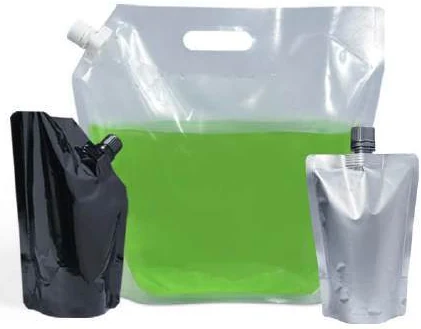
The catalogue includes spout pouches and retort pouches. These examples show different physical constructions; they are not interchangeable specifications. A fitted spout provides a controlled opening for dispensing. The reference range includes compact pouches and larger handled formats. Specify the product, fill volume, spout location and cap before developing the pouch shape; a corner spout and a top-centre spout require different layouts.
| Format reference | Material or construction to clarify | Details to include in the brief |
|---|---|---|
| Spout pouches | Flexible liquid-pack laminate with a fitted spout and cap; contact-layer and closure compatibility are reviewed for the formulation. | Fill volume and product viscosity; spout bore, position and cap. |
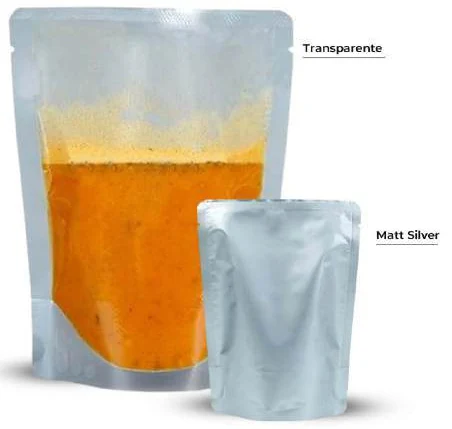
| Retort pouches | Multilayer retort laminate, with transparent or opaque options subject to product and process review. | Food formulation and fill weight; required process time and temperature. |
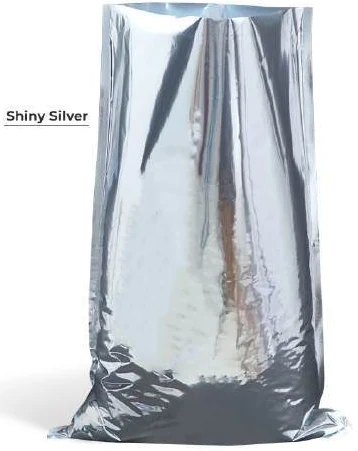
Use the reference pictures to identify the base, side panels, window or opening that you mean. A picture cannot supply the missing dimensions or material layers. If a photograph shows a finish or closure you do not want, state that difference explicitly; otherwise a visual reference can introduce an unintended requirement.
Complete the record before requesting the next sample
- Attach a record tied to the proposed complete pack. Identify the product or SKU and the date of the observation.
- Record the formulation, drawing and closing route. Keep confirmed information separate from proposed values and questions for the supplier.
- Add the actual fill weight or volume, the dimension convention, material proposal and intended closure. Include the number of designs and quantity per design when requesting a quotation.
- State which question the next drawing, sample or quotation must resolve. A change of size, closure or material should remain visible alongside the earlier reference.
This record makes the next conversation specific. It lets the design, purchasing and packing teams work from the same proposed item and shows which decision still needs evidence. Review the related product pages for format details, or prepare a custom packaging brief with the unresolved requirements.
Put the decision into practice
1. Assemble the references. Gather the final product, pack, component and process revisions before asking anyone to sign release.
2. Check each decision. Confirm that every relevant requirement has an owner, accepted evidence or a clearly recorded open status.
3. Issue a scoped release. State partial and final acceptance explicitly so purchasing understands what the signature authorises.
4. Control repeat orders. Compare each repeat specification to the released record and route changes for technical review.
Send Navkar Poly Print the controlled release record with the exact pouch references when progressing a technically assessed liquid-food enquiry.
Sources and scope.
These references support the technical discussion. Product photographs illustrate formats; the material, dimensions and suitability of the proposed pack are confirmed for each project.
- Viking Masek: liquid pouch filling sequence
Equipment maker describes coordinated pouch handling, liquid filling and closure; no Navkar equipment or performance implied.
- SEE: Spout Pouches technical sell sheet
Illustrates spout-position, handle and shape options in another manufacturer portfolio; component selection remains project-specific.
Let’s discuss your product.
Share your contents, dimensions, filling method, quantity and delivery destination. We’ll work through the proposed packaging specification with you.
Create a packaging brief