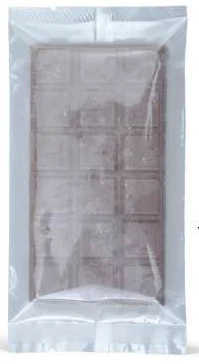
Request food-contact packaging evidence for the exact proposed material and intended use, then have the responsible qualified team assess it against current requirements. A general food-grade statement is not a complete application record. Identify the product, contact arrangement and proposed process conditions before asking which documents apply. This article provides a request framework and makes no determination that a particular pack or supplier complies.
Define the contact use before collecting documents
Record the food type, proposed package construction, relevant contact surfaces and known filling or storage conditions. Ask the responsible team what additional information is needed. Do not assume that evidence for one product or use condition transfers automatically to another. If the buyer cannot disclose the full formulation at enquiry stage, agree an appropriate information route with the qualified reviewer. The supplier should understand the intended use sufficiently to propose relevant evidence, while the project record remains honest about information not yet available.
Use current official requirements through qualified review
The FSSAI packaging regulations compendium is an official reference for review in the Indian context; the current applicable requirements and any amendments must be checked for the actual product and use. A document request should not turn into an unqualified legal assurance. Ask the reviewer to identify required declarations, reports or other evidence and the scope expected. For an export enquiry, confirm the destination-specific review separately rather than assuming an Indian reference settles the receiving market’s requirements.
Check that each document belongs to the proposal
Record issuer, reference, date, material identity and covered conditions for each supplied document. Ask how it maps to the proposed construction, including relevant components. Avoid treating a company-level certificate, generic resin statement or unrelated report as automatic evidence for the finished item. Bostik’s laminate-adhesive information illustrates that a laminate involves a defined component system; the project’s applicable evidence must still be assessed. Keep gaps and clarification requests visible instead of manufacturing a compliant status from incomplete paperwork.
Use a contact-evidence request register
The register helps procurement collect and organise evidence. The decision on sufficiency and applicability belongs to the authorised regulatory and technical reviewers for the actual project.
| Record | What to capture and how to use it |
|---|---|
| Intended use | Record food type, proposed construction and relevant contact, filling and storage information. Identify missing details and the technical owner who can resolve them before requesting a broad suitability statement from the supplier. |
| Applicable review | Identify the market and responsible qualified reviewer. Ask which current requirements and amendments apply, keeping Indian and destination-market assessments distinct where an export proposal is being considered. |
| Document request | List the specific declarations, reports or supporting records requested by the reviewer. State the expected material and use scope, avoiding a generic request for all certificates that can produce a large but irrelevant document pack. |
| Document mapping | Record issuer, date, reference and the construction or component covered. Ask the supplier to explain the link to the proposed item and preserve any scope limitation instead of transferring evidence from a similarly described material. |
| Decision and gaps | Record the qualified applicability decision, outstanding questions and next evidence required. Keep company-level certification claims separate from item-specific evidence, and leave acceptance open where the responsible reviewer has not resolved the gap. |
Keep the original documents and reviewer decisions together. A summary spreadsheet is useful for status, but it should not replace the source evidence or hide qualifications contained in the documents themselves.
Illustrative generic declaration
A supplier provides a general statement referring to a broad material family. The enquiry concerns a specific printed laminate under stated use conditions. Procurement records the statement but asks the qualified reviewer whether it covers the proposal and what further evidence is needed. It does not call the item approved or reject the entire supplier automatically. The example demonstrates document-scope checking; it supplies no legal conclusion or food-safety guarantee.
Describe the intended contact before requesting documents
Identify the food, the surface intended to contact it and the proposed filling, storage and use conditions. Include relevant processing information for the qualified reviewer. A generic request for a food-grade certificate may omit the very conditions that determine whether a document is applicable. The document request should describe the proposed package system, not just the product category.
List the construction and relevant components by their current references. If a spout, closure, ink or adhesive is part of the proposal, ask the responsible reviewer what supporting information is needed. Do not assume that a statement covering one supplied film automatically covers every component or the assembled finished package.
Start with current official texts
Use the FSSAI regulations index and official notifications as starting points for the qualified Indian regulatory review. A compendium is useful, but its date matters. The notification list includes an August 2026 packaging amendment concerning pan-masala materials, illustrating why a 2025 compilation should not be treated as the complete current position.
This article provides a document-request method rather than a legal compliance determination. Ask the responsible reviewer to identify the current provisions, applicability and effective requirements for the actual food and package. Distinguish a draft from a final notification. A proposed definition or consultation text should not be presented as an enacted obligation merely because it appears on an official site.
Map every statement to its subject
For a supplier declaration, identify who issued it, the material or item covered, its date and stated use scope. For a test report, identify the specimen, method and conditions. For a certificate, establish what the certificate actually covers and whether it is relevant to the required decision. Different document types are not interchangeable proof of the whole package.
Create a mapping table with one row per requirement or question. Link the document to the exact construction or component. If the item name is broad or obsolete, ask the issuer to clarify the relationship. Do not amend a supplier's statement yourself or infer that a similar trade name covers the proposed grade.
Read test conditions with the intended use
The qualified reviewer should compare the test's stated conditions and specimen with the proposed food-contact situation. Keep the report's limits and any exclusions visible. A genuine report can still be inapplicable to a different material, process or use. Procurement's role is to collect a traceable evidence set and obtain the appropriate interpretation, rather than decide suitability from a pass word alone.
If a needed condition is absent from the request, return to the product and filling owners. A supplier cannot provide a well-matched response to an undefined process. Avoid inventing a filling temperature, storage period or contact condition just to complete a form. Record what is known and which owner must resolve the missing information.
Handle an evidence gap as a defined question
Suppose an illustrative declaration names a base film while the proposal is a printed laminate with a separate fitment. The next action is to ask the reviewer which parts of the assembled system are covered and which require additional information. The gap is not automatically proof of noncompliance, but it prevents an unsupported complete-package conclusion.
Record the requested clarification, responsible party and decision status. When an updated document arrives, retain its identity and the review that resolves the question. Do not silently replace the old attachment while leaving the original interpretation unchanged. The evidence chain should show why the current conclusion applies to the current proposed item.
Keep the final claim proportional to the review
The closing record should state which documents were reviewed for which intended use and what decision the responsible reviewer made. Do not convert a supplier document into a claim that FSSAI has approved Navkar's factory or every pack design. No such company approval is established here.
For an export enquiry, add the destination and responsible importer or qualified market reviewer. Indian evidence may be useful but does not automatically settle another jurisdiction's requirements. Retain the exact package identity and conditions across these reviews so procurement can compare the evidence without inventing a universal food-contact approval.
Product-contact documentation: a practical specification example
Two samples have similar appearances but different material requirements. One may use a clear panel and another an opaque surface; neither appearance specifies its complete layer structure. Keep the product, storage conditions, fill method and required performance in the brief. Ask for the proposed construction in writing so the comparison remains meaningful when a paper-look or metallic appearance is introduced.
For this decision, start with the actual intended contents and supplied construction. The useful output is a request specific to the proposed pack rather than a generic brochure. Put that output beside the relevant quotation, drawing or sample rather than leaving it in a separate email. This is an illustrative decision exercise, not a report of a completed customer trial.
Product references to make the discussion concrete
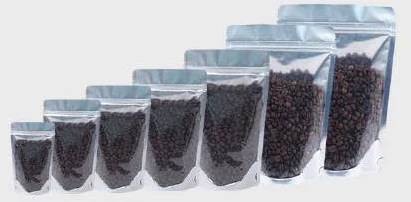
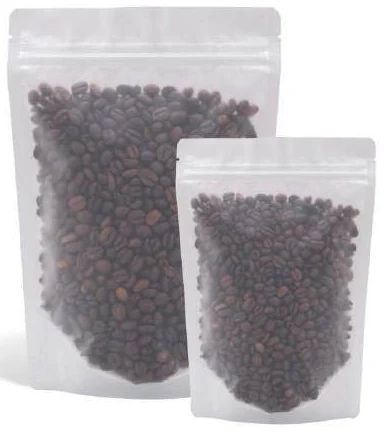
The catalogue includes clear-front opaque-back pouches and kraft paper pouches. These examples show different physical constructions; they are not interchangeable specifications. A clear front shows the contents while an opaque or metallic back provides a contrasting panel. Specify which face carries the principal artwork and check how it reads through the transparent face. The windowed side and opaque side need a coordinated material brief.
| Format reference | Material or construction to clarify | Details to include in the brief |
|---|---|---|
| Clear-front opaque-back pouches | Transparent front paired with opaque or foil-look back panels; confirm the layer construction on each face. | Front and back material requirements; artwork side and orientation. |
| Kraft paper pouches | Kraft or paper outer with a product-specific inner construction; paper appearance does not establish a plastic-free composition. | Paper colour and surface preference; full layer structure and thickness. |
Use the reference pictures to identify the base, side panels, window or opening that you mean. A picture cannot supply the missing dimensions or material layers. If a photograph shows a finish or closure you do not want, state that difference explicitly; otherwise a visual reference can introduce an unintended requirement.
Complete the record before requesting the next sample
- Attach a request specific to the proposed pack rather than a generic brochure. Identify the product or SKU and the date of the observation.
- Record the actual intended contents and supplied construction. Keep confirmed information separate from proposed values and questions for the supplier.
- Add the actual fill weight or volume, the dimension convention, material proposal and intended closure. Include the number of designs and quantity per design when requesting a quotation.
- State which question the next drawing, sample or quotation must resolve. A change of size, closure or material should remain visible alongside the earlier reference.
This record makes the next conversation specific. It lets the design, purchasing and packing teams work from the same proposed item and shows which decision still needs evidence. Review the related product pages for format details, or prepare a custom packaging brief with the unresolved requirements.
Request an evidence-based proposal
Include the completed register and intended-use brief in the enquiry. Ask the supplier to identify what it can support and what remains conditional. Record the final decision through the authorised review process before making public compliance claims. This creates a concrete, useful evidence request while preserving the difference between collecting paperwork and establishing suitability.
Send the completed contact-evidence request register with your product and filling details to Navkar Poly Print for a project-specific discussion. Ask for the proposed specification, evidence required and open questions to be recorded before quotation approval.
Sources and scope.
These references support the technical discussion. Product photographs illustrate formats; the material, dimensions and suitability of the proposed pack are confirmed for each project.
- FSSAI packaging regulations compendium, version V
Official regulatory reference for a qualified reviewer to check; no compliance determination or certificate claim.
- Bostik laminate adhesives
Adhesive manufacturer context for flexible lamination; suitability and process conditions remain project-specific.
- FSSAI Notifications
Official current notification index includes August 2026 packaging amendment concerning pan-masala materials; qualified applicability review remains required.
- FSSAI regulations index
Official starting point for qualified current Indian food-contact regulatory review; no company approval or compliance conclusion.
Let’s discuss your product.
Share your contents, dimensions, filling method, quantity and delivery destination. We’ll work through the proposed packaging specification with you.
Create a packaging brief