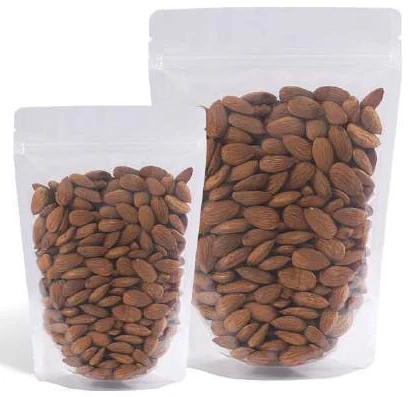
For namkeen, compare a defined rollstock forming route with a defined premade zipper-pouch route at the batch sizes you can actually sell. Rollstock may suit an established continuous packing operation, while a premade zipper pouch may support repeated use or a different retail position. The decision depends on accepted output, changeovers, product protection and the customer's eating occasion.
Define the alternatives accurately
Rollstock is supplied as a reel for a nominated forming, filling and sealing route. A premade pouch arrives with its shape already converted and needs an appropriate filling and final-closing route. Neither description alone tells you the line's real output or complete feature set.
Zippers can be incorporated through different packaging systems. This guide compares a specified basic rollstock route with a specified premade zipper-pouch proposal; it does not claim that rollstock and zippers are inherently incompatible. Keep the exact candidate descriptions in the quotation and trial records.
Record the namkeen's particle distribution, oil or seasoning, target mass and representative bulk volume. Fine bhujiya, larger pieces and mixed snacks can create different filling and sealing questions. Do not approve the entire product range from one visually convenient sample.
Match the eating occasion
Ask whether the pack is normally finished in one sitting or opened repeatedly. A small takeaway portion and a family sharing pack do different jobs. If repeated access is important, observe whether customers can open, remove product and reclose the candidate conveniently.
A zipper is a usability feature, not an automatic guarantee of freshness after opening. The product, closure behaviour, consumer routine and storage conditions still matter. A single-use pack may remain the better commercial offer for an occasion where the contents are consumed promptly.
Keep quantity and occasion visible in design testing. A consumer may prefer a larger pack because of value or a smaller one because it limits spending. Those reasons are different from valuing the zipper or pouch shape and should be recorded separately.
Compare actual line output
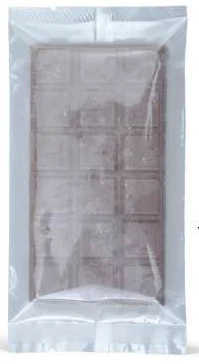
Obtain the proposed reel specification and the filler manufacturer's requirements for the rollstock route. Include web width, print repeat, unwind direction and other agreed fields needed for the actual equipment. Record the approved revision rather than relying on a generic reel label.
For premade pouches, identify opening access, handling method, filling clearance and final seal requirements. Ask the filling partner which operations are manual or automated and what evidence is needed for this product. Do not assume a premade pouch always means hand packing.
Mespack's solution finder provides a primary equipment starting point, while Viking Masek's premade pouch filler documentation illustrates automated filling and sealing of already converted pouches. Supplier equipment descriptions do not establish the output of Navkar or a buyer's proposed line.
Measure useful output through a representative run
Record accepted finished packs over a defined working period, including ordinary stoppages and changeover. Separately capture rejects, product giveaway where measured, sealing interruptions and the reasons for lost time. A headline speed from a brochure is not a conversion cost for your namkeen.
Use the intended product and pack quantity during qualification. A route that handles a free-flowing reference product may behave differently with oily seasoning or fragile pieces. The technical team should choose the suitable observation conditions and acceptance criteria.
Allocate changeover to the flavours and artwork versions that actually create it. Ten short flavour runs can consume a different share of the schedule from one long run with the same total quantity. Procurement should see the production pattern rather than a single blended annual volume.
Build a batch-size break-even calculation
Separate fixed batch costs from costs that change with each accepted pack. Fixed costs can include setup or a defined changeover charge. Variable costs can include the complete pack, filling, closing and relevant handling. Keep the financial boundary equivalent between candidates.
For an invented example, route A has ₹12,000 fixed cost and ₹3.20 variable cost per accepted pack. Route B has ₹4,000 fixed cost and ₹4.00 variable cost. The equations are A = ₹12,000 + ₹3.20 × quantity and B = ₹4,000 + ₹4.00 × quantity.
The difference in fixed cost is ₹8,000 and the variable difference is ₹0.80. Their illustrative break-even quantity is 10,000 accepted packs. Below that quantity B is cheaper within this model; above it A is cheaper. These are invented inputs, not current film prices or predictions for either route.
Check what the simple calculation excludes
| Input | Why it can change the decision |
|---|---|
| Product lost or rejected | High-value contents can outweigh a small packaging saving |
| Artwork count | Setup and stock divide across separate designs |
| Filling availability | Outsourcing or queue delays can change the usable commercial route |
| Outer cartons and delivery | Different filled shapes may require different protection and carton counts |
| Unsold inventory | A low unit price can still create excess stock or obsolete artwork |
Recalculate with the buyer's actual quotations and accepted yield. If variable cost is quoted per ordered unit instead of accepted unit, account for rejects consistently. Do not divide one supplier's entire invoice by accepted output while leaving another's quoted loss allowance outside the comparison.
Protect texture and product appearance
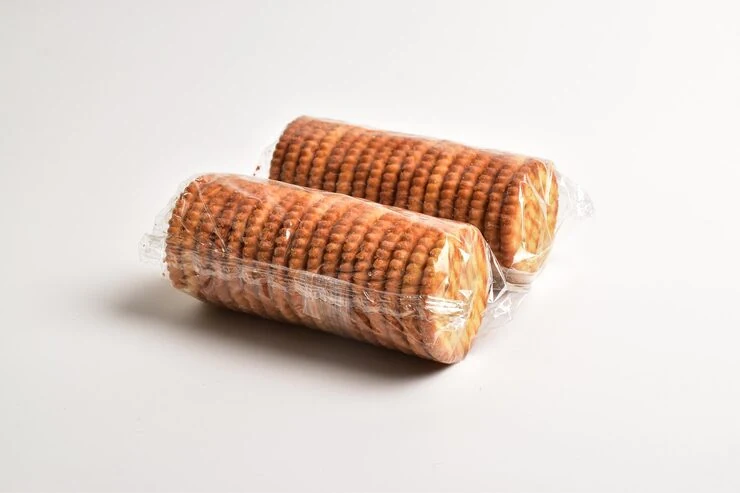
Compare the proposed structures and completed seals under the intended product and storage conditions. Ask which quality changes determine rejection for the particular namkeen. Texture, flavour, oil-related changes and piece damage may require different assessment methods selected by the product team.
The package format is only one part of that evaluation. A zipper, a gusset or a stronger-looking film does not establish a shelf-life period. Preserve the structure, process, product and storage records together so that a claim can be traced to the actual qualified system.
For repeated use, observe both the practical reclosure action and product quality over an appropriate use study. Keep unopened shelf life and opened-use performance distinct in the article, on the pack and in the technical approval record. Customers should understand what the tested claim actually covers.
Review shelf appeal with a filled sample
Compare the candidates at the actual fill quantity after normal settling. Check whether the front panel remains readable, whether the pack stands or hangs as intended and whether the product appears appropriate for the selling occasion. A flat artwork preview cannot show these behaviours.
Use clear flavour differentiation across the range. A premium-looking family pouch that makes flavours hard to identify can frustrate repeat buyers. Test the design at shelf distance and as a small ecommerce thumbnail before paying for several versions.
If the zipper format is expected to support a higher price, test that proposition explicitly. Record conversion and contribution at the proposed price, alongside usability and complaints. A stated preference for a convenient closure is not proof that buyers will pay the required premium.
Split the forecast by flavour before using break-even
An illustrative brand forecasts 30,000 packs across six flavours. The useful question is whether the fixed setup in the model applies once to the programme or separately to each flavour and artwork. Dividing total volume by six gives only 5,000 packs per flavour if demand is evenly split.
That split can change the comparison materially when each design has its own setup or stock commitment. Actual flavour demand may also be uneven, leaving one design in frequent production and another in slow inventory. Ask the supplier to quote the real design mix and identify what can be shared.
Keep forecast and committed order quantity separate. A larger expected programme can justify planning, but the buyer still needs a defensible first purchase and a repeat-order route. This helps procurement avoid selecting an apparently economical line on a volume that has not yet been sold.
Namkeen rollstock versus zipper: a practical specification example
A brand is comparing two packaging concepts around one real application. Hold the product quantity and customer use constant, then list what changes with the container: filling, closing, opening, dispensing, display and shipment. A flexible alternative may offer a different shape or use pattern, but its material and closure still need their own project-specific review. Keep hypothetical cost examples separate from quotations.
For this decision, start with the portion size and use after opening. The useful output is the packing route separated from the reclosure choice. Put that output beside the relevant quotation, drawing or sample rather than leaving it in a separate email. This is an illustrative decision exercise, not a report of a completed customer trial.
Product references to make the discussion concrete
The catalogue includes spout pouches and flat-bottom pouches. These examples show different physical constructions; they are not interchangeable specifications. A fitted spout provides a controlled opening for dispensing. The reference range includes compact pouches and larger handled formats. Specify the product, fill volume, spout location and cap before developing the pouch shape; a corner spout and a top-centre spout require different layouts.
| Format reference | Material or construction to clarify | Details to include in the brief |
|---|---|---|
| Spout pouches | Flexible liquid-pack laminate with a fitted spout and cap; contact-layer and closure compatibility are reviewed for the formulation. | Fill volume and product viscosity; spout bore, position and cap. |
| Flat-bottom pouches | Flexible laminate with paper-look or opaque outer options; the appearance alone does not identify the full layer structure. | Base width and full opened depth; net fill and product bulk. |
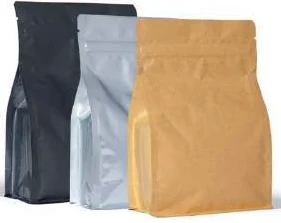
Use the reference pictures to identify the base, side panels, window or opening that you mean. A picture cannot supply the missing dimensions or material layers. If a photograph shows a finish or closure you do not want, state that difference explicitly; otherwise a visual reference can introduce an unintended requirement.
Complete the record before requesting the next sample
- Attach the packing route separated from the reclosure choice. Identify the product or SKU and the date of the observation.
- Record the portion size and use after opening. Keep confirmed information separate from proposed values and questions for the supplier.
- Add the actual fill weight or volume, the dimension convention, material proposal and intended closure. Include the number of designs and quantity per design when requesting a quotation.
- State which question the next drawing, sample or quotation must resolve. A change of size, closure or material should remain visible alongside the earlier reference.
This record makes the next conversation specific. It lets the design, purchasing and packing teams work from the same proposed item and shows which decision still needs evidence. Review the related product pages for format details, or prepare a custom packaging brief with the unresolved requirements.
Connect the format to replenishment
For short flavour runs or uncertain demand, keep stock exposure and artwork changes visible. For a stable high-volume line, focus on verified repeat performance, reel handover and scheduled changeovers. Neither buying pattern is universally superior; the format should fit the brand's real replenishment plan.
Quote actual cartons to the receiving PIN code and include the agreed delivery scope. Regional freight and the buyer's storage arrangement can change the result. For distant markets or Sri Lanka, qualify the complete delivered economics before extending assumptions from a nearby pilot.
Send Navkar Poly Print the namkeen brief, quantity by flavour, target fill, intended packing line and customer occasion. Request comparable rollstock and pouch proposals with clear exclusions. Give procurement and B2B heads the break-even model, accepted-output evidence and repeat-use findings before approving the commercial format.
Sources and scope.
These references support the technical discussion. Product photographs illustrate formats; the material, dimensions and suitability of the proposed pack are confirmed for each project.
- Mespack's solution finder
Primary supplier or technical reference for the linked format or component question; no Navkar capability, test outcome or shelf-life claim is transferred.
- Viking Masek's premade pouch filler documentation
Primary supplier or technical reference for the linked format or component question; no Navkar capability, test outcome or shelf-life claim is transferred.
Let’s discuss your product.
Share your contents, dimensions, filling method, quantity and delivery destination. We’ll work through the proposed packaging specification with you.
Create a packaging brief