Choose a zipper snack pack when customers need repeated access and the complete design supports convenient reclosure and product quality. Choose a single-use pack when the quantity and eating occasion are normally completed at once. The useful comparison is the cost and quality of the snack actually consumed, rather than the presence of a closure feature.
Define the eating occasion
A commuter portion, a lunchbox pack and a family sharing bag serve different routines. Record the intended user, quantity consumed per occasion and how long the remainder normally stays in the package. These observations explain whether repeated access is a meaningful requirement.
Keep snack type specific. Makhana, nuts, namkeen and mixed snacks differ in bulk volume, fragility, seasoning and other quality factors. A zipper that works comfortably for one product form may need a different opening arrangement for another.
Do not use a larger pack merely to justify a convenient feature. The customer still needs a clear value proposition and a manageable quantity. Test the pack size and the closure together while keeping their effects distinguishable in the commercial record.
Understand the original seal and the zipper
The original completed pack and the consumer's reclosed pack are different states. A zipper provides a repeat-access interface, while the final seal and opening route form part of the unopened system. Record both in drawings and prototype reviews.
Flexico's closure catalogue is a primary example of application-specific closure choices. A supplier's feature description does not establish the performance of another proposed pack. Request the actual closure reference and the relevant fitting and qualification requirements.
Observe whether the intended user can identify the opening, remove product and reclose the zipper consistently. A feature that appears obvious to a packaging team may be unclear to a first-time buyer. Include grip and access for the intended audience rather than assessing only the designer's demonstration.
Define what freshness means for this snack
Ask the product team which changes determine rejection. Texture, flavour, oil-related changes, moisture and other relevant measures may need different methods. The complete product and safety assessment should establish the claim, rather than a generic statement that zippers keep everything fresh.
NIFTEM's Makhana Packaging material provides category background on moisture and storage. It is not a controlled zipper-versus-single-use trial. Use product-specific evidence for the snack and avoid transferring older general recommendations or shelf-life claims.
Separate unopened storage from repeated access after opening. The zipper does not automatically recreate the original protected environment. A smaller single-use pack may reduce the need to store leftovers, but that does not establish its total cost or environmental advantage without a complete comparison.
Compare matched product quantities
Begin with equal total snack mass in the quotation. One family pack and several portion packs can deliver the same total quantity while creating different numbers of openings, pieces of packaging and purchase occasions. Record the whole offer rather than comparing one large pack with one small pack.
For consumer testing, observe a realistic eating routine. Include where the pack is placed, whether the customer shares it and what happens to the remainder. Avoid asking people to finish more food than they normally would simply to make the test convenient.
Keep price and product grade visible. A preference for portion packs may reflect lower spending per transaction. A preference for a large zipper pack may reflect a lower price per common quantity. Those are commercial offer effects, not necessarily closure preferences.
Measure the practical reclosure
Observe opening, product access, clearing the opening where appropriate, closing and checking the closure. The technical and product teams should define suitable handling conditions. Record errors, requests for help and the point at which the user abandons the intended action.
Repeat with a partly emptied pack. Its shape and grip can differ from the full prototype. Check whether product around the opening interferes with the user's task and whether the design provides adequate access without encouraging confusion about the original seal.
Use neutral questions after observation. Ask what was easy, what was difficult and how the customer would normally store the remainder. Do not tell participants that the zipper is the premium or freshness option before collecting their response.
Build a complete cost comparison
| Cost or value input | Why it belongs in the decision |
|---|---|
| Complete packaging | Includes the nominated structure, dimensions, printing and closure features |
| Conversion | Includes filling, closing, setup, output and measured rejects |
| Product quantity | Allows comparison per common snack mass and eating occasion |
| Distribution | Includes actual cartons, protection and destination scope |
| Useful consumption | Identifies measured product left unused under the defined routine |
Quote realistic quantities by flavour and design. Portion packs may create more individual units for the same product mass, while larger packs can create different stock and selling-price exposure. The actual quotations and route determine which cost effect matters.
An illustrative consumption calculation
Suppose a family pack contains 400g and the defined observation records 360g consumed in acceptable condition. At an invented relevant filled-system cost of ₹120, its cost per consumed kilogram is ₹120 ÷ 0.36 = ₹333.33. A portion-pack offer with the same 400g total costs ₹128 and records 392g consumed, giving approximately ₹326.53 per consumed kilogram.
These assumptions are invented and do not describe the performance of a zipper or single-use pack. They show how useful consumption can change a nominal price comparison. Actual customer routines, product quality and cost can produce a different result.
For the brand's calculation, record production losses separately, adding only expenses not already counted in product or other costs. Do not charge the same lost product twice. For the consumer calculation, use purchase price and observed quantity. Mixing those perspectives can create a saving neither party receives.
Test the shelf offer and price communication
Review the candidates at shelf distance and as small mobile images. Brand, snack type, flavour and quantity should be clear. If convenience is a key feature, explain it accurately without allowing the zipper message to obscure the product itself.
Show the price per common quantity where appropriate and approved. A lower ticket price and a better unit price can point to different candidates. Procurement and B2B heads should understand which buyer need the brand intends to serve.
Test whether customers recognise the intended eating occasion without coaching. A family sharing design may be mistaken for a single portion if its scale is unclear online. A portion-pack bundle may need better quantity communication than one large hero photograph provides.
Validate the opened-use claim
The technical team should choose a suitable study for the product, opening pattern and intended conditions. Record the original product batch, complete pack references, access schedule and acceptance measures. Keep any result within that defined scope.
Do not promise a universal number of fresh days after opening because a zipper appears secure. Consumer actions and storage can vary substantially. State only claims supported by the product's evidence and approved communication.
If a study or pilot is inconclusive, record that outcome clearly. It may still reveal an opening problem or show that the pack size is poorly matched to consumption. Correcting those issues can improve usefulness even without demonstrating a shelf-life extension.
Check whether the pack size creates the leftover problem
If users repeatedly leave snack unused, investigate quantity before assuming a better closure is the whole solution. A family pack may be too large for the actual household, while several smaller packs may better match consumption at a different total price.
Compare a realistic set of offers: the current size, a suitable zipper candidate and a portion alternative where relevant. Keep the same total product mass visible in the cost model, then observe the customer occasion each offer serves. The purpose is to identify a useful commercial range, not force every customer into one format.
Record the number of packs opened and the amount actually consumed under the defined observation. This can reveal whether a closure improvement, a quantity change or clearer occasion positioning deserves the next trial. It also avoids crediting the zipper for a benefit that came mainly from changing the portion size.
Zipper versus single-use: a practical specification example
A format comparison is useful when it answers the actual buying question. Define the customer action and the filled product before deciding that one appearance is better. A valve, window, zipper or matte surface changes a different part of the specification. Some features can coexist, so compare their purposes and constraints rather than forcing every decision into an either-or choice.
For this decision, start with the portion pattern and use after first opening. The useful output is a closure choice tied to the expected customer actions. Put that output beside the relevant quotation, drawing or sample rather than leaving it in a separate email. This is an illustrative decision exercise, not a report of a completed customer trial.
Product references to make the discussion concrete
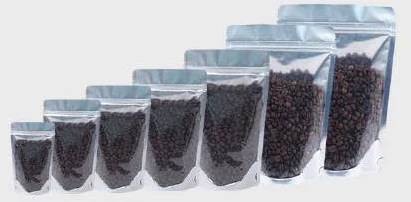
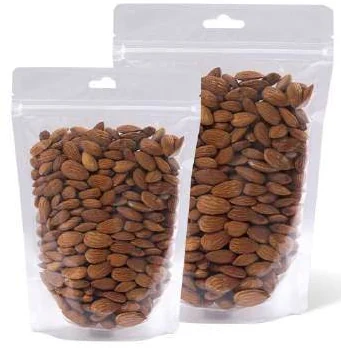
The catalogue includes coffee pouches with valve and jar-shaped zipper pouches. These examples show different physical constructions; they are not interchangeable specifications. A degassing valve and a reclosable zipper serve different purposes. Choose the pouch geometry first, then specify the valve position, zipper and final top seal as separate features. Stand-up, side-gusset and flat-bottom examples help compare panel area and shelf footprint.
| Format reference | Material or construction to clarify | Details to include in the brief |
|---|---|---|
| Coffee pouches with valve | Paper-look or opaque flexible laminate with an optional degassing valve; the complete barrier structure is specified for the coffee and storage brief. | Coffee form and intended fill; packing interval after roasting. |
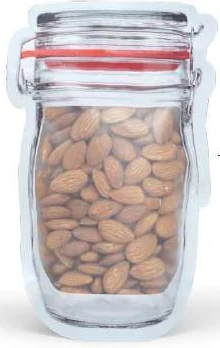
| Jar-shaped zipper pouches | Clear or frosted flexible pouch construction with a zipper; the jar shape is a profile, not a rigid container. | Usable cavity and narrowest opening; die-cut outline and corner radii. |
Use the reference pictures to identify the base, side panels, window or opening that you mean. A picture cannot supply the missing dimensions or material layers. If a photograph shows a finish or closure you do not want, state that difference explicitly; otherwise a visual reference can introduce an unintended requirement.
Complete the record before requesting the next sample
- Attach a closure choice tied to the expected customer actions. Identify the product or SKU and the date of the observation.
- Record the portion pattern and use after first opening. Keep confirmed information separate from proposed values and questions for the supplier.
- Add the actual fill weight or volume, the dimension convention, material proposal and intended closure. Include the number of designs and quantity per design when requesting a quotation.
- State which question the next drawing, sample or quotation must resolve. A change of size, closure or material should remain visible alongside the earlier reference.
This record makes the next conversation specific. It lets the design, purchasing and packing teams work from the same proposed item and shows which decision still needs evidence. Review the related product pages for format details, or prepare a custom packaging brief with the unresolved requirements.
Make the next order evidence-led
Choose a zipper pack when repeat access is valuable, users can operate it and the qualified product system supports the intended claim. Choose single-use quantities when they better match the eating occasion and the complete economics. A brand may use both for distinct customer needs.
Send Navkar Poly Print the snack brief, eating occasion, target quantities, opening needs and delivery destination. Request comparable structures, closure references and trial requirements. Keep technical acceptance, consumer use and commercial margin as separate conclusions in the procurement review.
Sources and scope.
These references support the technical discussion. Product photographs illustrate formats; the material, dimensions and suitability of the proposed pack are confirmed for each project.
- Flexico's closure catalogue
Primary supplier or technical reference for the linked format or component question; no Navkar capability, test outcome or shelf-life claim is transferred.
- Makhana Packaging material
Moisture, storage and handling brief. Not a controlled format trial; older regulatory/template material and qualitative cost claims are not adopted.
Let’s discuss your product.
Share your contents, dimensions, filling method, quantity and delivery destination. We’ll work through the proposed packaging specification with you.
Create a packaging brief