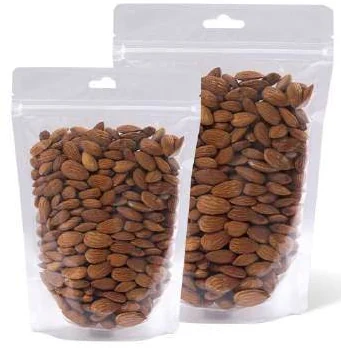
Approve a tear notch by observing the opening it produces on the complete pouch. Notch position, grip, material construction and adjacent features work together. A visible notch does not by itself demonstrate an easy, predictable first opening or a useful opening above a zipper.
Define the intended opening outcome
State what the customer should achieve: remove a top strip, create a pouring opening or access a zipper. Describe the product-removal task after the tear. The desired outcome should lead the design discussion instead of simply requesting a notch because a reference pack has one.
Identify the actual pouch material proposal and feature arrangement for technical review. Opening behaviour should not be inferred from film thickness alone. The converter needs to assess the complete construction and its production method. Keep any easy-open claim pending until the intended pack has been reviewed with suitable evidence.
Define the opening outcome before the tear feature
Describe what the opened pack should allow next. A product emptied once needs useful transfer access. A repeated-use pack may need a particular remaining edge above a reclosure feature. A hanging pack may have another relationship between the display area and the opening. Keep those tasks distinct.
Record the exact material and feature proposal being reviewed. A change in a local notch drawing does not necessarily describe every factor in the tear behaviour of the complete construction. Ask the converter what representative sample is needed and which technical questions remain open.
ISO 17480 addresses accessible packaging design focused on opening. It provides a relevant standards context for defining the task. The public abstract does not establish a universal tear force or demonstrate that a local mock-up conforms to the standard.
For an illustrative pouch, the desired result is access to a zipper with useful remaining grip. The trial therefore follows the initial tear through separation of the lips and ordinary product removal. Stopping the observation when the tear starts would miss the outcome the feature was meant to serve.
Map the feature relationships
Show the notch, top closure, optional zipper and intended remaining grip region on a drawing. Use explicit reference edges and distinguish the notch centre from its edge when locating it. Avoid copying a distance from another supplier's pack as a universal requirement.
Fresh-Lock's closure resource shows different reclosure-system types. If a zipper is selected, identify the actual feature below the opening path. A tear that starts correctly can still leave awkward access to that feature, so the opening and reclosure need a combined review.
Mark feature relationships on one view
Show the notch, final closing region, intended tear route and adjacent feature on the same controlled drawing. Keep reference edges explicit. A position described from the wrong top edge can create an apparently small difference with a substantial effect on the remaining opening.
Separate required geometry from a development sketch. The supplier should confirm the actual production drawing and relevant acceptance conditions. A manually cut notch can help explain an idea while leaving the production feature and its variation unresolved.
Ask the artwork owner to mark the cue and any text near the opening. If a top region is removed, confirm which information remains with the pack. A graphic instruction that points to another edge can make an otherwise useful feature confusing. Physical and communication reviews need the same sample identity.
Use an overlay when a change is proposed. Show the previous and new position, the resulting remaining edge and any affected print region. Reviewers can then see why a local move deserves another opening observation. They do not need to infer the consequence from two unrelated screenshots or from a revised dimension with no context.

Use an opening-path record
| Observation | What to capture |
|---|---|
| Recognition | Where the reviewer first looks for an opening cue |
| Grip | Which areas are held and whether space is sufficient |
| Initiation | How the tear starts at the intended point |
| Travel | The observed route and any deviation |
| Result | Remaining edge, access and effect on adjacent features |
| Product use | Whether the next pour, scoop or piece-removal task works |
This original record includes the outcome because a successful start is only one part of opening. Record what happened without attributing it immediately to a single material or converting cause.
Observe an unopened representative sample
Give reviewers the pack in its intended received state. Do not pre-start the tear unless that is how the customer will receive it. Use approved product and normal handling procedures. Record spontaneous actions before offering an explanation so unclear cues can be distinguished from physical opening difficulty.
An illustrative issue is a reviewer finding the notch easily but tearing below the intended region, reducing zipper access. Another is a clean tear that leaves insufficient grip for reclosure. These are different outcomes and require different questions in the supplier review. Keep photographs and sample IDs for each.
Record initiation, travel and result as separate events
Initiation asks whether the user finds the feature and starts opening. Travel records what happens as the tear moves. Result records the final edge and usable access. A sample can perform differently at each stage, so avoid one unexplained easy-open rating.
Let the reviewer use the received-state sample before coaching where appropriate. Record requests for help and any explanation supplied. A second attempt after instruction answers a different question from first-time recognition. Both can be retained without presenting them as equivalent observations.
For an illustrative finding, the intended cue is understood and the tear starts, but the remaining opening is too restricted for the specified scoop. The next question concerns the complete outcome. It would be misleading to record the sample simply as passed because initiation succeeded.
Keep the product and filled condition identified. An empty sample can help isolate a feature for discussion, but the complete product-filled task may present different grip and access. Use the appropriate sample for each question and record any limitation rather than assuming that one opening demonstration covers all later conditions.
Review changes across the whole feature set
A revised top height, zipper position, material proposal or shaped edge can affect the opening task. Ask the converter which earlier evidence remains applicable and what should be repeated. Do not let an artwork-only approval conceal a changed physical opening arrangement.
Glenroy's shaped-packet example identifies a tear notch on a specific finished pouch shape. For your design, record the actual notch, surrounding edge and neighbouring features on the approved drawing. Review the opening path on a representative complete sample; the existence of the manufacturer's example does not establish how another construction will tear.
Use findings to choose a specific follow-up
Classify the issue before asking for a change. An unclear cue needs communication review. A restricted remaining opening needs a geometry and task review. A technical question about material behaviour belongs with the converter and relevant specialists. One broad request for a better notch can obscure these differences.
Ask what the next sample should preserve. If initiation is already clear, a revised outcome should not lose that benefit. Keep the accepted cue, actual drawing and outstanding question together so development does not repeatedly restart settled decisions.
For an amendment, record the changed feature and the reason earlier evidence is retained or repeated. A new structure, moved zipper or changed top geometry can affect the sequence even if the notch itself is unchanged. The technical owners should identify the applicable scope.
At release, keep an unopened reference and images of the opening outcome where suitable. Link them to approved instruction wording and the drawing revision. The repeat-order file should describe the intended complete opening, not merely contain a notch dimension that another team must interpret without knowing the task it supports.
Record what happens to any removed strip as part of the intended opening sequence. Its presence can affect how the remaining edge is held and how the reviewer interprets completion. Keep the observation tied to the actual feature arrangement, without turning one development exercise into a general consumer-behaviour claim.
Tear-notch placement: a practical specification example
A pouch feature can help one handling action while changing another. A hanging hole needs a header; a spout changes the opening and artwork area; a zipper needs a clear path for reclosure. Define the action the feature supports before adding it to the drawing. Review the whole pack with the product present instead of approving the component in isolation.
For this decision, start with the intended tear path and available seal area. The useful output is a marked opening path kept clear of essential information. Put that output beside the relevant quotation, drawing or sample rather than leaving it in a separate email. This is an illustrative decision exercise, not a report of a completed customer trial.
Product references to make the discussion concrete
The catalogue includes side-gusset pouches and hanging display pouches. These examples show different physical constructions; they are not interchangeable specifications. Folded sides expand as the pouch fills. This format has a different filled footprint from a bottom-gusset stand-up pouch, so specify the face width and opened side depth separately. A coffee-valve version can be discussed for the relevant product.
| Format reference | Material or construction to clarify | Details to include in the brief |
|---|---|---|
| Side-gusset pouches | Paper-look and opaque or foil-look laminates are illustrated; confirm the actual inner and outer layers for the contents. | Face width and side-gusset convention; filled height and headspace. |
| Hanging display pouches | Clear or opaque flexible pouch construction with a punched hanging feature; final material and reinforcement are reviewed for the fill. | Retail hook and hole dimensions; filled weight and hanging orientation. |
Use the reference pictures to identify the base, side panels, window or opening that you mean. A picture cannot supply the missing dimensions or material layers. If a photograph shows a finish or closure you do not want, state that difference explicitly; otherwise a visual reference can introduce an unintended requirement.
Complete the record before requesting the next sample
- Attach a marked opening path kept clear of essential information. Identify the product or SKU and the date of the observation.
- Record the intended tear path and available seal area. Keep confirmed information separate from proposed values and questions for the supplier.
- Add the actual fill weight or volume, the dimension convention, material proposal and intended closure. Include the number of designs and quantity per design when requesting a quotation.
- State which question the next drawing, sample or quotation must resolve. A change of size, closure or material should remain visible alongside the earlier reference.
This record makes the next conversation specific. It lets the design, purchasing and packing teams work from the same proposed item and shows which decision still needs evidence. Review the related product pages for format details, or prepare a custom packaging brief with the unresolved requirements.
Release a clear opening instruction and reference
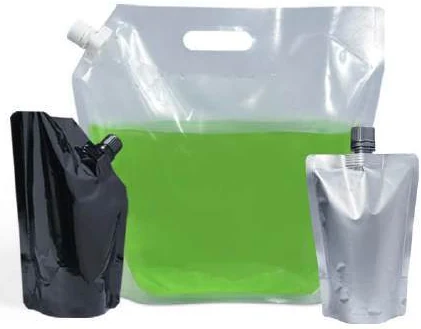
Once reviewed, align the printed cue with the physical feature. Keep the wording simple and have the content owner approve it. Retain the drawing, unopened sample and opening-result photographs as a connected reference.
Send Navkar Poly Print the intended opening outcome, feature map and observed path record. Ask for a proposal that can be assessed from first grip through the next product-use task, with the technical evidence for the chosen construction reviewed separately.
Sources and scope.
These references support the technical discussion. Product photographs illustrate formats; the material, dimensions and suitability of the proposed pack are confirmed for each project.
- Fresh-Lock flexible packaging closure applications
Differentiates press-to-close zippers and slider closure systems; not a performance claim for an unspecified pouch.
- Glenroy: shaped packaging with tear notch
Direct manufacturer example of a shaped pouch incorporating a tear notch; no universal tear direction, easy-open performance or material prescription inferred.
- ISO 17480:2015: ease of opening
Public abstract identifies accessible packaging design focused on opening; no full-procedure access or conformity claim.
Let’s discuss your product.
Share your contents, dimensions, filling method, quantity and delivery destination. We’ll work through the proposed packaging specification with you.
Create a packaging brief