Assess a powder pouch zipper after ordinary product use, not only on a clean empty sample. Observe how the customer opens the pack, removes powder and recloses it. Record dust near the feature, grip access and uncertainty about closure so the selected design can be reviewed against the real task.
Define the use case precisely
State whether customers pour directly, use a scoop or empty the pack into another container. Record the product's normal physical form and any relevant tendency to cling or create dust observed by the product owner. Do not infer the behaviour of a new blend from the name of one ingredient.
Identify the actual reclosure proposal. Fresh-Lock describes several closure-system types. Ask the converter which system is proposed and how its position affects access. A generic “powder zipper” label is not enough to define a component or prove suitability.
Define the powder condition and the customer's tool
Record the finished-product reference and the condition supplied by its owner for the observation. Include any normal particle or blend variation relevant to access. A sample prepared for photography may not represent ordinary product, so ask the product team to confirm what the review material covers.
Identify the actual scoop or receiving opening if the task uses one. Record how far the tool needs to enter and which region the user holds. Those observations give the converter a physical access question rather than a broad request for a powder-friendly pouch.
The ISO 17480 public abstract treats ease of opening as an accessible-design topic. A local powder-use exercise can expose design questions, but it does not establish conformity to the standard. Define the intended users and scope honestly.
For an illustrative nutritional powder, the intended task is repeated scooping rather than one-time transfer. The trial includes the actual scoop and relevant remaining amounts. A convenient direct pour from another sample would be useful context, but it would not settle this scoop-access requirement. The task should lead the feature review.
Set a realistic use cycle
Prepare a complete closed sample containing the intended quantity. Observe first opening, removal of a normal amount and reclosure. Repeat the relevant task through a defined partly used state. Record the sequence and remaining product condition so the observation can be understood later.
Keep the trial within the product owner's normal handling procedure. If the powder has specific handling controls, the responsible team must supply them. The packaging review should not invent chemical, food-safety or equipment operating advice. Its purpose is identifying what happens at the pack interface during authorised ordinary use.
Follow product contact through one ordinary cycle
Record where visible powder first approaches the feature: during first opening, product removal, returning the tool or reclosure. The timing helps distinguish an opening issue from a removal-path issue. A photograph taken only after several actions can lose that information.
Use simple location references on the drawing. Identify product near the mouth, the grip region or the selected feature rather than writing powder everywhere. Keep the amount qualitative unless an agreed method actually measures it. An approximate visual description should not become an invented contamination percentage.
Observe the user's response. They may change grip, tap the body or hesitate about alignment. Record the action before attributing it to component design. If the approved product procedure forbids or requires a particular action, keep that instruction with the trial; the observation should not invent handling advice.
Preserve a comparison sample where appropriate and authorised. It can help the supplier understand the observed region. Label any opened or altered item so it is not later mistaken for an untouched baseline. A good record makes the ordinary use sequence explainable without reconstructing it from memory.

Use a powder-use observation card
| Stage | Record | Distinguish from |
|---|---|---|
| First opening | Grip and access | Production closure assessment |
| Product removal | Pour or scoop path | Dose accuracy evaluation |
| Feature contact | Powder visible near the zipper | Assumed closure failure |
| Reclosure | Alignment, effort and feedback | Unmeasured barrier performance |
| Partly used storage | Shape and handling | Shelf-life validation |
This original card separates observations that are often collapsed into “zipper problem.” Powder visible near a feature is useful evidence, but the responsible technical team must determine its functional consequence through appropriate assessment.
Investigate the source of difficulty
If reviewers struggle to align the zipper, compare the grip space, pack shape and use sequence. If powder approaches the tracks during pouring, record the pour direction and product level. If a scoop rubs the feature, show the actual tool and opening path. These observations lead to different design questions.
An illustrative comparison might show that one prototype pours comfortably but leaves little space for a scoop, while another supports scooping with a less convenient direct pour. Choose according to the intended use task rather than declaring one opening universally better. The actual product and user requirement control the decision.
Diagnose access, alignment and feedback separately
Access concerns whether the user can reach and hold the feature. Alignment concerns bringing its mating parts together. Feedback concerns whether the user recognises completion. One person can struggle with any of these while the others work adequately. Record the specific difficulty and the relevant stage.
For an illustrative observation, the reviewer reaches the lips comfortably but cannot tell whether the final portion of the zipper is engaged. That is a feedback or alignment question, not evidence that grip space is too small. Another sample may have obvious closure feedback but leave the scoop rubbing the opening.
Ask the responsible technical team which evidence addresses any functional consequence of product contact. An easy user task does not establish barrier or leakage performance. Conversely, a component document does not show that the chosen whole-pack layout is intuitive. Keep the records linked but separate.
Compare a targeted revision against the same task. If the proposed opening becomes wider, repeat the scoop and reclosure observations under matching relevant conditions. If the powder formulation also changes, identify that difference and describe the exercise as assessment of the new complete proposal rather than proof of a single geometric effect.
Keep convenience and technical evidence separate
The selected material and complete closure still require product-specific technical review. A user panel that finds reclosure easy does not establish containment performance or a storage duration. Likewise, a technically assessed component can still present a confusing first-opening task.
FLtècnics' application resource distinguishes premade-pouch and rollstock equipment routes for dry products. Keep the actual packing route in the record because the delivered component and final closing operation also need review.
Build a result that supports the next design action
Use a finding row containing the event, product and sample identities, evidence reference and next question. “Scoop contacts the upper feature during normal removal from the partly used sample” is actionable. It lets the converter review opening geometry while the product owner confirms the intended tool and task.
Keep unsuccessful and successful observations in the same file. The successful stage shows what should be preserved during revision. A request that mentions only the failure can lead to a new sample that solves access but loses an already useful opening cue or grip region.
Choose the next sample according to the open question. A construction sample may resolve feature position. A final-material sample may be needed for another technical assessment. Ask the supplier to identify differences from production, and avoid using one convenient sample beyond its stated purpose.
Close the record with a bounded decision. State which product form, tool, remaining-product states and feature arrangement were assessed. A later move from scoop use to direct transfer is a changed task, even when the brand and outside dimensions remain familiar. The original observation becomes a useful reference rather than a blanket approval.
Include the tool identity in the release record when it controls access. Replacing a scoop with a larger one can reopen the use task while leaving every pouch dimension unchanged. The product team should identify such changes before a repeat component order inherits the earlier convenience conclusion.
Powder at the zipper: a practical specification example
A pouch feature can help one handling action while changing another. A hanging hole needs a header; a spout changes the opening and artwork area; a zipper needs a clear path for reclosure. Define the action the feature supports before adding it to the drawing. Review the whole pack with the product present instead of approving the component in isolation.
For this decision, start with the product flow and potential closure contamination. The useful output is an observation of reclosure after normal dispensing. Put that output beside the relevant quotation, drawing or sample rather than leaving it in a separate email. This is an illustrative decision exercise, not a report of a completed customer trial.
Product references to make the discussion concrete
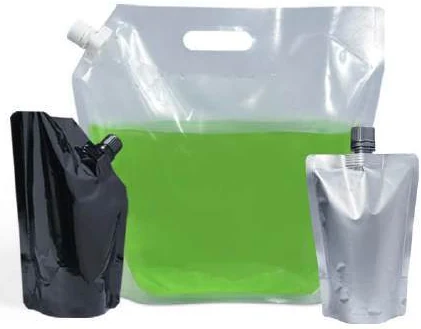
The catalogue includes spout pouches and hanging display pouches. These examples show different physical constructions; they are not interchangeable specifications. A fitted spout provides a controlled opening for dispensing. The reference range includes compact pouches and larger handled formats. Specify the product, fill volume, spout location and cap before developing the pouch shape; a corner spout and a top-centre spout require different layouts.
| Format reference | Material or construction to clarify | Details to include in the brief |
|---|---|---|
| Spout pouches | Flexible liquid-pack laminate with a fitted spout and cap; contact-layer and closure compatibility are reviewed for the formulation. | Fill volume and product viscosity; spout bore, position and cap. |
| Hanging display pouches | Clear or opaque flexible pouch construction with a punched hanging feature; final material and reinforcement are reviewed for the fill. | Retail hook and hole dimensions; filled weight and hanging orientation. |
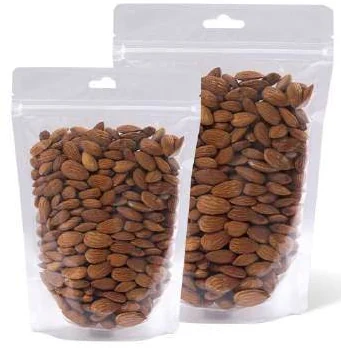
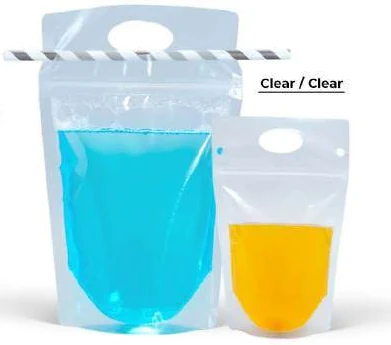
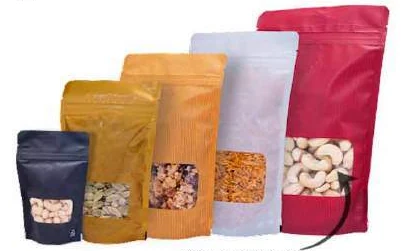
Use the reference pictures to identify the base, side panels, window or opening that you mean. A picture cannot supply the missing dimensions or material layers. If a photograph shows a finish or closure you do not want, state that difference explicitly; otherwise a visual reference can introduce an unintended requirement.
Complete the record before requesting the next sample
- Attach an observation of reclosure after normal dispensing. Identify the product or SKU and the date of the observation.
- Record the product flow and potential closure contamination. Keep confirmed information separate from proposed values and questions for the supplier.
- Add the actual fill weight or volume, the dimension convention, material proposal and intended closure. Include the number of designs and quantity per design when requesting a quotation.
- State which question the next drawing, sample or quotation must resolve. A change of size, closure or material should remain visible alongside the earlier reference.
This record makes the next conversation specific. It lets the design, purchasing and packing teams work from the same proposed item and shows which decision still needs evidence. Review the related product pages for format details, or prepare a custom packaging brief with the unresolved requirements.
Request a targeted revision
Write the problem as an observed event: “scoop contacts zipper during normal removal” or “reviewer cannot identify whether the tracks are fully engaged.” Attach the sample ID and relevant image. Avoid requesting a vaguely “stronger zipper” when the issue may be geometry or access.
Send Navkar Poly Print the powder-use card, actual product brief, intended tool and closure proposal. Ask for a sample revision that resolves the recorded task, then repeat the affected use cycle before approval.
Sources and scope.
These references support the technical discussion. Product photographs illustrate formats; the material, dimensions and suitability of the proposed pack are confirmed for each project.
- Fresh-Lock flexible packaging closure applications
Differentiates press-to-close zippers and slider closure systems; not a performance claim for an unspecified pouch.
- FLtècnics: spices, coffee and tea pouch machinery
Differentiates rollstock HFFS and premade-pouch HFS routes for these product categories.
- ISO 17480:2015: ease of opening
Public abstract identifies accessible packaging design focused on opening; no full-procedure access or conformity claim.
Let’s discuss your product.
Share your contents, dimensions, filling method, quantity and delivery destination. We’ll work through the proposed packaging specification with you.
Create a packaging brief