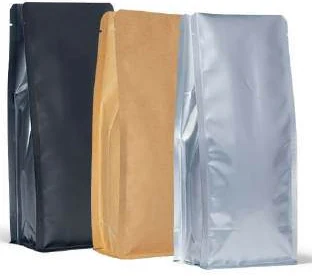
Compare a spout pouch with a bottle as a complete filling and use system. For a refill concept, include the receiving bottle, the transfer action and the amount of product left after dispensing. For a primary pack, compare the customer's daily handling directly. Empty pack weight or a striking photograph cannot establish compatibility, ease of use or delivered cost. This guide builds a system comparison without assuming that any liquid or filling process is suitable.
Define what the customer is buying
A primary pack and a refill solve different jobs. State whether the customer will dispense directly from the pouch or transfer the contents into another container. If a receiving bottle is part of the intended use, record its opening and how the transfer will be performed. Do not assume a narrow spout will suit the product's flow or particles. Ask for representative product and component trials reviewed by the relevant technical team. The format decision should name the use case before discussing handles, cap appearance or the size of the front label panel.
Compare the filling and closing routes
Document how each candidate is filled, which opening is used and how the final closure is completed. A cap and spout introduce component interfaces that need clear responsibility, while a bottle has its own neck and closure requirements. Obtain the filling site's requirements rather than selecting components from images. Record proposed fill and storage conditions for technical review. Do not infer hot-fill, retort, aseptic or chemical compatibility from either format. Those are application questions that require exact evidence, independent of whether the package looks familiar in the market.

Measure dispatch and use separately
Make an actual carton arrangement for each candidate using equal product quantities and agreed protection. Record carton dimensions and gross mass for transport quotations. Avoid claiming a fixed freight reduction from the empty pouch's compactness because filled packs and required outer packaging determine the shipment. Review dispensing and transfer separately: grip, opening alignment and residual product can matter to users even when the carton arrangement looks efficient. Keep commercial calculations tied to observed units and quotations rather than a general statement that flexible always costs less than rigid.
Build a primary-pack or refill comparison sheet
Use this sheet for a cross-functional discussion. Procurement can compare scope, while product and filling owners resolve compatibility and process questions instead of leaving them hidden inside a format preference.
| Record | What to capture and how to use it |
|---|---|
| Use-system boundary | State primary use or refill use and identify every container involved. Include the receiving bottle where relevant, because a pouch that pours neatly in isolation may not align with the actual intended refill opening. |
| Product and process brief | Record formulation information available for review, flow or particles, and proposed filling and storage conditions. Ask the technical owner to identify evidence needed; do not convert a familiar product category into an assumed suitability decision. |
| Closure interface | Identify cap, neck or spout references and the party responsible for their fit. Link the intended filling operation and closure evidence so a component sample cannot be mistaken for approval of the assembled filled package. |
| Customer action | Describe gripping, opening, pouring and resealing in the intended use. Record observations on representative prototypes, including the receiving container for a refill, without treating a usability observation as proof of product compatibility. |
| Delivered pack-out | Record equal product quantities, actual outer-carton dimensions and gross mass for each candidate. Obtain comparable transport quotations with the same destination and scope before attributing savings to the format itself. |
Make separate decisions for technical suitability, user handling and commercial fit. A strong result in one column should not conceal an unanswered question in another, especially when a component or filling process is still provisional.
Illustrative refill transfer review
A household-product brand explores a corner-spout refill for an existing bottle. The team records the bottle opening, the planned transfer action and the candidate pouch's grip. A prototype shows an awkward alignment when the bottle is placed upright, so the team revises the use arrangement and retests it. This does not establish formulation compatibility or approve the final closure. Those remain separate gates. The resulting brief is more useful than asking for a standard refill pouch because it identifies the complete system and the observed handling issue.
Mespack offers filling-route context. Mondi supplies a primary pouch-format reference.
Define the transfer before selecting the spout
For a refill, place the actual receiving bottle beside the candidate pouch. Show where each hand goes and whether the bottle is supported on a surface. Include the cap removal and replacement sequence. A receiving opening that is easy to reach with an empty demonstration can be awkward when the pouch contains the intended product quantity.
Observe flow start, flow interruption and the end of the pour as separate actions. Record splashing, contact between components and product remaining in each container. These are observations to investigate, rather than proof of a particular cause. If a temporary funnel is used, include it in the use-system description. Removing it later changes the action that was assessed.
Keep the filling opening and dispensing opening explicit
The opening used by the filler may differ from the one used by the customer. Ask the component and filling owners to identify both. Mespack's premade equipment description includes a particular series for filling through the spout. That is evidence that this route exists, rather than confirmation that a customer's station can use it.
For each proposed route, show the component reference, product path and operation completing the package. Ask what incoming orientation and dimensional information the filler needs. If an alternative leaves an edge open for filling, mark it on the drawing. This makes the responsibility boundary visible and avoids quoting a closed component set when the packing site expects a different unfinished interface.
Compare equal useful product quantities
Use a simple illustrative residual-product calculation only when actual measurements will be collected. If a filled quantity is 1,000 g and 20 g remains after the defined dispensing action, the amount removed is 980 g. The residual share is 20 divided by 1,000, or 2%. These numbers are invented to demonstrate the calculation; they do not describe either format's expected performance.
Define the action before collecting data: orientation, stopping rule, permitted squeezing or tapping and whether a tool is allowed. Otherwise one operator may empty a pouch aggressively while another stops when a bottle first stops flowing. Record individual observations and the product condition. A comparison without a consistent action can reflect the procedure more than the package.
Build a complete commercial boundary
Compare one equivalent quantity delivered to the same destination. List empty packaging, closures, filling work, protective outer packaging and transport separately. For a refill concept, explain whether the receiving bottle is already owned, supplied initially or replaced periodically. Its cost and life cannot disappear from a system comparison merely because the current enquiry concerns the refill.
Use actual quotations for prices and freight. A smaller empty-package volume may affect storage, while the filled shipment depends on carton dimensions, mass and protection. Keep these as separate observations until the relevant cost is known. When a quotation omits a component or packing operation, mark the omission as unresolved rather than assigning a guessed amount to complete the spreadsheet.
Review the partially used pack
After the initial transfer or dispensing action, examine how the pack is placed down and closed. A full-pack grip observation may not describe the partly empty shape. Ask whether the cap remains accessible and whether the intended instructions make the next use clear. Keep the product owner's compatibility and storage review connected to the exact component and construction proposed.
If one candidate wins the handling comparison while another has the confirmed filling route, the result remains a trade-off. Identify the evidence needed to close the weaker column. The next action might be a component fit review, a representative filling trial or another transfer observation. This creates a useful basis for a project decision without assuming that replacing a bottle with a pouch is automatically a complete improvement.
Spout versus bottle: a practical specification example
A brand is choosing a dry-food pack before commissioning artwork. Compare the same product in two filled samples, using the same net weight and display space. The useful difference may be the usable opening, footprint or closing method rather than the empty pouch silhouette. A window or valve is another specification within a format, so it should not silently replace the original comparison.
For this decision, start with the product flow and intended dispensing action. The useful output is an opening and dispensing comparison at the proposed fill volume. Put that output beside the relevant quotation, drawing or sample rather than leaving it in a separate email. This is an illustrative decision exercise, not a report of a completed customer trial.
Product references to make the discussion concrete
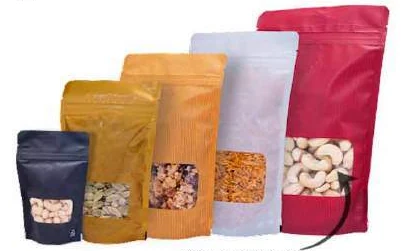
The catalogue includes spout pouches and window pouches. These examples show different physical constructions; they are not interchangeable specifications. A fitted spout provides a controlled opening for dispensing. The reference range includes compact pouches and larger handled formats. Specify the product, fill volume, spout location and cap before developing the pouch shape; a corner spout and a top-centre spout require different layouts.
| Format reference | Material or construction to clarify | Details to include in the brief |
|---|---|---|
| Spout pouches | Flexible liquid-pack laminate with a fitted spout and cap; contact-layer and closure compatibility are reviewed for the formulation. | Fill volume and product viscosity; spout bore, position and cap. |
| Window pouches | A transparent window combined with paper-look or opaque flexible panels; confirm the full structure and product requirements. | Window width, height and location; product visibility at full and low fill. |
Use the reference pictures to identify the base, side panels, window or opening that you mean. A picture cannot supply the missing dimensions or material layers. If a photograph shows a finish or closure you do not want, state that difference explicitly; otherwise a visual reference can introduce an unintended requirement.
Complete the record before requesting the next sample
- Attach an opening and dispensing comparison at the proposed fill volume. Identify the product or SKU and the date of the observation.
- Record the product flow and intended dispensing action. Keep confirmed information separate from proposed values and questions for the supplier.
- Add the actual fill weight or volume, the dimension convention, material proposal and intended closure. Include the number of designs and quantity per design when requesting a quotation.
- State which question the next drawing, sample or quotation must resolve. A change of size, closure or material should remain visible alongside the earlier reference.
This record makes the next conversation specific. It lets the design, purchasing and packing teams work from the same proposed item and shows which decision still needs evidence. Review the related product pages for format details, or prepare a custom packaging brief with the unresolved requirements.
Request evidence for the proposed system
Select a candidate only after the relevant technical, filling, use and shipment questions have a responsible owner and acceptable evidence. Ask quotation respondents to state which components and operations are included. Record any exclusions clearly, including receiving-container assumptions for a refill concept. Keep the proposed market and distribution conditions in the brief so the team can decide what qualification remains before a commercial launch.
Send the completed refill system comparison sheet with your product and filling details to Navkar Poly Print for a project-specific discussion. Ask for the proposed specification, evidence required and open questions to be recorded before quotation approval.
Sources and scope.
These references support the technical discussion. Product photographs illustrate formats; the material, dimensions and suitability of the proposed pack are confirmed for each project.
- Mespack solution finder
Equipment supplier distinguishes rollstock and premade-pouch routes; no Navkar equipment inference.
- Mondi stand-up pouch
Primary format reference; does not establish the performance of another supplier's pack.
- Pre-Made Pouch Packaging Machine
Manufacturer identifies a spout-filling route; does not establish customer equipment or product suitability.
Let’s discuss your product.
Share your contents, dimensions, filling method, quantity and delivery destination. We’ll work through the proposed packaging specification with you.
Create a packaging brief