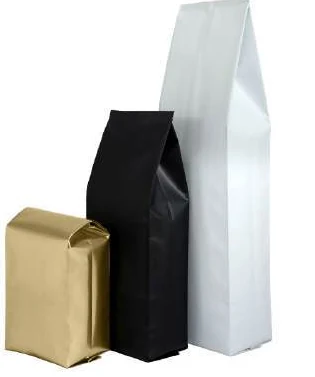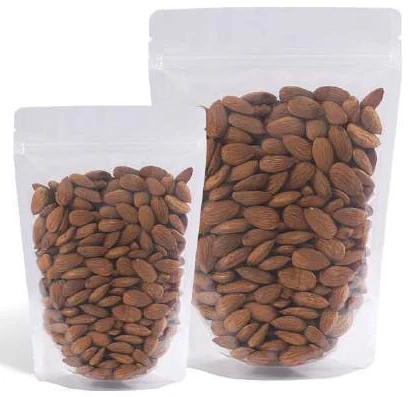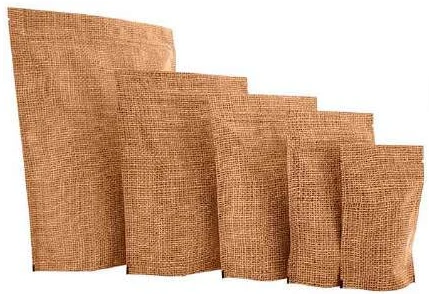
Choose a gusseted design when its planned expansion solves a defined packaging need. Choose a pillow-style geometry when it meets the same product, filling and presentation requirements without that additional fold arrangement. Neither description predicts capacity from flat width alone. Compare filled samples, the available opening and the intended outer carton to see what the extra geometry actually contributes to your product.
Locate the expansion before comparing sizes
Ask whether the proposed expansion is at the sides, base or another defined location. Record how the gusset dimension is stated: a full opened dimension and a folded inset are not interchangeable. Use an annotated view showing the fold lines and measurement convention. A pillow-style reference can still bulge substantially when filled, so its flat dimensions do not describe a rigid box. Avoid translating a competitor's weight declaration directly into your pouch dimensions. Product bulk, settlement and required clearance have to be evaluated with the actual intended product.
Observe where the product settles
Fill candidate samples in a controlled comparison and photograph front, side and base views. Record the quantity, filling method and any manual shaping used before the photograph. Look for uneven expansion, folds that remain trapped and the effect on the visible panel. The purpose is to identify geometry questions for the converter and line owner, not to diagnose a technical fault from one specimen. If the product changes from whole pieces to smaller fragments, repeat the fit review because the same declared weight may occupy a different space.
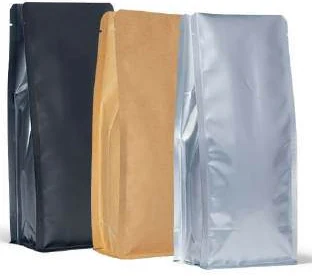
Check the extra fold at the interfaces
A gusset introduces folding geometry that should be shown where seals, gripping and artwork meet it. Ask the converter and packing team to agree these interfaces. Do not assume that an existing pillow route can produce a gusseted version by using wider film alone. Review the filled pack in its proposed carton and retail fixture. If the candidate needs a tray to remain presented correctly, include the tray in the comparison. An empty sample's neat rectangular appearance is not evidence that every filled product will behave in the same way.
Use an expansion review sheet
Compare the functional result of the geometry rather than awarding points simply for adding gussets. This sheet helps separate the fold definition, the observed filled shape and the evidence needed for line approval.
| Record | What to capture and how to use it |
|---|---|
| Fold convention | Attach a drawing identifying each fold and the meaning of the quoted gusset dimension. Ask both quotation and sample records to use that convention so a folded inset is not confused with the expanded dimension. |
| Actual fill condition | Record the product form, proposed quantity and fill method used for the sample. Note settlement or deliberate reshaping, because these actions change the apparent fit and should be visible when candidates are compared. |
| Expansion observation | Record which folds opened as intended and what remained constrained. Link the observation to front, side and base photographs, then ask whether a dimensional or filling-route adjustment needs a new sample. |
| Interface review | Mark seal intersections, gripping zones and artwork crossing folds. Assign converter, line and artwork owners to the relevant questions; a visually pleasing sample cannot resolve all three interfaces without their review. |
| Outer-pack result | Record count, orientation and dimensions of an actual proposed carton arrangement. Use this pack-out for freight enquiries, and keep any estimated arrangement clearly separate from a demonstrated result. |
Keep a pillow-style candidate in the review if it still meets the brief. A comparison is useful when it demonstrates the benefit required from extra geometry rather than presuming that a more complex shape is preferable.
Illustrative equal-weight comparison
Two samples hold the same illustrative 250 g quantity of a bulky dry product. Their flat widths are similar, but the gusseted sample expands into a different depth while the pillow sample curves more strongly at its front. That observation does not prove which will cost less to deliver. The buyer checks both against the retailer's tray and makes a carton pack-out. The purchasing decision can then refer to measured display and packing results, with the exact sample and fill condition recorded beside each result.
Syntegon provides a vertical-equipment reference. Mespack identifies alternative package production routes.
Explain where the extra volume comes from
A gusset is a folded section that can open as the pouch fills. Its value is the additional shape available in use, rather than the fold line visible in an empty sample. A pillow-style pack also changes shape around the contents, but it does not provide the same defined folded expansion feature. Compare actual drawings because terminology and measurement conventions can differ.
Lay an empty candidate flat, then show the fold opened without stretching the material. Mark the face width, the folded portion and the intended expanded direction. This simple demonstration often reveals whether two quoted dimensions describe the same object. It also prevents a nominal width comparison from overlooking material and space assigned to the side folds.
Assess the product as a moving load
Observe how the product occupies the candidate immediately after filling and after the agreed settling period. Loose granules, irregular pieces and compressible contents can form different shapes at the same mass. Record the product condition rather than relying on the pack's nominal capacity. A water-filled demonstration is useful only for the question it actually answers; it may not represent the chosen solid product.
Look at the transition between the expanded body and the closed end. Ask whether product moves into a region needed for closing or whether the pack must be manually shaped. The observation should lead to a drawing or filling question. Avoid treating every wrinkle as a defect when the agreed appearance and functional criteria have not yet been defined.
Use the measurement convention consistently
Quantum Packaging's measurement guide illustrates a supplier's side-fold convention. Such a guide helps identify what a dimension means; the project still needs its own labelled drawing. Specify whether a quoted gusset value refers to one folded portion or the full opened dimension, and show the measurement points.
Use that convention on the quotation, sample label and approval drawing. If the purchasing team records one interpretation and artwork uses another, the resulting panel layout can be wrong even when each person copied the same number. Where an old sample has no drawing, measure and annotate it before asking for a like-for-like replacement. Record any uncertainty that the sample cannot resolve.
Compare expanded depth in the carton
In an illustrative arrangement, a filled pack occupying 45 mm in depth would use 270 mm across six packs placed in that direction. A different filled shape occupying 50 mm would use 300 mm. Those figures are simple products of measured depth and count, before dividers, clearance and variation. They do not establish which carton is suitable or whether packs can be compressed safely.
Physically arrange representative packs and check the carton closes as intended. Include the orientation of the folds and end seals, because adjacent packs may interfere at protruding regions. If a gusset improves the displayed face but expands the shipping envelope, retain both observations. The buyer can then evaluate the retail benefit against an actual pack-out consequence.
Decide whether expansion is controlled enough
An expanded shape should be repeatable enough for the intended filling, display and packing tasks. Observe several samples under the same declared condition and record the range rather than choosing the neatest one. A small observation set is a design check, not a production capability study. Its role is to reveal an obvious dependency that deserves a better-defined trial.
If a candidate works only when the product is arranged by hand, identify that step and its owner. If the folds open unevenly, ask whether the drawing, material behaviour or filling presentation needs investigation. Change one relevant variable before repeating the comparison. The result should explain why the chosen expansion geometry fits the job, with the boundaries of that evidence attached.
Gusset versus pillow format: a practical specification example
A brand is choosing a dry-food pack before commissioning artwork. Compare the same product in two filled samples, using the same net weight and display space. The useful difference may be the usable opening, footprint or closing method rather than the empty pouch silhouette. A window or valve is another specification within a format, so it should not silently replace the original comparison.
For this decision, start with the filled product envelope and carton arrangement. The useful output is an overhead photograph of both candidates at the same fill. Put that output beside the relevant quotation, drawing or sample rather than leaving it in a separate email. This is an illustrative decision exercise, not a report of a completed customer trial.
Product references to make the discussion concrete
The catalogue includes flat-bottom pouches and window pouches. These examples show different physical constructions; they are not interchangeable specifications. A box-style base gives the filled pack a distinct footprint, with separate front, back and side panels. Compare a plain top opening with a regular zipper, and use filled samples to decide the shelf depth and panel proportions.
| Format reference | Material or construction to clarify | Details to include in the brief |
|---|---|---|
| Flat-bottom pouches | Flexible laminate with paper-look or opaque outer options; the appearance alone does not identify the full layer structure. | Base width and full opened depth; net fill and product bulk. |
| Window pouches | A transparent window combined with paper-look or opaque flexible panels; confirm the full structure and product requirements. | Window width, height and location; product visibility at full and low fill. |
Use the reference pictures to identify the base, side panels, window or opening that you mean. A picture cannot supply the missing dimensions or material layers. If a photograph shows a finish or closure you do not want, state that difference explicitly; otherwise a visual reference can introduce an unintended requirement.
Complete the record before requesting the next sample
- Attach an overhead photograph of both candidates at the same fill. Identify the product or SKU and the date of the observation.
- Record the filled product envelope and carton arrangement. Keep confirmed information separate from proposed values and questions for the supplier.
- Add the actual fill weight or volume, the dimension convention, material proposal and intended closure. Include the number of designs and quantity per design when requesting a quotation.
- State which question the next drawing, sample or quotation must resolve. A change of size, closure or material should remain visible alongside the earlier reference.
This record makes the next conversation specific. It lets the design, purchasing and packing teams work from the same proposed item and shows which decision still needs evidence. Review the related product pages for format details, or prepare a custom packaging brief with the unresolved requirements.

Approve the expansion that earns its place
Select the geometry that meets the agreed fit, line and display requirements. Include the fold convention and approved filled reference in the order record. Request another review when changing product bulk, fill quantity, seal arrangement or gusset dimensions. Keep material and application qualification separate: more expansion space does not itself demonstrate better barrier, contact suitability or product protection. The useful outcome is an understandable geometry specification that the next order can reproduce.
Send the completed expansion review sheet with your product and filling details to Navkar Poly Print for a project-specific discussion. Ask for the proposed specification, evidence required and open questions to be recorded before quotation approval.
Sources and scope.
These references support the technical discussion. Product photographs illustrate formats; the material, dimensions and suitability of the proposed pack are confirmed for each project.
- Syntegon SVX vertical packaging
Primary equipment reference for vertical forming, filling and sealing; machine-specific claims are not transferred.
- Mespack solution finder
Equipment supplier distinguishes rollstock and premade-pouch routes; no Navkar equipment inference.
- How to measure a side-fold gusseted pouch
Supplier illustration of side-fold dimensions; measurement convention only, not capacity or universal tolerance.
Let’s discuss your product.
Share your contents, dimensions, filling method, quantity and delivery destination. We’ll work through the proposed packaging specification with you.
Create a packaging brief