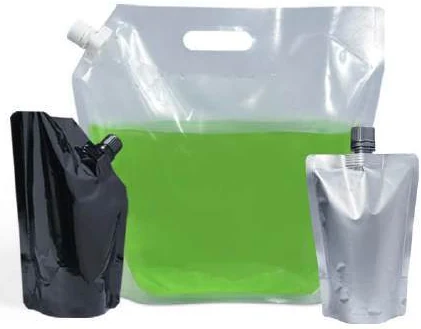
Review a handled spout pouch as a complete handling system. The handle must serve its intended carrying task, while the spout and supporting grip must allow opening and pouring. Define the actual filled quantity and use conditions before assessing convenience or asking the technical team to approve the construction.
Describe what the handle is expected to do
State whether it is used to lift the full pack, transfer it a short distance, steady it during dispensing or support another action. Record intended product quantity and normal use context. Do not call a feature a carrying handle if the proposal only establishes a convenient finger opening for a different task.
Ask the supplier to identify the handle construction and its relationship to seals, film panels and the spout. Request the evidence appropriate to the proposed load and use. Avoid inventing an allowable mass or a number of lifts from an untested development sample.
Choose a feature for an identified handling task
This is a general feature-selection review. Decide what the handle must help the user do before choosing its appearance. A later workstation trial can assess one fixed bulk-transfer event, but that is a separate task after a credible configuration has been selected.
Describe the range of intended handling actions and the actual filled quantities. Keep carrying, supporting and dispensing as distinct requirements. A feature that is useful for one action may need another supporting contact during a different action. The selected complete design should make those relationships clear.
ISO 22015 places physical handling and manipulation around opening and closing. It supports a whole-task design view. The public scope provides no safe carrying mass or prescribed movement for this pouch, so those questions remain with the responsible technical assessment.
For an illustrative refill project, the buyer initially asks for a handle because the pack looks larger than a familiar product. The task review shows the actual requirement is steadying the body during transfer. The supplier can then propose credible feature arrangements for that task instead of receiving an unsupported instruction to add a carrying feature with no defined function.
Define the complete component system
Record the pouch drawing and exact closure proposal. Gualapack's cap-and-spout resource describes matched component systems. An identified system is essential for discussing cap access and dispensing, even when the main review question concerns the handle.
Keep actual formulation and process conditions in the technical brief. A handle does not establish compatibility of the film, fitment or closure with a product. Nor does a published example of a handled pack establish the capability or approval of an unspecified proposal.
Identify interactions before selecting candidate geometry
Show the proposed handle region, spout, cap, body panels and relevant seals on one drawing. Ask which areas must remain accessible during each selected task. Keep the actual product and filled shape in the discussion; the empty component cannot show every contact a user will need.
Separate reach from support. Cap access asks whether the user can operate the selected closure in the intended sequence. Body support asks how the filled pack is managed. These questions interact, but combining them into one comfort score can hide an unresolved step.
Compare candidate arrangements by their task consequences. One may provide a clearer cap approach while another offers a more useful holding region. Record the trade-off and ask the product owner which consequence controls the selection. Do not declare one handle style universally superior.
For an illustrative candidate pair, both contain a handle feature, but one positions the cap within the supporting contact region. That raises a whole-system question. The next sample should resolve the intended opening and supporting sequence, with its actual components identified. A separate loose-handle demonstration would leave the interaction unanswered.
Use a two-hand task map
| Task | Handle hand | Other hand | Observation |
|---|---|---|---|
| Lift | Intended carrying contact | As required by normal use | Grip and pack orientation |
| Open | Supports or releases the pack | Operates cap | Access and awkward movement |
| Aim | Controls orientation | Supports body if needed | Relation to receiving opening |
| Pour | Maintains intended grip | Assists as required | Control through changing fill level |
| Reclose | Holds the pack | Operates closure | Stability and cap access |
This original map exposes tasks where a reviewer has to change grip unexpectedly. It is a usability record and does not replace a defined mechanical or distribution assessment.
Observe full and partly used conditions
Use representative product through the authorised trial procedure. Observe the intended full-pack task and relevant partly used states. A changing filled shape can alter where a supporting hand naturally goes. Record the product amount and sample identity for each observation.
Do not perform improvised overload demonstrations or encourage unsafe lifting. The responsible technical team should define applicable assessment methods and acceptance conditions. If those are not available, record load suitability as pending rather than converting a convenient lift into a performance claim.
Observe relevant fill states without inventing a rating
Choose the filled and partly used conditions that belong to the intended proposition. A repeated-use pack may need a broader set of observations than a one-time transfer pack. Record actual quantities or defined states rather than an unexplained full and empty comparison.
Use the approved procedure and representative complete samples. Record changed support, cap access and body shape as observations. A transition between contacts can be normal, awkward or require technical review depending on the actual task. Do not assign meaning from the image alone.
Keep subjective comments beside observable events. “Feels uncomfortable” can guide a follow-up question, while the event record identifies where and when the difficulty occurred. The technical owners can then decide what additional assessment is needed for the proposed construction and users.
Do not turn a convenient short demonstration into a load claim. Formal handling or distribution evidence has its own sample, method and acceptance scope. Preserve those references separately from the feature-selection observations. The selected handle should be justified by the actual intended task and relevant evidence, not a numerical rating invented to make a mock-up look decisive.
Review spout position with grip changes
Gualapack's premade-pouch resource distinguishes central and lateral spout positions. For the actual handled design, compare cap access and pour direction with the proposed grip. A position that suits one handling sequence may be awkward for another.
An illustrative issue is a handle that supports carrying well but leaves the cap difficult to reach while the pack is held in the intended pouring orientation. Record the complete sequence and ask for a design review. Approving the handle and spout separately would leave that interaction unresolved.
Select the whole feature arrangement and its next tests
Write the reason for choosing the candidate in task language. Identify which actions it supports, which product and quantity range it covers and which technical questions remain open. A selected concept can justify further development without being a production-approved pack.
Ask what changes the selection. A different filled quantity, receiving task, closure system or body geometry can alter the feature's role. Record these triggers so a repeat enquiry does not automatically extend the chosen arrangement to a different application.
Check consequences for artwork and outer packing. A handle can consume a region previously used for information or change how complete packs fit their carton. Those consequences require their own targeted review rather than being assumed acceptable because the main handling task looked promising.
Carry the selected drawing and component identities into the next activity. If a fixed workstation bulk-transfer trial is planned, give it a separate event record and approved procedure. Keep this selection file focused on choosing the feature arrangement, with carrying suitability, process and product evidence maintained under their respective technical owners.
Keep fill quantity and actual filled mass as separate inputs when the task involves handling. A volume description alone does not identify the load presented by the actual product and complete pack. Obtain the relevant product information from its owner and have the technical team establish the assessment scope. If the product or quantity changes, revisit that input before transferring a previous handling conclusion. The feature-selection file should identify what was actually assessed, including any support or use condition that formed part of the proposal.
Carry handle: a practical specification example
A pouch feature can help one handling action while changing another. A hanging hole needs a header; a spout changes the opening and artwork area; a zipper needs a clear path for reclosure. Define the action the feature supports before adding it to the drawing. Review the whole pack with the product present instead of approving the component in isolation.
For this decision, start with the filled weight and intended grip. The useful output is a handle position and surrounding material requirement. Put that output beside the relevant quotation, drawing or sample rather than leaving it in a separate email. This is an illustrative decision exercise, not a report of a completed customer trial.
Product references to make the discussion concrete
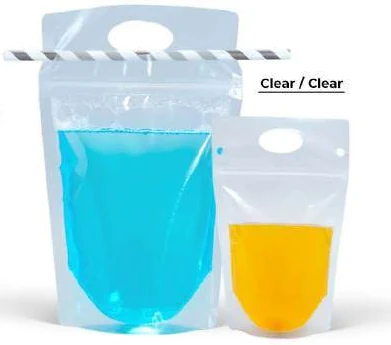
The catalogue includes spout pouches and hanging display pouches. These examples show different physical constructions; they are not interchangeable specifications. A fitted spout provides a controlled opening for dispensing. The reference range includes compact pouches and larger handled formats. Specify the product, fill volume, spout location and cap before developing the pouch shape; a corner spout and a top-centre spout require different layouts.
| Format reference | Material or construction to clarify | Details to include in the brief |
|---|---|---|
| Spout pouches | Flexible liquid-pack laminate with a fitted spout and cap; contact-layer and closure compatibility are reviewed for the formulation. | Fill volume and product viscosity; spout bore, position and cap. |
| Hanging display pouches | Clear or opaque flexible pouch construction with a punched hanging feature; final material and reinforcement are reviewed for the fill. | Retail hook and hole dimensions; filled weight and hanging orientation. |
Use the reference pictures to identify the base, side panels, window or opening that you mean. A picture cannot supply the missing dimensions or material layers. If a photograph shows a finish or closure you do not want, state that difference explicitly; otherwise a visual reference can introduce an unintended requirement.
Complete the record before requesting the next sample
- Attach a handle position and surrounding material requirement. Identify the product or SKU and the date of the observation.
- Record the filled weight and intended grip. Keep confirmed information separate from proposed values and questions for the supplier.
- Add the actual fill weight or volume, the dimension convention, material proposal and intended closure. Include the number of designs and quantity per design when requesting a quotation.
- State which question the next drawing, sample or quotation must resolve. A change of size, closure or material should remain visible alongside the earlier reference.
This record makes the next conversation specific. It lets the design, purchasing and packing teams work from the same proposed item and shows which decision still needs evidence. Review the related product pages for format details, or prepare a custom packaging brief with the unresolved requirements.
Release a bounded handling requirement
Link the task map, product quantity, drawing, closure identity and technical evidence. State the approved use conditions and unresolved questions. If quantity, formulation, handle geometry or fitment changes, review the impact before a repeat order.
Send Navkar Poly Print the two-hand task map and product/process brief. Ask for a handled-spout proposal that can be reviewed as one complete pack, with carrying suitability and dispensing convenience assessed through the appropriate separate evidence.
Sources and scope.
These references support the technical discussion. Product photographs illustrate formats; the material, dimensions and suitability of the proposed pack are confirmed for each project.
- Gualapack: caps and spouts
Describes matched cap-and-spout systems and distinct closure designs.
- Gualapack: premade pouches
Shows central and lateral spout positioning as separate design choices; proprietary specifications not transferred.
- ISO 22015:2019: handling and manipulation
Public scope treats opening and closing within broader physical handling; actual package task and technical evidence remain project-specific.
Let’s discuss your product.
Share your contents, dimensions, filling method, quantity and delivery destination. We’ll work through the proposed packaging specification with you.
Create a packaging brief