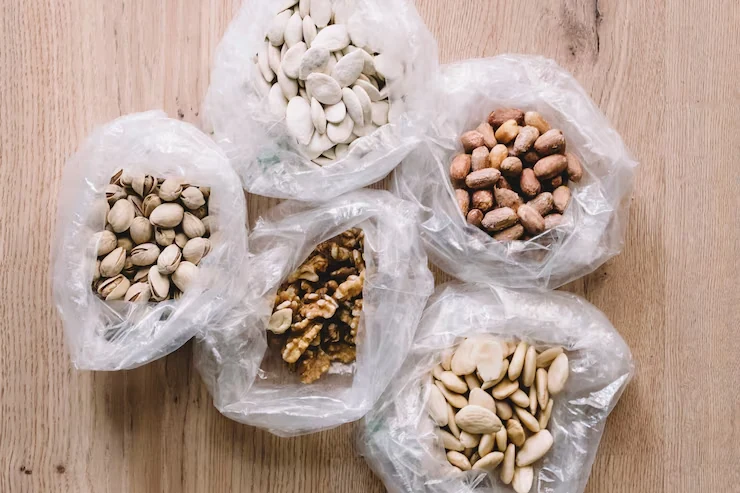
A spice pouch can suit a refill or compact retail offer when its protection, opening and price support the intended use. A jar can suit repeated kitchen access when its closure and dispensing arrangement add enough value. Compare the exact spice, complete pack and household routine rather than assuming one container always retains aroma better.
Define the product and the kitchen task
Whole cardamom, chilli powder, turmeric and a mixed seasoning are different packaging applications. Record product form, blend version, target mass, representative volume and relevant product properties for the technical team. A generic spice pouch specification can conceal important differences.
State whether customers pour directly, use a spoon, shake through an outlet or refill another container. These actions determine access width, closure handling and the value of rigidity. A retail refill pack should identify its receiving-container assumptions rather than promising compatibility with every household jar.
Describe normal consumption and the intended selling quantity. A pack used over many kitchen sessions requires a different opened-use evaluation from a small quantity consumed quickly. Keep that distinction visible when comparing nominal unit price and any freshness claim.
What spice research establishes
The 2017 study Effects of packaging materials on the aroma stability of Thai tom yam seasoning powder evaluated a defined seasoning in glass jars closed with different films at 38°C for 49 days. Sensory and analytical measurements tracked aroma changes. Differences among the tested materials were not significant for the reported aroma attributes.
This was not a commercial pouch-versus-jar trial. Its conditions and specific herb mixture cannot establish the best pack for every Indian spice. It does show why a meaningful comparison needs product-specific methods and should not assume a visible container difference guarantees an aroma benefit.
The CFTRI-authored chapter Packaging Aspects of Spices and Spice Products provides historical technical context on aroma, moisture and environmental exposure. Its older market and regulatory references should not be treated as current requirements or pricing evidence.
Compare the complete protective systems
For a pouch, request the full structure, contact layer, seals and any reclosure feature. For a jar, identify the container, closure, liner or seal where relevant and the dispensing arrangement. A transparent jar or an opaque pouch can each have unresolved closure and product-contact questions.
Ask which quality changes determine rejection for this product. Aroma loss, colour change, caking and other relevant measures may require different methods. The product specialist should select endpoints and acceptance criteria, including the food-safety evaluation that sits beyond a simple appearance check.
Record the actual formulation, filling route, pack references and intended storage conditions together. If a candidate's structure changes during quotation, review the effect on the evidence. A drawing approval alone does not approve a substitute contact material or a different closure system.
Evaluate access before choosing convenience features
Give users representative filled packs and the tools they normally use. Observe opening, measuring, pouring or scooping, closure replacement and storage. Record where powder catches, where the label becomes hard to read and whether the user can identify the correct variant quickly.
For a refill, include the receiving jar. Check opening alignment, capacity and the transfer action. Follow the product team's approved use boundaries; this guide does not prescribe cleaning or safe reuse instructions. Packaging communication should be reviewed by the responsible product and compliance owners.
Test the near-empty stage too. A broad pouch opening may allow useful access, but folds or a reclosure can influence the task. A jar may be familiar but difficult to empty around a particular shoulder or dispensing insert. Record outcomes rather than assigning convenience from the container category.
Build equivalent quotations
| Cost boundary | What belongs in the comparison |
|---|---|
| Primary pack | Complete pouch or jar specification and decoration |
| Closure and access | Zipper, cap, liner, seal or dispensing feature actually proposed |
| Conversion | Filling, closing, coding, setup and accepted output |
| Distribution | Filled carton, protection, delivery scope and receiving location |
| Loss and stock | Rejects, product loss, returns, excess components and obsolete artwork |
Quote the same product quantity and design count. Separate first-order development costs from recurring expenses. If a refill programme depends on customers retaining a jar, show the starter product and subsequent refill economics as related but distinct calculations.
Calculate value per common quantity
An invented retail example illustrates unit-price comparison. A 200g pouch at ₹90 costs ₹45 per 100g. A 150g jar at ₹75 costs ₹50 per 100g. The jar has a lower ticket price, but the pouch has the lower price per equivalent product quantity.
These are invented figures, not observations of current spice prices or proposed Navkar rates. They also say nothing about aroma retention, product grade or the value of the jar for the intended use. Keep those factors in their own evidence columns.
For procurement, calculate cost per accepted filled unit and per common product mass. Include the complete packaging and conversion scope, actual lane quotation and any measured losses. A favourable consumer unit price can coexist with an unattractive brand margin if the channel and delivery costs are ignored.
Test freshness through the actual use period
Define unopened and opened-use studies separately with the technical owner. The unopened evaluation should cover the qualified product, structure, closure and intended conditions. The opened-use evaluation should represent the customer's repeated access pattern without claiming it recreates every household.
Record the method and conditions beside each result. A trained sensory panel, analytical aroma measurement and customer preference question answer different questions. None should be substituted casually for another in a freshness statement.
If one pack performs better, examine all the variables that changed. Container geometry, material, closure, headspace and handling may differ together. Report the result for the tested system rather than declaring that all pouches or all jars are superior.
Make the design useful in a crowded kitchen
Check product identity and variant recognition at a glance. Similar pack colours across many spices can create selection errors, especially when containers are stored with only part of the label visible. Test the intended storage orientation, not only the front-facing retail mockup.
For retail, review the filled pack at shelf distance and as a mobile thumbnail. A visible product area can communicate appearance, while opaque printing can support a clearer information hierarchy. Treat that choice as a design and protection question requiring review rather than a guaranteed sales advantage.
Avoid imagery that implies an ingredient, grade or performance the product team has not approved. The packaging should communicate the actual spice and its intended use. A premium finish cannot compensate for unclear identification or unsupported product claims.
Run a commercial pilot with a clear question
If the proposed change is a refill offer, track transfer completion, repeat purchase and availability. If it is a premium jar, track conversion and contribution at the intended price. If it is an opening improvement, measure the access task before changing the entire retail offer.
Keep product grade, quantity, price, promotion and availability in the record. A change in any of these can influence sales. A small preference exercise can identify design problems, but it does not establish a reliable sales uplift across all regional markets.
Ask procurement and B2B heads to review the evidence boundary. The commercial team should know what has been tested, which assumptions remain and what would trigger a change to the buying decision. This makes a limited pilot more useful than a broad format claim.
Review the intended storage location
Ask users where the pack normally sits between cooking sessions and how they identify it there. The technical team should decide how relevant exposure conditions enter the study. A front-facing retail mockup does not represent a pack stored sideways among similar variants.
Use the observation to improve identification and access without improvising food-storage advice. If the brand supplies handling instructions, keep them consistent across the pouch, receiving jar and product page. A clearer routine can be valuable even when the format itself remains unchanged.
Spice pouch versus jar: a practical specification example
A format comparison is useful when it answers the actual buying question. Define the customer action and the filled product before deciding that one appearance is better. A valve, window, zipper or matte surface changes a different part of the specification. Some features can coexist, so compare their purposes and constraints rather than forcing every decision into an either-or choice.
For this decision, start with the dispensing action and proposed serving. The useful output is the usable opening and remaining product access compared. Put that output beside the relevant quotation, drawing or sample rather than leaving it in a separate email. This is an illustrative decision exercise, not a report of a completed customer trial.
Product references to make the discussion concrete
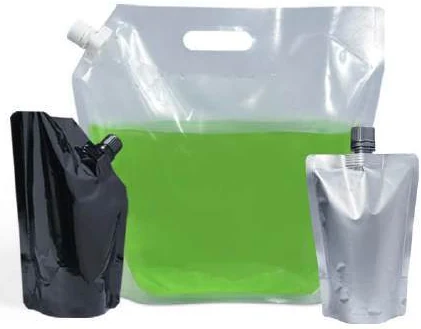
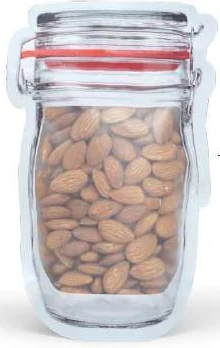
The catalogue includes spout pouches and jar-shaped zipper pouches. These examples show different physical constructions; they are not interchangeable specifications. A fitted spout provides a controlled opening for dispensing. The reference range includes compact pouches and larger handled formats. Specify the product, fill volume, spout location and cap before developing the pouch shape; a corner spout and a top-centre spout require different layouts.
| Format reference | Material or construction to clarify | Details to include in the brief |
|---|---|---|
| Spout pouches | Flexible liquid-pack laminate with a fitted spout and cap; contact-layer and closure compatibility are reviewed for the formulation. | Fill volume and product viscosity; spout bore, position and cap. |
| Jar-shaped zipper pouches | Clear or frosted flexible pouch construction with a zipper; the jar shape is a profile, not a rigid container. | Usable cavity and narrowest opening; die-cut outline and corner radii. |
Use the reference pictures to identify the base, side panels, window or opening that you mean. A picture cannot supply the missing dimensions or material layers. If a photograph shows a finish or closure you do not want, state that difference explicitly; otherwise a visual reference can introduce an unintended requirement.
Complete the record before requesting the next sample
- Attach the usable opening and remaining product access compared. Identify the product or SKU and the date of the observation.
- Record the dispensing action and proposed serving. Keep confirmed information separate from proposed values and questions for the supplier.
- Add the actual fill weight or volume, the dimension convention, material proposal and intended closure. Include the number of designs and quantity per design when requesting a quotation.
- State which question the next drawing, sample or quotation must resolve. A change of size, closure or material should remain visible alongside the earlier reference.
This record makes the next conversation specific. It lets the design, purchasing and packing teams work from the same proposed item and shows which decision still needs evidence. Review the related product pages for format details, or prepare a custom packaging brief with the unresolved requirements.
Choose the system that matches the product
Prioritise a qualified pouch for a suitable refill or compact offer when product protection and use are accepted. Prioritise a jar where repeated access, dispensing or the intended presentation justifies its complete delivered cost. Keep aroma and shelf-life claims tied to the tested system in either case.
Send Navkar Poly Print the spice form, target mass and volume, access method, quantity by design and destination. Request a proposed pouch specification and evidence plan. Clarify any jar or dispensing component sourcing separately, because those capabilities are not part of Navkar's confirmed manufacturing scope.
Sources and scope.
These references support the technical discussion. Product photographs illustrate formats; the material, dimensions and suitability of the proposed pack are confirmed for each project.
- Effects of packaging materials on the aroma stability of Thai tom yam seasoning powder
Scope aroma comparisons to actual methods. Not commercial pouch versus jar; reported sensory differences among films not significant.
- Packaging Aspects of Spices and Spice Products
Aroma, moisture and environment considerations. Older market/regulatory figures are not current requirements or prices.
Let’s discuss your product.
Share your contents, dimensions, filling method, quantity and delivery destination. We’ll work through the proposed packaging specification with you.
Create a packaging brief