A mayonnaise pouch enquiry needs a clear formulation reference, filling route and use pattern. Start with the questions that distinguish this product from a thin sauce, then ask the packaging and food technical teams what evidence would support the proposed pouch assembly.
Keep the formulation and pack records connected
Describe the exact mayonnaise or mayonnaise-style product being considered. A flavoured dressing, a plain product and a foodservice preparation may share a brand while requiring separate technical assessment. Record each formula revision against its packaging sample code so a later change cannot quietly inherit the earlier approval.
The buyer does not need to prescribe a universal laminate. The useful task is to supply relevant product information to the competent reviewers and obtain an explicit statement of what they assessed. Keep the formulation owner's acceptance separate from the converter's dimensional or printing approval.
Describe the emulsion under its actual conditions
Ask the formulation owner to identify the actual mayonnaise or dressing reference and relevant product conditions. A plain product, a flavoured version and a reformulated product should not inherit one another's approval solely because they share a brand or similar appearance.
A study of mayonnaise emulsions with different droplet sizes used rheometry and storage-condition comparisons. Its tested samples showed shear-thinning and time-dependent features, with flow curves affected by storage conditions. Those results support recording the actual formulation and measurement basis; they do not prescribe a commercial pouch or storage duration.
Where the owner supplies a flow-property result, keep its method and conditions. The word thick or a single unqualified viscosity value cannot represent every action during filling and service. The technical teams need data relevant to the actual proposed process.
Use representative finished material for physical observations under owner-approved procedures. A convenient substitute can help an early geometry discussion, but identify it clearly. It should not become an apparent demonstration of the actual emulsion's filling or removal behaviour.
Review filling and service use as different tasks
Show how the product enters the pack, how the final closure is made and which operations happen afterwards. Viking Masek links liquid filler selection to product properties in its pouch-line explanation. That supports collecting real product information rather than describing every dressing as the same liquid.
For service use, identify who handles the pack and the receiving equipment. A kitchen transferring a whole pouch into another vessel has a different task from an operator dispensing small portions repeatedly. Give reviewers the actual pouch orientation, storage instruction and product-use rules authorised by the food business.
Separate the line handover from kitchen use
Draw the component at receipt, product entry, final closing operation and subsequent handling. Identify which company or team owns each interface. A spout visible in the finished pack does not establish where or how filling occurs.
For service, define the actual task and receiver. A single bulk transfer, repeated occasional dispensing and a specialised dispenser arrangement are different propositions. Keep the relevant one in the brief and assess it under the food business's authorised product-use conditions.
An illustrative project may have a suitable development mouth for manual filling but an unresolved interface with the intended routine operation. Record that gate separately from a comfortable service demonstration. One cannot close the other.
If a specialised process or dispensing system is required, request an explicit capability response and supporting evidence. A feature included in another manufacturer's portfolio is a reference for discussion, not proof of availability or integration in the proposed supply route. The complete application needs its own accountable technical assessment.
Agree what happens when a sample cannot complete the planned service action. Record the interruption and refer it to the authorised owner rather than substituting a different action midway through the comparison. The event may reveal a useful question about receiver access or product condition. A changed task can still be observed, but it needs a separate description so its result is not merged with the original proposition.
Keep the starting and final pack states identified in the same record. This helps reviewers understand whether a grip transition occurred during the intended sequence or between separately prepared samples.
Record the end-of-pack experience
An illustrative evaluation could compare two proposed pouch geometries using the same agreed product quantity and handling sequence. Record the starting quantity, amount delivered to the intended vessel, remaining product and the user's observations. Do not convert that one exercise into a general waste-reduction claim.
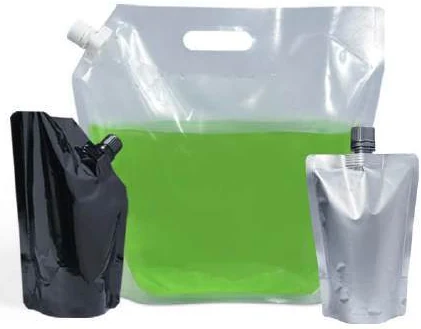
SEE includes handle and spout options in its spout pouch portfolio. Their presence in a catalogue does not establish that either feature solves the handling task for a particular mayonnaise. The final filled assembly needs its own review.
Define residual product before comparing it
Ask what the product owner means by remaining product. It could be material left after one ordinary transfer, after a defined repeated-use sequence or after another approved action. The method changes the meaning of the observation, so agree it before collecting numbers.
If a quantity is measured, record starting basis, delivered material, material outside the receiver and the remaining pack condition. Keep packaging tare treatment and instrument limitations visible through the responsible team's measurement arrangement. Do not call an incomplete mass record a material balance.
An explicitly illustrative simplified record begins with 1,000 g of product, records 960 g delivered to the intended vessel and 40 g remaining, with no other loss in the assumed example. The delivered fraction is 96%. These invented values teach the arithmetic; they are not performance data or a waste-reduction claim.
A real comparison requires the owner's relevant method and adequate evidence. If one candidate uses a different product condition or handling action, report that difference. The record can support investigation without pretending to isolate a pouch feature or establish a universal evacuation result.
Interpret a mayonnaise transfer observation
A useful comparison record has one row per filled sample and separate columns for what happened and what it means. An illustrative entry might state: "Sample M2, second transfer, user moved grip towards base; technical interpretation pending." Do not rewrite that observation as "ergonomic failure" or "better evacuation" without agreed criteria. If the product owner wants a residual-product comparison, ask for the method and acceptance before collecting results. Retain the raw observations even when a preferred design is chosen; they explain why a later handle, spout or pouch-size change deserves review.
Capture the action that explains the number
Place each observation beside its handling context. Record receiver, ordinary grip, product condition and any repositioning. A remaining-mass result alone does not tell the team whether access, product behaviour or another part of the sequence needs attention.
For an illustrative event, the operator may move the supporting hand towards the base during the ordinary final transfer. Describe that action without assigning an ergonomic failure or benefit. The responsible team can decide whether further workstation or use assessment is needed.
Keep specimen identity through all reports. A geometry observation, compatibility assessment and closure result may involve different samples. The file should show which proposed assembly each supports and whether any final-production difference remains open.
At release, pair formula, quantity, process, drawing, construction, fitment and cap references. Reconcile complete artwork and quoted commercial scope with that assembly. Future changes should trigger a focused impact review, preserving earlier evidence only where the relevant owner considers its scope applicable. The useful enquiry is a defined mayonnaise application with an honest evidence route.
Record the formulation and service evidence
Use this original worksheet with your product and supplier team. Give each row a named owner and evidence reference; a blank answer remains an open decision.
| Record | What to enter and why |
|---|---|
| Product identity | Record mayonnaise type, formulation revision, flavour variant and the person authorised to approve the application. |
| Filling route | Identify line, proposed filling opening, final closure and any subsequent operations requiring technical assessment. |
| Service task | Describe one-time transfer or repeated dispensing, receiving equipment and the brand-authorised product-use conditions. |
| Observation sheet | Capture pack identity, starting quantity, delivered quantity, residual product and visible handling observations. |
| Approval boundary | State which results are dimensional, functional or product-related and who can release each requirement. |
Mayonnaise pouch: a practical specification example
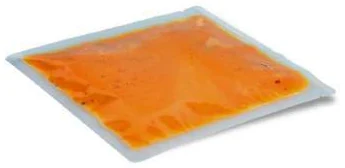
A liquid-food pack needs a coherent filling, sealing and dispensing plan. A flat portion sachet, retort pouch and capped spout pouch are different briefs even when they contain a similar recipe. Record the product flow, fill volume, intended treatment and how the user empties the pack. Do not transfer a process condition or storage expectation from a reference photograph.
For this decision, start with the product flow and intended outlet. The useful output is a dispensing comparison that identifies the proposed closure. Put that output beside the relevant quotation, drawing or sample rather than leaving it in a separate email. This is an illustrative decision exercise, not a report of a completed customer trial.
Product references to make the discussion concrete
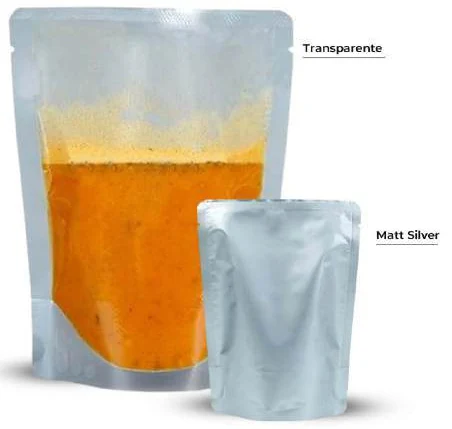
The catalogue includes spout pouches and retort pouches. These examples show different physical constructions; they are not interchangeable specifications. A fitted spout provides a controlled opening for dispensing. The reference range includes compact pouches and larger handled formats. Specify the product, fill volume, spout location and cap before developing the pouch shape; a corner spout and a top-centre spout require different layouts.
| Format reference | Material or construction to clarify | Details to include in the brief |
|---|---|---|
| Spout pouches | Flexible liquid-pack laminate with a fitted spout and cap; contact-layer and closure compatibility are reviewed for the formulation. | Fill volume and product viscosity; spout bore, position and cap. |
| Retort pouches | Multilayer retort laminate, with transparent or opaque options subject to product and process review. | Food formulation and fill weight; required process time and temperature. |
Use the reference pictures to identify the base, side panels, window or opening that you mean. A picture cannot supply the missing dimensions or material layers. If a photograph shows a finish or closure you do not want, state that difference explicitly; otherwise a visual reference can introduce an unintended requirement.
Complete the record before requesting the next sample
- Attach a dispensing comparison that identifies the proposed closure. Identify the product or SKU and the date of the observation.
- Record the product flow and intended outlet. Keep confirmed information separate from proposed values and questions for the supplier.
- Add the actual fill weight or volume, the dimension convention, material proposal and intended closure. Include the number of designs and quantity per design when requesting a quotation.
- State which question the next drawing, sample or quotation must resolve. A change of size, closure or material should remain visible alongside the earlier reference.
This record makes the next conversation specific. It lets the design, purchasing and packing teams work from the same proposed item and shows which decision still needs evidence. Review the related product pages for format details, or prepare a custom packaging brief with the unresolved requirements.

Put the decision into practice
1. Separate variants. Create one application row for every materially different mayonnaise formulation rather than assuming a common approval.
2. Agree observations. Define the handling sequence and what will be recorded before comparing candidate pouch geometries.
3. Run representative samples. Evaluate the agreed assembly under approved product conditions, retaining the sample and process identities.
4. Close the evidence gaps. Route packaging observations and food-product conclusions to their respective owners before an order decision.
Include the mayonnaise formulation reference and intended service task when asking Navkar Poly Print to review a pouch enquiry.
Sources and scope.
These references support the technical discussion. Product photographs illustrate formats; the material, dimensions and suitability of the proposed pack are confirmed for each project.
- Viking Masek: liquid pouch filling sequence
Equipment maker describes coordinated pouch handling, liquid filling and closure; no Navkar equipment or performance implied.
- SEE: Spout Pouches technical sell sheet
Illustrates spout-position, handle and shape options in another manufacturer portfolio; component selection remains project-specific.
- Mayonnaise emulsions: storage and rheological properties
Primary abstract and indexed results describe flow and storage-condition effects in tested emulsions; no pouch suitability or storage duration inferred.
Let’s discuss your product.
Share your contents, dimensions, filling method, quantity and delivery destination. We’ll work through the proposed packaging specification with you.
Create a packaging brief