Compare sauce sachets and spout pouches by the cost of an accepted served portion in the intended operation. Sachets may suit individually distributed portions, while a spout pouch may suit repeated dispensing or a refill task. The better choice depends on portion control, labour, leftover product, technical qualification and the customer's actual meal occasion.
Define the portion before comparing packs
State the sauce, formulation version, consistency and particles. Then describe the portion as the operation actually serves it: an individual sachet handed to the customer, a staff-dispensed amount or a refill into another dispenser. These systems create different commercial and handling questions.
Use a measured product quantity for the cost comparison where appropriate. One sachet is not necessarily equivalent to one squeeze from a spout pouch. If actual servings vary, record that variation rather than assuming every customer receives the intended amount.
Identify who opens and handles the package. A customer eating outside, a kitchen worker assembling takeaway orders and staff replenishing a counter dispenser have different needs. Compare the candidate in the real task before deciding that individual portions or a larger pack must be more convenient.
Match the filling and closing route
For sachets, record the nominated rollstock or premade route, dimensions, print requirements, filling and final closure. For the spout pouch, identify the body, spout, cap, filling access and closing operation. Keep the proposed product and process conditions with both quotations.
Mespack's equipment solution finder provides primary context for matching a product and format with a filling route. It does not establish Navkar's machinery or confirm that a specific sauce has been qualified. The actual packing partner must state the relevant requirements and commercial scope.
Include coding, inspection, secondary packing and rejected-product responsibility. A quotation for printed film is not equivalent to a filled individual portion, and a ready-made spout pouch still needs a suitable filling and closing route. Normalise those boundaries before comparing prices.
Use research within the sauce boundary
The 2021 paper Quantitative and Predictive Modelling of Lipid Oxidation in Mayonnaise investigates a specific food-quality mechanism under accelerated conditions. It is not a sachet-versus-spout trial and cannot establish a universal sauce shelf life. It illustrates why formulation-specific evidence belongs alongside the format decision.
For your sauce, ask the product technologist which quality and safety measures are required. Unopened distribution and service after opening need distinct consideration. The proposed pack size does not itself establish acceptable service duration, refrigeration requirements or processing suitability.
Observe the service sequence
For sachets, record retrieval, handing out, opening success, unused portions and disposal handling within the chosen observation boundary. For a spout pouch, record positioning, opening, dispensing, closure replacement and any transfer into another dispenser.
Keep the served task comparable. If one system is placed at the customer's table and the other remains behind a counter, staffing and customer behaviour change too. That may be the real business choice, but it should be described rather than hidden inside a packaging preference.
Observe a normal and a busy service period. A format that is convenient when staff have time may interrupt a rush. Record the reason for each interruption so the corrective action can address access, refill positioning, portion control or staffing appropriately.
Build the portion-cost equation
Use relevant service cost ÷ accepted portions served. Include product, packaging, filling, delivery, direct handling and additional waste-handling costs within the same boundary. Count purchased product once; do not add its lost portion again if already included. If the comparison begins with packaging-only quotations, add the missing operations before calling the result a served-portion cost.
Track product that is ordered, filled, received, opened, dispensed and left unused. These quantities explain losses at different stages. Keep technical rejects distinct from portions deliberately given away for service or promotion, because the business reasons differ.
Avoid dividing a bulk pack's nominal mass by the target portion and treating every theoretical portion as delivered. Residual product, actual portion variation and service constraints can change the usable number. Measure those effects under the intended operation before making a savings claim.
An illustrative calculation
Assume, only for explaining the method, that an individual-portion system costs ₹900 for the product, packaging and delivery used to provide 500 accepted portions. Add ₹100 of directly attributable handling expense, giving ₹1,000 ÷ 500 = ₹2.00 per accepted portion.
A bulk dispensing example costs ₹800 for all product, packaging and delivery entering the observation, plus ₹180 direct handling and ₹60 additional disposal and cleanup expense. Product loss is already paid for in the ₹800 and affects usable portions; it is not charged again. With 520 accepted portions, ₹1,040 ÷ 520 = ₹2.00.
The apparent packaging saving disappears in this invented example once handling and losses are included. These values are not market prices, measured portion sizes or predictions for sachets and spout pouches. Replace them with actual quotations and observations; a different operation can produce the opposite result.

Check portion consistency and customer value
The commercial goal may be consistent condiment availability, controlled serving cost or a better meal experience. Choose a primary goal and an acceptable service measure before the pilot. A lower average cost that creates frequent shortages or complaints may not serve the operation.
Ask customers or staff what causes dissatisfaction. Difficulty opening a sachet, an awkward spout or an unavailable refill require different changes. Record the product quantity alongside the complaint so a packaging issue is not confused with a change in recipe or serving policy.
If the brand expects the pack to increase sauce sales, measure sales of the relevant product or meal under comparable conditions. Free sachet distribution and paid retail pouch sales are different business models. They cannot be compared through a single package count.
Include opened-use qualification
The food business should define approved service conditions, handling instructions and acceptance criteria with its technical team. A larger pack can create repeated access and residual product, while individually sealed units create a different opening pattern. Neither pattern automatically establishes a safe or superior outcome.
Keep the study record tied to the exact formulation, process, closure and intended conditions. Review changes to pack size, outlet or dispensing equipment before transferring an earlier conclusion. A closure demonstration is not a substitute for the product's full technical assessment.
Do not publish a universal number of days that an opened spout pouch remains fresh. The useful content explains what the buyer must qualify and why. A project-specific claim can be added only when supported by the responsible technical review.
Review storage and delivery
Compare cartons containing equal usable product quantities and record actual dimensions, gross mass and protection. Individual portions and bulk packs can use stockroom space differently. Include replenishment frequency and picking effort when those activities genuinely differ.
Request transport quotations to the actual receiving location. For a regional foodservice buyer, the order pattern and route may matter more than a general statement about flexible packaging weight. For Sri Lankan enquiries, add the agreed delivery term, importer responsibilities and destination charges.
Inspect both the outer pack and the sauce units after the agreed handling evaluation. Record closure problems, visible leakage and cosmetic damage separately. The cost of replacing an entire contaminated carton can differ greatly from replacing one visibly damaged unit.
Count unused portions without confusing them with defects
For sachets, distinguish sealed units retained for later approved service from damaged units and portions discarded after distribution. Those quantities have different commercial meanings. An unopened sachet left in a stock bin is not automatically product waste.
For the bulk system, distinguish product remaining within approved service conditions from product that the operation must discard. Use the food business's established technical rules to define disposition. The cost comparison should follow those rules rather than inventing longer use to improve the result.
Reconcile starting stock, received stock, served portions and closing stock over the observation period. This helps separate normal inventory from leakage, over-portioning and unexplained loss. If the totals do not reconcile, investigate the record before publishing a saving per portion.
The resulting sheet is useful for procurement because it identifies whether the next improvement belongs in packaging, dispensing practice, stock control or the product offer itself.
Sauce sachet versus spout: a practical specification example
A format comparison is useful when it answers the actual buying question. Define the customer action and the filled product before deciding that one appearance is better. A valve, window, zipper or matte surface changes a different part of the specification. Some features can coexist, so compare their purposes and constraints rather than forcing every decision into an either-or choice.
For this decision, start with the serving size and dispensing requirement. The useful output is the filling and opening routes compared at the same product conditions. Put that output beside the relevant quotation, drawing or sample rather than leaving it in a separate email. This is an illustrative decision exercise, not a report of a completed customer trial.
Product references to make the discussion concrete
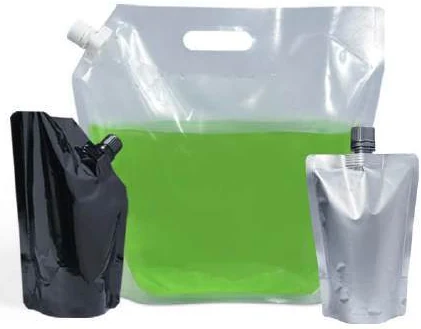
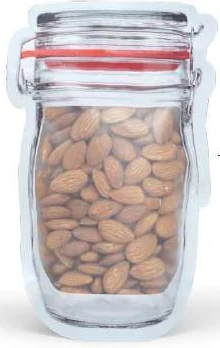
The catalogue includes spout pouches and jar-shaped zipper pouches. These examples show different physical constructions; they are not interchangeable specifications. A fitted spout provides a controlled opening for dispensing. The reference range includes compact pouches and larger handled formats. Specify the product, fill volume, spout location and cap before developing the pouch shape; a corner spout and a top-centre spout require different layouts.
| Format reference | Material or construction to clarify | Details to include in the brief |
|---|---|---|
| Spout pouches | Flexible liquid-pack laminate with a fitted spout and cap; contact-layer and closure compatibility are reviewed for the formulation. | Fill volume and product viscosity; spout bore, position and cap. |
| Jar-shaped zipper pouches | Clear or frosted flexible pouch construction with a zipper; the jar shape is a profile, not a rigid container. | Usable cavity and narrowest opening; die-cut outline and corner radii. |
Use the reference pictures to identify the base, side panels, window or opening that you mean. A picture cannot supply the missing dimensions or material layers. If a photograph shows a finish or closure you do not want, state that difference explicitly; otherwise a visual reference can introduce an unintended requirement.
Complete the record before requesting the next sample
- Attach the filling and opening routes compared at the same product conditions. Identify the product or SKU and the date of the observation.
- Record the serving size and dispensing requirement. Keep confirmed information separate from proposed values and questions for the supplier.
- Add the actual fill weight or volume, the dimension convention, material proposal and intended closure. Include the number of designs and quantity per design when requesting a quotation.
- State which question the next drawing, sample or quotation must resolve. A change of size, closure or material should remain visible alongside the earlier reference.
This record makes the next conversation specific. It lets the design, purchasing and packing teams work from the same proposed item and shows which decision still needs evidence. Review the related product pages for format details, or prepare a custom packaging brief with the unresolved requirements.
Choose the system for the meal occasion
Prioritise sachets where individually distributed portions and the observed opening experience fit the operation. Prioritise a spout pouch where qualified repeated dispensing or refilling works well and the complete portion economics support it. A business can use different formats for distinct service channels.
Send Navkar Poly Print the sauce brief, actual portion task, target quantities, filling route and destination. Request comparable component and conversion scopes. Present procurement and B2B heads with accepted portions, handling observations, technical evidence and a reproducible cost calculation rather than an empty-pack price comparison.
Sources and scope.
These references support the technical discussion. Product photographs illustrate formats; the material, dimensions and suitability of the proposed pack are confirmed for each project.
- Mespack's equipment solution finder
Primary supplier or technical reference for the linked format or component question; no Navkar capability, test outcome or shelf-life claim is transferred.
- Quantitative and Predictive Modelling of Lipid Oxidation in Mayonnaise
Evidence needs for formulation-specific stability. Experimental conditions are not storage instructions or a transferable expiry date.
Let’s discuss your product.
Share your contents, dimensions, filling method, quantity and delivery destination. We’ll work through the proposed packaging specification with you.
Create a packaging brief