Compare a refill pouch and bottle for ecommerce by the cost and quality of the parcel the customer receives. The primary pack, closure, protective arrangement, delivery route and refill experience form one commercial system. A lighter empty container is useful information, but it does not establish lower delivered cost or fewer returns.
Define the online offer
State whether the customer buys a starter bottle, a refill for a named container or a direct-use pouch. Record the product, formulation version, fill quantity, closure and intended use instructions. The customer should understand that offer before checkout and when opening the parcel.
List any companion products in the same shipment. Leakage can affect more than the failed unit, changing replacement and complaint costs. A single-item test may not represent a bundle containing paper labels, cartons or another product vulnerable to contamination.
Identify the actual fulfilment arrangement and destination pattern. Local deliveries, regional parcel networks and an export shipment can involve different handling and commercial scopes. Start with the intended launch lanes rather than promising a single freight saving for every market.
Compare complete parcel configurations
Prepare both candidates with the same product quantity and an outer arrangement designed for the intended route. Record the primary pack, closure protection, dividers or cushioning, outer carton, void space and any additional containment required by the technical and logistics owners.
Do not force both candidates into an unsuitable identical carton merely to make the photograph look comparable. They should receive appropriate, documented protection. The fair comparison is the complete qualified cost and outcome, with differences stated clearly.
Record actual packed dimensions, gross mass and unit count. Keep primary-pack mass as a separate measurement. The parcel's commercial charge can depend on service rules and dimensions as well as scale weight, so an empty pouch-versus-bottle weight difference cannot determine the invoice alone.
Use current distribution guidance within its scope
ISTA's 2026 Project 3P overview for India parcel delivery describes a general simulation approach for eligible individual packaged products. It treats product and package together and states scope limitations. The overview is not the full procedure or proof that a particular parcel has passed testing.
Ask a suitable packaging specialist or laboratory which current method applies to the actual route, product and parcel. Define product damage and package damage acceptance beforehand. A laboratory result should identify the tested configuration so later changes to the carton, closure or quantity can be reviewed properly.
Inspect technical and cosmetic outcomes separately
Check leakage, closure function, primary-pack condition and product integrity using the agreed technical criteria. Then check the customer's presentation: scuffing, label damage, distortion and the condition of companion items. These outcomes can have different commercial consequences.
An outer carton that looks acceptable can conceal a damaged primary closure. A visibly marked carton can also contain a technically acceptable retail unit. Record the actual failure rather than treating every outer mark as product loss or every intact carton as a successful shipment.
Keep photographs, pack references, route or test conditions and the disposition of the sample. This evidence helps the team decide whether the corrective action belongs to the primary pack, closure, protective arrangement, fulfilment process or carrier discussion.
Calculate delivered cost per accepted order
Include primary packaging, filling, outer protection, pick-and-pack, transport and payment or channel charges relevant to the comparison. Add product loss, support, refunds and replacement shipment within a consistent boundary. Avoid double counting expenses already included in a fulfilment quotation.
Use total relevant order cost ÷ accepted customer orders for a defined period or pilot. Keep first delivery success distinct from eventual resolution. A replacement can satisfy the customer while still creating additional commercial expense that belongs in the system comparison.
For a brand-level model, state whether product cost and net revenue are included. Count purchased product once, with incremental replacement or disposal costs identified separately. If net revenue already reflects refunds, do not deduct them again. Label a packaging-only model accordingly; empty-pack price is not profitable ecommerce contribution.
An illustrative return-cost comparison
Assume invented costs solely to show the method. Candidate A has ₹120,000 relevant base expense across 1,000 orders, plus ₹8,000 of replacement and support expense. Candidate B has ₹125,000 base expense and ₹2,000 replacement and support expense. Both eventually provide 1,000 accepted orders.
Their costs are ₹128 and ₹127 per accepted order. The lower base-cost candidate becomes slightly dearer after the stated resolution expense. These inputs are not pouch or bottle performance data, current carrier rates or a prediction of leakage.
Replace the assumptions with actual pilot observations and invoices. Show a sensitivity range when failure expense is still uncertain. A small change in replacement cost can matter more than a minor primary-pack saving, particularly where the product itself is valuable.
Check the customer's refill action
A refill arriving intact still needs to work with the receiving container. Observe opening, positioning, transfer, stopping, closure replacement and disposal or retention according to the approved instructions. Use the actual product and container under suitable conditions chosen by the responsible team.
Record the customer's first interpretation of the parcel contents. Clear product identity, quantity and refill purpose reduce avoidable confusion. The ecommerce image sequence should show the intended system accurately, including whether a bottle is included or only shown to explain use.
The February 2026 SPC refill-at-home report highlights practical consumer concerns in US skincare research. It is useful context for questions about convenience, not evidence of Indian ecommerce conversion or a guaranteed refill preference.
Keep product compatibility in the qualification record
Provide the formulation, proposed filling route, contact materials, closures and intended storage to the technical reviewer. Delivery testing does not establish chemical compatibility or a product's shelf life. These requirements need their own appropriate evidence.
Keep the tested primary pack and parcel configuration linked. A substitute cap or different pouch structure can change the technical system even if the outer box is unchanged. Likewise, a successful primary-pack study does not qualify an unreviewed fulfilment arrangement.
Record the owner of each approval: product compatibility, filling, parcel protection, artwork and commercial scope. Procurement and B2B heads can then see which decisions are ready and which still depend on specialist evidence.
Test the offer without confusing image effects
Use matched product photography, quantity information and delivery terms when comparing online response. A clearer image can improve comprehension independently of the physical format. If both the format and image sequence change, describe the test as a complete offer comparison.
Track product-page exposures, purchases, net contribution, complaints and repeat orders. Image clicks alone do not establish sales. A higher initial conversion accompanied by more returns can reduce overall value, while an easier refill routine may influence later repurchase rather than the first click.
Keep stock availability and promotional differences in the record. A candidate promoted more heavily or offered with free delivery may sell more for reasons unrelated to the pack. A suitable experiment or carefully bounded pilot is needed before attributing the result to format.
Price regional expansion lane by lane
Start with the real fulfilment origin and receiving PIN codes. Compare normal order sizes, carton configurations and service scope. Use actual carrier quotations and buyer requirements rather than an assumed national rate based only on distance.
For Sri Lanka, define the delivery term, export packing and documentation responsibilities, import-side costs and handling of damaged orders. A nearby international market can still require a separate commercial and operational model. Do not transfer a domestic parcel result directly into an export claim.
Separate the starter parcel from the refill parcel
A starter bottle and a refill can have different carton dimensions, protection needs and customer expectations. Build a cost and acceptance record for each rather than averaging them into one unexplained delivery number. The repeat-order mix can change as the programme develops.
Check what customers believe is included before purchase. If a bottle appears in the main image but the offer contains only a refill, clarify that relationship visibly. Avoid relying on a small caption to correct a misleading overall presentation.
This review can reduce confusion without changing the physical packaging. Keep its effect distinguishable from parcel protection so the team knows whether better information or a material change solved the complaint.
Ecommerce refill versus bottle: a practical specification example
A format comparison is useful when it answers the actual buying question. Define the customer action and the filled product before deciding that one appearance is better. A valve, window, zipper or matte surface changes a different part of the specification. Some features can coexist, so compare their purposes and constraints rather than forcing every decision into an either-or choice.
For this decision, start with the filled pack and dispatch arrangement. The useful output is a complete pack-out comparison with closure handling included. Put that output beside the relevant quotation, drawing or sample rather than leaving it in a separate email. This is an illustrative decision exercise, not a report of a completed customer trial.
Product references to make the discussion concrete
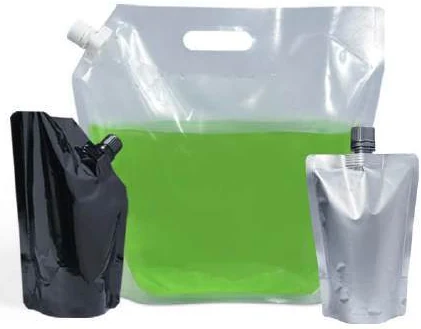
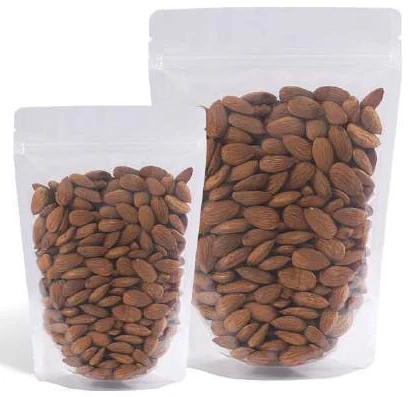
The catalogue includes spout pouches and jar-shaped zipper pouches. These examples show different physical constructions; they are not interchangeable specifications. A fitted spout provides a controlled opening for dispensing. The reference range includes compact pouches and larger handled formats. Specify the product, fill volume, spout location and cap before developing the pouch shape; a corner spout and a top-centre spout require different layouts.
| Format reference | Material or construction to clarify | Details to include in the brief |
|---|---|---|
| Spout pouches | Flexible liquid-pack laminate with a fitted spout and cap; contact-layer and closure compatibility are reviewed for the formulation. | Fill volume and product viscosity; spout bore, position and cap. |
| Jar-shaped zipper pouches | Clear or frosted flexible pouch construction with a zipper; the jar shape is a profile, not a rigid container. | Usable cavity and narrowest opening; die-cut outline and corner radii. |
Use the reference pictures to identify the base, side panels, window or opening that you mean. A picture cannot supply the missing dimensions or material layers. If a photograph shows a finish or closure you do not want, state that difference explicitly; otherwise a visual reference can introduce an unintended requirement.
Complete the record before requesting the next sample
- Attach a complete pack-out comparison with closure handling included. Identify the product or SKU and the date of the observation.
- Record the filled pack and dispatch arrangement. Keep confirmed information separate from proposed values and questions for the supplier.
- Add the actual fill weight or volume, the dimension convention, material proposal and intended closure. Include the number of designs and quantity per design when requesting a quotation.
- State which question the next drawing, sample or quotation must resolve. A change of size, closure or material should remain visible alongside the earlier reference.
This record makes the next conversation specific. It lets the design, purchasing and packing teams work from the same proposed item and shows which decision still needs evidence. Review the related product pages for format details, or prepare a custom packaging brief with the unresolved requirements.
Choose the delivered experience
Choose a refill pouch when the qualified primary system, parcel protection, transfer task and repeat economics work together. Choose a bottle when its observed direct-use or delivery performance produces a better complete result. A starter-bottle and refill programme may be useful when each role is defined clearly.
Send Navkar Poly Print the product brief, intended offer, receiving-container reference, parcel configuration, quantities and launch destinations. Request a candidate specification and evidence requirements. Approve the system from accepted orders and usable product, not the empty container price alone.
Sources and scope.
These references support the technical discussion. Product photographs illustrate formats; the material, dimensions and suitability of the proposed pack are confirmed for each project.
- 2026 Project 3P overview for India parcel delivery
Product and complete parcel evaluated together. Overview is not full procedure, carrier compliance or evidence of a passed test.
- SPC refill-at-home report
Convenience and availability questions for local validation. Attitudes; not Indian shampoo, dishwash or ecommerce sales.
Let’s discuss your product.
Share your contents, dimensions, filling method, quantity and delivery destination. We’ll work through the proposed packaging specification with you.
Create a packaging brief