Treat product observed in a seal region as a specific filling-and-closure question requiring an identified record and qualified review. Record where it appears, which pouch and product were involved and what the line team observed. Do not infer a universal defect severity or prescribe operating adjustments from a photograph. A contamination observation sheet helps the converter and filling team investigate the same event without losing context.
Record the observation neutrally
Describe visible product, residue or another observed condition without assuming its cause or safety significance. Identify the actual seal path and whether the observation is before or after the final closure. Include the sample reference and photographs where the site permits them. Avoid handling or opening questionable material outside the site’s approved procedures just to improve documentation. The buyer’s purpose is to preserve the evidence and request a technical decision. A clear observation can be useful even before the responsible team has established whether it affects acceptance.
Link the event to product entry
Record the actual product form, intended quantity and filling route through the line team’s approved record. Ask whether the event occurred under a particular condition or after a change, as observed by authorised staff. Do not prescribe nozzle placement, sealing temperature or other operating parameters in the procurement discussion. If the pouch opening, feature or fill quantity differs from the earlier sample, identify that difference. The investigation needs the actual interface, not just the statement that the same film ran successfully with another product.

Keep visual evidence within its scope
A photograph can locate a concern but may not establish the complete closure result. ASTM F1886/F1886M provides a visual-inspection method scope; ASTM F88/F88M addresses a different seal-strength question. The qualified team should decide applicable assessment and disposition. Record the decision and supporting evidence rather than converting a clean-looking or contaminated-looking image into a blanket acceptance verdict. If another controlled trial is needed, preserve sample groups by condition so the result can be interpreted.
Use a seal-region observation sheet
Complete the sheet for the actual event and retain the original evidence through the site's process. It coordinates investigation without replacing technical inspection or operating procedures.
| Record | What to capture and how to use it |
|---|---|
| Location and stage | Identify the intended seal path and whether the observation occurs before or after closure. Link the drawing revision so another reviewer can locate the same region rather than interpreting an anonymous close-up photograph. |
| Observed condition | Describe what is visible and attach identified evidence where appropriate. Separate the observation from suspected causes and do not infer severity or product disposition without the responsible technical assessment. |
| Product and pouch | Record product form, quantity and the pouch construction and geometry references. Note changes from earlier trials so the investigation can assess the actual product-entry interface instead of assuming all conditions are unchanged. |
| Line context | Link the event to the authorised filling record and condition sequence. Preserve observed timing and relevant changes through the line team, leaving operating adjustments and handling decisions within the site's approved process. |
| Technical action | Record the qualified review, required evidence and disposition decision. Keep any further trial linked to separate sample groups and conditions, then verify the agreed action before closing the event record. |
Send the sheet with a specific review request: which observation needs interpretation and which decision is required. This is more useful than asking the supplier to fix sealing without identified material, location or filling context.
Illustrative dusty-product event
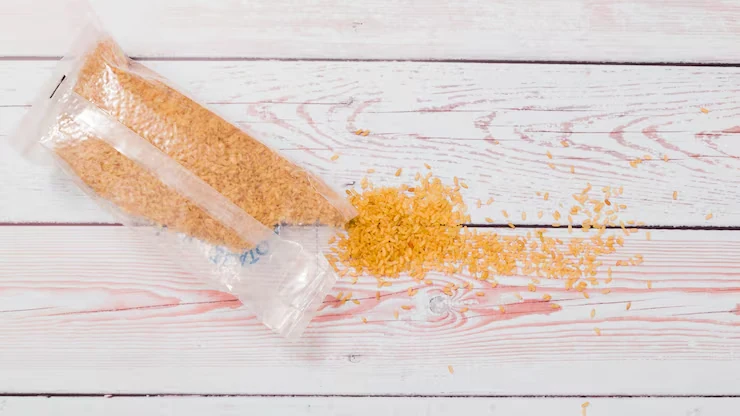
During a trial with an illustrative fine dry product, staff observe material near the proposed final closure region. The buyer records the pouch and product identities and asks the line owner to preserve the relevant evidence through its procedures. The converter receives the location map and sample references. The team investigates before deciding the cause or acceptance. The example supplies no contamination tolerance, no machine setting and no conclusion that the film or filling process is responsible.
Identify the stage at which material appears
Observe the relevant closing region before dosing, after dosing and before the final closure where the approved process allows. Record when product or residue first becomes visible. A photograph of the finished seam may show the symptom but leave the entry point unknown. The sequence helps the technical team decide what to investigate next.
Use factual descriptions such as fine particles on the inner closing surface or a piece resting across the proposed joint. Avoid calling every mark contamination without identifying what was actually observed. Where the material's identity is uncertain, record the uncertainty and route the question to the responsible technical owner.
Connect the observation to the dose path
Mark the product entry, nozzle or manual transfer route, pouch support and final closing region on a sketch. Include the product quantity and relevant condition. The same product can move differently during filling than when settled in the finished pouch. A clearance review should therefore examine the state at closure, not only the final static fill level.
Ask the filling owner to describe the actual sequence and any intervention used. Do not prescribe a nozzle, timing adjustment or cleaning action from a general article. The useful contribution from procurement is a clear interface record that lets the qualified team evaluate the actual route and proposed package geometry.
Retain a clean comparison reference
Where appropriate under the assessment plan, compare the affected specimen with an identified reference produced under the stated condition. Keep the pouch construction, drawing and product identity clear. A comparison can help show where the observed material lies, but it should not become a claim that every other pack was unaffected.
The ASTM F1886 visual-inspection catalogue identifies a method concerned with visual inspection of flexible-package seals. A visual method has its own scope and conditions. Ask the technical reviewer which observations and any additional assessments are needed for the actual product and closure decision.
Separate frequency from a selected photograph
If the team records how often the observation occurs, state the population observed, selection method and classification. For an illustrative check, 3 affected specimens among 60 observed gives 3 divided by 60, or 5%, for that observation set. These invented values do not estimate a production defect rate or establish an acceptable limit.
A close-up of one specimen can show location and appearance, while a counted set answers a different question about the observed group. Keep both evidence types labelled. Do not present a deliberately selected problem sample as a random sample, or use a small trial percentage as a prediction of all future production.
Choose a follow-up that distinguishes causes
The responsible team may need to examine product behaviour, mouth geometry, support or the operating sequence. List hypotheses separately from observations. Ask what additional evidence can distinguish them. If several changes are made at once, record the combined condition and limit the causal conclusion accordingly.
For an illustrative dusty product, increasing pouch size without observing the dose path may leave the same issue unresolved. A larger empty body does not automatically provide a clear closing surface during the actual sequence. The follow-up should answer the identified physical question, with representative product and the relevant package state.
Verify the accepted condition at the closing interface
When an action is accepted, document what changed and how the original observation was checked again. Include the relevant stage and location in the verification. A neat finished pack selected after the run does not by itself show that the agreed sequence consistently maintained the required closing condition.
Link the accepted procedure or geometry reference to the item's handover. Keep application and closure evidence with their appropriate owners. The completed record should explain the observed event, investigation and verified condition without blaming a material or operator from appearance alone. It gives procurement a concrete question to resolve before the same filling-interface uncertainty returns in another order.
Seal contamination: a practical specification example
A pouch closes neatly when empty but behaves differently once product reaches the seal area. Use a representative fill and distinguish the factory-made seals, the final closing seal and any reclosure. The useful record shows where the problem appeared and what product or handling condition was present. Do not change several variables at once and then attribute the result to one feature.
For this decision, start with the product particles or liquid near the closing band. The useful output is observations linked to the filling and cleaning sequence. Put that output beside the relevant quotation, drawing or sample rather than leaving it in a separate email. This is an illustrative decision exercise, not a report of a completed customer trial.
Product references to make the discussion concrete
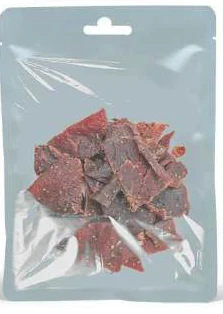
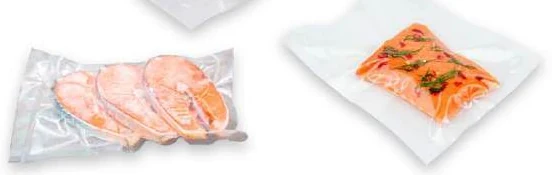
The catalogue includes dried-food and pet-treat pouches and vacuum packaging bags. These examples show different physical constructions; they are not interchangeable specifications. A clear face can show the contents, while an opaque panel leaves space for the artwork. Discuss zipper and no-zipper versions according to portion size and use after opening. The food or treat formulation, surface oils and intended storage conditions determine the material brief.
| Format reference | Material or construction to clarify | Details to include in the brief |
|---|---|---|
| Dried-food and pet-treat pouches | Clear-front or opaque flexible laminate with a product-specific contact layer; barrier and seal requirements are confirmed separately. | Product texture, oils and portion size; use after first opening. |
| Vacuum packaging bags | Clear or opaque flexible vacuum-bag construction; layer structure, thickness and surface requirements are confirmed for the packing method. | Product shape, edges and fill weight; usable opening and final seal band. |
Use the reference pictures to identify the base, side panels, window or opening that you mean. A picture cannot supply the missing dimensions or material layers. If a photograph shows a finish or closure you do not want, state that difference explicitly; otherwise a visual reference can introduce an unintended requirement.
Complete the record before requesting the next sample
- Attach observations linked to the filling and cleaning sequence. Identify the product or SKU and the date of the observation.
- Record the product particles or liquid near the closing band. Keep confirmed information separate from proposed values and questions for the supplier.
- Add the actual fill weight or volume, the dimension convention, material proposal and intended closure. Include the number of designs and quantity per design when requesting a quotation.
- State which question the next drawing, sample or quotation must resolve. A change of size, closure or material should remain visible alongside the earlier reference.
This record makes the next conversation specific. It lets the design, purchasing and packing teams work from the same proposed item and shows which decision still needs evidence. Review the related product pages for format details, or prepare a custom packaging brief with the unresolved requirements.
Close the event through the responsible review
Record the actual technical finding, action and verification scope. Update a controlled drawing or trial plan only when the decision supports it. Keep unresolved observations visible before normal supply approval. This provides procurement with a clear evidence trail while leaving closure assessment and process operation with qualified personnel.
Send the completed seal-region observation sheet with your product and filling details to Navkar Poly Print for a project-specific discussion. Ask for the proposed specification, evidence required and open questions to be recorded before quotation approval.
Sources and scope.
These references support the technical discussion. Product photographs illustrate formats; the material, dimensions and suitability of the proposed pack are confirmed for each project.
- ASTM F1886/F1886M visual inspection of flexible seals
Method scope for visual seal inspection; method selection and acceptance criteria require qualified review.
- ASTM F88/F88M seal strength
Standards-owner method scope; qualified team must determine current applicable edition and acceptance criteria.
Let’s discuss your product.
Share your contents, dimensions, filling method, quantity and delivery destination. We’ll work through the proposed packaging specification with you.
Create a packaging brief