Plan a sealing trial around a defined question and qualified acceptance method. Record the actual material, pouch, product and equipment references, then preserve observations by condition. A few attractive samples are insufficient if nobody knows what was trialled or what decision they support. Procurement can make the evidence traceable while qualified personnel choose operating conditions, test methods and acceptance criteria.
State what the trial must resolve
Identify the unresolved subject: a proposed construction, final closure interface, geometry revision or another specific question. Ask the technical owner what evidence is needed and which specimens represent it. Do not use a trial to manufacture a broad approved status when only one interface is being assessed. A useful plan states both the intended conclusion and the conditions not covered. This allows independent project work to continue while keeping the dependent release decision tied to appropriate evidence.
Distinguish the evidence environment
Laboratory samples and production-line samples can answer different questions. ASTM F2029 describes laboratory heat-seal practices; it should not be presented as a production-machine setup recipe. Ask the qualified reviewer how the planned evidence relates to the actual receiving route. Record any differences in material, geometry, product or equipment. A promising laboratory result can inform the next decision without being misrepresented as proof that every filled production package or future operating condition is qualified.
Preserve results by condition
Use the site’s approved records to identify conditions and sample sets. If the authorised team changes a condition, keep its observations separate from earlier samples. Ask the technical owner to select the applicable assessments, such as the specific strength scope of ASTM F88/F88M where appropriate. Record actual results and deviations without inventing a universal pass value. When several variables change, the report should explain the agreed rationale and limit causal conclusions to what the evidence supports.
Build a question-led sealing trial plan
The plan below is a coordination and evidence index. It does not replace operating instructions or a technical protocol approved for the actual site and application.
| Record | What to capture and how to use it |
|---|---|
| Decision question | State the specific interface or change requiring evidence and the decision expected. Avoid prove quality as the only objective, since it gives the technical team no clear boundary for specimens, observations or acceptance. |
| Representative baseline | Record construction, pouch, component, product and equipment references as applicable. Identify differences from normal production and ask the qualified owner how they limit the conclusions that can be drawn from the trial. |
| Assessment basis | Record the qualified method, applicable edition or internal reference and acceptance owner. Preserve the difference between laboratory practice, strength measurement and other package-integrity questions rather than treating all checks as interchangeable. |
| Condition and samples | Link each sample group to the authorised condition record. Keep changes and their observations separate, enabling the reviewer to interpret the actual sequence without reconstructing it from unlabelled specimens. |
| Decision and follow-up | Record accepted scope, deviations and further evidence required. Name the owner and verification action, then connect the result to the production-release decision instead of closing the trial simply because samples were produced. |
Agree the plan before preparing material. It is easier to obtain useful evidence when the question, representative baseline and decision owner are clear than to reconstruct a trial after the project needs approval urgently.
Illustrative material-screening exercise
A technical team compares candidate constructions in a laboratory exercise to inform the next packaging proposal. Procurement records the identities and the limited screening objective. The result is not described as production approval; the team identifies the receiving-route evidence still needed. The example shows how an early trial can be useful without overstating its scope. Actual operating conditions, sample plan and acceptance criteria must come from the qualified team for the specific project.
Decide whether the question is material or production
A laboratory study can examine a material's heat-seal response under controlled conditions. A production assessment examines the actual equipment, geometry, product and operating arrangement. These are connected stages with different evidence. State which decision the proposed trial must support before choosing specimens or asking for settings.
ASTM F2029's public scope concerns laboratory heat-seal preparation and says it does not cover production-equipment validation. It also warns that laboratory and manufacturing output can differ. This is a reason to use laboratory evidence as an identified starting point, with the qualified site determining the appropriate production assessment.
Retain the material and geometry baseline
Record the construction, drawing, feature set and relevant specimen preparation. A trial result without those references can be difficult to apply later. Keep the product and filling condition where they affect the question. If the assessment uses empty specimens, state that rather than implying it covers every filled-pack condition.
Mark the region represented by each sample. A simple flat area and a folded intersection can present different physical arrangements. The technical owner should choose the evidence needed for the actual package. Procurement's role is to preserve the relationship between the question, specimen and result, not to invent a test programme.
Learn from a study without copying its settings
Ilhan and colleagues' 2023 paper combined laboratory sealing, peel tests and cross-section imaging on a specified BOPP/metBOPET/CPP film. It found that critical regions responded differently and excessive conditions could damage the studied seal. Those findings are material- and geometry-specific; their numerical settings are not a recipe for another line.
The buyer's useful question is whether the trial plan represents the relevant regions and distinguishes the required outcomes. A stronger peel result alone may not answer every integrity or opening question. Ask the technical reviewer to identify the methods and acceptance basis appropriate to the product and package.
Record conditions as evidence, not instructions
Include how each sample was identified after it left the equipment. A label assigned from memory after the run can break the condition-to-result link. Agree the recording sequence with the site before collecting specimens for technical interpretation.
The trial record should identify the actual equipment and documented condition references used. Qualified site personnel should control operation through their procedure. This article does not provide generic temperature, pressure or dwell-time values. Copying a setpoint from an unrelated study can obscure differences in construction, geometry and equipment response.
Include interruptions, adjustments and sample timing in the record. If several conditions are assessed, label each specimen clearly and retain the sequence. An unlabelled group of good-looking seals cannot establish which condition produced them. The technical interpretation needs both the result and the actual state under which it was obtained.
Predefine how results will change the project
Write the possible decisions before observing the trial: accept the covered condition, revise the proposal or investigate a defined uncertainty. Identify the owner and evidence required for each. A trial that produces many measurements but no decision criterion can be difficult to use for purchasing or release.
For an illustrative comparison, one condition may meet the agreed strength criterion while another required assessment remains unresolved. Keep both statuses visible. Do not select the condition solely because it produced the highest number if the intended opening or other package requirement needs a different balance. The qualified owner must interpret the full evidence set.
Verify the scope of the final conclusion
The conclusion should identify the material, geometry, equipment reference and assessed conditions. State which requirements were accepted and which were outside the trial. If the commercial proposal changes afterwards, ask which evidence remains applicable. A successful trial should not become unrestricted approval of every fill quantity, product or construction.
Retain the plan, raw records and accepted summary together. Procurement can use the summary to understand the decision while the technical team retains the evidence needed to substantiate it. This creates a practical sealing trial that answers a defined question, uses research honestly and supports the next project step without inventing a universal sealing window or claiming a Navkar test that did not occur.
Trial record: a practical specification example
A pouch closes neatly when empty but behaves differently once product reaches the seal area. Use a representative fill and distinguish the factory-made seals, the final closing seal and any reclosure. The useful record shows where the problem appeared and what product or handling condition was present. Do not change several variables at once and then attribute the result to one feature.
For this decision, start with the material, sample and actual trial conditions. The useful output is a record that links each observation to the tested setup. Put that output beside the relevant quotation, drawing or sample rather than leaving it in a separate email. This is an illustrative decision exercise, not a report of a completed customer trial.
Product references to make the discussion concrete
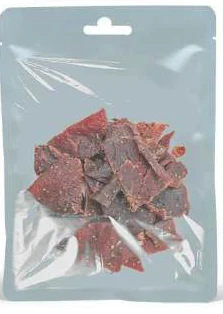
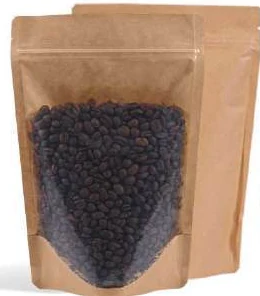
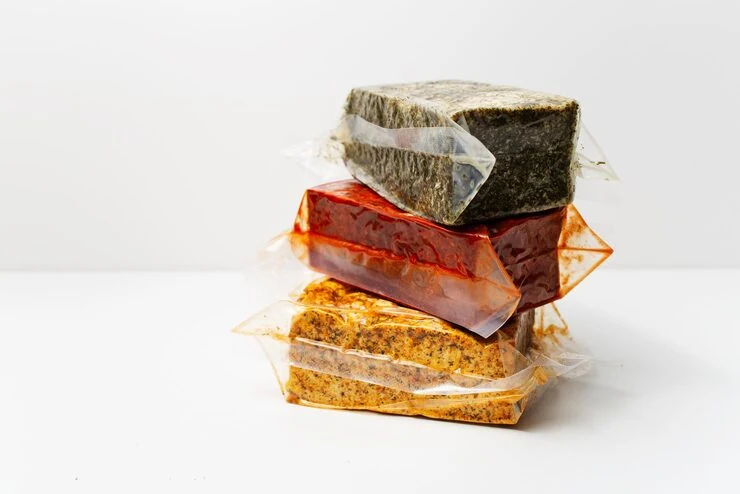
The catalogue includes dried-food and pet-treat pouches and vacuum packaging bags. These examples show different physical constructions; they are not interchangeable specifications. A clear face can show the contents, while an opaque panel leaves space for the artwork. Discuss zipper and no-zipper versions according to portion size and use after opening. The food or treat formulation, surface oils and intended storage conditions determine the material brief.
| Format reference | Material or construction to clarify | Details to include in the brief |
|---|---|---|
| Dried-food and pet-treat pouches | Clear-front or opaque flexible laminate with a product-specific contact layer; barrier and seal requirements are confirmed separately. | Product texture, oils and portion size; use after first opening. |
| Vacuum packaging bags | Clear or opaque flexible vacuum-bag construction; layer structure, thickness and surface requirements are confirmed for the packing method. | Product shape, edges and fill weight; usable opening and final seal band. |
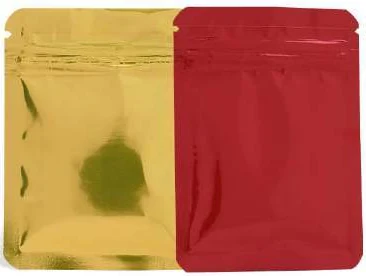
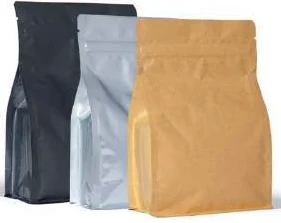
Use the reference pictures to identify the base, side panels, window or opening that you mean. A picture cannot supply the missing dimensions or material layers. If a photograph shows a finish or closure you do not want, state that difference explicitly; otherwise a visual reference can introduce an unintended requirement.
Complete the record before requesting the next sample
- Attach a record that links each observation to the tested setup. Identify the product or SKU and the date of the observation.
- Record the material, sample and actual trial conditions. Keep confirmed information separate from proposed values and questions for the supplier.
- Add the actual fill weight or volume, the dimension convention, material proposal and intended closure. Include the number of designs and quantity per design when requesting a quotation.
- State which question the next drawing, sample or quotation must resolve. A change of size, closure or material should remain visible alongside the earlier reference.
This record makes the next conversation specific. It lets the design, purchasing and packing teams work from the same proposed item and shows which decision still needs evidence. Review the related product pages for format details, or prepare a custom packaging brief with the unresolved requirements.
Issue a scoped trial decision
Keep the accepted findings and open questions with the material and drawing references. Ask the supplier and filling site to acknowledge the next required action. Reassess the relevant evidence after changes rather than automatically reusing an earlier result. A sealing trial is complete when it supports the stated decision and documents its limits.
Send the completed question-led sealing trial plan with your product and filling details to Navkar Poly Print for a project-specific discussion. Ask for the proposed specification, evidence required and open questions to be recorded before quotation approval.
Sources and scope.
These references support the technical discussion. Product photographs illustrate formats; the material, dimensions and suitability of the proposed pack are confirmed for each project.
- ASTM F2029 laboratory heat seals
Standards-owner laboratory practice scope; not a production-machine setup instruction.
- ASTM F88/F88M seal strength
Standards-owner method scope; qualified team must determine current applicable edition and acceptance criteria.
- Observing the effect of pressure and temperature on the seal integrity of critical seal regions of various flexible bag designs
2023 defined-film laboratory/production-sample study; geometry-dependent response and excessive-condition damage, no copied settings.
Let’s discuss your product.
Share your contents, dimensions, filling method, quantity and delivery destination. We’ll work through the proposed packaging specification with you.
Create a packaging brief