Reserve the space needed for the intended filling and closing route rather than filling a prototype to its apparent maximum. The required clearance depends on product behaviour, geometry, features and the receiving operation. Ask the converter and line owner to define the relevant interface through representative samples and qualified review. There is no universal empty-space percentage that can be assumed suitable for every pouch and product.
Draw the working space
Show the product-entry opening, proposed fill region, features and original final closure on one view. Distinguish a conceptual fill line from a measured or accepted production condition. Ask the line owner what space it needs to handle and close the pack through its approved operation. A zipper or spout can change available access, so include it from the start. Do not assume the full flat height is usable product space or that a filled pack photograph reveals the clearances required during the actual closing cycle.
Use representative product behaviour
Record the intended quantity and product form, including settlement or movement observed during the agreed review. Weight alone does not define the occupied region. If the product form or filling method changes, reassess the relevant fit and clearance questions. Use a substitute only with an explicit technical rationale and limit the conclusions. The buyer should record the actual observation rather than manipulate a sample until it looks full enough. The objective is a workable interface, not the largest nominal quantity that can be squeezed into a prototype.
Link clearance to the closure evidence
Ask the qualified team which checks and samples are needed for the proposed route. ASTM F2029 concerns laboratory heat-seal practice, while ASTM F88/F88M concerns seal strength. Neither supplies a universal filling-clearance dimension. Record the actual acceptance basis and responsible owner. A pack that contains the intended quantity may still need further review of its final closure, and an accepted closure observation does not establish every product or distribution requirement.
Use a fill-space and closure review
The review combines a labelled geometry view with actual sample information. It helps distinguish product-fit observations from the evidence needed for the closing operation.
| Record | What to capture and how to use it |
|---|---|
| Package baseline | Record drawing, construction and feature references. Show opening and final closure together so the available product space is assessed against the actual proposed package, not a plain sample that omits important features. |
| Product condition | Record intended quantity, form and relevant settlement observations. Identify the filling method and any substitute used, preserving differences that can limit what the sample demonstrates about the intended production condition. |
| Clearance requirement | Ask the line owner to state the space and interface requirements for its approved route. Record the source and acceptance owner instead of applying a generic headspace percentage or distance to every product. |
| Observed fit | Identify the sample and show the occupied product region under the agreed conditions. Distinguish a conceptual line from measured observations and record any deliberate shaping or support used during the review. |
| Closure decision | Link the qualified closure evidence and remaining questions to the same configuration. Reassess the affected scope after quantity, product form, feature or route changes, avoiding an automatic transfer from simple fill-fit approval. |
Keep a filled reference image with the record where appropriate, but identify its orientation and sample limits. A photograph without the product quantity and configuration is a weak basis for future clearance decisions.
Illustrative larger-fill request
A brand asks to add more product to an existing pouch. The previous sample had been reviewed at a lower quantity, so the buyer updates the product condition and asks the filling owner to review the closing interface. It does not assume the change is acceptable because the material can physically contain the extra product. The review records fit and closure evidence separately and identifies whether geometry, feature position or another proposal needs discussion.
Measure the condition at closing
Fill clearance concerns the space needed for the actual closing operation, not merely the empty space visible after the product has settled. Ask the filler to identify the relevant package state and measurement reference. Product can momentarily occupy a different region during dosing. A static filled photograph may therefore answer only part of the clearance question.
Record product quantity, condition, pouch support and the observation point in the sequence. If a sample is shaken or manually settled before measurement, state that action. The technical owner should determine whether it represents routine operation. Avoid selecting the neatest specimen without documenting how it reached that state.
Distinguish outside height from usable region
The pouch's total height includes regions occupied by seals, features and the opening arrangement. The closing operation may require a defined area within that geometry. Ask the converter and filler to mark it together. A taller pouch can still have an unsuitable mouth or feature arrangement if the relevant usable region remains constrained.
Mespack's premade route description separates opening, dosing and sealing. This manufacturer example supports reviewing the stages as different interfaces. It does not supply a clearance value for another machine or product. Obtain that requirement from the named site's qualified owner and link it to the actual drawing.
Observe irregular and changing product shapes
An irregular piece can project above the general fill surface, while loose material can move during handling. Record the condition relevant to the closing action rather than reducing the contents to one average level. The assessment plan should identify representative product and appropriate observations for the actual task.
If a substitute is used, explain which differences may affect the result. A smooth model can help identify an obvious geometric clash but cannot reproduce the behaviour of every real product. Keep its conclusion narrow. The next representative observation should address the unresolved condition instead of treating a convenient substitute as full filling evidence.
Use a simple arithmetic screen carefully
Suppose an illustrative drawing provides 240 mm from an agreed base reference to the identified limit, while the observed product envelope reaches 210 mm from that same reference. The simple difference is 30 mm. These invented values describe a measured gap; they do not establish an acceptable closing allowance or a recommended pouch size.
The qualified filling owner must interpret the gap against its actual operation, variation and relevant features. If the two heights use different reference points or conditions, subtraction is misleading. Mark both on one sketch and retain the sample identity. A transparent measurement can expose a question without pretending to settle the full closure assessment.
Review the trade-off before increasing size
Increasing height or width may provide space but can also change panel proportions, shelf fit, carton arrangement and handling. Identify the specific region that needs improvement before revising the whole pouch. A different feature position or filling presentation may be relevant, subject to the responsible owners' assessment.
When a geometry change is proposed, update the drawing and review affected artwork and fit decisions. Use the next sample to observe the changed clearance under a comparable condition. Record any other differences so the improvement can be interpreted. A larger empty sample does not establish that the intended product will remain clear of the closing region during routine filling.
Release the covered filling interface
The acceptance note should identify the geometry, product quantity, observation condition and closure-related requirement assessed. Link the relevant technical evidence and state any limits. Keep application and final-seal performance decisions with their appropriate owners rather than treating clearance alone as complete package approval.
Revisit the interface when product, quantity, feature, pouch dimension or filling route changes. Some evidence may remain applicable, but the responsible owner should explain why. The completed record gives procurement a specific, repeatable basis for discussing space at closing and prevents total pouch height or an attractive filled photograph from becoming a substitute for the actual operational requirement.
Filling clearance: a practical specification example
A pouch closes neatly when empty but behaves differently once product reaches the seal area. Use a representative fill and distinguish the factory-made seals, the final closing seal and any reclosure. The useful record shows where the problem appeared and what product or handling condition was present. Do not change several variables at once and then attribute the result to one feature.
For this decision, start with the usable mouth and product path. The useful output is the fill opening checked with a representative product sample. Put that output beside the relevant quotation, drawing or sample rather than leaving it in a separate email. This is an illustrative decision exercise, not a report of a completed customer trial.
Product references to make the discussion concrete
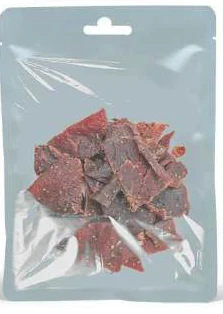
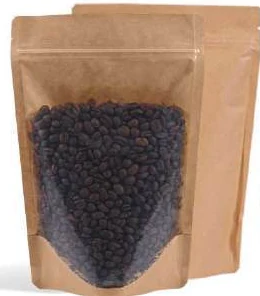
The catalogue includes dried-food and pet-treat pouches and vacuum packaging bags. These examples show different physical constructions; they are not interchangeable specifications. A clear face can show the contents, while an opaque panel leaves space for the artwork. Discuss zipper and no-zipper versions according to portion size and use after opening. The food or treat formulation, surface oils and intended storage conditions determine the material brief.
| Format reference | Material or construction to clarify | Details to include in the brief |
|---|---|---|
| Dried-food and pet-treat pouches | Clear-front or opaque flexible laminate with a product-specific contact layer; barrier and seal requirements are confirmed separately. | Product texture, oils and portion size; use after first opening. |
| Vacuum packaging bags | Clear or opaque flexible vacuum-bag construction; layer structure, thickness and surface requirements are confirmed for the packing method. | Product shape, edges and fill weight; usable opening and final seal band. |
Use the reference pictures to identify the base, side panels, window or opening that you mean. A picture cannot supply the missing dimensions or material layers. If a photograph shows a finish or closure you do not want, state that difference explicitly; otherwise a visual reference can introduce an unintended requirement.
Complete the record before requesting the next sample
- Attach the fill opening checked with a representative product sample. Identify the product or SKU and the date of the observation.
- Record the usable mouth and product path. Keep confirmed information separate from proposed values and questions for the supplier.
- Add the actual fill weight or volume, the dimension convention, material proposal and intended closure. Include the number of designs and quantity per design when requesting a quotation.
- State which question the next drawing, sample or quotation must resolve. A change of size, closure or material should remain visible alongside the earlier reference.
This record makes the next conversation specific. It lets the design, purchasing and packing teams work from the same proposed item and shows which decision still needs evidence. Review the related product pages for format details, or prepare a custom packaging brief with the unresolved requirements.
Approve the demonstrated quantity and route
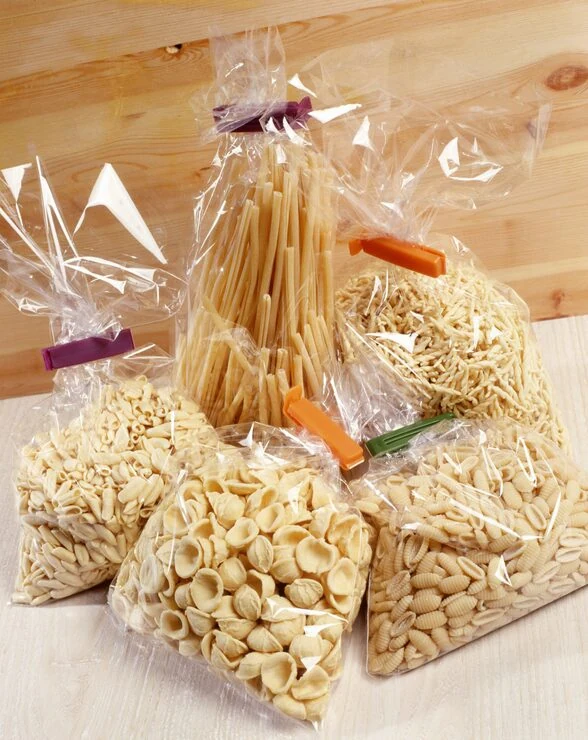
Record the accepted quantity, product form and package configuration with the relevant evidence. Ask suppliers to identify deviations before production and keep the line owner involved in changes. Use the review for repeat orders so the approved pouch size does not become an unrestricted capacity claim for different products or filling conditions.
Send the completed fill-space and closure review with your product and filling details to Navkar Poly Print for a project-specific discussion. Ask for the proposed specification, evidence required and open questions to be recorded before quotation approval.
Sources and scope.
These references support the technical discussion. Product photographs illustrate formats; the material, dimensions and suitability of the proposed pack are confirmed for each project.
- ASTM F2029 laboratory heat seals
Standards-owner laboratory practice scope; not a production-machine setup instruction.
- ASTM F88/F88M seal strength
Standards-owner method scope; qualified team must determine current applicable edition and acceptance criteria.
- Pre-Made Pouch Packaging Machine
Describes feeding, transfer, opening, filling and top sealing; includes a spout-filling machine family. Limits: Equipment-family context. Does not prove customer-line compatibility, Navkar equipment, throughput or material savings.
Let’s discuss your product.
Share your contents, dimensions, filling method, quantity and delivery destination. We’ll work through the proposed packaging specification with you.
Create a packaging brief