Plan a pouch storage trial around a defined technical question, identified samples and an authorised protocol. A calendar of stored packs is useful only when the responsible team has decided what will be evaluated and how the results will support the application.
State whether the study concerns empty or filled packs
Separate empty packaging storage from filled-product studies. They have different objects and decisions. Record the intended material or assembly, product where applicable, relevant process and the question the technical owner wants to answer.
Do not invent a universal storage period or accelerated-study conversion. Ask competent reviewers to define conditions, sample quantities, intervals, methods and acceptance. Procurement can organise the records and custody without interpreting technical outcomes.
Identify samples and retrievals
Use sample codes linked to batch, drawing, artwork and components. GS1's traceability standard connects identities with events; apply that discipline to placement, retrieval and evaluation records. Record actual dates rather than backdating a missed observation.
Define who may move or open samples and how deviations are reported. Keep baseline or reserve groups distinct where the protocol requires them. A replacement sample with a different history is not automatically equivalent to a missing planned item.

Keep methods and interpretation together
ASTM's packaging catalogue contains different property methods. The study owner should select relevant evaluation and acceptance for the question, not choose a test merely because a report is readily available.
Define a decision that storage evidence can support
Write the question in the protocol brief before selecting dates. An empty-pouch study might ask whether an identified storage arrangement preserves specified requirements for later processing. A filled-product study may involve product stability and packaging interactions, requiring product-team ownership and a different evidence plan. Keep those objects separate. A shelf-life conclusion cannot be created merely by storing empty pouches for a calendar period.
Identify the proposed use of the result. It may support a development choice, a storage instruction or another scoped decision. Ask the technical owner what evidence would be sufficient and what remains outside the study. Procurement can organise samples, documents and custody, while interpretation belongs to the competent team. This preserves a practical division of work without requiring purchasing to design a technical programme from a generic blog example.
Specify the starting sample state
Record construction, material and component references, drawing, artwork, batch and production stage as relevant. If filled, add product identity and the applicable filling or closure record. State whether specimens have been handled or evaluated before storage. A baseline needs an identifiable history. Two apparently identical pouches can represent different constructions or conditions, making a later comparison difficult to interpret.
Ask the protocol owner to define the sample groups, reserve specimens and retrieval requirements. Do not invent a universal count. Some evaluations may consume or alter specimens, and the available quantity must support the actual plan. ISTA's sample-planning FAQ notes that limited successful tests do not guarantee future performance. Use that caution as context, not as a storage-study method or sample-number prescription.
Make storage conditions an authorised input
The protocol should identify the conditions, location, monitoring requirements and responsibilities selected by the technical owner. Keep actual condition records where required. Do not substitute a room description for measured information the protocol needs. If conditions depart from the plan, record the deviation and obtain the owner's interpretation. An undocumented departure cannot be repaired by writing the intended condition into the final summary.
Avoid inventing an accelerated-to-real-time conversion. Such an interpretation requires relevant scientific and application evidence, not a convenient multiplier. The same applies to declaring a universal maximum period for empty packaging. Obtain the actual supplier guidance and buyer requirements for the material and application. A controlled observation period is useful because its conditions and scope are known, not because its duration automatically establishes an expiry claim.
Plan retrievals as events with identities
Create a retrieval table showing group, planned event, specimen identity, responsible person and intended evaluation. Record actual placement and retrieval dates separately. If an event is missed, preserve the actual history and ask the technical owner what remains interpretable. Do not backdate the entry or substitute another specimen without identifying its different history. The deviation may change the conclusion or require another action.
Keep baseline and reserve groups distinct where the protocol requires them. Record movements, opening and any evaluation that alters the specimen. If a retrieved item is returned to storage, state whether the approved protocol permits that and how its history is recorded. The purpose is to ensure a later result can be connected to the actual specimen and exposure rather than only to a scheduled date on a spreadsheet.
Define observations before seeing changes
List the properties and methods selected by the competent owner, with acceptance criteria or interpretation rules where applicable. Appearance, dimensions and other properties may require different evidence. Do not add a conveniently available test after a change appears and present it as though it was the original plan. An investigation can be added legitimately, but identify its purpose and relationship to the planned study.
Record observations in factual language. A visible change should identify location, sample and condition before the team proposes a cause. It may prompt further evaluation without establishing that all packs from the format are affected. Keep raw observations and photographs alongside the authorised interpretation. This makes it possible to review the conclusion without relying on a selective summary of the most striking image.
Work through an empty-pouch storage question
For an illustrative project, the buyer proposes a particular warehouse arrangement before later filling. The technical owner defines which specified pouch requirements need review and the authorised storage and evaluation plan. Assign group E to that study and record its starting condition. A separate filled-product question receives group F, another protocol and product-team ownership. Do not merge the groups simply because both use the same outer pouch drawing.
Suppose an E specimen shows an appearance change at a retrieval. Preserve the specimen history and observation, then ask the owner what further evidence is appropriate. The finding does not establish a product shelf life or the cause of the change. If F has a different filled configuration, keep its result separate unless the competent reviewer documents a relevant relationship. The example shows how identity and purpose prevent a storage calendar from producing broader claims than its evidence supports.
Close the study with an interpretation record
Retain protocol, actual conditions, specimen history, results, deviations and the authorised conclusion. State the material or assembly and use conditions covered. Identify further questions and any revised instruction the owner accepts. If a later material, component or product changes, compare the new scope with this record before reusing the conclusion. A useful storage study produces a defined decision supported by actual history, without invented durations, conversion factors or performance guarantees.
Illustrative trial brief
An empty-pouch enquiry might concern whether the buyer's proposed storage arrangement preserves the requirements already specified for later use. A filled-product study asks different questions and needs product-team ownership. Create separate study identities rather than merging their calendars. For each, record starting condition, authorised storage, retrieval plan and decision owner. If a study sample shows a change, preserve the observation and ask the technical owner what further work is needed. Do not translate appearance alone into a shelf-life claim or a conclusion that every pouch from the same format is affected. The completed file should retain the protocol, actual history and authorised interpretation.
A working record for this decision
Use this original worksheet with your product and supplier team. Give each row a named owner and evidence reference; a blank answer remains an open decision.
| Record | What to enter and why |
|---|---|
| Study identity | State the technical question and whether samples are empty packaging or filled assemblies. |
| Sample references | Link batch, construction, artwork, components, product and process as relevant. |
| Protocol reference | Record authorised conditions, quantities, intervals, evaluation methods and acceptance owner. |
| Custody events | Log placement, movement, retrieval, opening and deviations with actual dates. |
| Interpretation scope | Attach the competent reviewer conclusion, limitations and any further evidence required. |
Storage review: a practical specification example
A sample looks acceptable, but the approval record must explain what was actually checked. Keep the current drawing and material proposal with the sample identity. A photograph can show a window, zipper or outline; it cannot establish an unmeasured performance result. Record the product, conditions and acceptance question so another team member can understand the limits of the observation.
For this decision, start with the material identity and storage conditions. The useful output is a record separating arrival condition from later handling. Put that output beside the relevant quotation, drawing or sample rather than leaving it in a separate email. This is an illustrative decision exercise, not a report of a completed customer trial.
Product references to make the discussion concrete
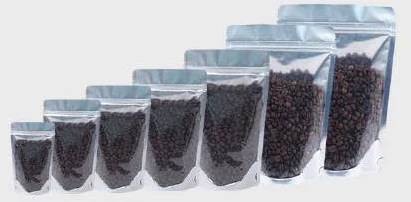
The catalogue includes vacuum packaging bags and window pouches. These examples show different physical constructions; they are not interchangeable specifications. Vacuum bags are specified around the product shape, evacuation route and final seal. Start with the usable opening and finished pack dimensions rather than the empty bag alone. Sharp corners, moisture in the seal area and product movement need particular attention during sample review.
| Format reference | Material or construction to clarify | Details to include in the brief |
|---|---|---|
| Vacuum packaging bags | Clear or opaque flexible vacuum-bag construction; layer structure, thickness and surface requirements are confirmed for the packing method. | Product shape, edges and fill weight; usable opening and final seal band. |
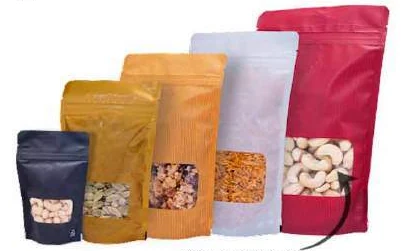
| Window pouches | A transparent window combined with paper-look or opaque flexible panels; confirm the full structure and product requirements. | Window width, height and location; product visibility at full and low fill. |
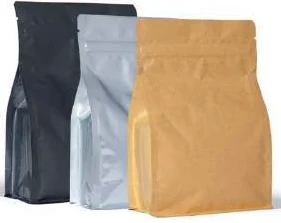
Use the reference pictures to identify the base, side panels, window or opening that you mean. A picture cannot supply the missing dimensions or material layers. If a photograph shows a finish or closure you do not want, state that difference explicitly; otherwise a visual reference can introduce an unintended requirement.
Complete the record before requesting the next sample
- Attach a record separating arrival condition from later handling. Identify the product or SKU and the date of the observation.
- Record the material identity and storage conditions. Keep confirmed information separate from proposed values and questions for the supplier.
- Add the actual fill weight or volume, the dimension convention, material proposal and intended closure. Include the number of designs and quantity per design when requesting a quotation.
- State which question the next drawing, sample or quotation must resolve. A change of size, closure or material should remain visible alongside the earlier reference.
This record makes the next conversation specific. It lets the design, purchasing and packing teams work from the same proposed item and shows which decision still needs evidence. Review the related product pages for format details, or prepare a custom packaging brief with the unresolved requirements.
Put the decision into practice
1. Define the question. Ask the responsible technical team what decision the storage work must support.
2. Approve the protocol. Obtain relevant conditions and methods rather than copying a generic calendar.
3. Maintain sample history. Identify and control samples through the planned storage and retrieval sequence.
4. File the conclusion. Retain raw observations and the authorised interpretation before extending any claim.
Tell Navkar Poly Print the storage-study question and sample identity requirements when arranging pouches for your technical team.
Sources and scope.
These references support the technical discussion. Product photographs illustrate formats; the material, dimensions and suitability of the proposed pack are confirmed for each project.
- ASTM: paper and packaging standards catalogue
Standards owner lists distinct measurement methods; method selection and acceptance limits need technical agreement.
- GS1: Global Traceability Standard
Primary standards source connects identities and shipment/receipt event records; this article offers an original simplified buyer worksheet.
- ISTA: How many samples are required for testing?
Official article title is sample-number FAQ despite legacy URL slug; limited successful tests do not guarantee future performance, and sample planning depends on purpose. No minimum count prescribed here.
Let’s discuss your product.
Share your contents, dimensions, filling method, quantity and delivery destination. We’ll work through the proposed packaging specification with you.
Create a packaging brief