Read a pouch test report by checking what was tested, how it was tested and what decision the result can support. A report title or pass stamp is not enough to show that the exact proposed pouch and application have been assessed.
Identify the tested item
Record sample description, batch, material or structure, dimensions, components and production stage as relevant. Compare those references with the proposed order. If the report only describes film, do not silently treat it as evidence for a complete pouch with fitment and final closure.
Ask the technical reviewer to identify any differences that matter. A related report can be useful background while still leaving the current assembly open. Keep that status visible to purchasing.
Separate method and acceptance criterion
ASTM lists distinct packaging test methods. A method describes an evaluation approach; the applicable acceptance requirement needs its own authorised basis. Record method version, reported conditions, units and the source of any limit, asking the competent team to interpret them.
For transport work, ISTA provides different test procedures. Confirm the packaged configuration and distribution scope instead of treating an unrelated transport result as universal approval.

Read limitations before summarising
Check report dates, laboratory or issuer identity, sampling information, deviations and stated limitations. Ask how the supplied sample relates to the production batch. Do not describe a third-party report as certification of Navkar's entire operation or imply it covers properties it did not assess.
Read the report as a chain of evidence
Begin with the question the buyer wants answered, then follow the report from sample identity through method and result to interpretation. A report can be technically detailed while addressing a different object. Record the tested material or assembly, batch, relevant components and production stage. Compare them with the proposed order. Ask the technical reviewer to identify which differences matter before summarising the result for procurement.
Keep the original report accessible. A certificate cover page or supplier slide may omit sample preparation, exclusions or conditions. If pages are missing, request the complete relevant record through the authorised exchange. Do not infer a satisfactory result from a report number or laboratory logo. The evidence should be interpretable by someone who can evaluate its method and intended application.
Match the property to the decision
ASTM F88/F88M-23 measures the force needed to separate a strip containing a seal and identifies specimen failure mode. That is a specific property measurement. It does not by itself establish finished-pack leak integrity, product compatibility or shelf life. A technical reviewer should map the reported result to the exact requirement it can support and retain the unresolved questions separately.
Use this distinction when comparing reports. A film barrier result concerns the tested film under its stated conditions. A transport evaluation concerns an identified packaged configuration and selected procedure. The buyer should not combine several narrow findings into an all-purpose approved pouch statement. A clear evidence matrix can show useful support across different requirements while preserving each report's object and limits.
Separate the method from the criterion
Record method identifier, version, reported conditions, units and any deviations. Then identify the source of the acceptance criterion and the person authorised to interpret it. A method name does not supply a universal pass limit for a new application. If a report states pass, ask what requirement was used and whether it applies to the current decision. Keep that answer with the report summary.
If the result is numerical, preserve the reported value and unit without converting or rounding away relevant information. Where conversion is needed, show the accepted basis and retain the original. Do not compare two numbers as though they represent the same property when their specimen geometry, method or conditions differ. Ask the competent owner whether a valid comparison can be made and what additional information it needs.
Ask whether the measurement is fit for the purpose
NIST's traceability guidance explains that metrological traceability alone does not guarantee fitness for purpose; the uncertainty must suit the measurement need. In practical terms, a buyer should not accept a broad traceable-equipment statement as the complete answer to a borderline result. Ask the technical reviewer what measurement information is necessary for the intended decision.
This does not mean procurement should invent uncertainty calculations or laboratory requirements. Record the report's stated measurement information and request the competent interpretation. Where accreditation is claimed, verify the relevant scope through the appropriate issuer's process. A laboratory's status and a particular report's applicability remain distinct questions. Both may matter, but neither should be replaced by a general impression of authority.
Examine sampling and condition history
Ask how the submitted specimens relate to the batch or configuration being purchased. Record selection information where supplied and identify what remains unknown. A sample sent by a supplier can provide valid evidence within its scope, while the buyer may need another sampling basis for a broader conclusion. The technical owner should make that decision rather than allowing a procurement summary to imply batch coverage that the report never stated.
Record whether specimens were empty, filled, conditioned, previously handled or altered before evaluation where relevant. Their history can affect interpretation. If a report does not describe a relevant condition, request clarification and keep the question open. Do not backfill plausible details from another report or from the usual method. The record should distinguish what was reported from what a reviewer assumes.
Summarise with a requirement map
Use a table with requirement, tested object, method, conditions, reported result, criterion source and reviewer conclusion. Include accepted within scope, further evidence needed or outside this requirement as appropriate decisions. The wording should make a limited conclusion useful without stretching it. Retain the reviewer's rationale where evidence from a related object is considered applicable.
For the illustrative R1 film and R2 finished shipping-unit reports, keep separate rows and decisions. R1 may inform a material property question under its conditions. R2 may inform the selected distribution question for its configuration. A new product formula introduces another application question. Neither report silently resolves it. Procurement can then see which evidence has value and which additional decision remains necessary before release.
Preserve changes and corrected reports
If the issuer corrects a report, identify the replacement and retain the earlier version as superseded according to the buyer's procedure. Record which conclusion changes and who reviewed it. At reorder or substitution, compare the current pack identity with the evidence map before reusing the result. The goal is an accurate, retrievable interpretation of what the report establishes for the actual proposed supply, rather than an impressive document title detached from its sample and conditions.
Interpret acceptance criteria
Read the acceptance statement separately from the measured result. Identify who supplied the criterion, which requirement it represents and whether it applies to the tested item. A method describes how evidence is generated; it does not automatically provide the buyer's application limit.
If a result is borderline or the report omits information needed for interpretation, assign the question to the competent reviewer. Preserve the report rather than adding a stronger internal pass label. The useful summary states the supported requirement and remaining uncertainty, with a direct link to the specimen and conditions that produced the result.
When the report summary enters a purchasing presentation, preserve the sample identity and scoped conclusion. A shortened headline should still indicate which requirement is supported and where further review remains open. This helps business reviewers use the evidence without turning a technical result into an unsupported supplier-wide approval.
A working record for this decision
Use this original worksheet with your product and supplier team. Give each row a named owner and evidence reference; a blank answer remains an open decision.
| Record | What to enter and why |
|---|---|
| Tested object | Record sample, batch, construction, components and production-stage identity. |
| Method reference | Identify method, version, reported conditions and units for technical review. |
| Acceptance basis | Record the authorised requirement or limit separately from the method name. |
| Report limitations | Capture issuer, dates, sampling, deviations and stated scope restrictions. |
| Decision mapping | List which application requirements the competent reviewer accepts the evidence to support. |
Test-report reading: a practical specification example
A sample looks acceptable, but the approval record must explain what was actually checked. Keep the current drawing and material proposal with the sample identity. A photograph can show a window, zipper or outline; it cannot establish an unmeasured performance result. Record the product, conditions and acceptance question so another team member can understand the limits of the observation.
For this decision, start with the tested material, method and conditions. The useful output is a comparison with the material proposed for the order. Put that output beside the relevant quotation, drawing or sample rather than leaving it in a separate email. This is an illustrative decision exercise, not a report of a completed customer trial.
Product references to make the discussion concrete
The catalogue includes vacuum packaging bags and window pouches. These examples show different physical constructions; they are not interchangeable specifications. Vacuum bags are specified around the product shape, evacuation route and final seal. Start with the usable opening and finished pack dimensions rather than the empty bag alone. Sharp corners, moisture in the seal area and product movement need particular attention during sample review.
| Format reference | Material or construction to clarify | Details to include in the brief |
|---|---|---|
| Vacuum packaging bags | Clear or opaque flexible vacuum-bag construction; layer structure, thickness and surface requirements are confirmed for the packing method. | Product shape, edges and fill weight; usable opening and final seal band. |
| Window pouches | A transparent window combined with paper-look or opaque flexible panels; confirm the full structure and product requirements. | Window width, height and location; product visibility at full and low fill. |
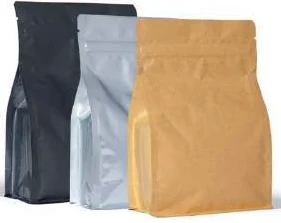
Use the reference pictures to identify the base, side panels, window or opening that you mean. A picture cannot supply the missing dimensions or material layers. If a photograph shows a finish or closure you do not want, state that difference explicitly; otherwise a visual reference can introduce an unintended requirement.
Complete the record before requesting the next sample
- Attach a comparison with the material proposed for the order. Identify the product or SKU and the date of the observation.
- Record the tested material, method and conditions. Keep confirmed information separate from proposed values and questions for the supplier.
- Add the actual fill weight or volume, the dimension convention, material proposal and intended closure. Include the number of designs and quantity per design when requesting a quotation.
- State which question the next drawing, sample or quotation must resolve. A change of size, closure or material should remain visible alongside the earlier reference.
This record makes the next conversation specific. It lets the design, purchasing and packing teams work from the same proposed item and shows which decision still needs evidence. Review the related product pages for format details, or prepare a custom packaging brief with the unresolved requirements.

Put the decision into practice
1. Match identities. Compare the report sample with the actual proposed pouch or shipping unit.
2. Review method details. Have the technical owner check version, conditions, units and the intended measurement.
3. Assess the criterion. Confirm the source and applicability of any pass limit or requirement.
4. Summarise with limits. Retain the original report and a scoped interpretation with unresolved questions clearly shown.
Provide Navkar Poly Print the requirement and proposed report scope so the enquiry identifies the exact pouch evidence your technical reviewer needs.
Sources and scope.
These references support the technical discussion. Product photographs illustrate formats; the material, dimensions and suitability of the proposed pack are confirmed for each project.
- ASTM: paper and packaging standards catalogue
Standards owner lists distinct measurement methods; method selection and acceptance limits need technical agreement.
- ISTA: test procedures
Transport testing is selected for the packaged product and distribution environment, not a universal pouch approval.
- ASTM F88/F88M-23: Seal Strength of Flexible Barrier Materials
Public scope identifies separation force and specimen failure mode for a seal-containing strip; not a whole-pack leak or shelf-life guarantee. Official indexed scope obtained; direct open timed out.
- NIST: Metrological Traceability FAQs and Policy
Measurement traceability alone does not guarantee fitness for purpose; uncertainty and intended need matter. NIST TN2156,2021,Possolo/Bruce/Watters; no endorsement or product claim.
Let’s discuss your product.
Share your contents, dimensions, filling method, quantity and delivery destination. We’ll work through the proposed packaging specification with you.
Create a packaging brief