Read an oxygen transmission rate report by checking the specimen, units, method and test conditions before comparing the number. OTR describes a defined measurement; it is not a standalone shelf-life promise. Ask the qualified technical reviewer whether the evidence applies to the proposed construction and intended use. A report-reading card helps procurement identify missing context without pretending to select a universal oxygen-barrier target.
Identify what was tested
Check the report’s specimen description, material revision and relevant sample preparation. Ask whether it is flat film, a component or another test article. A report for a similarly named film is not automatically evidence for the proposed laminate or finished pouch. Where the construction contains a window, fitment or other distinct region, ask the technical owner how the evidence covers the complete proposal. Preserve the report as supplied and record questions separately rather than rewriting missing details into an internal summary as if the laboratory had provided them.
Read the conditions and units together
Record the stated test method, temperature, humidity and other relevant conditions, along with the units and any reported limits. ASTM F3136 identifies one OTR measurement method. That citation is a method reference, not a recommendation that every project use it. Ask a qualified reviewer whether two reports are comparable and how a result below a measurement limit should be interpreted. Do not silently convert a less-than result into an exact value, or compare figures stripped of their conditions in a supplier summary table.

Connect the result to the decision
Ask what product requirement the OTR evidence is intended to support. The answer needs the relevant product, storage, geometry and closure context through an appropriate technical review. A film value alone should not be translated into a specific storage duration. AMETEK MOCON distinguishes testing of films and packages, reinforcing the need to identify evidence scope. Procurement can record applicability and gaps while the qualified team defines the acceptance basis and any further product or whole-package work required.
Use an OTR report-reading card
Complete one card per report, retaining the original document. Its purpose is to prevent context from disappearing when technical data moves into quotations and comparison spreadsheets.
| Record | What to capture and how to use it |
|---|---|
| Report and specimen | Record laboratory or source, report reference and the tested material identity. Compare it with the proposed construction and revision, then flag missing information rather than assuming a similar trade description proves equivalence. |
| Method and conditions | Copy the stated method and relevant test conditions accurately. Ask the technical reviewer whether another report uses a comparable basis before ranking results, and preserve any differences that affect the interpretation. |
| Units and limits | Record the units, reported value and any less-than or detection-limit notation exactly. Keep a qualified conversion or interpretation separate from the original result so the purchasing table does not create false precision. |
| Applicability decision | Name the product and requirement the report is meant to support. Record the technical reviewer's decision and scope, distinguishing a film measurement from evidence about the complete formed and closed package. |
| Remaining evidence | List missing identity, condition or application information and its owner. Ask what further report or product qualification is needed, rather than attaching an unqualified shelf-life promise to a low OTR number. |
Add a comparable, not comparable or needs clarification status only after the responsible reviewer has considered the full basis. A low number is useful only when the team understands what it actually measures.
Illustrative less-than result
One illustrative report states a result below its measurement limit, while another reports a numerical value under different conditions. Procurement records both exactly and asks the technical reviewer to assess comparability. It does not replace the less-than result with zero or rank the proposals automatically. The exercise produces an evidence request rather than a barrier winner. Actual acceptance requires the relevant material, method and application information, which this hypothetical example deliberately does not supply.
Read the specimen before the result
Locate the material identity and revision on the report. Ask whether the specimen is a flat film, laminate or complete package and whether it represents the proposed item. A familiar polymer name is insufficient if the grade, coating or construction differs. Keep the report identifier with the exact source document so a later reviewer can verify the relationship.
The current ASTM F3136-22 catalogue scope describes an oxygen-transmission method for materials including films and laminates. The page also identifies other OTR methods. A method name tells the reviewer how a result was obtained; it does not establish that every OTR value from every method and condition can be compared directly.
Keep temperature, humidity and gas conditions attached
Copy the stated conditions into the comparison table with the value and units. Include the relevant gas condition and any conditioning information available. If a field is absent, ask the laboratory or supplier rather than completing it from memory. A result without its conditions can appear precise while being unsuitable for the intended comparison.
Do not apply a universal conversion between conditions. The construction's response may depend on its materials and the method. Ask the technical reviewer whether the reports are comparable and what additional evidence would resolve a mismatch. The correct decision can be “not directly comparable” even when both numbers are genuine and both laboratories performed their stated work properly.
Distinguish a measured value from a reporting limit
A result reported as below a detection or reporting limit does not mean zero transmission. Retain the inequality and the relevant limit. If two candidates are both below the same limit, the report may not rank them. Replacing both with zero creates an unsupported calculation and can exaggerate the evidence available for a design decision.
Ask what precision and uncertainty information is relevant under the agreed review. Procurement does not need to invent a laboratory interpretation. It needs to preserve the actual reporting form and send the technical owner enough information to judge applicability. Avoid adding decimal places that the source did not provide.
Calculate a film-area estimate only within its assumptions
For an illustrative flat-film rate of 2 cm³/(m²·day) and an exposed area of 0.05 m² under the same stated conditions, simple multiplication gives 0.1 cm³/day. The calculation is 2 times 0.05. These invented values explain the units; they are not a package specification, a measured Navkar result or a shelf-life model.
The estimate assumes the reported film behaviour applies over that area and omits effects not represented by the flat specimen. Actual closures, features and damage may need separate consideration. The product's initial condition and sensitivity also remain outside this arithmetic. Ask the technical owner what finished-package and product evidence is needed for the intended decision.
Learn from whole-package evidence without copying its outcome
AMETEK MOCON's whole-package white paper describes five candidate pouch materials. At 37°C with humid oxygen test gas, finished pouches transmitted more than flat-film predictions; the reported investigation found sidewall-crease defects. This is a supplier case example, not a controlled comparison of all pouch designs.
Its practical lesson is to distinguish material screening from the performance of the formed package. Do not borrow the case's numerical outcome for another construction. Instead, ask whether the proposed evidence covers the geometry and handling relevant to the buyer's package, with the assessment scope set by the qualified team.
Record the report's decision value
If the report covers several specimens, identify the relevant row explicitly. A correct document linked to the wrong specimen can mislead the comparison as much as a missing report.
Conclude whether the report covers the proposed specimen and requirement, needs clarification or requires additional evidence. State the reason and reviewer role. Keep the value linked to its conditions in the purchase brief.
An OTR report can support a material decision without proving a storage duration. A shelf-life conclusion needs the product and complete package under relevant conditions. The useful purchasing record preserves that boundary and makes the next evidence request specific.
OTR discussion: a practical specification example
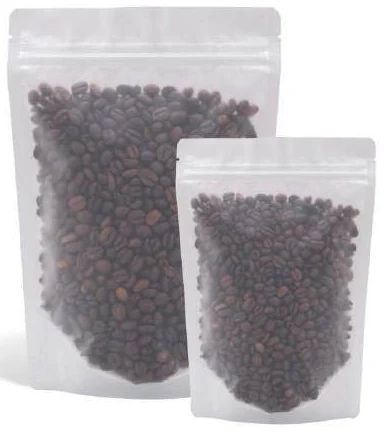
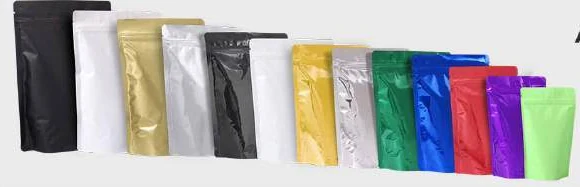
Two samples have similar appearances but different material requirements. One may use a clear panel and another an opaque surface; neither appearance specifies its complete layer structure. Keep the product, storage conditions, fill method and required performance in the brief. Ask for the proposed construction in writing so the comparison remains meaningful when a paper-look or metallic appearance is introduced.
For this decision, start with the product requirement and measurement conditions. The useful output is the quoted oxygen-transmission result with its test conditions. Put that output beside the relevant quotation, drawing or sample rather than leaving it in a separate email. This is an illustrative decision exercise, not a report of a completed customer trial.
Product references to make the discussion concrete
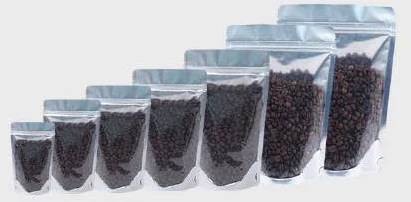
The catalogue includes clear-front opaque-back pouches and kraft paper pouches. These examples show different physical constructions; they are not interchangeable specifications. A clear front shows the contents while an opaque or metallic back provides a contrasting panel. Specify which face carries the principal artwork and check how it reads through the transparent face. The windowed side and opaque side need a coordinated material brief.
| Format reference | Material or construction to clarify | Details to include in the brief |
|---|---|---|
| Clear-front opaque-back pouches | Transparent front paired with opaque or foil-look back panels; confirm the layer construction on each face. | Front and back material requirements; artwork side and orientation. |
| Kraft paper pouches | Kraft or paper outer with a product-specific inner construction; paper appearance does not establish a plastic-free composition. | Paper colour and surface preference; full layer structure and thickness. |
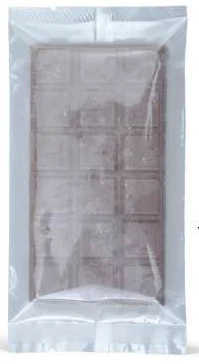
Use the reference pictures to identify the base, side panels, window or opening that you mean. A picture cannot supply the missing dimensions or material layers. If a photograph shows a finish or closure you do not want, state that difference explicitly; otherwise a visual reference can introduce an unintended requirement.
Complete the record before requesting the next sample
- Attach the quoted oxygen-transmission result with its test conditions. Identify the product or SKU and the date of the observation.
- Record the product requirement and measurement conditions. Keep confirmed information separate from proposed values and questions for the supplier.
- Add the actual fill weight or volume, the dimension convention, material proposal and intended closure. Include the number of designs and quantity per design when requesting a quotation.
- State which question the next drawing, sample or quotation must resolve. A change of size, closure or material should remain visible alongside the earlier reference.
This record makes the next conversation specific. It lets the design, purchasing and packing teams work from the same proposed item and shows which decision still needs evidence. Review the related product pages for format details, or prepare a custom packaging brief with the unresolved requirements.
Request a contextual barrier proposal
Send the report-reading card with the product and packing brief. Ask the supplier to identify the proposed construction and explain which evidence applies. Keep the technical acceptance and any further qualification requirements visible in the item record. This gives procurement a defensible comparison process without inventing a universal OTR threshold or a storage-duration calculation.
Send the completed OTR report-reading card with your product and filling details to Navkar Poly Print for a project-specific discussion. Ask for the proposed specification, evidence required and open questions to be recorded before quotation approval.
Sources and scope.
These references support the technical discussion. Product photographs illustrate formats; the material, dimensions and suitability of the proposed pack are confirmed for each project.
- ASTM F3136-22
Current public catalogue scope for a dynamic accumulation OTR method; not a purchased full procedure or universal acceptance limit.
- AMETEK MOCON permeation testing
Instrument-manufacturer context for film and package permeation; product qualification requires appropriate scope.
- Shelf Life and the Importance of Testing the Whole Package
April 2024 manufacturer case paper; five candidate materials, humid 37°C OTR comparison and observed crease defects; no transferred shelf-life result.
Let’s discuss your product.
Share your contents, dimensions, filling method, quantity and delivery destination. We’ll work through the proposed packaging specification with you.
Create a packaging brief