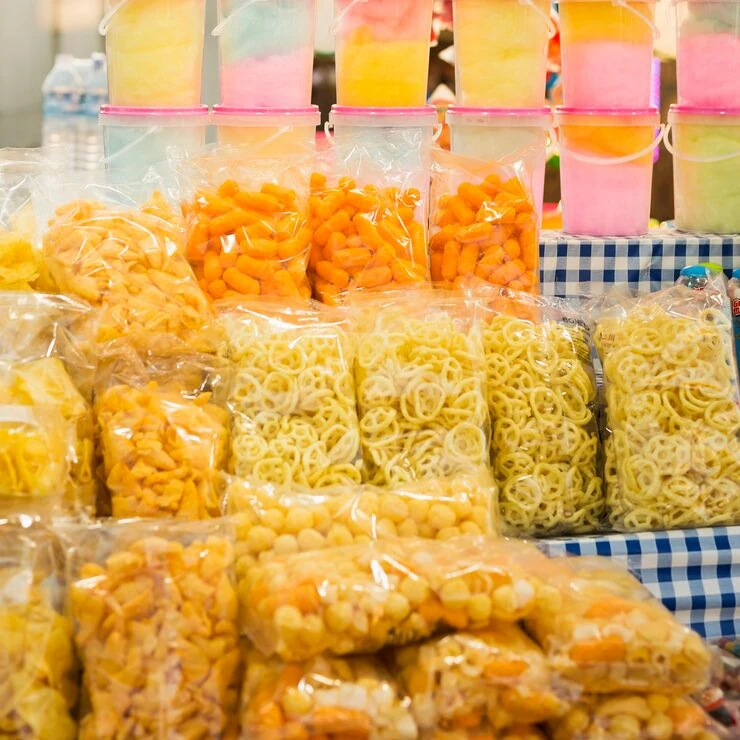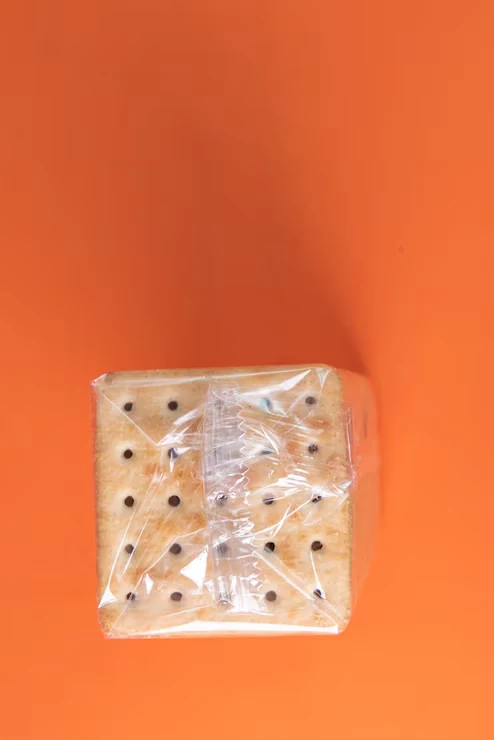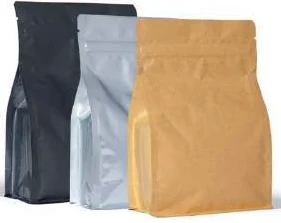
Namkeen and sev packaging pouches for Ratlam businesses should be chosen around snack volume, handling, closing and the sales channel. A small single-use pack, a family zipper pouch and a pack produced from printed rollstock answer different needs. Compare them at the same intended product and fill before deciding on appearance or an empty-pack price.
Ratlam sev brands and their packaging examples
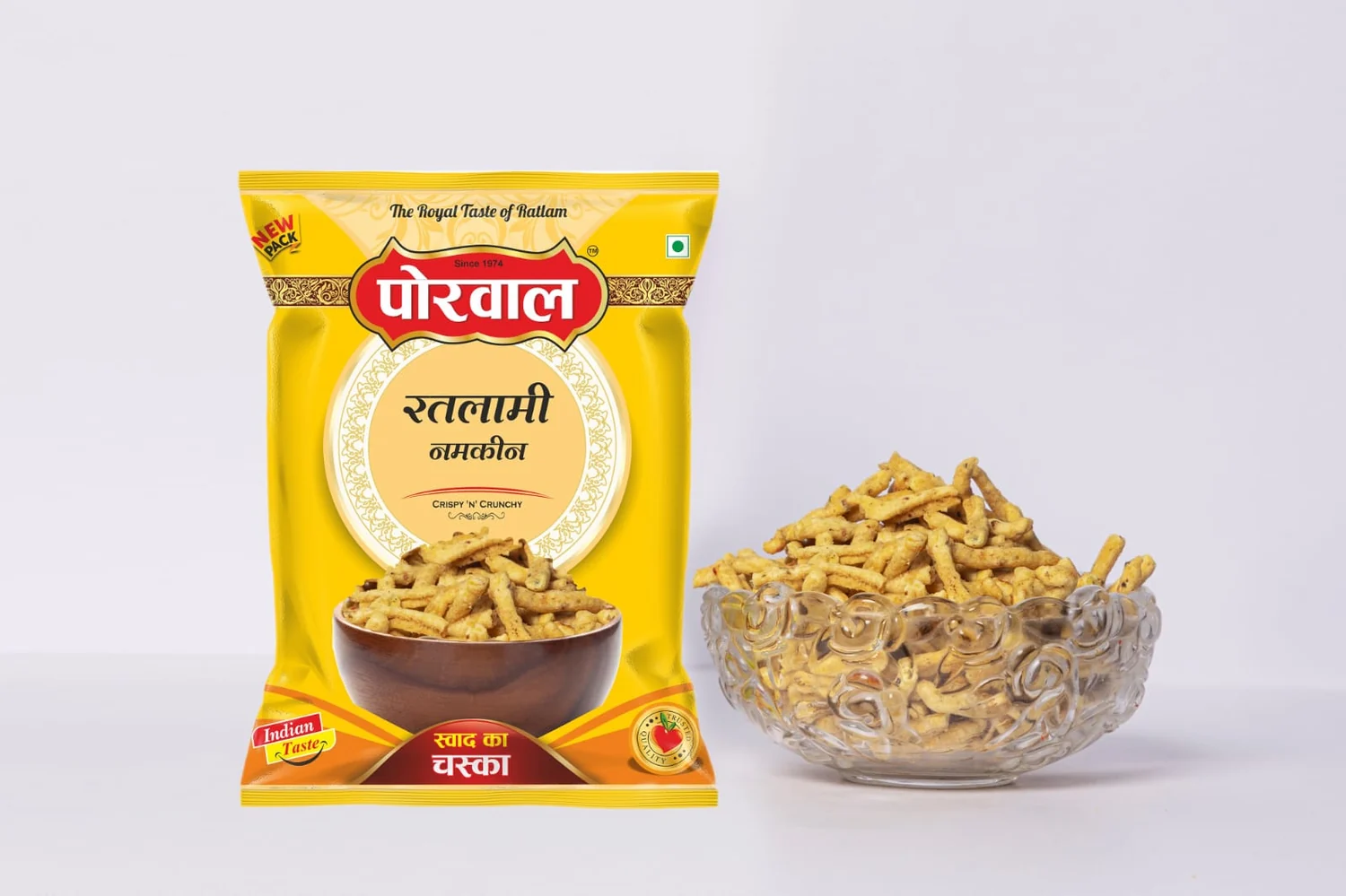
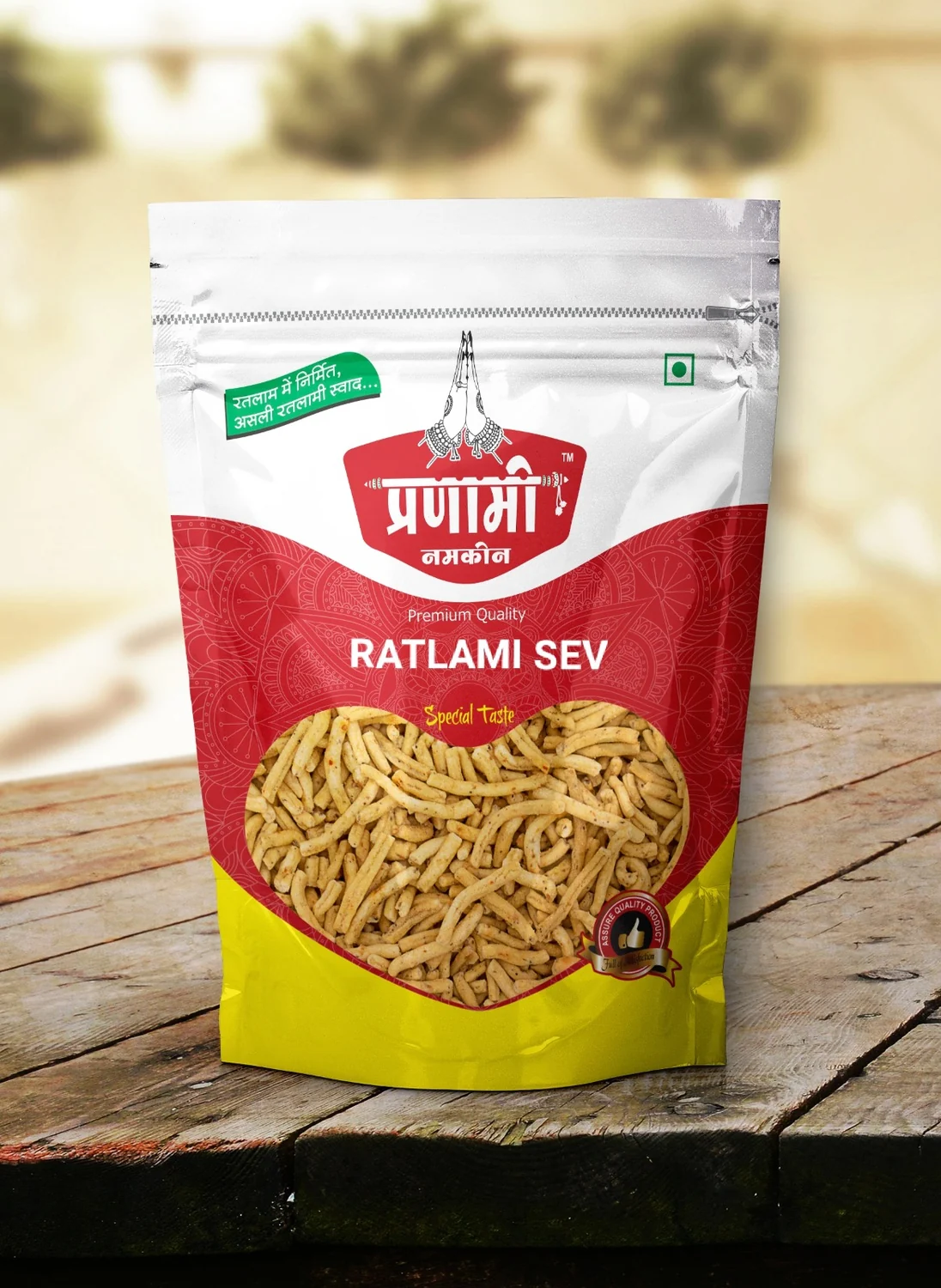
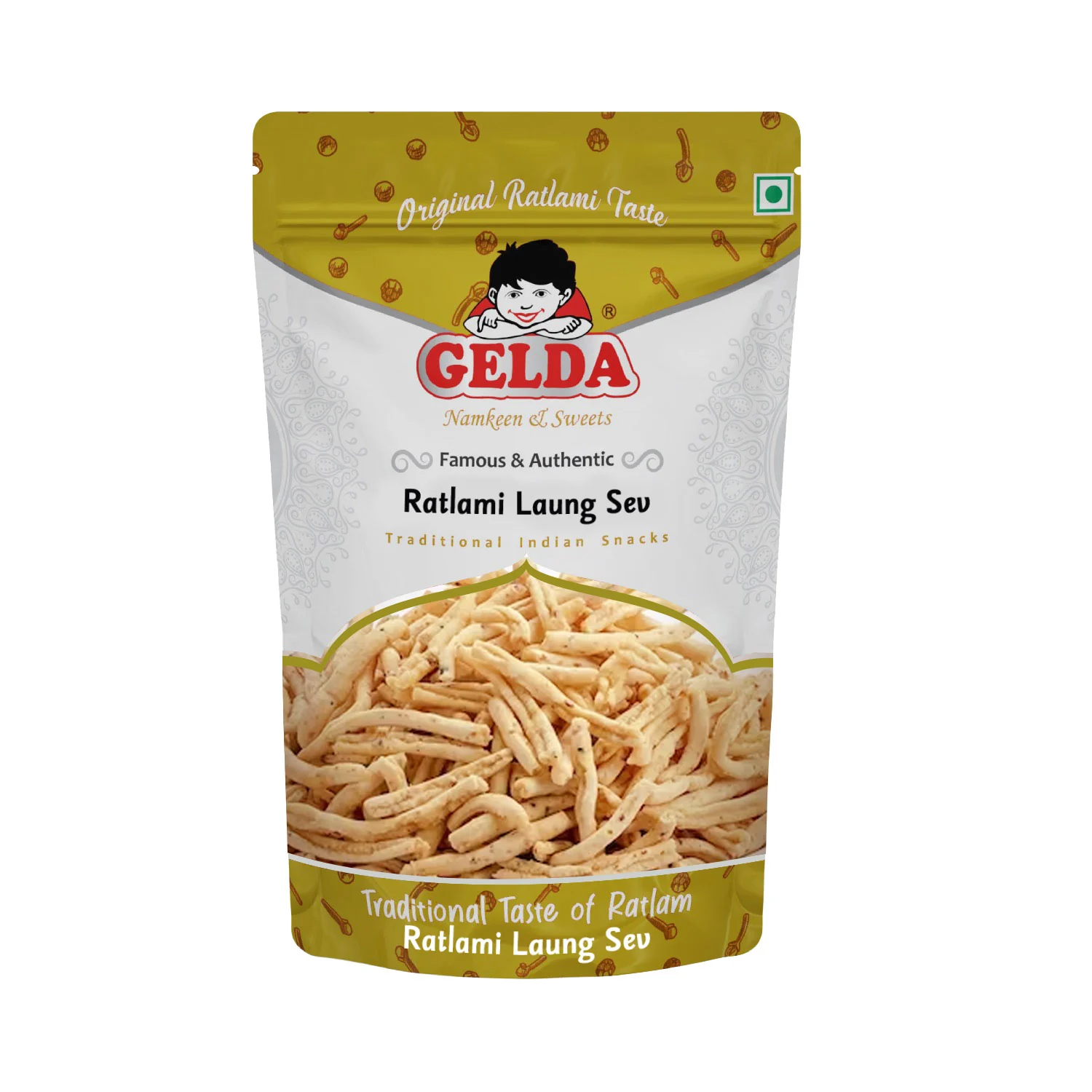
The Ratlam product hub brings sev, namkeen mixtures and family-pack requirements together. It uses published packs from local brands rather than a generic popcorn photograph. Porwal Ratlami Sev Bhandar, Pranami Foods and Gelda Foods Ratlam provide useful examples of recognisable sev branding, front-panel hierarchy and the different ways a pack can present the product.
Use these references to discuss your own artwork. Identify the sev variety, brand name, net-content panel and size variant before the print drawing is prepared. A family pack needs a different filled-volume and opening review from a small single-use pack. A mixture containing larger pieces also needs its own fill trial; matching the weight of a sev SKU does not establish the same pouch dimensions.
The pictured packs belong to the named brands. They do not establish a Navkar customer relationship or reveal the complete film construction, barrier performance or shelf life. Confirm those requirements through your product trials and the agreed specification. Start a Ratlami sev brief, compare namkeen mixtures, or review a family-pack requirement.
Ratlam: the industry and buying context
Ratlam district’s official culinary page identifies Ratlami sev among the city’s foods. For a namkeen business, the packaging brief should distinguish the actual snack, portion size, packing route and use after opening instead of treating every fried snack as one identical product.
Regional industry reference. The packaging requirements below are practical buying guidance; product images illustrate applications and formats.
Describe the snack and portion pattern
Name the actual sev, mixture or other snack and give the intended fill for each SKU. Describe piece size, product bulk and any seasoning or surface condition that the material and packing review needs to consider.
A light, bulky snack can occupy a different volume from a denser mixture at an equal weight. Use the actual product for a size exercise and record how it settles. Do not adopt a pouch size simply because a reference pack has the same printed net quantity.
Decide whether the customer is expected to finish the contents in one occasion or return to the pack. That use pattern helps define the opening and reclosure requirements. It should be settled before a family pack is given the same closure layout as a small portion.
Compare printed rollstock with premade pouches
Printed rollstock needs the web width, artwork repeat, orientation and reel requirements for a defined packing route. A premade pouch needs the finished dimensions, usable opening and final closing route. Ask the people packing the snack to confirm the relevant interfaces.
A zipper is a separate repeated-use feature rather than an alternative name for a packing route. Compare a family zipper pouch with the intended opening, dispensing and reclosure actions. Keep the final top seal and first-opening feature visible on the same drawing.
Use the same snack and proposed fill when comparing credible options. Record which observations concern the filled shape, packing route, customer use and shipment. An attractive upright appearance cannot resolve an unconfirmed filling or closing requirement.
Packaging formats to discuss
Use the product pages to identify the format you mean, then attach the dimensions and application requirements. A sample photograph shows a reference construction; the written brief defines the proposed order.
| Format | Construction or purpose to clarify | Information to include |
|---|---|---|
| Printed rollstock | Printed flexible film for a defined packing route | Web width, artwork repeat, orientation and reel requirements. |
| Stand-up pouches | Flexible pouch with a standing bottom gusset | Finished face size, opened bottom gusset and fill level. |
| Zipper pouches | Resealable closure within a flexible pouch | Usable mouth, zipper position and final top seal. |
| Window pouches | A transparent window combined with paper-look or opaque flexible panels; confirm the full structure and product requirements. | Window width, height and location; Product visibility at full and low fill. |
For artwork, ask for the drawing for the actual selected format before releasing final files. Keep the approved material, dimensions, opening and print revision on the same item record. A later change to one of those fields should be checked against the rest of the specification.
Make room for the snack and the closing area
Measure the filled envelope and remaining space above the contents. The closing band should be identified on the drawing, along with the zipper or tear feature where used. Record any product that reaches that area during filling.
For breakage concerns, agree how the snack condition will be observed before and after the handling exercise. Use the intended pack and outer arrangement and keep their identities with the result. A photograph of an unfilled pouch does not show how a particular snack behaves during dispatch.
Where the pack is used repeatedly, observe the pouch at a lower remaining fill as well as when full. Check access and reclosure separately from whether it stands neatly on a desk. Retain the representative filled reference that supports the chosen proportions.
Review the material and artwork as distinct decisions
Ask for the proposed full construction and thickness using the actual snack and storage requirements. Discuss product contact, packing conditions and any required performance evidence. A glossy, matte or metallic appearance is not itself a material-performance specification.
For a multi-flavour range, use a controlled master artwork with clearly identified variant fields. Check that the product and flavour can be read on the filled pack and distinguished during packing. Review small information at actual printed size.
If a window is proposed, establish its size and position alongside the print area and material brief. Check the view at the intended fill level and after settling. An empty sample can show more clear area than the customer will see on the filled shelf pack.
Prepare the delivered quotation for Ratlam
Provide the exact delivery point and postcode in Ratlam, the packing location and the quantity per design. If reels and premade pouches are separate items, list their units and specifications independently.
Compare setup, repeat packaging and freight on the same scope. A quoted reel and a quoted empty pouch do not automatically represent the same number of saleable snack packs. Record the denominator and any unresolved packing dependency before choosing by a headline price.
Keep the approved drawing, material, artwork and filled reference together. If the snack changes from fine sev to a different mixture or the fill increases, review fit and closing again. Our Hyderabad team can use that project record to discuss the proposed pack and confirm quotation details.
Questions for Ratlam snack-packaging buyers
Is a zipper needed for every namkeen pack?
Relate it to the portion and use after opening. A single-use pack and a family pack need different handling discussions. The final top seal remains a separate part of the closing specification.
Can one bag size cover different snacks at the same weight?
Check each actual snack. Piece size, bulk and settling can change the filled geometry. Use a recorded sample comparison rather than a universal weight-to-size rule.
What should a printed-film enquiry include?
Send the snack and fill, finished-pack drawing, agreed web width and repeat, orientation, material brief, artwork variants, quantity and delivery postcode. The packing team should confirm the route requirements before the film specification is released.
Prepare your Ratlam packaging enquiry
Start a packaging brief for Ratlam. The form will carry the proposed product, preferred format and delivery region into your enquiry; add your exact postcode and requirements before reviewing the brief. Share the quantity per design, intended fill, available drawing and artwork status. Our contact team is based in Hyderabad and confirms the proposed specification, availability, freight and lead time for each enquiry.
For further reading, use the related technical guides below or browse the regional packaging guides to explore another industry context. The best next step is the drawing, sample or quotation that resolves your own product's remaining question.
Sources and scope.
These references support the technical discussion. Product photographs illustrate formats; the material, dimensions and suitability of the proposed pack are confirmed for each project.
- Ratlam district: culinary context and Ratlami sev
Primary regional industry context. Does not establish a Navkar branch, local stock or product performance.
- Porwal Ratlami Sev Bhandar — published packaging reference
Supports the pictured market or packaging example only. It does not establish Navkar authorship, a customer relationship, current specifications or material performance.
- Pranami Foods — published packaging reference
Supports the pictured market or packaging example only. It does not establish Navkar authorship, a customer relationship, current specifications or material performance.
- Gelda Foods Ratlam — published packaging reference
Supports the pictured market or packaging example only. It does not establish Navkar authorship, a customer relationship, current specifications or material performance.
Discuss packaging for Ratlam.
Share your contents, dimensions, filling method, quantity and delivery destination. We’ll work through the proposed packaging specification with you.
Create a packaging brief