A hair oil pouch suits a project when its product compatibility, dispensing action and commercial scope have been qualified. A bottle may offer better control for repeated small doses, especially when the brand already uses a successful applicator. Compare the customer's actual oiling routine and the cost of a clean delivered pack before choosing the format.
Three hair oil offers need different comparisons
A small trial pack introduces the product for a limited occasion. A family refill replenishes a receiving bottle. A direct-use pouch becomes the container customers repeatedly handle. These are distinct offers even when all three contain the same oil formulation.
Choose one offer before comparing unit prices. Record the intended user, quantity per pack, normal dose and frequency of use. A pack that is economical for a trial may be inconvenient for repeated application. A large refill can have attractive unit economics but require customers to own a suitable receiving bottle.
Describe the bottle alternative precisely too. A standard pour opening, restricted outlet, nozzle or pump creates a different use experience. Comparing a basic pouch with an expensive dispensing system is useful only when those are genuinely the alternatives the customer is considering.
Map the oiling routine
Observe where the customer places the container, how they open it and where the product is applied or dispensed. Record whether one hand becomes oily before the closure must be replaced. A closure that feels comfortable with dry hands may be difficult in the real sequence.
For direct application, assess aiming and dose control using the intended outlet. For a refill, include the receiving bottle's opening, stability and remaining capacity. Keep the product condition comparable because flow can change the transfer action. The formulation team should define appropriate test conditions.
Measure errors and interruptions separately from preference. A user may like the pouch's appearance yet need help supporting it. Another may prefer a bottle simply because the outlet is familiar. Understanding the reason lets the brand improve the interface instead of changing the entire format unnecessarily.

What cosmetic research contributes
The 2017 study Influence of the container on the consumption of cosmetic products compared pump bottles and flip-top tubes with 221 French adults using shampoo, shower gel and cream. Container choice affected consumption in that study. It did not test hair oil pouches, so it supports measuring the dispensing task rather than predicting a hair oil outcome.
A 2025 paper, Product Waste Resulting from Insufficient Emptiability of Cosmetic Packaging and Its Economic and Environmental Implications, examines retained product across cosmetic packaging. Use its focus on residue to define a project measurement; do not copy a residue percentage from a different formulation or container into your cost model.
Compatibility starts with the actual formula
Supply the oil base, fragrance and other formulation information needed by the technical reviewer. Identify the intended filling conditions, storage, distribution and product-contact time. An ingredient category such as herbal oil is too broad to establish the behaviour of the complete product-pack system.
Request exact references for the film or bottle, contact layer, printing arrangement, adhesives where relevant, closure and any liner. The reviewer should decide what evidence is necessary for product interaction, leakage, appearance and quality. These requirements cannot be inferred from pack thickness or the word premium.
Preserve the approved formulation and component versions together. Changing the fragrance, colour, oil blend or closure may require renewed review. A successful sample from an earlier formula does not automatically approve a later product merely because the pack dimensions remain the same.
Compare the commercial scope
| Cost item | Pouch question | Bottle question |
|---|---|---|
| Primary container | What structure, dimensions and printing are included? | What bottle reference, mass and decoration are included? |
| Dispensing and closure | What opening, spout, cap or final seal is supplied? | What outlet, cap, pump or applicator is supplied? |
| Filling | Which filling and closing operations are required? | Which filling and closing operations are required? |
| Outer protection | What prevents abrasion, leakage consequences and distortion? | What protects the closure and container during transport? |
| Losses | What product, labour and replacement expenses arise from rejected units? | What product, labour and replacement expenses arise from rejected units? |
Ask both respondents to quote the same quantity, number of variants and delivery destination. A label, nozzle or protective carton omitted from one quote can create a false saving. State whether the comparison includes the filled oil or packaging conversion alone.
Calculate cost per useful application
An invented example shows how residual product changes the calculation. Suppose candidate A delivers 100g of oil and the defined use observation leaves 4g inaccessible. Candidate B also starts at 100g and leaves 2g. At an illustrative 4g per application, their usable quantities correspond to 24 and 24.5 applications.
If the relevant filled-system costs are ₹48 and ₹50, the calculated costs are ₹2.00 and about ₹2.04 per equivalent application. The first candidate remains cheaper in this example despite greater residue. These are invented assumptions, not recommended doses, measured losses or current market prices.
Use the brand's actual application definition and qualified observation method. For procurement, also calculate the value of oil lost in production and rejected packs. For consumer communication, avoid promising a number of applications unless the product and claims team can support it reliably.
Inspect the complete filled delivery unit
Prepare the actual retail pack and outer carton. Oil marks can damage labels and presentation even when most contents remain inside. Define acceptance for closure condition, visible leakage, print appearance and any secondary contamination before evaluating the shipment.
Use the same carton count and destination basis in transport quotations. Record gross mass, dimensions, units per carton and protective materials. A lighter empty pack may still require an outer arrangement that reduces the expected freight advantage.
For ecommerce, evaluate the consequences for other items in the parcel and the cost of a replacement order. For wholesale, include the receiving team's inspection and handling expectations. These are different commercial exposures and should appear in separate delivery records.
Make the pack attractive without confusing the product
Check brand, oil type, variant and quantity at ordinary shelf distance. Review the same design as a small mobile thumbnail. A pouch provides a different printable shape from a bottle label, so do not simply stretch the old artwork across the new panel.
Keep opening instructions and essential identification clear when the pack is held. Look for folds, oily handling or a closure position that obscures information. If a refill resembles a direct-use product, explain the intended action visibly enough for an uncoached user to understand.
Assess appearance after use as well as before purchase. A customer who keeps the pack in a visible household space may care about stability and cleanliness over time. Those observations are more useful than assigning either format an unsupported premium-image score.
Pilot the smallest meaningful commercial change
Choose one formula and one use system for the first comparison. Keep price, quantity and availability visible in the record. Track leakage complaints, dispensing difficulty, returns and repeat purchase alongside sales so the brand can identify why a candidate succeeds or fails.
If the purpose is trial acquisition, measure movement into the main product rather than only the number of inexpensive sample packs distributed. If the purpose is a refill, observe whether customers complete another refill purchase. These business questions require different success measures.
Record the alternative action before the pilot starts. A failed pouring task may call for a different outlet, while weak unit-price comprehension may call for clearer communication. Neither automatically means the entire pouch or bottle category is unsuitable.
Keep the approved outlet in the repeat-order master
Record the outlet or applicator reference beside the approved oil and container. A replacement cap that fits the neck can still change the customer's dispensing action. Procurement should route that substitution through the relevant review before treating it as an equivalent component.
Include a retained filled reference and the agreed appearance criteria. This gives a repeat-order discussion a concrete basis when a complaint concerns an oily closure, label condition or unexpected flow. It also prevents a minor sourcing change from silently altering the offer tested with users.
Hair-oil pouch comparison: a practical specification example
A brand is comparing two packaging concepts around one real application. Hold the product quantity and customer use constant, then list what changes with the container: filling, closing, opening, dispensing, display and shipment. A flexible alternative may offer a different shape or use pattern, but its material and closure still need their own project-specific review. Keep hypothetical cost examples separate from quotations.
For this decision, start with the formulation and desired serving size. The useful output is the material and opening requirements for the actual oil. Put that output beside the relevant quotation, drawing or sample rather than leaving it in a separate email. This is an illustrative decision exercise, not a report of a completed customer trial.
Product references to make the discussion concrete
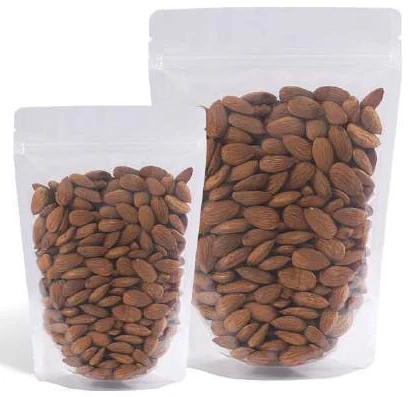
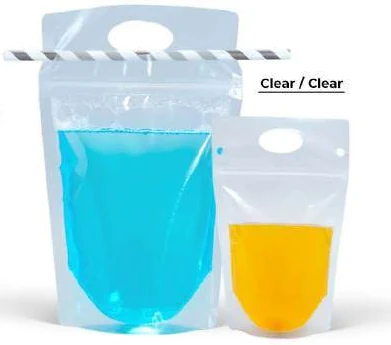
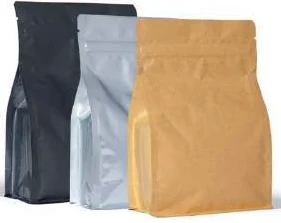
The catalogue includes spout pouches and flat-bottom pouches. These examples show different physical constructions; they are not interchangeable specifications. A fitted spout provides a controlled opening for dispensing. The reference range includes compact pouches and larger handled formats. Specify the product, fill volume, spout location and cap before developing the pouch shape; a corner spout and a top-centre spout require different layouts.
| Format reference | Material or construction to clarify | Details to include in the brief |
|---|---|---|
| Spout pouches | Flexible liquid-pack laminate with a fitted spout and cap; contact-layer and closure compatibility are reviewed for the formulation. | Fill volume and product viscosity; spout bore, position and cap. |
| Flat-bottom pouches | Flexible laminate with paper-look or opaque outer options; the appearance alone does not identify the full layer structure. | Base width and full opened depth; net fill and product bulk. |
Use the reference pictures to identify the base, side panels, window or opening that you mean. A picture cannot supply the missing dimensions or material layers. If a photograph shows a finish or closure you do not want, state that difference explicitly; otherwise a visual reference can introduce an unintended requirement.
Complete the record before requesting the next sample
- Attach the material and opening requirements for the actual oil. Identify the product or SKU and the date of the observation.
- Record the formulation and desired serving size. Keep confirmed information separate from proposed values and questions for the supplier.
- Add the actual fill weight or volume, the dimension convention, material proposal and intended closure. Include the number of designs and quantity per design when requesting a quotation.
- State which question the next drawing, sample or quotation must resolve. A change of size, closure or material should remain visible alongside the earlier reference.
This record makes the next conversation specific. It lets the design, purchasing and packing teams work from the same proposed item and shows which decision still needs evidence. Review the related product pages for format details, or prepare a custom packaging brief with the unresolved requirements.
Prepare the decision for procurement and B2B heads
Present four separate conclusions: product compatibility, customer use, delivered economics and commercial response. Identify the evidence behind each conclusion and any unresolved assumption. A department can then approve a limited pilot without accidentally approving every formula, size and delivery route.
Send Navkar Poly Print the hair oil brief, intended offer, existing bottle reference, quantities by variant and destination. Ask for a candidate specification and application evidence plan. Choose the format that supports clean, controlled use and a sustainable commercial offer for the particular product.
Sources and scope.
These references support the technical discussion. Product photographs illustrate formats; the material, dimensions and suitability of the proposed pack are confirmed for each project.
- Influence of the container on the consumption of cosmetic products
Measure the actual dispensing task. No hair oil pouch comparison.
- Product Waste Resulting from Insufficient Emptiability of Cosmetic Packaging and Its Economic and Environmental Implications
Define a project-specific residue observation. Do not transfer residue percentages to another formula or pack.
Let’s discuss your product.
Share your contents, dimensions, filling method, quantity and delivery destination. We’ll work through the proposed packaging specification with you.
Create a packaging brief