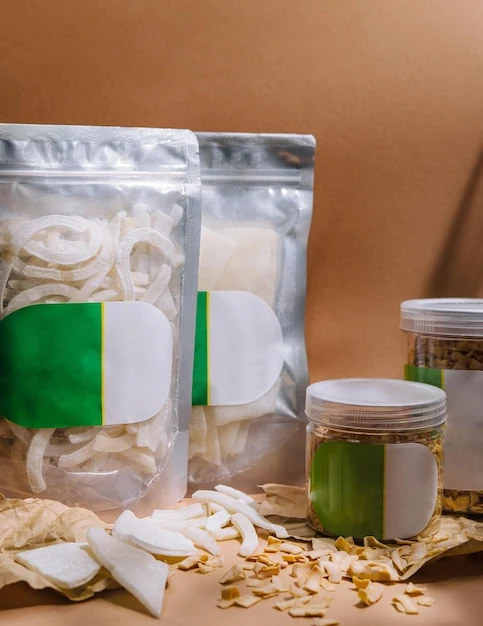
Describe a gusset pouch handover in two states: what the converter supplies and what the packing operation completes. Identify the open edge, existing seals, folds and any optional reclosure feature in each state. This prevents an attractive finished reference from concealing an unresolved closing task.
Define the delivered component
Show which edges are sealed and which edge is open. Identify side folds, base construction and any back seam. If a zipper is requested, mark its actual arrangement. Do not describe a pouch as “fully sealed” when one edge must remain open for the buyer's filling process.
Use a labelled drawing and an empty sample. Quantum Packaging's guide separates side-gusset dimensions; add the project-specific open-edge detail to that basic dimensional vocabulary. Ask the converter to identify any feature that differs between a development sample and the proposed production component.
Name the supplied state without relying on a finished image
Create a simple edge map showing existing seals, the supplied opening and any feature already installed. Give the component a sample and drawing reference. The packing operation can then describe what it receives instead of inferring supply condition from a photograph of the retail pack.
List associated parts separately. A cap shown in a reference image may be supplied installed, separately or outside the quotation. An insert may belong to secondary packing. Confirm the actual offer and preserve the component identities that affect the closing task.
For an illustrative spouted gusset design, the consumer uses a fitment while the proposed production route uses another opening. That arrangement is a question for converter and line review. The handover drawing should show both states clearly, with feasibility and the exact supplied condition confirmed before it becomes an order reference.
If a development sample differs, record the deviation beside the state it affects. A sample with a different open edge may be useful for appearance but poor evidence for line presentation. Matching outer dimensions cannot close that gap. Ask which representative sample is needed for the actual handover decision.
State the packing operation's task
The packing owner should specify the intended filling route and final closing method at a requirement level. Include equipment identity or the relevant machine document when available. Settings and operating instructions belong to the authorised technical team, not an assumed online recipe.
Describe how the mouth is presented, how product enters and how folds are returned to their closing state. A trial should reveal whether extra manipulation is required. Record that handling explicitly instead of treating it as an invisible operator workaround that every future shift will somehow know.
Record where responsibility changes hands
For each state, name who supplies the input, who performs the next operation and who accepts its result. These can be different organisations or teams. A commercial contact can coordinate the file, while the technical owners retain authority over their actual process and evidence.
Keep the data at each handover concrete. The line owner needs the accepted incoming drawing and interface information. The quality owner needs the defined closure assessment and traceable sample groups. The artwork owner needs the final geometry and coding region. One general pack approval cannot replace those distinct inputs.
When an issue sits between suppliers, write a joint question rather than assigning blame. For example, “fold turns inward between filling and closing” identifies a transition both teams can inspect. “Converter supplied a bad pouch” asserts a cause before the sequence has been reviewed.
Use a short unresolved-actions list beside the handover card. Each action should identify the affected state and the document or sample needed to close it. That keeps development moving while preventing the existence of a mostly completed file from being mistaken for an accepted production handover.
Build a closure-state handover card
| State | Component condition | Responsible review |
|---|---|---|
| Delivered | Existing seals, features and open edge | Converter and incoming inspection |
| Presented | Mouth and folds positioned for filling | Packing |
| Filled | Product quantity and occupied region | Packing and product owner |
| Ready to close | Fold alignment and clear working area | Packing and quality |
| Closed | Complete pack and opening sequence | Relevant cross-functional owners |
This original card clarifies responsibility without dictating machine settings. Attach a photo or drawing to each state where the fold arrangement is difficult to describe in words.
Distinguish reclosure from final closing
If a zipper is part of the design, review it as a feature with its own position and use task. Fresh-Lock distinguishes press-to-close and slider systems. The selected feature should be identified in the project record rather than represented by a generic line on a mock-up.
Ask how the initial closing arrangement and first opening relate to that feature. A reclosable pack can still require a separate final production closure. Do not assume the zipper alone defines the delivered pack's complete closure performance. The technical owners must assess the actual construction and process.
Ask what a closure report can demonstrate
ASTM F88/F88M-23 distinguishes sampled seal-separation behaviour from a user's interaction with the whole package. Its public significance also explains why test technique affects reported force. A report therefore needs its actual sample and method context.
Use that distinction in the handover review. A seal-strength report can support the property it measures under its stated conditions. It does not, by itself, show that the supplied pouch presents correctly, that product stays clear of the closing region or that the first-opening task is convenient.
Ask the technical owner to identify the appropriate criterion and evidence for each question. Keep the report's structure, sample stage and closing process linked to the proposed component. A result from another construction may provide background while leaving the current assembly open.
For an illustrative discrepancy, a report concerns a laboratory-made seal while the trial concern is a fold trapped during normal line closing. Preserve both records and ask what additional evidence is needed. Increasing a numerical seal requirement without investigating the observed transition could leave the actual handover issue unresolved.
Review a normal sequence with real product
Use representative product, fill quantity and normal handling. Observe where particles, dust or folded film approach the closing region. Record whether a problem appears before filling, during product movement or during fold alignment. That timing helps assign the next investigation to the right part of the process.
For an illustrative handover issue, an empty pouch may match the drawing while the filling sequence leaves a side fold turned into the final closing area. The observation calls for a joint process review; it is not enough to exchange another unfilled sample and declare the matter resolved.
Make the transition reproducible for another shift
Record normal product entry, fold positioning and readiness for final closing through the authorised packing procedure. Avoid turning a successful operator workaround into an invisible requirement. If a particular action belongs to the approved routine, identify it in the operation's own controlled instructions.
Keep changes separated by sample group. If the pouch geometry changes during a trial, start a new reference. If the authorised process changes, record the affected output. A mixed collection of trial packs cannot support a clear conclusion unless its history can be reconstructed honestly.
The empty reference and complete closed reference should agree with the released handover card. The first identifies the purchased component; the second identifies the outcome assessed through the accepted process. Retain any intermediate images needed to explain a difficult fold transition.
Before a repeat order, ask whether the supplied condition or packing route has changed. A new line, feature or product form can reopen an interface even when the commercial pouch name stays the same. Use the paired references to identify the specific state needing review rather than restarting the entire project without a defined question.
Use the handover record when samples move between sites. The receiving reviewer should know the supplied state, the operation still required and the purpose of the sample. A courier receipt only establishes arrival. Ask the intended technical reviewer to confirm the identified sample and the decision it can support before closing the handover action.
Top closure layout: a practical specification example
A pack is shortlisted for its shape, then its panels are divided between artwork and functional features. Work from the filled geometry: a bottom gusset, side gusset and flat base are distinct constructions. Establish where the product will settle, which panel the customer sees and which edge is used for filling. This prevents an artwork decision from silently changing the pack layout.
For this decision, start with the zipper, tear feature and final seal. The useful output is a drawing separating the three functional zones. Put that output beside the relevant quotation, drawing or sample rather than leaving it in a separate email. This is an illustrative decision exercise, not a report of a completed customer trial.
Product references to make the discussion concrete
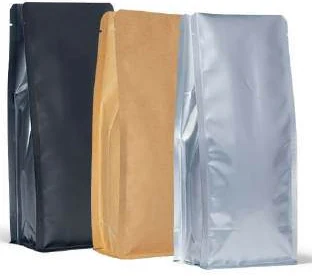
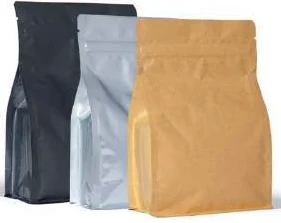
The catalogue includes flat-bottom pouches and side-gusset pouches. These examples show different physical constructions; they are not interchangeable specifications. A box-style base gives the filled pack a distinct footprint, with separate front, back and side panels. Compare a plain top opening with a regular zipper, and use filled samples to decide the shelf depth and panel proportions.
| Format reference | Material or construction to clarify | Details to include in the brief |
|---|---|---|
| Flat-bottom pouches | Flexible laminate with paper-look or opaque outer options; the appearance alone does not identify the full layer structure. | Base width and full opened depth; net fill and product bulk. |
| Side-gusset pouches | Paper-look and opaque or foil-look laminates are illustrated; confirm the actual inner and outer layers for the contents. | Face width and side-gusset convention; filled height and headspace. |
Use the reference pictures to identify the base, side panels, window or opening that you mean. A picture cannot supply the missing dimensions or material layers. If a photograph shows a finish or closure you do not want, state that difference explicitly; otherwise a visual reference can introduce an unintended requirement.
Complete the record before requesting the next sample
- Attach a drawing separating the three functional zones. Identify the product or SKU and the date of the observation.
- Record the zipper, tear feature and final seal. Keep confirmed information separate from proposed values and questions for the supplier.
- Add the actual fill weight or volume, the dimension convention, material proposal and intended closure. Include the number of designs and quantity per design when requesting a quotation.
- State which question the next drawing, sample or quotation must resolve. A change of size, closure or material should remain visible alongside the earlier reference.
This record makes the next conversation specific. It lets the design, purchasing and packing teams work from the same proposed item and shows which decision still needs evidence. Review the related product pages for format details, or prepare a custom packaging brief with the unresolved requirements.
Release paired references
Retain both the delivered-empty component and the approved complete closed-pack reference. Link them to the same drawing and trial record. If the packing route changes, reopen the affected state review even when the supplied pouch dimensions stay constant.
Send Navkar Poly Print the closure-state card, product brief and equipment-interface information. Ask the proposal to identify the supplied condition precisely so procurement and packing approve the same handover.
Sources and scope.
These references support the technical discussion. Product photographs illustrate formats; the material, dimensions and suitability of the proposed pack are confirmed for each project.
- Quantum Packaging: measuring a side-fold pouch
Named total height, width and side-gusset measurement convention; not a universal capacity chart.
- Fresh-Lock flexible packaging closure applications
Differentiates press-to-close zippers and slider closure systems; not a performance claim for an unspecified pouch.
- ASTM F88/F88M-23: seal strength
Public significance explains sampled seal separation and its limits relative to whole-package use; no universal acceptance value inferred.
Let’s discuss your product.
Share your contents, dimensions, filling method, quantity and delivery destination. We’ll work through the proposed packaging specification with you.
Create a packaging brief